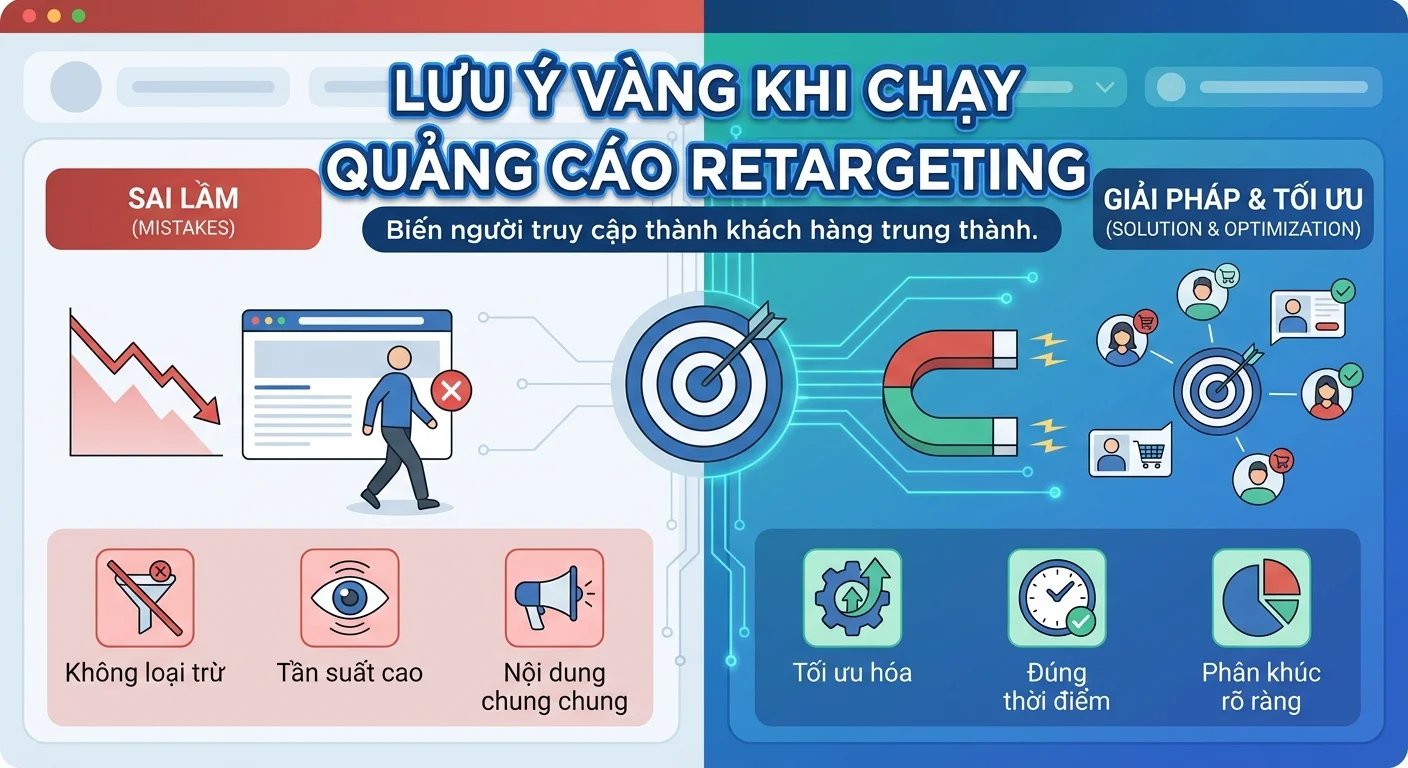
Retargeting is one of the most important strategies in modern digital advertising. Instead of constantly seeking new customers, Retargeting focuses on the group of people who have previously visited the website, viewed products, or interacted with the brand but have not yet converted.
When implemented correctly, Retargeting not only helps increase conversion rates but also optimizes advertising costs and enhances the overall effectiveness of the marketing strategy.
Retargeting and Audience Segmentation
A core principle in Retargeting is: not all visitors have the same level of interest. Segmenting by intent level helps businesses deliver relevant messages and use budgets more effectively.
Retargeting Funnel by Intent Level
- High Intent Group (Hot): Includes people who have added products to their cart or started the checkout process but haven't completed it. This is the group with the highest conversion potential and needs to be prioritized in the Retargeting campaign.
- Medium Intent Group (Warm): These are people who have viewed products, visited pricing pages, or browsed categories. They are in the consideration phase and need more information to make a decision.
- Low Intent Group (Cool): Includes blog readers, content viewers, or those who only visited the homepage. The goal of Retargeting with this group is to maintain brand awareness and provide educational content.
- Existing Customers: Previous buyers, suitable for upsell, cross-sell, or loyalty programs.
Retargeting Segments to Implement
Based on behavior and interaction time, businesses can build specific Retargeting segments such as:
- Cart abandoners within 7 days
- Checkout abandoners within 3 days
- Product viewers who haven't added to cart within 14 days
- Category viewers within 30 days
- Content readers within 60 days
- Customers who purchased within 30–90 days
- High-value customers with multiple repeat purchases
Each segment requires a different content strategy and priority level for optimal results.
Segmenting by Time and Creating Urgency
Effective Retargeting is based not only on behavior but also on timing. Breaking down audiences by time intervals helps make messages more relevant.
- 0–3 days: Remind of interest, no immediate offer needed
- 4–7 days: Create a sense of missing out, small offers
- 8–14 days: Brand recall, moderate offers
- 15–30 days: Encourage return with stronger offers
- Over 30 days: Win-back campaign with a new approach
Effective Retargeting Campaign Structure
A well-structured Retargeting strategy should be organized into multiple campaign groups rather than consolidated.
- Campaigns for High Intent Group: Focus on cart and checkout abandonment, segmented by time to optimize messaging.
- Campaigns for Medium Intent Group: Target product and category viewers, using dynamic ads based on behavior.
- Interaction-Based Campaigns: Retarget video viewers, page interactors, or ad clickers who haven't converted.
- Campaigns for Existing Customers: Upsell, cross-sell, and reactivate old customers.
- Sequential Retargeting: Guide customers through stages from brand awareness, product education, to driving conversions.
Audience Exclusion Principles in Retargeting
One of the most common mistakes is not excluding the right audiences, leading to wasted budgets and poor customer experiences.
- Cart abandonment campaigns should exclude recent purchasers
- Product retargeting should exclude cart abandoners and purchasers
- Prospecting should exclude all website visitors and existing customers
- Win-back campaigns should exclude customers who purchased in the last 30 days
Best Practices for Ad Content
Personalize Messages by Segment
- Cart abandoners need action-driving messages
- Product viewers need reasons to trust and choose
- Dormant customers need reminder content and updates
Dynamic Ads for Product Retargeting
Do:
- Show the exact product viewed
- Display prices clearly
- Add reviews and social proof
- Suggest related products
- Use carousels for multiple products
Don't:
- Advertise out-of-stock products
- Show outdated prices
- Use low-quality images
- Advertise products the customer has already purchased
Rotate Content to Avoid Ad Fatigue
Changing content weekly helps maintain effectiveness and reduce ad saturation.
Budget, Bidding, and Frequency Control
Retargeting budgets should be allocated based on the value of each audience group, with cart and checkout abandoners receiving the highest proportion.
Additionally, display frequency needs to be controlled appropriately:
- High intent groups can be shown more frequently
- Awareness and win-back groups need lower frequency, gentle reach
Failure to control frequency can lead to ad fatigue, negative feedback, and reduced campaign effectiveness.
Measurement, Optimization, and Continuous Testing
An effective Retargeting campaign needs to be monitored and optimized regularly through metrics such as:
- CTR
- CPC
- Conversion Rate
- ROAS
- CPA
- Frequency
A/B testing should focus on one element at a time, including ad content, audience segments, offers, and landing pages.
Common Mistakes to Avoid
- Not excluding converted users
- Using one message for all segments
- Ignoring display frequency
- Setting an inappropriate attribution window
- Not retargeting existing customers
- Poor mobile experience
- Setting and forgetting without optimization
- Retargeting too soon after a user leaves the website
Conclusion
Retargeting is not just about showing ads again to people who have visited a website; it's a comprehensive strategy based on segmentation, timing, and relevant messaging. Businesses that implement Retargeting systematically will optimize advertising costs, increase conversions, and build sustainable customer relationships.
Implementing Retargeting should be considered a core part of a long-term marketing strategy, rather than a short-term solution.
Turn what you've just read into real results — apply now with GTG CRM, free.
Apply Now