Η ατομική εμπορική επιχείρηση (hộ kinh doanh cá thể) είναι η μορφή οργάνωσης παραγωγής-επιχειρηματικότητας που ιδρύεται και λειτουργεί από ένα άτομο ή ομάδα μελών εντός της ίδιας οικογένειας. Λόγω αυτού του χαρακτηριστικού, οι κανονισμοί σχετικά με τις φορολογικές υποχρεώσεις για τις εμπορικές επιχειρήσεις έχουν σημαντικές διαφορές σε σχέση με τις εταιρείες. Η κατανόηση των φόρων που πρέπει να καταβληθούν και ο τρόπος εκπλήρωσης των φορολογικών υποχρεώσεων θα βοηθήσει τους ιδιοκτήτες των εμπορικών επιχειρήσεων να συμμορφώνονται με τη νομοθεσία και να αποφεύγουν κινδύνους διοικητικών παραβάσεων.
Το παρακάτω άρθρο συνοψίζει όλους τους φόρους και τα τέλη που πρέπει να γνωρίζουν οι ατομικές εμπορικές επιχειρήσεις, μαζί με λεπτομερείς οδηγίες για τον τρόπο δήλωσης και πληρωμής των φόρων σύμφωνα με τους ισχύοντες κανονισμούς του Υπουργείου Οικονομικών.
Όριο εσόδων που υπόκεινται σε φορολογία
Σύμφωνα με το Άρθρο 40/2021/TT-BTC, οι εμπορικές επιχειρήσεις με έσοδα από δραστηριότητες παραγωγής-επιχειρηματικότητας κατά το ημερολογιακό έτος 100 εκατομμύρια VND ή λιγότερο δεν θα υποχρεούνται να καταβάλλουν φόρο προστιθέμενης αξίας (ΦΠΑ) και φόρο εισοδήματος φυσικών προσώπων (ΦΕΦΠ). Ωστόσο, ακόμη και αν δεν οφείλουν φόρους, οι εμπορικές επιχειρήσεις εξακολουθούν να είναι υπεύθυνες για την πλήρη, ακριβή και έγκαιρη δήλωση σύμφωνα με τους κανονισμούς.
Για τις εμπορικές επιχειρήσεις που λειτουργούν ως ομάδες ατόμων ή οικογένειες, το όριο εσόδων των 100 εκατομμυρίων VND/έτος υπολογίζεται για έναν μόνο νόμιμο εκπρόσωπο ολόκληρης της ομάδας κατά το φορολογικό έτος, όχι ξεχωριστά για κάθε μέλος.
Είδη φόρων και τελών που πρέπει να καταβάλουν οι εμπορικές επιχειρήσεις
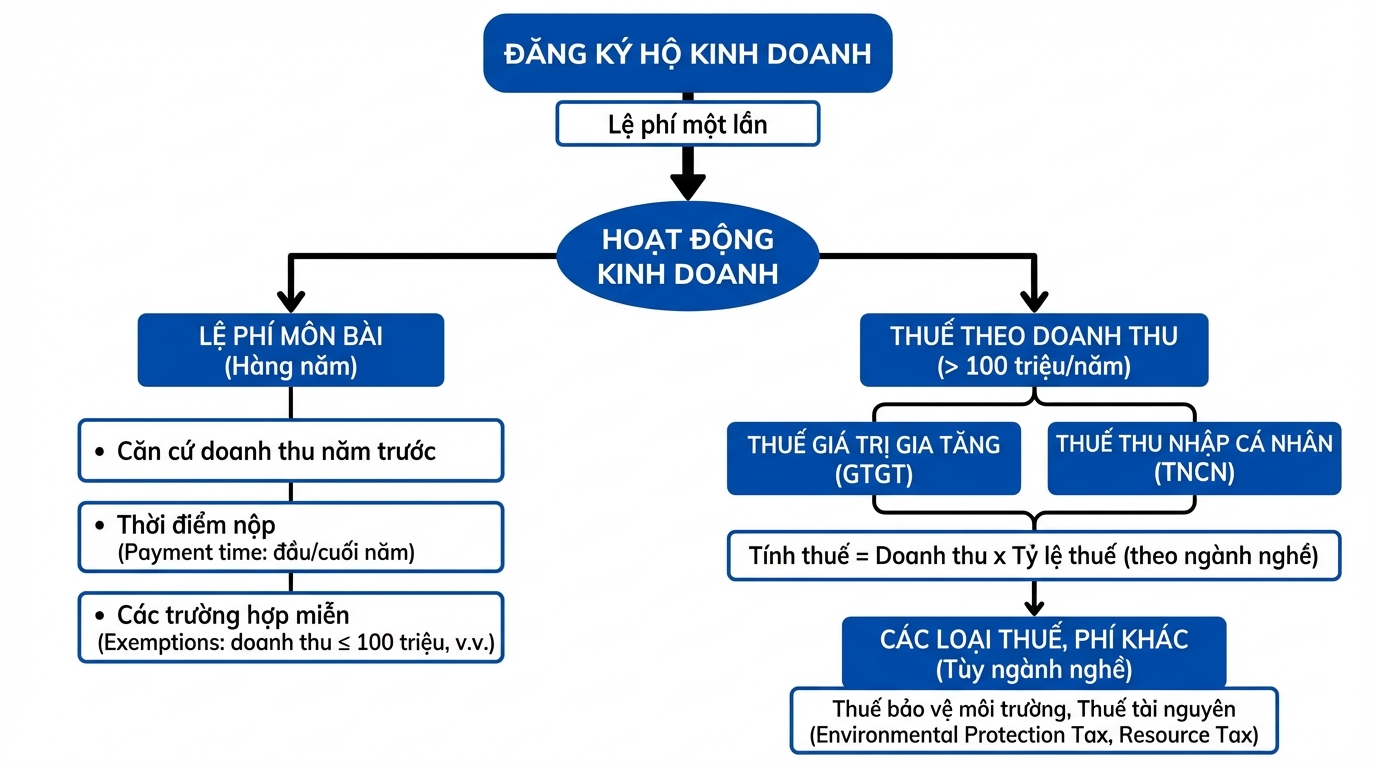
Τέλος εγγραφής εμπορικής επιχείρησης
Αυτό είναι ένα εφάπαξ τέλος κατά την εγγραφή ίδρυσης της εμπορικής επιχείρησης στην αρμόδια αρχή. Το ύψος αυτού του τέλους καθορίζεται συγκεκριμένα σε κάθε περιοχή και συνήθως δεν είναι υψηλό.
Τέλος άδειας λειτουργίας (Lệ phí môn bài)
Το τέλος άδειας λειτουργίας είναι ένα ετήσιο τέλος που πρέπει να καταβάλουν οι εμπορικές επιχειρήσεις, υπολογιζόμενο βάσει των εσόδων του προηγούμενου έτους. Σύμφωνα με το Άρθρο 65/2020/TT-BTC, το ποσό των τελών κυμαίνεται ανάλογα με το μέγεθος των εσόδων και χωρίζεται σε διαφορετικά επίπεδα.
Χρόνος πληρωμής του τέλους άδειας λειτουργίας:
Οι εμπορικές επιχειρήσεις που ξεκινούν τη λειτουργία τους κατά το πρώτο εξάμηνο του έτους θα πρέπει να καταβάλουν το τέλος άδειας λειτουργίας ολόκληρου του έτους. Εάν ξεκινούν τη λειτουργία τους κατά το δεύτερο εξάμηνο του έτους, θα πρέπει να καταβάλουν μόνο το 50% του τέλους ολόκληρου του έτους.
Στην περίπτωση που μια εμπορική επιχείρηση ζητήσει προσωρινή διακοπή λειτουργίας και υποβάλει γραπτή αίτηση στην φορολογική αρχή ή στην αρχή εγγραφής επιχειρήσεων πριν από τις 30 Ιανουαρίου κάθε έτους, και δεν έχει ήδη καταβάλει το τέλος άδειας λειτουργίας για εκείνο το έτος, θα απαλλαγεί από την πληρωμή του τέλους για το έτος προσωρινής διακοπής.
Τρόπος υπολογισμού των εσόδων για τον υπολογισμό του τέλους:
Τα έσοδα που χρησιμοποιούνται ως βάση για τον υπολογισμό του τέλους άδειας λειτουργίας είναι το σύνολο των εσόδων που υπόκεινται σε φόρο εισοδήματος φυσικών προσώπων του προηγούμενου έτους, εξαιρουμένης της δραστηριότητας ενοικίασης περιουσιακών στοιχείων. Για νέες εμπορικές επιχειρήσεις ή επιχειρήσεις που επανεκκινούν τη δραστηριότητά τους μετά από διάλυση, τα έσοδα υπολογίζονται με βάση το μέγεθος των επιχειρηματικών εγκαταστάσεων του ίδιου κλάδου και της ίδιας γεωγραφικής περιοχής.
Περιπτώσεις απαλλαγής από το τέλος άδειας λειτουργίας:
Οι εμπορικές επιχειρήσεις απαλλάσσονται από το τέλος άδειας λειτουργίας στις ακόλουθες περιπτώσεις: ετήσια έσοδα 100 εκατομμύρια VND ή λιγότερο· δεν έχουν σταθερή επιχειρηματική εγκατάσταση και δεν λειτουργούν τακτικά· δραστηριότητα παραγωγής αλατιού· υδατοκαλλιέργεια, αλιεία ή αλιευτικές υπηρεσίες υποστήριξης· το πρώτο έτος ίδρυσης ή έναρξης δραστηριότητας παραγωγής-επιχειρηματικότητας.
Φόρος προστιθέμενης αξίας
Ο ΦΠΑ εφαρμόζεται σε εμπορικές επιχειρήσεις με έσοδα 100 εκατομμύρια VND ή περισσότερο κατά το έτος. Ο συντελεστής φορολογίας υπολογίζεται ως ποσοστό επί των εσόδων, ανάλογα με τον συγκεκριμένο κλάδο δραστηριότητας.
Τύπος υπολογισμού ΦΠΑ:
Οφειλόμενος ΦΠΑ = Έσοδα που υπόκεινται σε ΦΠΑ × Συντελεστής ΦΠΑ
Τα έσοδα που υπόκεινται σε φορολογία περιλαμβάνουν το σύνολο των εσόδων από πωλήσεις, παροχή υπηρεσιών, μεταποίηση, προμήθειες, καθώς και τυχόν μπόνους, προσφορές, εκπτώσεις, ενισχύσεις, πρόσθετες χρεώσεις, υπερτιμολογήσεις και αποζημιώσεις για παραβίαση συμβάσεων.
Φόρος εισοδήματος φυσικών προσώπων
Παρόμοια με τον ΦΠΑ, ο ΦΕΦΠ εφαρμόζεται επίσης σε εμπορικές επιχειρήσεις με έσοδα 100 εκατομμύρια VND/έτος ή περισσότερο. Ο συντελεστής ΦΕΦΠ καθορίζεται λεπτομερώς ανά κλάδο δραστηριότητας στο Παράρτημα Ι που συνοδεύει το Άρθρο 40/2021/TT-BTC.
Τύπος υπολογισμού ΦΕΦΠ:
Φόρος εισοδήματος φυσικών προσώπων προς πληρωμή = Έσοδα για τον φόρο εισοδήματος φυσικών προσώπων × Φορολογικός συντελεστής φόρου εισοδήματος φυσικών προσώπων
Για τις επιχειρήσεις που δραστηριοποιούνται σε πολλούς διαφορετικούς τομείς και επαγγέλματα, είναι απαραίτητο να δηλώνονται και να υπολογίζονται οι φόροι ξεχωριστά για κάθε τομέα σύμφωνα με τον καθορισμένο συντελεστή. Εάν τα έσοδα ανά τομέα δεν μπορούν να προσδιοριστούν ή οι δηλώσεις δεν είναι σύμφωνες με την πραγματικότητα, οι φορολογικές αρχές θα προχωρήσουν σε εκτίμηση σύμφωνα με τις διατάξεις της φορολογικής νομοθεσίας.
Άλλοι φόροι, τέλη
Ανάλογα με τη φύση του επιχειρηματικού κλάδου, οι επιχειρήσεις μπορεί να χρειαστεί να πληρώσουν επιπλέον φόρους, όπως περιβαλλοντικό φόρο (για τη δραστηριότητα εμπορίας πετρελαιοειδών, πλαστικών σακουλών), φόρο φυσικών πόρων (για την εκμετάλλευση φυσικών πόρων), ή άλλα τέλη και εισφορές σύμφωνα με τους κανονισμούς.
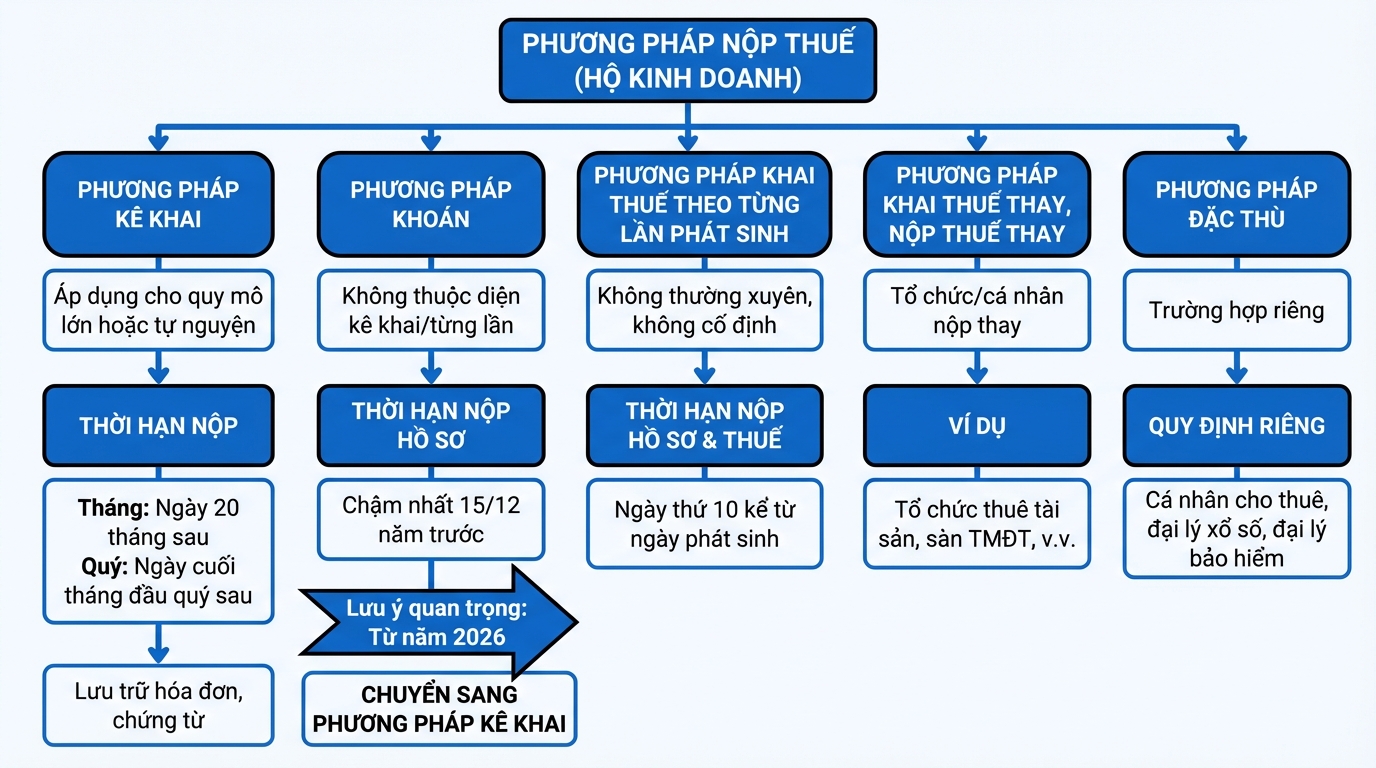
Μέθοδοι Φορολογίας
Οι επιχειρήσεις μπορούν να εφαρμόσουν μία από τις ακόλουθες μεθόδους φορολογίας, ανάλογα με την κλίμακα και τα χαρακτηριστικά της δραστηριότητάς τους:
Μέθοδος Δήλωσης
Εφαρμόζεται σε επιχειρήσεις μεγάλης κλίμακας ή σε επιχειρήσεις που δεν πληρούν τις προϋποθέσεις μεγάλης κλίμακας, αλλά επιλέγουν εθελοντικά αυτή τη μέθοδο.
Η προθεσμία υποβολής της μηνιαίας δήλωσης φόρου είναι η 20η ημέρα του επόμενου μήνα. Για την τριμηνιαία δήλωση φόρου, η προθεσμία είναι η τελευταία ημέρα του πρώτου μήνα του επόμενου τριμήνου.
Η προθεσμία πληρωμής του φόρου συμπίπτει με την προθεσμία υποβολής της δήλωσης φόρου. Οι επιχειρήσεις δεν υποχρεούνται να τηρούν πλήρες λογιστικό σύστημα, αλλά πρέπει να διατηρούν τιμολόγια, αποδείξεις και συμβάσεις για να αποδείξουν τη νομιμότητα των αγαθών και των υπηρεσιών.
Μέθοδος Εκτίμησης
Εφαρμόζεται σε επιχειρήσεις που δεν εμπίπτουν στην κατηγορία φορολόγησης με δήλωση ή μεμονωμένη συναλλαγή.
Η προθεσμία υποβολής της δήλωσης φόρου είναι το αργότερο έως τις 15 Δεκεμβρίου του προηγούμενου έτους από το φορολογικό έτος. Για τις νεοσύστατες επιχειρήσεις, τις επιχειρήσεις που αλλάζουν μέθοδο φορολόγησης, ή τις επιχειρήσεις που αλλάζουν κλάδο, μέγεθος, η προθεσμία είναι η 10η ημέρα από την ημερομηνία που συνέβη η αλλαγή.
Σημαντική Σημείωση: Από το 2026, σύμφωνα με τον οδικό χάρτη ψηφιακού μετασχηματισμού της φορολογικής υπηρεσίας, όλες οι επιχειρήσεις θα πρέπει να μεταβούν από τη μέθοδο εκτίμησης στη μέθοδο δήλωσης. Αυτό απαιτεί από τις επιχειρήσεις να προετοιμαστούν με συστήματα διαχείρισης πωλήσεων, ηλεκτρονικά τιμολόγια και διαφανείς φορολογικές δηλώσεις.
Μέθοδος Δήλωσης Φόρου ανά Συναλλαγή
Εφαρμόζεται σε επιχειρήσεις που δεν είναι τακτικές και δεν έχουν σταθερή επαγγελματική έδρα.
Η προθεσμία υποβολής της δήλωσης φόρου είναι η 10η ημέρα από την ημερομηνία που προκύπτει η φορολογική υποχρέωση. Η προθεσμία πληρωμής του φόρου συμπίπτει με την προθεσμία υποβολής της δήλωσης φόρου.
Μέθοδος Δήλωσης και Πληρωμής Φόρου από Τρίτους
Σε ορισμένες ειδικές περιπτώσεις, οργανισμοί ή ιδιώτες θα αναλάβουν τη δήλωση και την πληρωμή του φόρου για λογαριασμό της επιχείρησης. Παραδείγματα: οργανισμοί που μισθώνουν περιουσία από ιδιώτες, οργανισμοί που συνεργάζονται με ιδιώτες, οργανισμοί που καταβάλλουν μπόνους επίτευξης πωλήσεων, ιδιοκτήτες πλατφορμών ηλεκτρονικού εμπορίου.
Ειδικές Μέθοδοι
Εφαρμόζεται ειδικά για ορισμένες περιπτώσεις, όπως ιδιώτες που εκμισθώνουν ακίνητα, ιδιώτες που υπογράφουν απευθείας συμβάσεις ως πράκτορες λαχείων, πράκτορες ασφαλειών, πράκτορες πολυεπίπεδου μάρκετινγκ. Κάθε περίπτωση έχει τους δικούς της κανονισμούς σχετικά με την περίοδο δήλωσης και την προθεσμία πληρωμής.
Προθεσμία Εγγραφής Φόρου
Σύμφωνα με το Άρθρο 33 του Νόμου 2019 περί Διαχείρισης Φόρων, οι επιχειρήσεις έχουν προθεσμία 10 εργάσιμων ημερών από την ημερομηνία έκδοσης της άδειας εγγραφής επιχείρησης για να εγγραφούν φορολογικά στην αρμόδια φορολογική αρχή. Η έγκαιρη φορολογική εγγραφή είναι υποχρεωτική, ώστε να αποφεύγονται διοικητικά πρόστιμα.
Συνέπειες Μη Έγκαιρης Δήλωσης Φόρου
Η καθυστερημένη υποβολή ή μη υποβολή της δήλωσης εγγραφής φόρου, της δήλωσης φόρου θα έχει ως αποτέλεσμα διοικητικά πρόστιμα σύμφωνα με την Εγκύκλιο 166/2013/TT-BTC, με πρόστιμα από προειδοποίηση έως 5.000.000 VND, ανάλογα με τη σοβαρότητα της παράβασης και τον χρόνο καθυστέρησης.
Συγκεκριμένα, η καθυστερημένη υποβολή της φορολογικής δήλωσης από 1-10 ημέρες μπορεί να επιφέρει πρόστιμο 700.000 VND, από 10-20 ημέρες πρόστιμο 1.400.000 VND, από 20-30 ημέρες πρόστιμο 2.100.000 VND, από 30-40 ημέρες πρόστιμο 2.800.000 VND, και άνω των 40 ημερών πρόστιμο 3.500.000 VND. Επιπλέον, οι εμπορικές επιχειρήσεις θα επιβαρυνθούν και με τόκους υπερημερίας επί του οφειλόμενου φόρου, σύμφωνα με τη νομοθεσία.
Συμπέρασμα
Η κατανόηση των φορολογικών κανονισμών όχι μόνο βοηθά τις εμπορικές επιχειρήσεις να συμμορφώνονται με τη νομοθεσία, αλλά θέτει επίσης μια σταθερή βάση για βιώσιμη ανάπτυξη σε ένα ολοένα και πιο επαγγελματικό επιχειρηματικό περιβάλλον.
Μετατρέψτε όσα διαβάσατε σε πραγματικά αποτελέσματα — εφαρμόστε το τώρα με το GTG CRM, δωρεάν.
Εφαρμόστε τώρα