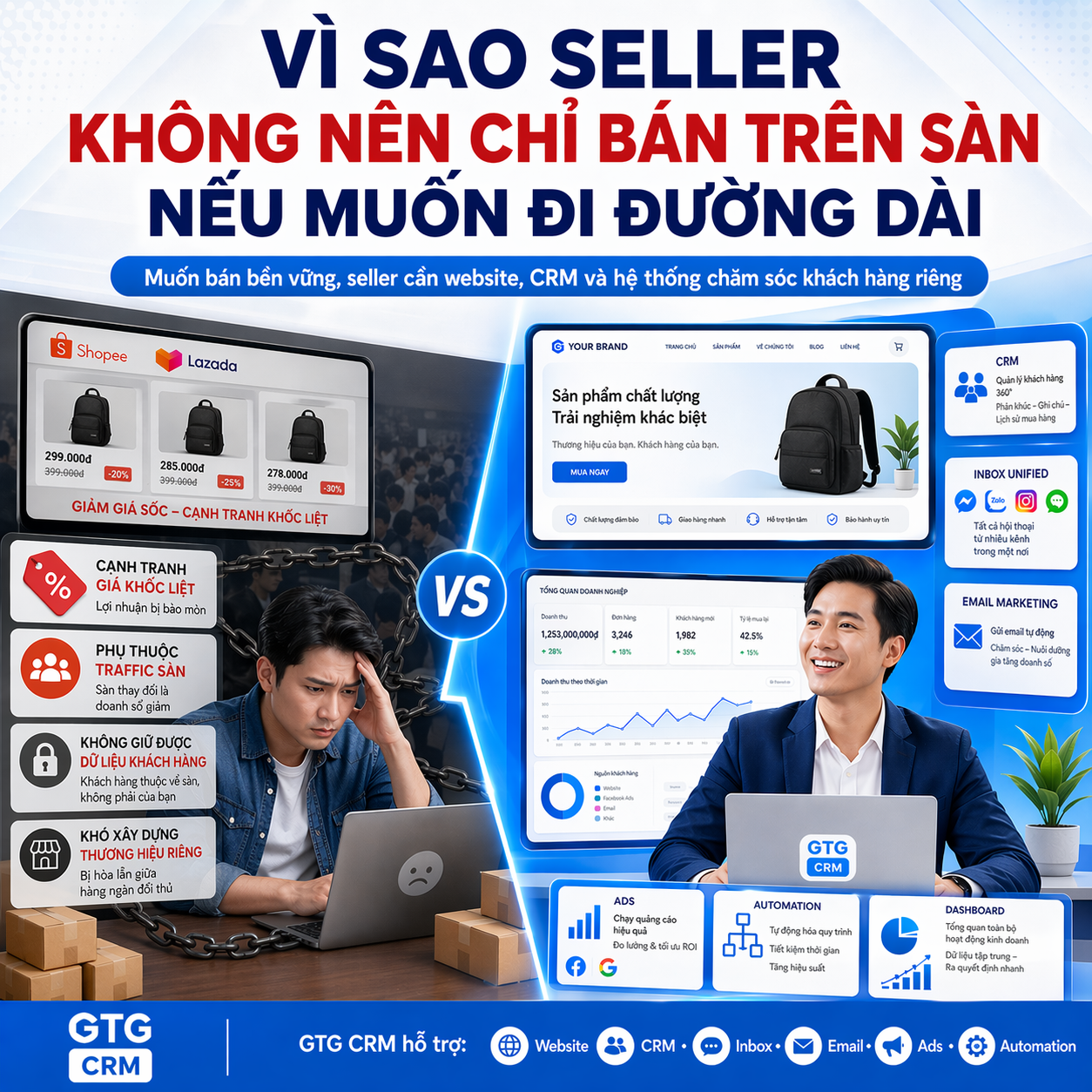
Η πώληση σε πλατφόρμες ηλεκτρονικού εμπορίου όπως το Shopee, το Lazada, το Tiki προσφέρει την ευκαιρία να προσεγγίσετε πελάτες γρήγορα από τις πρώτες κιόλας ημέρες. Ωστόσο, εάν εστιάσετε μόνο στην πλατφόρμα και δεν δημιουργήσετε το δικό σας κανάλι πωλήσεων, θα αντιμετωπίσετε πολλούς μακροπρόθεσμους κινδύνους: αυξανόμενο κόστος διαφήμισης, απώλεια ελέγχου στα δεδομένα των πελατών, δυσκολία στη δημιουργία δικής σας επωνυμίας και πλήρη εξάρτηση από τις πολιτικές της πλατφόρμας. Για να αναπτυχθούν βιώσιμα, οι πωλητές χρειάζονται τη δική τους ιστοσελίδα πωλήσεων και ένα σύστημα διαχείρισης πελατών για να είναι πιο προορατικοί στη φροντίδα και την επανενεργοποίηση των παλιών πελατών.
Γιατί πολλοί πωλητές παραμένουν πλήρως εξαρτημένοι από τις πλατφόρμες
Όταν ξεκινάτε μια διαδικτυακή επιχείρηση, οι πλατφόρμες ηλεκτρονικού εμπορίου είναι μια λογική επιλογή για τους περισσότερους πωλητές. Δεν απαιτείται μεγάλο κεφάλαιο για την κατασκευή υποδομής, ούτε πολύπλοκη τεχνική γνώση, απλώς εγγραφή λογαριασμού και έναρξη πωλήσεων. Η διαθέσιμη επισκεψιμότητα από την πλατφόρμα βοηθά τα προϊόντα να φτάσουν αμέσως στους πελάτες, ειδικά σε μεγάλες εκπτώσεις όπως 9.9, 11.11 ή 12.12.
Αλλά ακριβώς αυτή η ευκολία οδηγεί πολλούς πωλητές στην παγίδα της άνεσης. Όταν οι παραγγελίες έρχονται σταθερά, τα έσοδα αυξάνονται, πιστεύουν ότι δεν χρειάζεται να κάνουν τίποτα άλλο. Όσο περισσότερο πωλούν στην πλατφόρμα, τόσο περισσότερο πιστεύουν ότι αυτός είναι ο μόνος και επαρκής δρόμος για μακροπρόθεσμη ανάπτυξη.
Η πραγματικότητα δείχνει ότι πολλοί πωλητές, μετά από 2-3 χρόνια δραστηριότητας, έχουν μόνο ένα κατάστημα στην πλατφόρμα, χωρίς ιστοσελίδα, χωρίς δική τους λίστα πελατών, και μάλιστα χωρίς τρόπο να επικοινωνήσουν με όσους αγόρασαν στο παρελθόν εκτός του συστήματος μηνυμάτων της πλατφόρμας. Όταν ρωτούνται για τους λόγους, οι απαντήσεις είναι συνήθως: "Οι πελάτες αγοράζουν από την πλατφόρμα, κανείς δεν θα μπει σε μια ιστοσελίδα", "Εστιάζοντας σε ένα μέρος για να μην κουραζόμαστε", ή "Δεν ξέρω πώς να φτιάξω ιστοσελίδα".
Κίνδυνοι και κρυφά κόστη της πώλησης μόνο στις πλατφόρμες
Αυξανόμενο κόστος διαφήμισης
Οι πλατφόρμες ηλεκτρονικού εμπορίου λειτουργούν με ένα μοντέλο marketplace υψηλού ανταγωνισμού. Για να εμφανιστούν τα προϊόντα σας μπροστά στους πελάτες, πρέπει να πληρώσετε για διαφημίσεις, να συμμετάσχετε σε προωθητικά προγράμματα που διοργανώνει η πλατφόρμα, ή να αποδεχτείτε βαθιές εκπτώσεις για να ανταγωνιστείτε. Όσο περισσότεροι πωλητές συμμετέχουν, τόσο αυξάνεται το κόστος διαφήμισης.
Ένας πωλητής καλλυντικών μπορεί να πρέπει να δαπανήσει από 15% έως 25% των εσόδων του σε διαφήμιση και προμήθειες της πλατφόρμας. Εάν τα έσοδα ενός μήνα είναι 100 εκατομμύρια, μπορεί να χρειαστεί να δαπανήσει 20 έως 25 εκατομμύρια μόνο για να έχει παραγγελίες. Αυτό το ποσό δεν περιλαμβάνει το κόστος των εκπτώσεων σε προγράμματα flash sale ή κουπόνια που η πλατφόρμα απαιτεί από τα καταστήματα να καλύψουν.
Απώλεια ιδιοκτησίας δεδομένων πελατών
Αυτό είναι το μεγαλύτερο πρόβλημα, αλλά λίγοι πωλητές το συνειδητοποιούν από νωρίς. Όταν οι πελάτες αγοράζουν από μια πλατφόρμα, όλες οι πληροφορίες τους ανήκουν στην πλατφόρμα, όχι σε εσάς. Βλέπετε μόνο το όνομα, τον αριθμό τηλεφώνου και τη διεύθυνση για μια συγκεκριμένη παραγγελία, αλλά δεν μπορείτε να εξαγάγετε τη λίστα πελατών για να κάνετε επαναληπτικές διαφημίσεις, να στείλετε email marketing, ή να δημιουργήσετε ένα πρόγραμμα πιστότητας πελατών.
Εάν ένας πελάτης έχει αγοράσει από εσάς 5 φορές τον περασμένο χρόνο, αλλά δεν έχει επιστρέψει τους τελευταίους 2 μήνες, δεν έχετε κανέναν τρόπο να επικοινωνήσετε προορατικά για να υπενθυμίσετε ή να στείλετε μια προσφορά. Είστε πλήρως εξαρτημένοι από το αν θα θυμηθούν μόνοι τους το κατάστημά σας και θα επιστρέψουν για να το αναζητήσουν.
Αυτό σημαίνει ότι χάνετε την ευκαιρία να διατηρήσετε τα δεδομένα πελατών, την πιο σημαντική πηγή πόρων για μακροπρόθεσμη ανάπτυξη. Χωρίς δεδομένα, δεν μπορείτε να αναλύσετε τη συμπεριφορά αγορών, δεν μπορείτε να εξατομικεύσετε την εμπειρία, και δεν μπορείτε να χτίσετε μακροχρόνιες σχέσεις με τους πελάτες.
Δυσκολία στη δημιουργία δικής σας επωνυμίας
Όταν πουλάτε σε μια πλατφόρμα, οι πελάτες συνήθως θυμούνται πρώτα την πλατφόρμα, και μετά το κατάστημά σας. Πολλοί αγοράζουν από το Shopee αλλά δεν θυμούνται το όνομα του καταστήματος, απλώς ότι αγόρασαν από το Shopee. Αυτό σας καθιστά δύσκολο να δημιουργήσετε μια δική σας μάρκα στο μυαλό των πελατών.
Η εμφάνιση του καταστήματος στην πλατφόρμα περιορίζεται επίσης από τα διαθέσιμα πρότυπα. Δεν μπορείτε να προσαρμόσετε την εμπειρία χρήστη με τον δικό σας τρόπο, δεν μπορείτε να αφηγηθείτε την ιστορία της μάρκας σας σε βάθος, και είναι δύσκολο να δημιουργήσετε μια διαφορά από χιλιάδες άλλα καταστήματα που πωλούν τα ίδια προϊόντα.
Εξάρτηση από τις πολιτικές και τους αλγορίθμους της πλατφόρμας
Οι πλατφόρμες ηλεκτρονικού εμπορίου αλλάζουν τις πολιτικές τους συχνά. Σήμερα το κατάστημά σας βρίσκεται στην κορυφή των αναζητήσεων, αύριο ο αλγόριθμος αλλάζει και χάνετε τη θέση σας χωρίς να καταλαβαίνετε τον λόγο. Η πλατφόρμα μπορεί να αυξήσει τις προμήθειες, να αλλάξει τις πολιτικές επιστροφής χρημάτων ή να δώσει προτεραιότητα σε μεγαλύτερα καταστήματα σε προωθητικές ενέργειες.
Εάν παραβιάσετε τις πολιτικές, είτε σκόπιμα είτε ακούσια, το κατάστημά σας μπορεί να κλειδωθεί προσωρινά ή μόνιμα. Σε αυτή την περίπτωση, ολόκληρο το κανάλι πωλήσεών σας θα σταματήσει, τα έσοδα θα γίνουν 0 και δεν θα έχετε κανένα εφεδρικό κανάλι.
Δυσκολία στη φροντίδα και επανενεργοποίηση παλιών πελατών
Στις επιχειρήσεις, το κόστος διατήρησης ενός παλιού πελάτη είναι συνήθως 5 έως 10 φορές χαμηλότερο από την εύρεση νέων πελατών. Όταν όμως πουλάτε μόνο μέσω πλατφόρμας, δεν μπορείτε να φροντίσετε ενεργά τους παλιούς πελάτες. Δεν ξέρετε ποιος αγόρασε 1 φορά, ποιος αγόρασε 5 φορές, ποιος έχει να ξαναγοράσει για καιρό.
Το σύστημα μηνυμάτων της πλατφόρμας σας επιτρέπει να στέλνετε μηνύματα σε πελάτες μόνο εντός του πεδίου μιας συγκεκριμένης παραγγελίας. Αν θέλετε να στείλετε ειδοποιήσεις για νέα προϊόντα ή προωθητικές ενέργειες, δεν έχετε κανέναν τρόπο να τους προσεγγίσετε, εκτός αν διαφημιστείτε επί πληρωμή στην ίδια την πλατφόρμα.
Πότε ένας πωλητής πρέπει να αρχίσει να σκέφτεται μια δική του ιστοσελίδα πωλήσεων
Δεν χρειάζεται να έχετε ιστοσελίδα από την πρώτη μέρα. Η πλατφόρμα εξακολουθεί να είναι ένα καλό μέρος για να ξεκινήσετε, να δοκιμάσετε προϊόντα και να βρείτε την ταιριαστότητα προϊόντος-αγοράς (product market fit). Αλλά όταν έχετε τα ακόλουθα σημάδια, είναι η ώρα να σκεφτείτε τη δημιουργία ενός δικού σας καναλιού πωλήσεων.
Πρώτο σημάδι: Έχετε σταθερά έσοδα στην πλατφόρμα για 3 έως 6 μήνες. Αυτό αποδεικνύει ότι τα προϊόντα σας έχουν πραγματική ζήτηση, όχι μόνο βραχυπρόθεσμη δοκιμή.
Δεύτερο σημάδι: Το ποσοστό των πελατών που επιστρέφουν για δεύτερη, τρίτη αγορά αρχίζει να αυξάνεται. Αν δείτε μια ομάδα πιστών πελατών, αυτό είναι ένα καλό σημάδι για να αρχίσετε να δημιουργείτε ένα δικό σας κανάλι για να τους φροντίζετε καλύτερα.
Τρίτο σημάδι: Το κόστος διαφήμισης στην πλατφόρμα αρχίζει να καταλαμβάνει μεγάλο μερίδιο στην δομή του κόστους. Όταν πρέπει να ξοδέψετε 20% έως 30% των εσόδων σας για διαφήμιση, το κέρδος διαβρώνεται και χρειάζεστε ένα συμπληρωματικό κανάλι για να βελτιστοποιήσετε το κόστος.
Τέταρτο σημάδι: Θέλετε να χτίσετε τη δική σας επωνυμία αντί απλώς να είστε ένα ανώνυμο κατάστημα ανάμεσα σε χιλιάδες άλλα. Όταν έχετε φιλοδοξία μακροπρόθεσμης ανάπτυξης, όχι μόνο να πουλάτε, αλλά και να δημιουργείτε αξία επωνυμίας, μια δική σας ιστοσελίδα είναι ένα απαραίτητο βήμα.
Πώς μια δική σας ιστοσελίδα βοηθάει τον πωλητή να μακροημερεύσει
Πλήρης ιδιοκτησία των δεδομένων πελατών
Όταν οι πελάτες αγοράζουν από την ιστοσελίδα σας, κατέχετε όλες τις πληροφορίες τους: email, αριθμό τηλεφώνου, ιστορικό αγορών, αγαπημένα προϊόντα, συχνότητα επιστροφής. Αυτά είναι first party data, η πιο πολύτιμη πηγή δεδομένων σε μια εποχή ολοένα και πιο αυστηρής προστασίας προσωπικών δεδομένων.
Με αυτά τα δεδομένα, μπορείτε να κατηγοριοποιήσετε τους πελάτες σύμφωνα με διάφορα κριτήρια: νέοι πελάτες, πιστοί πελάτες, πελάτες που έχουν καιρό να επιστρέψουν. Από εκεί, μπορείτε να σχεδιάσετε κατάλληλες καμπάνιες φροντίδας για κάθε ομάδα, αυξάνοντας το ποσοστό επανάληψης αγορών και τη μέση αξία παραγγελίας.
Μείωση του κόστους μάρκετινγκ μακροπρόθεσμα
Η ιστοσελίδα πωλήσεων σας επιτρέπει να κάνετε SEO, να δημιουργείτε χρήσιμο περιεχόμενο για να προσελκύετε πελάτες φυσικά από την Google. Όταν τα άρθρα σας ή οι σελίδες προϊόντων σας κατατάσσονται καλά στις μηχανές αναζήτησης, έχετε μια δωρεάν και βιώσιμη πηγή επισκεψιμότητας, ανεξάρτητη από τον μηνιαίο προϋπολογισμό διαφήμισης.
Επιπλέον, όταν έχετε μια λίστα πελατών, μπορείτε να στέλνετε email marketing ή μηνύματα Zalo με πολύ χαμηλότερο κόστος από το να διαφημίζεστε στην πλατφόρμα. Μια καμπάνια email προς 10.000 παλιούς πελάτες μπορεί να κοστίσει μόνο μερικές εκατοντάδες χιλιάδες đồng, αλλά να αποφέρει έσοδα δεκάδων εκατομμυρίων αν το περιεχόμενο είναι ελκυστικό.
Δημιουργία δικής σας επωνυμίας
Η ιστοσελίδα είναι ένας χώρος αποκλειστικά δικός σας. Μπορείτε να προσαρμόσετε την εμφάνιση, να αφηγηθείτε την ιστορία της επωνυμίας σας, να σχεδιάσετε την εμπειρία χρήστη με τον δικό σας τρόπο. Οι πελάτες που επισκέπτονται την ιστοσελίδα θα θυμούνται το όνομα της επωνυμίας σας, όχι το όνομα της πλατφόρμας.
Όταν μια μάρκα έχει εδραιωθεί, μπορείτε να αυξήσετε τις τιμές των προϊόντων χωρίς να χρειάζεται να ανταγωνίζεστε με βάση την τιμή, όπως συμβαίνει στα marketplace. Οι πελάτες είναι πρόθυμοι να πληρώσουν περισσότερα για μια μάρκα που εμπιστεύονται.
Δράση στη στρατηγική επιχείρησης
Δεν εξαρτάστε πλέον από τις πολιτικές ή τους αλγόριθμους των marketplace. Εσείς αποφασίζετε ποιες προωθητικές ενέργειες θα πραγματοποιήσετε, πόσο θα μειώσετε τις τιμές και πώς θα φροντίσετε τους πελάτες. Αν μια μέρα ένα marketplace αλλάξει τις πολιτικές του δυσμενώς, θα έχετε ακόμα ένα εναλλακτικό κανάλι για να διατηρήσετε τα έσοδά σας.
Αύξηση ποσοστού επαναλαμβανόμενων πελατών
Με ένα σύστημα CRM ενσωματωμένο στον ιστότοπό σας, μπορείτε να παρακολουθείτε τη συμπεριφορά των πελατών και να στέλνετε αυτόματες ειδοποιήσεις όταν εγκαταλείπουν το καλάθι αγορών, όταν υπάρχει νέο προϊόν που ταιριάζει στα ενδιαφέροντά τους, ή όταν είναι τα γενέθλιά τους. Αυτές οι μικρές επαφές βοηθούν στην αύξηση της αφοσίωσης και του ποσοστού επαναγορών.
Οδικός χάρτης 3 βημάτων για να δημιουργήσετε οι πωλητές το δικό τους κανάλι πωλήσεων εκτός marketplace
Βήμα 1: Δημιουργήστε έναν απλό ιστότοπο πωλήσεων
Δεν χρειάζεστε έναν περίπλοκο ιστότοπο από την αρχή. Ένας βασικός ιστότοπος πωλήσεων με τις ακόλουθες λειτουργίες είναι αρκετός για να ξεκινήσετε: εμφάνιση προϊόντων, καλάθι αγορών, πληρωμή και φόρμα επικοινωνίας.
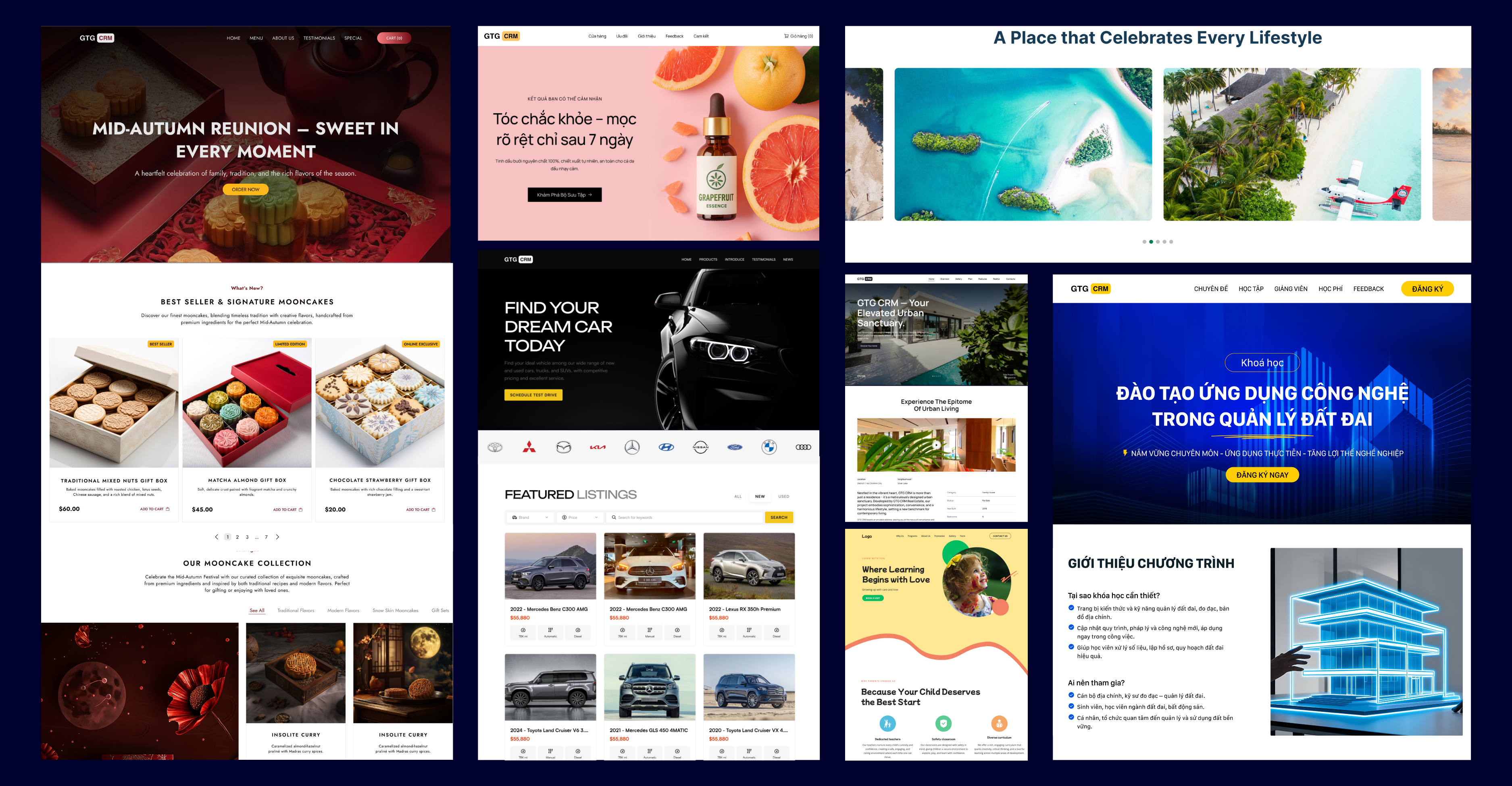
Εάν ο προϋπολογισμός είναι περιορισμένος, μπορείτε να χρησιμοποιήσετε πλατφόρμες που υποστηρίζουν τη γρήγορη δημιουργία ιστοτόπων χωρίς να απαιτείται γνώση προγραμματισμού. Το GTG CRM είναι ένα παράδειγμα, το οποίο σας επιτρέπει να δημιουργήσετε έναν ιστότοπο πωλήσεων με έτοιμες διεπαφές, εύκολη προσαρμογή και ενσωματωμένο σύστημα διαχείρισης παραγγελιών.
Μην αναβάλλετε την έναρξη περιμένοντας τον τέλειο ιστότοπο. Ξεκινήστε με μια απλή έκδοση και, στη συνέχεια, βελτιώστε τη σταδιακά με βάση τα σχόλια των πελατών.
Βήμα 2: Δημιουργήστε landing pages για κάθε καμπάνια
Το landing page είναι μια σελίδα προορισμού σχεδιασμένη με επίκεντρο έναν συγκεκριμένο στόχο: τη συλλογή πληροφοριών πελατών, την παρουσίαση νέων προϊόντων ή την προώθηση προωθητικών ενεργειών. Σε αντίθεση με έναν γενικό ιστότοπο, ένα landing page για πωλητές σας βοηθά να ελέγχετε αποτελεσματικά την απόδοση κάθε καμπάνιας μάρκετινγκ.
Για παράδειγμα, όταν εκτελείτε διαφημίσεις στο Facebook για μια νέα σειρά προϊόντων περιποίησης δέρματος, αντί να οδηγείτε τους πελάτες στην αρχική σελίδα του ιστότοπού σας, τους οδηγείτε σε ένα landing page που μιλάει μόνο για αυτό το προϊόν. Αυτή η σελίδα έχει λεπτομερείς πληροφορίες, ελκυστικές εικόνες και μια σαφή πρόσκληση για δράση (call to action) όπως "Παραγγείλετε τώρα" ή "Λάβετε την προσφορά".
Όταν οι πελάτες συμπληρώνουν τα στοιχεία τους στη φόρμα στο landing page, είτε αγοράσουν αμέσως είτε όχι, έχετε συλλέξει δεδομένα για να τους φροντίσετε αργότερα.
Βήμα 3: Χρησιμοποιήστε CRM για τη διαχείριση και φροντίδα πελατών
Το CRM είναι ένα σύστημα που σας βοηθά να αποθηκεύετε και να διαχειρίζεστε τις πληροφορίες των πελατών συστηματικά. Αφού αποκτήσετε έναν ιστότοπο και αρχίσετε να συλλέγετε δεδομένα, το επόμενο βήμα είναι να χρησιμοποιήσετε το CRM για να ταξινομήσετε τους πελάτες, να παρακολουθείτε το ιστορικό αλληλεπίδρασης και να ρυθμίσετε αυτοματοποιημένες διαδικασίες φροντίδας.
Για παράδειγμα, όταν ένας νέος πελάτης εγγραφεί για να λαμβάνει πληροφορίες από ένα landing page, το CRM μπορεί αυτόματα να στείλει ένα email καλωσορίσματος μαζί με έναν κωδικό έκπτωσης. Όταν ένας πελάτης κάνει την πρώτη του αγορά, το σύστημα το καταγράφει και μετά από 7 ημέρες στέλνει αυτόματα ένα μήνυμα για να ρωτήσει για την εμπειρία του. Εάν ένας πελάτης δεν επιστρέψει μετά από 30 ημέρες, το CRM μπορεί να στείλει μια ειδική προσφορά για να τον επανενεργοποιήσει.
Το σύστημα CRM όχι μόνο σας εξοικονομεί χρόνο, αλλά διασφαλίζει επίσης ότι δεν θα χάσετε καμία ευκαιρία φροντίδας πελατών.
Παράδειγμα συγκεκριμένης ροής πωλήσεων από traffic σε lead capture και επανεμπλοκή πελατών
Ας δούμε μια πραγματική κατάσταση για να κατανοήσουμε καλύτερα πώς ο ιστότοπος, το landing page και το CRM συνεργάζονται.
Στάδιο 1: Προσέλκυση traffic
Συνεχίζετε να πουλάτε στο Shopee και έχετε μια σταθερή βάση πελατών. Αποφασίζετε να κάνετε διαφημίσεις στο Facebook προωθώντας μια νέα σειρά προϊόντων περιποίησης δέρματος. Αυτή η διαφήμιση δεν οδηγεί στο Shopee, αλλά σε ένα landing page στον δικό σας ιστότοπο.
Στάδιο 2: Συλλογή πληροφοριών πελατών
Αυτή η σελίδα προορισμού διαθέτει έναν ελκυστικό τίτλο, εικόνες προϊόντων υψηλής ποιότητας και μια απλή φόρμα που ζητά από τους πελάτες να εισαγάγουν το όνομα, τον αριθμό τηλεφώνου και το email τους για να λάβουν έκπτωση 15% στην πρώτη τους παραγγελία. Όταν οι πελάτες συμπληρώσουν τη φόρμα, οι πληροφορίες τους αποθηκεύονται αυτόματα στο CRM.
Στάδιο 3: Άμεση Φροντίδα
Αμέσως μετά τη συμπλήρωση της φόρμας από τον πελάτη, το σύστημα στέλνει αυτόματα ένα email ή μήνυμα Zalo ευχαριστώντας τον, μαζί με τον κωδικό έκπτωσης και έναν σύνδεσμο προς τη σελίδα του προϊόντος στον ιστότοπο. Οι πελάτες μπορούν να αγοράσουν αμέσως ή να το αποθηκεύσουν για αργότερα.
Στάδιο 4: Παρακολούθηση και Υπενθύμιση
Εάν ο πελάτης δεν έχει αγοράσει εντός 3 ημερών, το CRM στέλνει αυτόματα ένα ήπιο μήνυμα υπενθύμισης: "Έχετε δει το προϊόν X αλλά δεν έχετε παραγγείλει ακόμα. Ο κωδικός έκπτωσής σας ισχύει μέχρι το τέλος αυτής της εβδομάδας."
Εάν ο πελάτης αγοράσει, το CRM καταγράφει την πρώτη παραγγελία και τον μεταφέρει στην ομάδα "Νέοι Πελάτες". Μετά από 7 ημέρες, το σύστημα στέλνει ένα μήνυμα για να ρωτήσει πώς πάει και να προτείνει σχετικά προϊόντα.
Στάδιο 5: Επανενεργοποίηση Παλιών Πελατών
Μετά από 30 ημέρες, εάν ο πελάτης δεν επιστρέψει, το σύστημα στέλνει αυτόματα μια ειδική προσφορά ή προτείνει νέα προϊόντα που ταιριάζουν με το ιστορικό αγορών τους. Εάν έχουν αγοράσει πολλές φορές, το CRM μπορεί να στείλει ένα πρόγραμμα πόντων ή προσφορές για πιστούς πελάτες.
Όλη αυτή η διαδικασία είναι αυτοματοποιημένη, χρειάζεται μόνο να τη ρυθμίσετε μια φορά. Το αποτέλεσμα είναι ένα βιώσιμο σύστημα πωλήσεων, που δεν εξαρτάται πλήρως από τις πλατφόρμες, και έχει τη δυνατότητα να φροντίζει τους πελάτες προληπτικά.
Το GTG CRM βοηθά τους πωλητές να χτίσουν τα δικά τους κανάλια πωλήσεων
Εάν αναζητάτε μια απλή λύση για να ξεκινήσετε να χτίζετε το δικό σας κανάλι πωλήσεων εκτός πλατφόρμας, το GTG CRM μπορεί να είναι η κατάλληλη επιλογή. Αυτό το σύστημα έχει σχεδιαστεί ειδικά για επιχειρήσεις που δραστηριοποιούνται στο διαδίκτυο, ειδικά για πωλητές που θέλουν να μεταβούν από την πώληση σε πλατφόρμες σε πρόσθετα δικά τους κανάλια πωλήσεων.
Το GTG CRM παρέχει τις βασικές λειτουργίες που χρειάζεστε:
Ιστότοπος Πωλήσεων: Μπορείτε να δημιουργήσετε έναν ιστότοπο πωλήσεων βελτιστοποιημένο για SEO με έτοιμες εμφανίσεις, εύκολα προσαρμόσιμο, χωρίς να απαιτείται γνώση προγραμματισμού. Ο ιστότοπος ενσωματώνει ήδη σύστημα διαχείρισης προϊόντων, παραγγελιών και πελατών.
Landing Page: Δημιουργήστε ξεχωριστές landing pages για κάθε καμπάνια μάρκετινγκ για να συλλέγετε πληροφορίες πελατών πιο αποτελεσματικά.
CRM: Αποθηκεύστε και διαχειριστείτε πληροφορίες πελατών, παρακολουθήστε το ιστορικό αλληλεπίδρασης, κατηγοριοποιήστε πελάτες βάσει πολλαπλών κριτηρίων. Το σύστημα σας βοηθά να γνωρίζετε ποιος αγόρασε, ποιος όχι, ποιος χρειάζεται περαιτέρω φροντίδα.
Αυτοματοποιημένες Διαδικασίες: Ρυθμίστε αυτοματοποιημένες διαδικασίες φροντίδας πελατών από τη στιγμή που αφήνουν τις πληροφορίες τους στη landing page μέχρι να γίνουν πιστοί πελάτες.
Το GTG CRM δεν είναι η μοναδική λύση, αλλά είναι κατάλληλο για πωλητές που βρίσκονται στη φάση μετάβασης από τις πωλήσεις σε πλατφόρμες στη δημιουργία των δικών τους καναλιών. Το σύστημα είναι απλό, εύκολο στη χρήση και έχει λογική τιμή για μικρομεσαίες επιχειρήσεις.
Συμπέρασμα
Οι πλατφόρμες ηλεκτρονικού εμπορίου είναι ένα καλό σημείο εκκίνησης, αλλά όχι ο τελικός προορισμός εάν θέλετε να χτίσετε μια βιώσιμη επιχείρηση. Όταν πουλάτε μόνο σε πλατφόρμες, χάνετε τον έλεγχο των δεδομένων των πελατών, εξαρτάστε από τις πολιτικές τρίτων και δυσκολεύεστε να χτίσετε τη δική σας επωνυμία.
Η ύπαρξη ενός δικού σας ιστότοπου πωλήσεων δεν σημαίνει ότι πρέπει να εγκαταλείψετε εντελώς τις πλατφόρμες. Μπορείτε ακόμα να πουλάτε και στα δύο κανάλια, αλλά ο ιστότοπος θα είναι το μέρος όπου θα κατέχετε τα δεδομένα, θα χτίζετε την επωνυμία σας και θα φροντίζετε τους πελάτες με τον δικό σας τρόπο. Αυτή είναι μια βιώσιμη στρατηγική πωλήσεων, που σας βοηθά να μειώσετε τους κινδύνους και να αυξήσετε τη μακροπρόθεσμη ανάπτυξη.
Εάν έχετε ήδη σταθερά έσοδα από τις πλατφόρμες, είναι καιρός να αρχίσετε να σκέφτεστε τη δημιουργία ενός καναλιού πωλήσεων εκτός πλατφόρμας. Ξεκινήστε με έναν απλό ιστότοπο, δημιουργήστε landing pages για να συλλέξετε πληροφορίες πελατών και χρησιμοποιήστε ένα CRM για πωλητές για να διαχειριστείτε αποτελεσματικά τα δεδομένα. Δεν χρειάζεται να τα κάνετε όλα ταυτόχρονα, αλλά ξεκινήστε σήμερα για να μην μείνετε πίσω.
Δημιουργήστε ένα website πωλήσεων με το GTG CRM για να είστε πιο προορατικοί στην επιχείρησή σας, να διατηρείτε τα δεδομένα των πελατών σας και να χτίσετε τη δική σας επωνυμία.
Συχνές Ερωτήσεις
Πωλώ προϊόντα σε πλατφόρμες για 3 μήνες, χρειάζομαι website τώρα;
Όχι απαραίτητα αμέσως. Εστιάστε στο να βρείτε τα κατάλληλα προϊόντα και να χτίσετε σταθερές πωλήσεις στην πλατφόρμα. Μόλις έχετε σταθερά έσοδα για 3 έως 6 μήνες και παρατηρήσετε ότι οι πελάτες επιστρέφουν για πολλαπλές αγορές, τότε είναι η κατάλληλη στιγμή να σκεφτείτε ένα δικό σας website.
Είναι ακριβή η δημιουργία website;
Το κόστος δημιουργίας ενός website ποικίλλει ανάλογα με τις απαιτήσεις σας. Εάν χρησιμοποιείτε πλατφόρμες που υποστηρίζουν τη δημιουργία website, όπως το GTG CRM, το κόστος θα είναι πολύ χαμηλότερο από το να προσλάβετε μια ξεχωριστή ομάδα προγραμματιστών. Μπορείτε να ξεκινήσετε με ένα απλό website και να το επεκτείνετε σταδιακά καθώς αυξάνονται τα έσοδά σας.
Δεν έχω τεχνικές γνώσεις, πώς θα διαχειριστώ το website;
Σύγχρονες πλατφόρμες όπως το GTG CRM έχουν σχεδιαστεί για να είναι εύχρηστες και από άτομα χωρίς τεχνικές γνώσεις. Θα χρειαστεί μόνο να κάνετε απλές ενέργειες σε ένα εύκολο περιβάλλον για να προσθέσετε προϊόντα, να επεξεργαστείτε περιεχόμενο και να διαχειριστείτε τις παραγγελίες. Εάν αντιμετωπίσετε δυσκολίες, η ομάδα υποστήριξης θα σας βοηθήσει.
Πρέπει να εγκαταλείψω εντελώς τις πλατφόρμες για να εστιάσω στο website;
Όχι. Οι πλατφόρμες εξακολουθούν να αποτελούν σημαντική πηγή επισκεψιμότητας και εσόδων. Η καλύτερη στρατηγική είναι η διατήρηση και των δύο καναλιών: πωλήσεις στις πλατφόρμες για να προσεγγίσετε νέους πελάτες, και ταυτόχρονα η δημιουργία ενός website για να κατέχετε τα δεδομένα και να φροντίζετε καλύτερα τους υπάρχοντες πελάτες.
Πώς θα φέρω επισκέπτες στο website μου, όταν οι άνθρωποι έχουν συνηθίσει να αγοράζουν από τις πλατφόρμες;
Μπορείτε να ξεκινήσετε τρέχοντας διαφημίσεις στο Facebook ή στο Google που οδηγούν απευθείας στο website. Επιπλέον, δημιουργήστε αποκλειστικές προσφορές μόνο στο website για να ενθαρρύνετε τους πελάτες να το δοκιμάσουν. Σταδιακά, με την καλή βελτιστοποίηση SEO και την οικοδόμηση επωνυμίας, οι πελάτες θα σας βρίσκουν μόνοι τους.
Είναι το CRM περίπλοκο; Χρειάζεται να μάθω πολλά για να το χρησιμοποιήσω;
Τα σύγχρονα CRM έχουν σχεδιαστεί για να είναι απλά και διαισθητικά. Δεν χρειάζεται να μάθετε πολλά, απλώς κατανοήστε τις βασικές έννοιες, όπως πώς να προσθέτετε πελάτες, να τους ομαδοποιείτε και να ρυθμίζετε αυτοματοποιημένες διαδικασίες. Τα περισσότερα συστήματα CRM παρέχουν λεπτομερείς οδηγίες και μια ομάδα υποστήριξης που είναι έτοιμη να σας βοηθήσει.
Μετατρέψτε όσα διαβάσατε σε πραγματικά αποτελέσματα — εφαρμόστε το τώρα με το GTG CRM, δωρεάν.
Εφαρμογή Τώρα