Many small businesses, when starting a website, often prioritize the most visible elements: a homepage, service information, a contact form, and basic images to attract visitors. This approach isn't wrong. However, after the website is launched, a familiar problem arises: while it may seem to have sufficient content, the overall impression of professionalism and trustworthiness remains unmet.
The reason is often not a lack of information. The problem lies in the website's inconsistency in terms of brand identity .
The colors vary widely. The fonts are inconsistent. The images and presentation lack a unified spirit. The tone of the content is also unclear, failing to define the desired style of the business. When these details don't align, the website easily feels disjointed, even if the business has invested effort in content and design.
That's why more and more small businesses are starting to see Brand Identity as something they should consider sooner. Not just for aesthetics, but to ensure their website better supports trust and sales.
Why do small businesses often overlook brand alignment in the early stages?
It's quite understandable. When resources are limited, businesses often prioritize what shows clear results first. They build websites for online presence, run ads for traffic, and create landing pages to generate leads. Brand identity is usually relegated to the "later" category.
But as time went on, the company realized a problem: if the brand foundation wasn't clear from the start, the website would struggle to create a sense of consistency.
Customers might not call the problem by its proper name, "brand identity mismatch." But they will sense it through many subtle signals:
- The website doesn't look professional enough.
- Each section sounds like it's being spoken in a different voice.
- The colors and images fail to convey a clear brand identity.
- It's hard to remember how this business is different from others.
In other words, customers don't need to be designers to sense the lack of consistency. They perceive it intuitively. And that intuition strongly influences their beliefs.
How are brand identity and website related?
A website is one of the clearest ways to showcase a brand in the digital environment. It's where customers not only read information but also experience the business through its interface, images, colors, and presentation style.
If Brand Identity is the part of how a business wants to be perceived, then the website is where that is most concretely expressed.
A website that aligns with the brand often helps customers perceive the business more quickly:
- clearly located
- work systematically
- serious investment
- more trustworthy in the eyes of newcomers
Conversely, when a website lacks consistency, the first impression customers often get is that it's "not well-made," "lacks a distinct style," or "not professional enough." This is a significant disadvantage, especially for SMBs that need to build online credibility.
What does brand synchronization across websites include?
Many people, when they hear about Brand Identity, immediately think of the logo. But in reality, brand consistency across websites is much broader.
1. Color
Color is one of the first things customers notice. A website with a clear and consistent color scheme will help create a more professional impression from the very first glance.
Conversely, if each area uses a different tone, the CTA color is not prominent, or the overall design lacks a clear dominant color scheme, the website can easily become diluted.
2. Font
Fonts are more than just aesthetics. They directly impact how a brand feels. A business that wants to project a modern, clean, and trustworthy image will need a different font than a brand that wants to create a soft, approachable, or creative feel.
When fonts are inconsistent, a website can easily lose its rhythm and fail to create a polished impression.
3. Visuals and presentation
Images, icons, whitespace, layout, card usage, section placement—all contribute to brand identity. A website with clear visuals often helps customers immediately recognize the business's style.
4. Content tone
This is the most often overlooked part. Some websites have very strong headlines, but the descriptions are too technical. One section is friendly, while another is too rigid. This disrupts the reading experience.
The more consistent the tone of the content, the more customers perceive the business to have a distinct personality.
5. Overall reliability level
Interestingly, when colors, fonts, visuals, and tone work together, a website not only looks better, but it also inspires more trust . For users, consistency often conveys a sense of professionalism.
Why does synchronization lead to better sales?
Many businesses think branding is more about visuals, while sales are a separate issue. But on a website, these two elements are quite closely intertwined.
A website that aligns with your brand typically supports better sales because:
Customers understand the business faster.
When everything aligns with a common theme, customers can easily understand who the business is serving and what makes it different.Customers believe it faster.
Consistency gives the impression that this is a well-invested business, not one that's just going through the motions.Customers are easier to remember.
In an online environment with so many choices, a distinct brand helps businesses stand out from the crowd.The website feels more complete now.
This directly impacts whether guests want to stay, read further, and contact us.
In other words, branding isn't just about making a website look better. It makes a website sell better by increasing trust and enhancing brand clarity.
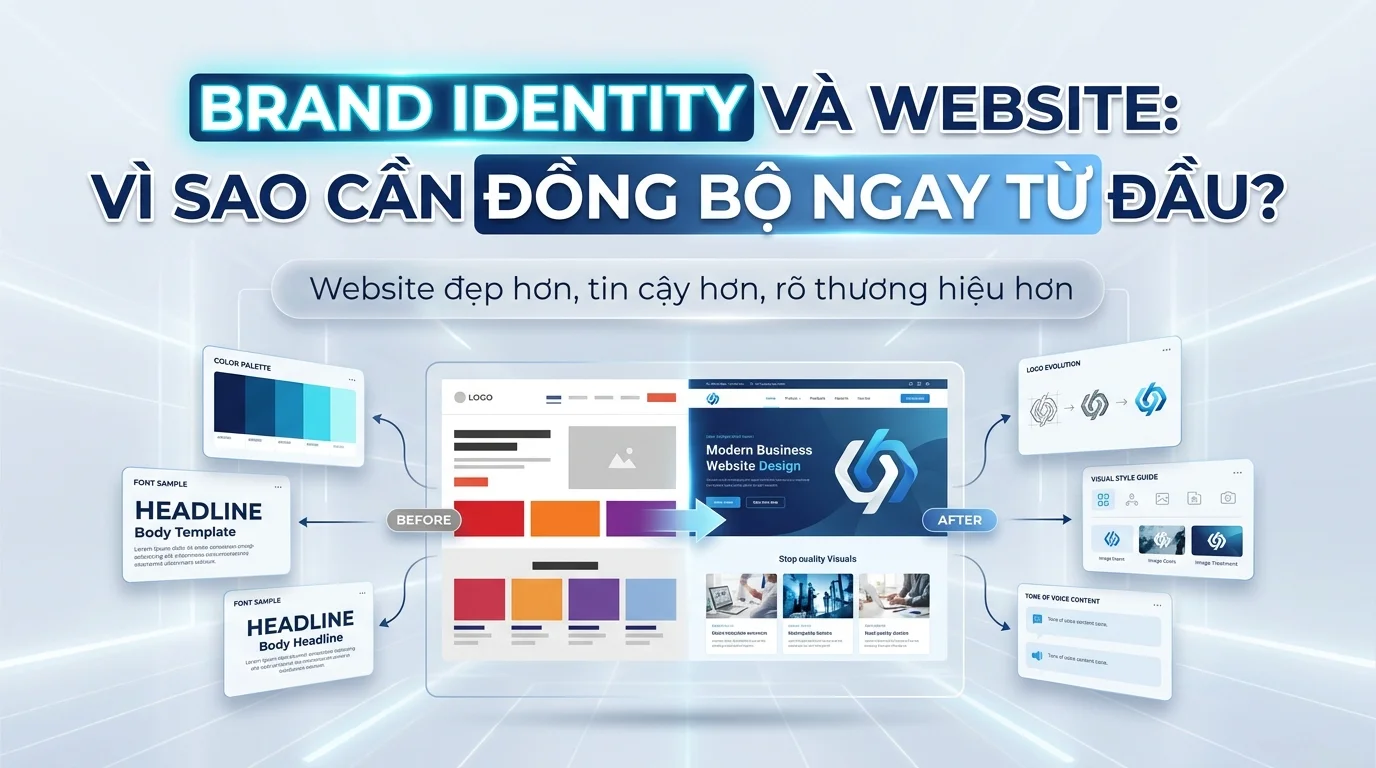
A very clear example: before and after brand synchronization.
Imagine two websites selling the same service.
The first website had sufficient content, but each section was different. The CTA color wasn't striking. The font changed inconsistently. The images lacked a unified style. After reading it, customers knew what the business did, but it didn't leave them with any clear impression.
The second website has a relatively similar structure, but the overall experience is more consistent. The colors are clearly dominant, the font is concise, the visuals are consistent, and the content maintains a consistent tone from beginning to end. Even at a glance, customers can see that this brand appears more professional.
The difference isn't just about aesthetics. It's about the feeling of trust the customer receives.
When should small businesses start paying attention to Brand Identity?
Not every business needs a highly complex branding strategy right from the start. But if you're in any of the situations below, it's time to start taking things more seriously:
- The website is there, but it lacks a unique style.
- Businesses want to build a more professional image to support sales.
- Visitors come to the website but haven't yet formed a clear brand impression.
- Content and design teams struggle to maintain consistency.
- Businesses are looking to expand their websites, landing pages, and other touchpoints in the same spirit.
The key point is that you don't need to wait until you're older to do it. Many SMBs will save a lot of time and effort if they have a clearer brand identity foundation early on.
Brand identity doesn't have to be overly complex for small businesses.
This is where many SMBs often hesitate. They think branding is a huge, time-consuming undertaking only suitable for large businesses. In reality, for small businesses, what's needed first isn't an overly elaborate brand identity. What's needed is a sufficiently clear brand foundation for the website to build upon.
Just to clarify some core points such as:
- dominant color
- main font system
- visual spirit
- tone of content
- the way a brand wants to appear to customers
Once these sections are clearer, website development becomes much easier because the team doesn't have to start over every time a new section is added.
How does GTG CRM support Brand Identity and Website?
GTG CRM is suitable for businesses that want to build a more professional website but still in a clean and practical way.
In addition to the website feature, GTG CRM also includes Brand Identity AI to help businesses build a stronger brand identity from the outset. This is useful for SMBs who want their website to not only have content and a great interface, but also to reflect their brand more consistently.
Brand Identity AI in GTG CRM can assist with elements such as logo, vision, mission, core values, color library, and font . When these elements are clearer, businesses can more easily implement a website with a more cohesive approach, rather than piecing together disjointed parts.
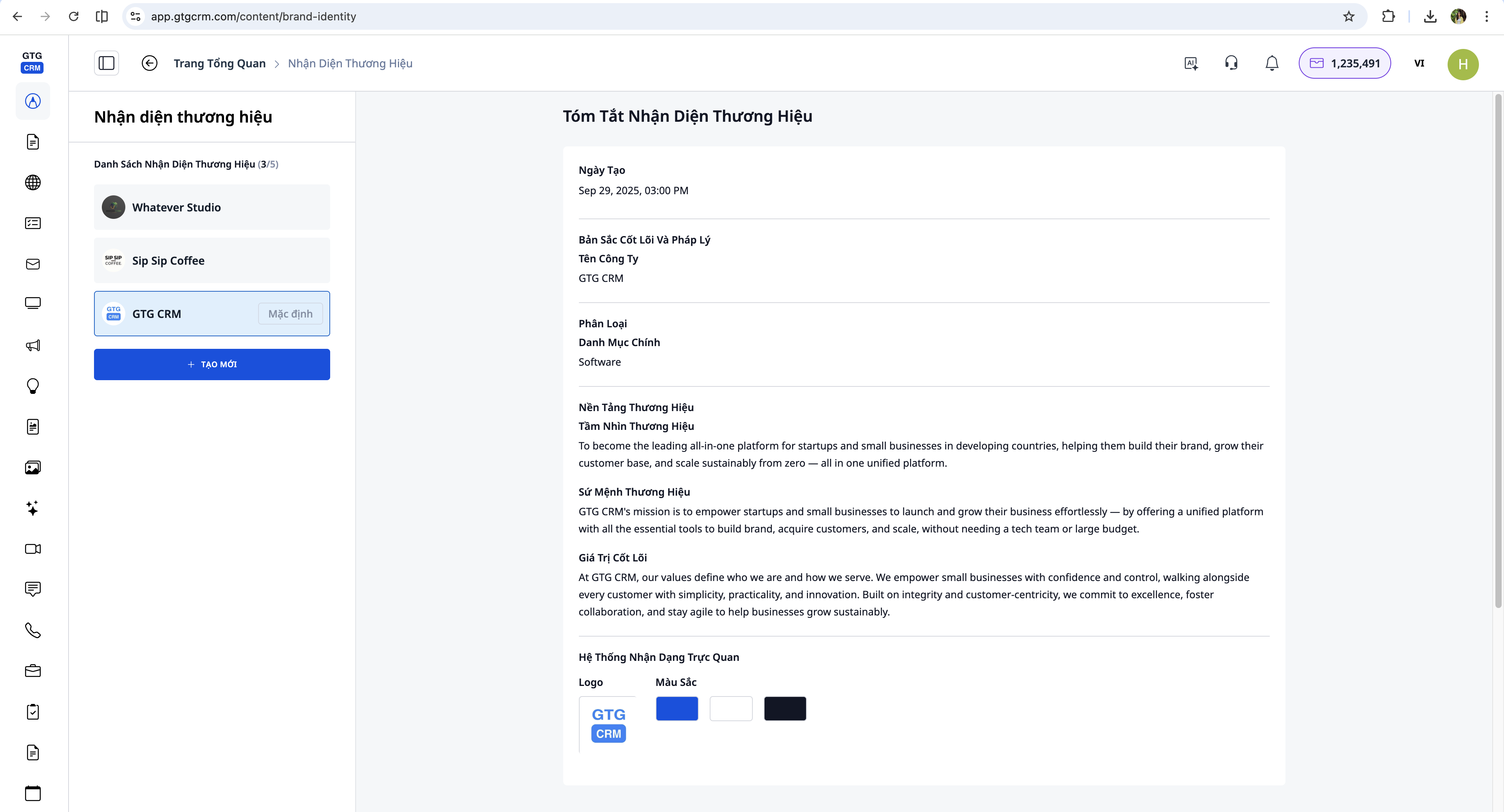 The real value here isn't in separating branding and website development into two completely distinct steps. The value lies in the fact that businesses can begin building their brand simultaneously with the website development process, ensuring everything aligns seamlessly from the start.
Conclude
For small businesses, brand identity may not be the most pressing issue on the first day. However, if the website is where customers check the credibility and perceive the professionalism of the business, then brand consistency will sooner or later become a crucial factor.
Colors, fonts, visuals, and tone of voice don't just make a website look better. They help customers understand, trust, and remember the business more quickly.
If a business wants to build a website not only for visibility but also to better support sales, then Brand Identity is a very important aspect to consider early on.
With GTG CRM, businesses can get started in a more streamlined way by integrating their website with Brand Identity AI, thereby building a clearer and more consistent brand identity right from the start.
Turn what you've just read into tangible results — apply it now with GTG CRM, free.
Apply now