![[MỚI NHẤT] Nghị định 320/2025/NĐ-CP hướng dẫn thi hành Luật Thuế Thu nhập Doanh nghiệp 2025](https://assets.gtgcrm.com/gtgcrm-home-page/huong-dan-thi-hanh-luat-thue-thu-nhap-doanh-nghiep/huong-dan-thi-hanh-luạt-thue-doanh-nghiep.png)
Valitsus on ametlikult välja andnud Määrus 320/2025/NĐ-CP, mis on üksikasjalik määrus ja juhendi rakendamine Ettevõtlustulude maksu seadus 2025. See määrus selgitab maksustatava tulu määramise viisi, maksustamismeetodeid, maksumäärasid ning ettevõtlustulude maksusoodustusi.
See on oluline õiguslik alus, mis mõjutab otseselt ettevõtete deklaratsiooni ja maksude tasumise tegevust alates 2025. majandusaastast. Seetõttu peavad organisatsioonid, ettevõteteks ümberkujundatud majapidamised ja tegutsevad ettevõtted aktiivselt oma tegevust uuendama, et õigesti määrusi järgida ja maksuriske piirata.
Ülevaade Määrusest 320/2025/NĐ-CP
Kuupäev 15.12.2025, valitsus andis välja määruse 320/2025/NĐ-CP, et täpsustada teatavaid sätteid ja kehtestada meetmed ettevõtlustulude maksu seaduse rakendamiseks.
Määrus sisaldab 6 peatükki, 26 artiklit, koos järgmise sisuga:
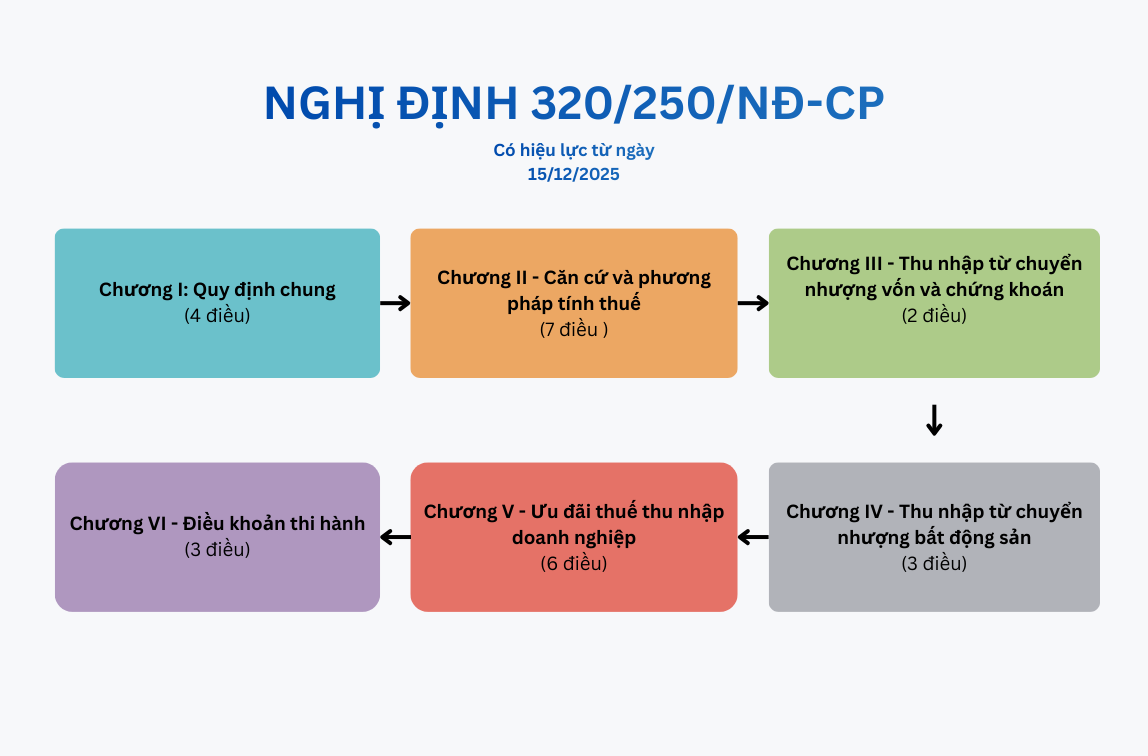
Määruse 320/2035/NĐ-CP täielik sisu
I peatükk - Üldsätted
Sisaldab 4 artiklit (artiklid 1–4)
II peatükk - Maksustamise alused ja meetodid
Sisaldab 7 artiklit (artiklid 5–12)
III peatükk - Kapitaliülekande ja väärtpaberite tulud
Sisaldab 2 artiklit (artiklid 13, 14)
IV peatükk - Kinnisvaraülekande tulud
Sisaldab 3 artiklit (artiklid 15–17)
V peatükk - Ettevõtlustulude maksusoodustused
Sisaldab 6 artiklit (artiklid 18–23)
VI peatükk - Rakendussätted
Sisaldab 3 artiklit (artiklid 24–26)
Vaata määruse 320/2025/NĐ-CP täielikku teksti
Reguleerimisala ja kohaldamisala
Määrus täpsustab ettevõtlustulude maksu seaduse rakendamist, sealhulgas:
- Maksustatava tulu määramine
- Maksustamise alused
- Maksumäärad
- Maksustamismeetodid
- Maksusoodustuste põhimõtted ja tingimused
Kohaldatavad subjektid on organisatsioonid ja üksikisikud, kes on seotud ülaltoodud sätetega.
Ettevõtlustulu maksustamise kohustuslased hõlmavad:
- Vietnami õigusaktide kohaselt asutatud ja tegutsevad ettevõtted
- Välismaised ettevõtted, kellel on või kellel ei ole alalist tegevuskohta Vietnamis
- Üksused, ühistud, ühistute liidud
- Krediidiasutused ja muud majandusüksused, millel on maksustatavat tulu
Ettevõtlustulu maksustatava tulu määramine
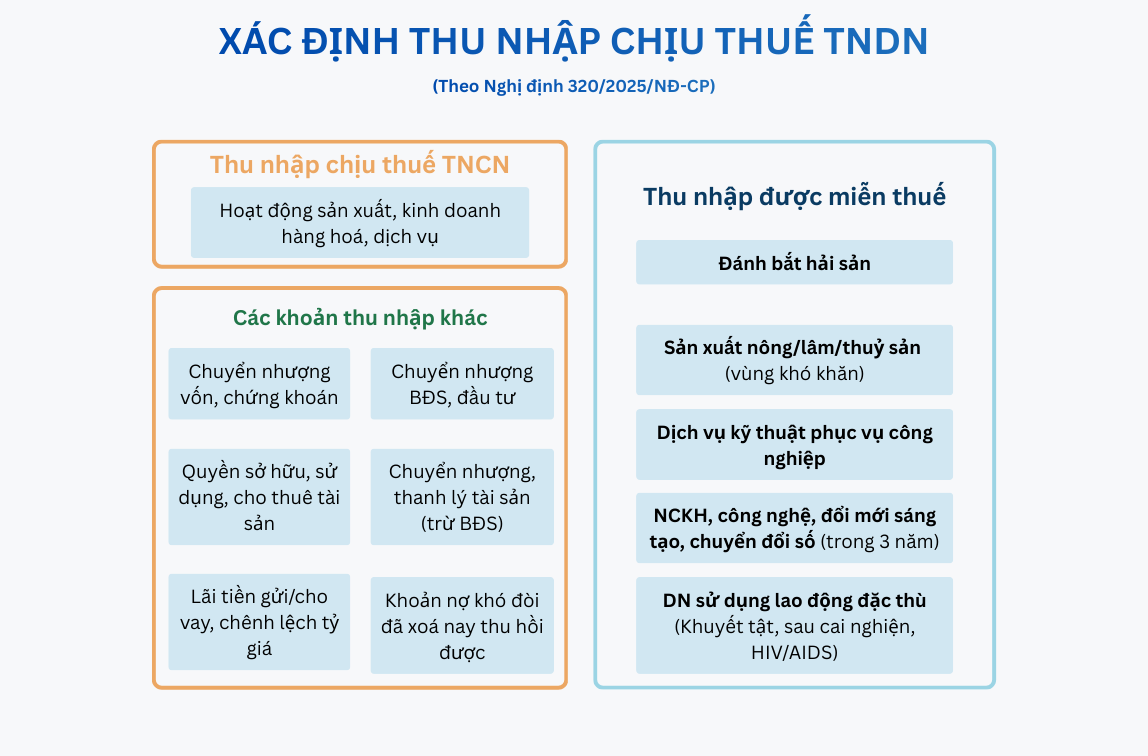
Kuidas määrata ettevõtte tulumaksuga maksustatavat tulu
Ettevõtte tulumaksuga maksustatav tulu
Määruse 320/2025/NĐ-CP kohaselt ettevõtte tulumaksuga maksustatav tulu hõlmab:
- Tulu kaupade ja teenuste tootmisest ja müügist
- Muu maksuseadustega ettenähtud tulu
Muu tulu kategooria on üsna lai, sealhulgas, kuid mitte ainult:
- Tulu kapitali, väärtpaberite võõrandamisest
- Tulu kinnisvara ja investeerimisprojektide võõrandamisest
- Tulu vara omandiõigusest ja kasutusõigusest
- Tulu vara rentimisest
- Tulu vara likvideerimisest, võõrandamisest (välja arvatud kinnisvara)
- Hoiuste intressid, laenuintressid
- Valuuta vahekursi kõikumised
- Kahtlased võlad, mida on maha arvestatud, kuid mida õnnestub sisse nõuda
- Kingitused, annetused ja muu seadusega ettenähtud tulu
Ettevõtted peavad neid tulusid õigesti klassifitseerima, et täielikult deklareerida maksustatava tulu määramisel.
Maksuvaba tulu ettevõtte tulumaksust
Lisaks maksustatavale tulule sätestab määrus selgelt ka maksuvaba tulu, näiteks:
- Tulu kalapüügist
- Tulu põllumajandusest, metsandusest, kalandusest, eriti raskesti ligipääsetavates piirkondades
- Tulu otse põllumajandusteenuste osutamisest
- Tulu teadus- ja arenduslepingutest, tehnoloogilisest innovatsioonist, digitaalsest transformatsioonist (maksuvaba 03 aasta jooksul)
- Tulu ettevõtetelt, kes kasutavad tööjõuna puudega inimesi, rehabilitatsioonis käinuid, HIV/AIDSi nakatunud inimesi
Ettevõtte tulumaksu arvutamise alused ja meetodid
Arvutamise alused:
Ettevõtte tulumaks määratakse kindlaks järgmiste alusel:
- Maksustatav tulu perioodil
- Vastav ettevõtte tulumaksumäär
Kasumi ja kahjumi tasaarvestamise ja kahjumi edasikandmise põhimõtted:
Ettevõtetel on lubatud arvestada tootmis- ja müügitegevuse kasumeid ja kahjumeid samal maksustamisperioodil. Siiski tuleb märkida:
- Kinnisvara või investeerimisprojektide võõrandamisest tekkinud kahjumit ei saa tasaarvestada soodustusõigusega maksustatava tuluga
- Kahjumit saab täielikult ja pidevalt üle kanda järgmistele aastatele, maksimaalselt mitte üle 05 aasta
Maksustatava tulu arvutamise alus
Maksustatava tulu arvutatakse ettevõtte kogu teenitud summast müükidest, töötlemisest ja teenuste osutamisest, sõltumata sellest, kas raha on saadud või mitte.
Määrus selgitab järgmist:
- Tulu arvestamise aeg
-
Tulu määramine erijuhtudel, näiteks:
- Osamaksetega või hilisemate maksetega müük
- Varade rentimine
- Ehitus- ja paigaldustegevus
- Äriühistu leping (BCC)
- Muud juhtumid vastavalt eeskirjadele
Arvesse minevad ja mittearvesse minevad kulud
Kulude arvesse võtmise tingimused:
Arvesse minev kulu peab samal ajal täitma 3 tingimust:
- Tekkinud tegelikult ja seotud tootmis- või äritegevusega
- Omama täielikke ja seaduslikke arveid ja tõendeid
- Omama sularahata maksetingimusi tehingute puhul alates 05 miljonist dongist või rohkem
Mittearvesse minevad kulud, sealhulgas:
- Kulud, mis ei vasta ülaltoodud tingimustele
- Halduskaristused
- Töötajate heaolu kulude ületav osa
- Intressikulu, mis vastab puuduvale registreeritud kapitalile
Ettevõtte tulumaksumäär
Vastavalt dekreedile 320/2025/ND-CP:
Tavalised maksumäärad: 20%
Soodusmäärad vastavalt käibele:
- 15%: ettevõtted, kelle aastane kogukäive ei ületa 03 miljardit dongi
- 17%: ettevõtted, kelle käive on üle 03 miljardi dongi kuni 50 miljardi dongini
Erimäärad:
- 25% kuni 50% nafta otsingu-, uuringu- ja tootmistegevuseks
- 40% või 50% haruldaste ressursside kaevandamiseks
Välismaised ettevõtted, kellel puudub alaline esindus Vietnamis kohaldavad makse protsendina käibest, näiteks:
- Teenused: 5% (eriti hotellide, restoranide, kasiinode haldamine: 10%)
- Autoritasud: 10%
- Osaühingu üleminek: 2%
Ettevõtte tulumaksusoodustused
Soodustatud tööstusharud ja piirkonnad
Tähelepanuväärsed soodustatud tööstusharud:
- Kõrgtehnoloogia rakendused, R&D
- Tarkvara ja IT-teenuste tootmine
- Täiendav tööstus
- Taastuvenergia, puhas energia
- Riiklikud olulised infrastruktuuriinvesteeringud
- Suuremahulised tootmisprojektid investeeringutega alates 12 000 miljardist dongist
Piirkonnapõhised soodustused kehtivad:
- Piirkonnad, kus on rasked või eriti rasked majanduslikud ja sotsiaalsed tingimused
- Majandustsoonid, kõrgtehnoloogilised tsoonid, kõrgtehnoloogilised põllumajandustsoonid, kontsentreeritud digitaaltehnoloogia tsoonid
Soodusmäär
- 10% maksumäär 15 aastat uutele investeerimisprojektidele, mis kuuluvad soodustatud valdkondadesse või eriti rasketesse piirkondadesse
- 10% maksumäär kogu tegevusaja jooksul teatavate põllumajanduse, sotsialiseerimise ja sotsiaalelamute valdkondade jaoks
- 17% maksumäär 10 aastat muude soodustatud projektide või rasketes piirkondades asuvate projektide jaoks
Maksusoodustused ja -vabastused
- 4 aastat maksuvabastust, 9 aastat järgmisest maksumaksukohustusest 50% vähendamine vastavalt Ettevõtte tulumaksu seaduse artikli 19 lõikele 1
- 2 aastat maksuvabastust, 4 aastat järgmisest perioodist 50% vähendamine vastavalt Dekreedi artikli 19 lõikele 4
- Soodustused laiendusprojektidele
- 2 aastat maksuvabastust uutele ettevõtetele, mis on asutatud ettevõtetest
- Lisatoetused naistöötajate ja vähemusrahvustest töötajate kulude eest
Kehtivus
Dekreet 320/2025/NĐ-CP kehtib alates 15. detsembrist 2025 ja seda kohaldatakse 2025. aasta ettevõtte tulumaksu perioodi kohta.
Ettevõtted saavad valida, kas kohaldada tulu, kulusid, soodustusi, maksusoodustusi ja kahjumite ülekandmist käsitlevaid sätteid ühel järgmistest ajahetkedest:
Alates 2025. aasta maksustamisperioodi algusest
- Alates Ettevõtte tulumaksu seaduse jõustumise kuupäevast
- Alates dekreedi jõustumise kuupäevast
Mõningaid konkreetseid sätteid, nagu sularahata arveldamine ja osaluse üleandmine, kohaldatakse alates dekreedi jõustumise kuupäevast.
Kokkuvõte
Dekreet 320/2025/NĐ-CP kehtestab kõrgemad nõuded tulu läbipaistvuse ja maksukohustuse osas, eriti väikeste ettevõtete ja ettevõtete puhul. Tulude aktiivne jälgimine, täielike arvete esitamine ja andmete tsentraliseeritud salvestamine ei aita mitte ainult tagada eeskirjade nõuetekohast järgimist, vaid aitab ka kaasa fikseeritud maksude ratsionaliseerimisele, vähendades riski, et maksud määratakse ebatäpselt. Müügi-, tulu- ja arvete haldusvahendite abil, mis on integreeritud GTG CRM-i, saavad ettevõtted kontrollida oma äriandmeid algusest peale, toetades läbipaistvamat koostööd maksuhalduritega ja luues jätkusuutliku tegevuse aluse vastavalt dekreedi 320/2025/NĐ-CP vaimule. Märkimisväärsete funktsioonide hulka kuuluvad:
- Elektrooniliste arvete loomine ja haldamine otse tehinguandmetest.
- Automaatne kliendiandmete täitmine, vähendades käsitsi sisestamise vigu.
- Arvete oleku jälgimine (väljastatud, saadetud, tasutud).
- Arvete tsentraliseeritud salvestamine, lihtne otsida ja kontrollida vajaduse korral.
- Ühendus juhtivate elektrooniliste arvete pakkujatega, nagu Sinvoce, Misa,... toetades ettevõtteid kehtivate õigusaktide järgimisel.
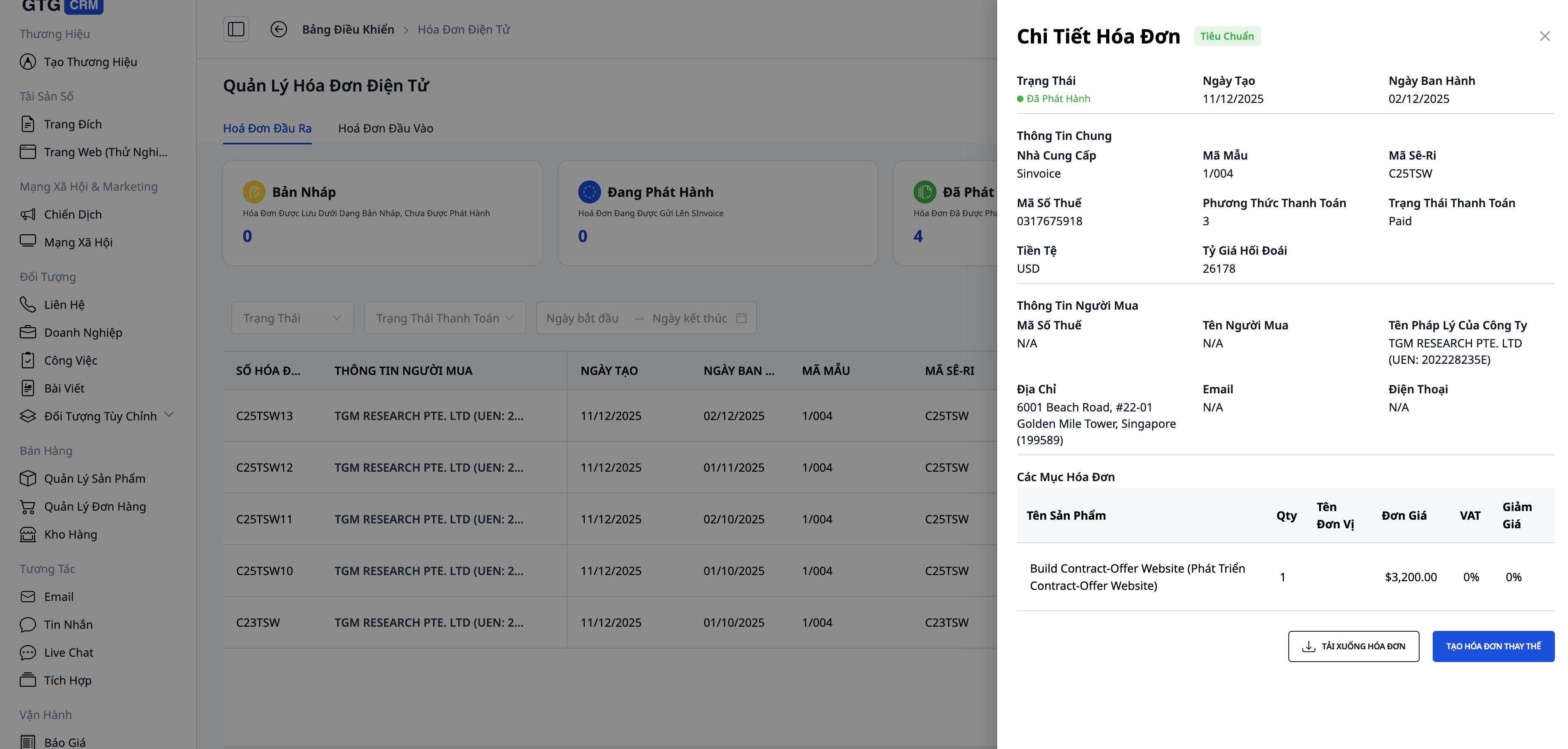
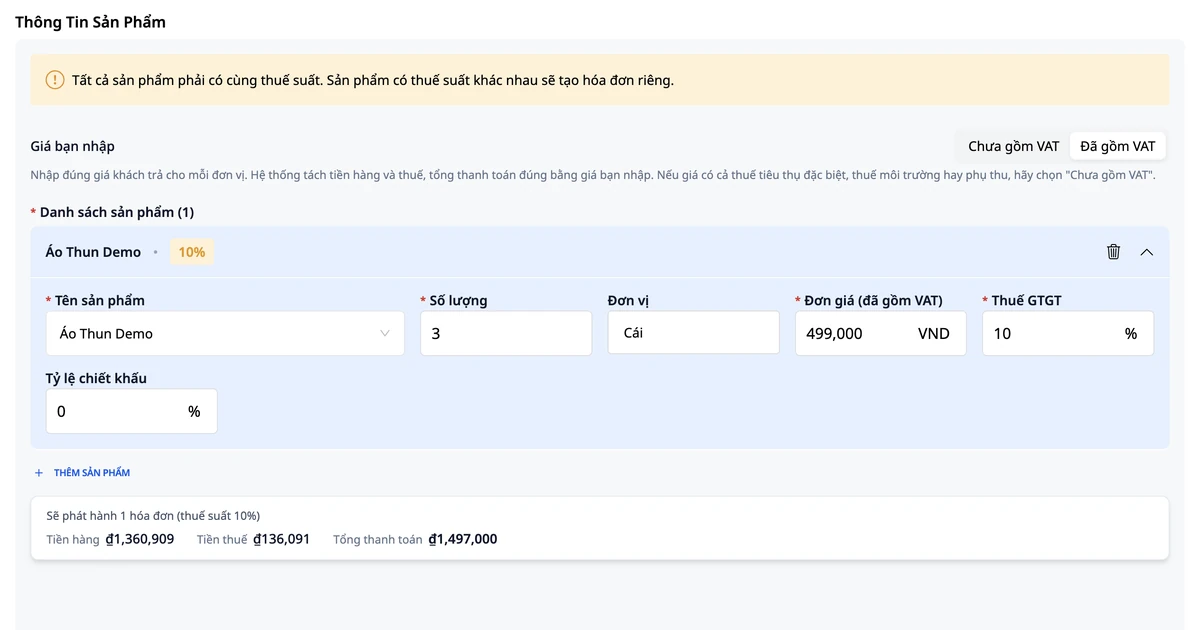
Näide GTG CRM-st loodud arvest.
Muutke loetu tegelikeks tulemusteks – rakendage seda GTG CRM-iga kohe, tasuta.
Rakendage kohe