Sinulla voi olla oikeat avainsanat, houkuttelevat mainostekstit ja täydellinen laskeutumissivu, mutta jos valitset väärän tarjousstrategian, koko budjetti menee harhaan. Todellisuudessa monet pienet ja keskisuuret yritykset kohtaavat saman ongelman: eivät tiedä, pitäisikö valita manuaalinen vai automaattinen, optimoida klikkausten, konversioiden vai arvon mukaan?
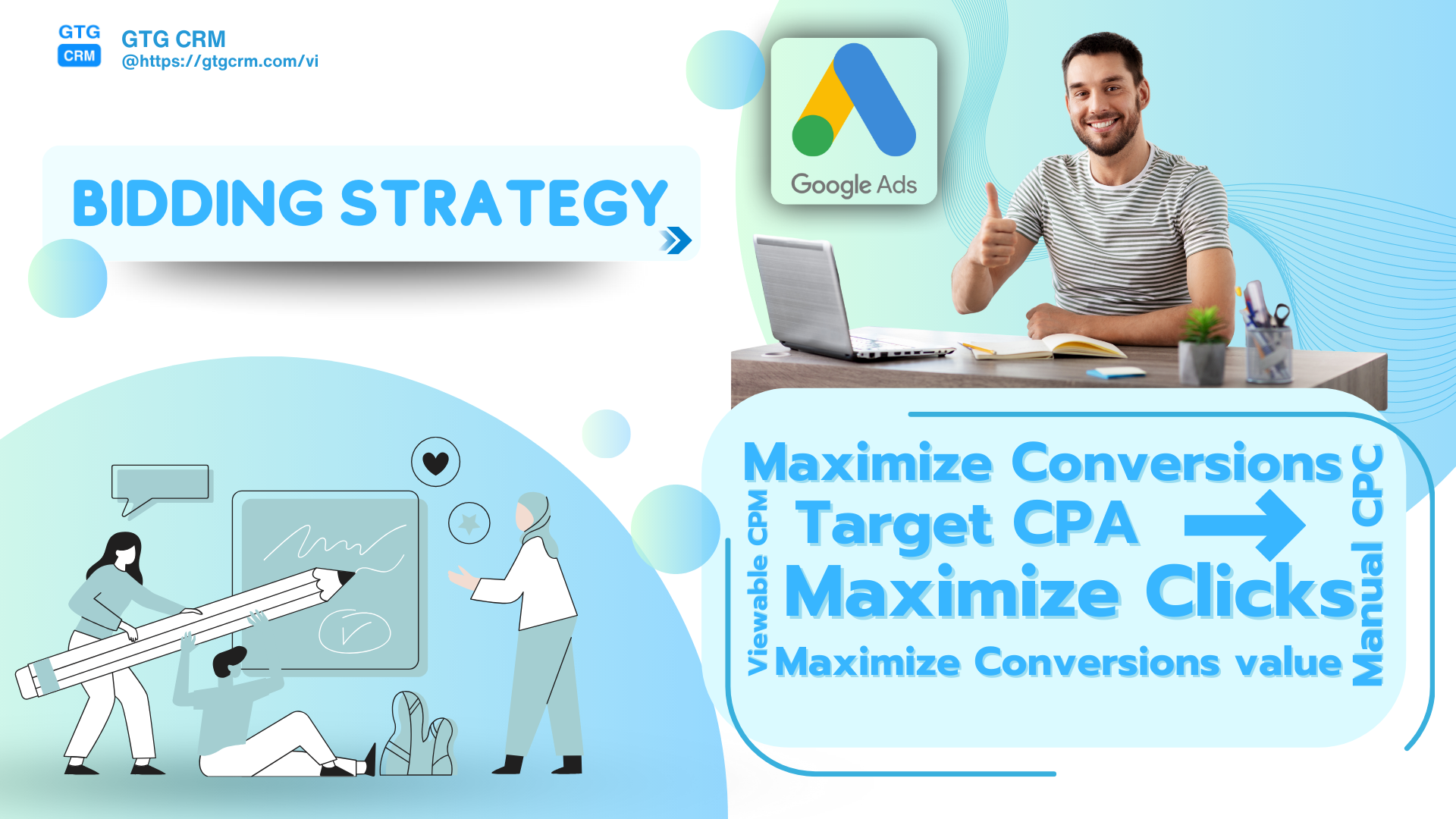
Google Ads -tarjousstrategiat
Tässä artikkelissa analysoimme 6 yleisintä tarjousstrategiaa ja selitämme eron Standard Biddingin ja Portfolio Biddingin välillä, sekä miten GTG CRM auttaa muuttamaan liiditiedot budjetin optimointipäätöksiksi.
Standard Bidding vs Portfolio Bidding
- Standard Bidding: Valitset tarjousstrategian kullekin kampanjalle erikseen. Esimerkiksi Search Ads -kampanja käyttää Target CPA -kohdennusta, Display Ads -kampanja Maximize Clicks -optimointia. Tämä on perinteinen tapa, joka sopii, jos jokaisella kampanjalla on eri tavoite ja haluat hallita niitä erikseen.
- Portfolio Bidding: Luot "strategiakansion", jota käytetään useisiin kampanjoihin, mainosryhmiin tai avainsanoihin samanaikaisesti. Etuna on, että Google saa yhdistettyä dataa koko portfoliosta älykkäämpää optimointia varten. Portfolio säästää myös hallintaaikaa, jos sinulla on useita kampanjoita, joilla on yhteinen tavoite (esimerkiksi kaikki liidinhankintakampanjat käyttävät Target CPA = 200 000 VNĐ).
Pienet yritykset antavat usein jokaisen kampanjan valita oman tarjousstrategiansa, mikä johtaa hajautettuun dataan. Portfolio mahdollistaa datan keräämisen ja keskitetyn optimoinnin, mutta sen hallinta voi olla vaikeaa ilman järjestelmää liidien laadun seurantaan useista lähteistä. Tässä GTG CRM tulee apuun – keräämällä kaiken liididatan useista kampanjoista todellisen tehokkuuden analysoimiseksi, jotta tiedät, kannattaako valita Standard vai Portfolio.
Target CPA – Keskity kustannuksiin per konversio
Monet markkinoijat ovat pakkomielteisiä kysymyksestä: "Kuinka paljon potentiaalinen asiakas todella maksaa?". Target CPA antaa sinun asettaa tämän luvun ja antaa Googlen optimoida tarjouksia huutokaupan aikana.
Edut:
- Keskittyy suoraan kustannuksiin/liidiä kohden, budjetin ennustaminen ja skaalaaminen on helppoa, mikä on pelastus niille, jotka eivät halua "jahdata klikkauksia".
- Huutokauppaa huutokauppa-aikana (auction-time): hyödyntää laitteiden, sijaintien, historian jne. signaaleja CPA:n alentamiseksi.
Haitat:
- Vaatii riittävästi & puhdasta konversiodataa
- Liian matalan CPA:n asettaminen estää mainosten jakelun, liian korkea nostaa budjettia, eikä liidien laatu ole välttämättä taattu.
- Optimoi "helppoihin" mutta laaduttomiin konversioihin jos kohdemääritykset ovat virheelliset (mikrokonversiot, päällekkäisyydet, roskaposti).
Jotta Target CPA toimisi tehokkaasti, tilillä tulisi olla vähintään 30–50 konversiota 30 päivän aikana, lyhyt suppilo ja vakaa laskeutumissivu, jotta Googlella on riittävästi dataa optimointiin. Sen sijaan sitä ei tulisi käyttää, jos seuranta ei ole standardin mukaista, suppilo on liian pitkä, kuten B2B:ssä, monivaiheinen, tai jos budjetti on liian pieni ja vaihteleva, koska se vaikeuttaa tekoälyn oppimista ja tulokset ovat epävakaita.
GTG CRM ratkaisee tämän tuottamalla todellisia CPA-lukuja todellisesta liidi- ja asiakasdatasta. Esimerkiksi järjestelmä näyttää, että todellisen ostavan asiakkaan keskimääräinen CPA on 200 000 VNĐ → syötät tämän luvun, muuttaen Target CPA:n satunnaisesta arvauksesta tarkaksi työkaluksi.
Maximize Clicks – Kun liikenne on ykkösprioriteetti
Tämä on Googlen strategia, joka maksimoi klikkaukset budjetin puitteissa. Monet yritykset, jotka ovat vasta aloittaneet, valitsevat tämän tavan vetääkseen mahdollisimman paljon liikennettä verkkosivustolle ja luodakseen taustadataa.
Edut
- Vetää liikennettä nopeasti, sopii datan keräämiseen, avainsanojen/mainosten testaamiseen.
- Yksinkertainen asennus, ei vaadi paljon konversiodataa alussa.
Haitat
- Ei takaa laatua: CTR voi olla korkea, mutta liidejä vähän / huonolaatuisia.
- Helppo polttaa rahaa laajohakuisiin hakuihin ilman negatiivisia avainsanoja, CPC-rajoitusta, kohdeyleisön suodatusta.
GTG CRM analysoi selkeästi, kuinka monta klikkausta 1 000 klikkauksesta muuttuu liideiksi, kuinka monta etenee myyntivaiheeseen. Näin tiedät, onko Maximize Clicks -kampanja todella kannattava vai vain "kaunis, mutta hyödytön" raportti.
Maximize Clicks tulisi käyttää, kun kampanjoit TOFU-vaiheessa (top of funnel), tarvitset nopeasti remarketing-listan rakentamista tai haluat löytää uusia avainsanoja ja asiakaskäyttäytymisen oivalluksia. Sitä ei sen sijaan tulisi käyttää, jos budjetti on rajallinen, yritys vaatii laadukkaita liidejä välittömästi, tai alan CPC on liian korkea, koska se voi helposti nostaa kustannuksia takaamatta konversiotuloksia.
Maximize Conversions – Maksimoi konversiot
Toisin kuin Maximize Clicks, tämä strategia antaa Googlen automaattisesti etsiä huutokauppoja, jotka todennäköisimmin tuottavat korkeimman konversiotason. Ongelmana on, että jos konversioiden seuranta ei ole kunnossa, optimoit… arvottomia toimintoja (esim. napin klikkaus ilman lomakkeen täyttöä). Monet yritykset joutuvat tähän ansaan, luullen konversioiden kasvaneen räjähdysmäisesti, vaikka myynti ei parane.
Käytön edut
- Google etsii automaattisesti huutokauppoja, joissa on korkea konversiotodennäköisyys, ja lisää nopeasti konversioiden määrää.
- Sopii liidien hankintaan/lomakkeiden täyttöön, lyhentää oppimisaikaa verrattuna Target CPA:han, kun dataa on vähän.
Käytön haitat
- Väärän tavoitteen optimointi jos seuranta ei ole kunnossa (puoliksi täytetyt rekisteröinnit, napin klikkaukset, sivun katselut…).
- CPA voi vaihdella: jos mikrokonversiot ovat "ensisijaisia" → laatu laskee.
Maksimoi konversiot tulisi käyttää, kun haluat nopeasti lisätä rekisteröitymisten tai lomakkeiden täyttöjen määrää, erityisesti silloin, kun konversiodataa on jo olemassa, mutta se ei ole vielä "riittävän hyvää" Target CPA:n ajamiseen. Tämä strategia ei kuitenkaan sovellu, jos myyntisykli on liian pitkä tai liidien arvot vaihtelevat suuresti, sillä tällöin tarvitset arvopohjaisia tarjousmenetelmiä tarkempaan optimointiin.
Maksimoi konversion arvo – Konversioarvon maksimointi
Tämä on korkeampi taso kuin Maksimoi konversiot. Google ei ainoastaan etsi enemmän konversioita, vaan priorisoi myös arvokkaampia konversioita (esim. 5 miljoonan tilaukset 500 tuhannen sijaan). Monet yritykset eivät kuitenkaan määrittele konversioille arvoa, vaan laskevat vain määrää. Tällöin Maksimoi konversion arvo on käytännössä sama kuin Maksimoi konversiot.
Käytön edut
- Optimoi arvon (liikevaihto/AOV/LTV) perusteella, ei vain määrän. Erityisen sopiva verkkokaupoille, SaaS-yrityksille, joissa on määritelty konversioarvo.
- Priorisoi automaattisesti korkean arvon asiakkaat → lisää liikevaihtoa/mainosdollaria.
Käytön haitat
- Vaatii standardin mukaisen arvonseurannan (GA4/CRM). Ilman arvoa → algoritmi on "sokea", tehokkuus ≈ Maksimoi konversiot.
- Voi vähentää määrää priorisoimalla korkean arvon tapahtumia.
Maksimoi konversion arvo tulisi käyttää, kun yrityksellä on selkeitä eroja keskimääräisessä tilausarvossa (AOV) tai elinkaariarvossa (LTV), jokaiselle tapahtumalle on määritelty tietty arvo ja päämääränä on liikevaihdon optimointi pelkän konversioiden määrän sijaan. Sitä ei sen sijaan tulisi käyttää, jos luotettavaa arvodataa ei ole tai toiminta tapahtuu palvelu-/liidienhankintasektorilla, jossa konversioarvoa ei voida tarkasti määritellä.
Näkyvä CPM – Näkyvien näyttökertojen optimointi
Tämä strategia on suunnattu pääasiassa Display- ja YouTube-verkostoihin, joissa tavoitteena on lisätä bränditietoisuutta suorien konversioiden sijaan. Maksat 1 000 "näkyvästä" (viewable) näyttökerrasta. Tämä on järkevä valinta yrityksille, jotka haluavat kasvattaa brändin kattavuutta, mutta haasteena on: todellisen vaikutuksen mittaaminen liikevaihtoon on vaikeaa.
Käytön edut
- Optimoi näkyviä näyttökertoja (viewable impressions) → hyvä brändin tunnettuuden kasvuun Display- ja YouTube-verkoissa.
- 1 000 näyttökerran hinta on yleensä alhainen, nopea kattavuus, remarketing-yleisöjen luominen.
Käytön haitat
- Ei optimoi konversioita, vaikea yhdistää suoraan liikevaihtoon (voidaan helposti nähdä "kuvakustannuksena").
- Vaatii näyttökertojen, bränditurvallisuuden ja näyttöpaikkojen hallinnointia hukkaan menemisen / käyttäjien ahdistelun välttämiseksi.
Näkyvä CPM tulisi käyttää, kun haluat lanseerata uuden brändin tai tuotteen, toteuttaa kausiluonteisia tietoisuuskampanjoita ja suunnitella jälkimarkkinointia myöhemmässä vaiheessa hyödyntääksesi mainoksia nähneiden henkilöiden määrää. Päinvastoin, sitä ei pidä soveltaa, jos tavoitteena on lyhyen aikavälin suorituskyky, rajallinen budjetti tai jos tarvitset selkeän CAC/ROAS-takuun alusta alkaen, koska tämä strategia keskittyy enemmän näyttöihin kuin suoraan konversioiden optimointiin.
Manuaalinen CPC – Täydellinen hallinta, mutta työläs
Manuaalinen CPC antaa sinun asettaa hintatarjouksen jokaiselle avainsanalle ja mainosryhmälle. Tämä on vaihtoehto markkinoijille, jotka haluavat täydellisen hallinnan. Mutta ongelma on hallinnan aiheuttama väsymys. Satojen avainsanojen kanssa jatkuva manuaalinen CPC:n säätäminen muuttuu painajaiseksi. Lisäksi ilman selkeää dataa joudut tilanteeseen, jossa "huutokauppa käydään sokeasti", maksat paljon rahaa avainsanoista, jotka eivät tuota asiakkaita. GTG CRM auttaa vähentämään taakkaa osoittamalla, mitkä avainsanat tuovat laadukkaita liidejä ja mitkä vain roskaa klikkauksia. CRM-datan ansiosta voit keskittää manuaalisen budjetin oikeisiin tuottaviin avainsanoihin sen sijaan, että "tuhlaisit rahaa" tunteella.
Käytön edut
- Täydellinen hallinta avainsanan/mainosryhmän mukaan; sopii ensisijaisesti "hittiavainsanojen", brändin ja kilpailijoiden priorisointiin.
- Helppo toteuttaa tarkoituksenmukainen testaus (sijainti, laite, aika).
Käytön haitat
- Työläs: vaikea ylläpitää, kun avainsanavalikoima on suuri/dynaaminen.
- Helppo menettää mahdollisuus huutokauppa-aikana, jos reagointi on hidasta; riippuu käyttäjän taidoista.
Manuaalista CPC:tä tulisi käyttää, kun sinulla on rajallinen budjetti ja sinun on keskityttävä tarkkaan "laskeutumispisteeseen", erityisesti niche-markkinoilla, joilla on pieni, mutta korkealaatuinen avainsanavalikoima. Tämä strategia ei kuitenkaan sovi suuriin tileihin, joissa on paljon vaihteluita, tai kun sinulla ei ole riittävästi aikaa tai tiimiä jatkuvaan seurantaan ja optimointiin, koska tehokkuus helposti laskee verrattuna Googlen automaattisiin strategioihin.
Johtopäätös
Jokaisella hintatarjousstrategialla on syynsä: Maximize Clicks liikenteen hankintaan, Target CPA liidien kustannusten hallintaan, Target ROAS ja Maximize Conversion Value voittojen optimointiin, Manual CPC hallintaan ja Viewable CPM bränditietoisuuteen. Mutta yhteistä niille on, että mikään strategia ei ole tehokas, jos sinulta puuttuu tarkkaa asiakasdataa.
Google tuntee vain klikit ja konversiot. Mutta sinä tarvitset enemmän: muuttuuko kyseinen konversio todelliseksi asiakkaaksi, mikä on tilausarvo, mikä on todellinen CPA, saavutetaanko ROAS. Ja tässä GTG CRM:n rooli on: tarjota päästä päähän -dataa, jotta et valitse hintatarjousstrategiaa tunteella, vaan todellisen myynnin kannalta merkityksellisen datan perusteella.
Jos haluat, että jokainen Google Ads -mainoksiin käyttämäsi euro ei tuo vain klikkauksia, vaan muuttuu myös asiakkaiksi, yhdistä Google Ads ja GTG CRM jo tänään.
Muuta lukemasi konkreettisiksi tuloksiksi — kokeile GTG CRM:ää nyt, ilmaiseksi.
Kokeile nyt