Við skattgreiðslur eru reikningar ekki aðeins venjulegir bókfærsluvottorð heldur einnig bein stoð fyrir skattyfirvöld til að ákvarða tekjur, kostnað og skattskyldu fyrirtækis. Í reynd eru mörg fyrirtæki og atvinnurekendur sektaðir ekki vegna viljandi brota, heldur vegna þess að þeir gefa út reikninga á röngum tíma, á rangt viðskipti eða nota ógilda reikninga.
Greinin hér að neðan samantekur algeng mistök við útgáfu reikninga sem leiða til sekta, ásamt sérstökum sektum, fyrningarfresti og leiðbeiningum um hvernig á að leiðrétta þegar reikningar hafa verið gefnir út rangt, til að hjálpa fyrirtækjum að forðast lagalega áhættu.
Mistak 1: Reikningur gefinn út á röngum tíma
Hvenær telst reikningur gefinn út á röngum tíma?
Fyrirtæki telst gefa út reikning á röngum tíma þegar reikningurinn er ekki gefinn út á þeim tíma sem lögin kveða á um, þar á meðal algeng tilvik:
- Vörur hafa verið afhentar eða þjónusta hefur verið lokið en reikningur er gefinn út of seint
- Reikningur gefinn út áður en vörur eru afhentar eða áður en þjónusta er lokið
- Reikningur skráður á röngu bókhaldstímabili, sem leiðir til rangra tekna og skattskyldu
- Þessi mistök eru oft uppgötvuð þegar skattyfirvöld bera saman tímasetning raunverulegra viðskipta við gögn rafrænna reikninga.
Sektir vegna útgáfu reikninga á röngum tíma
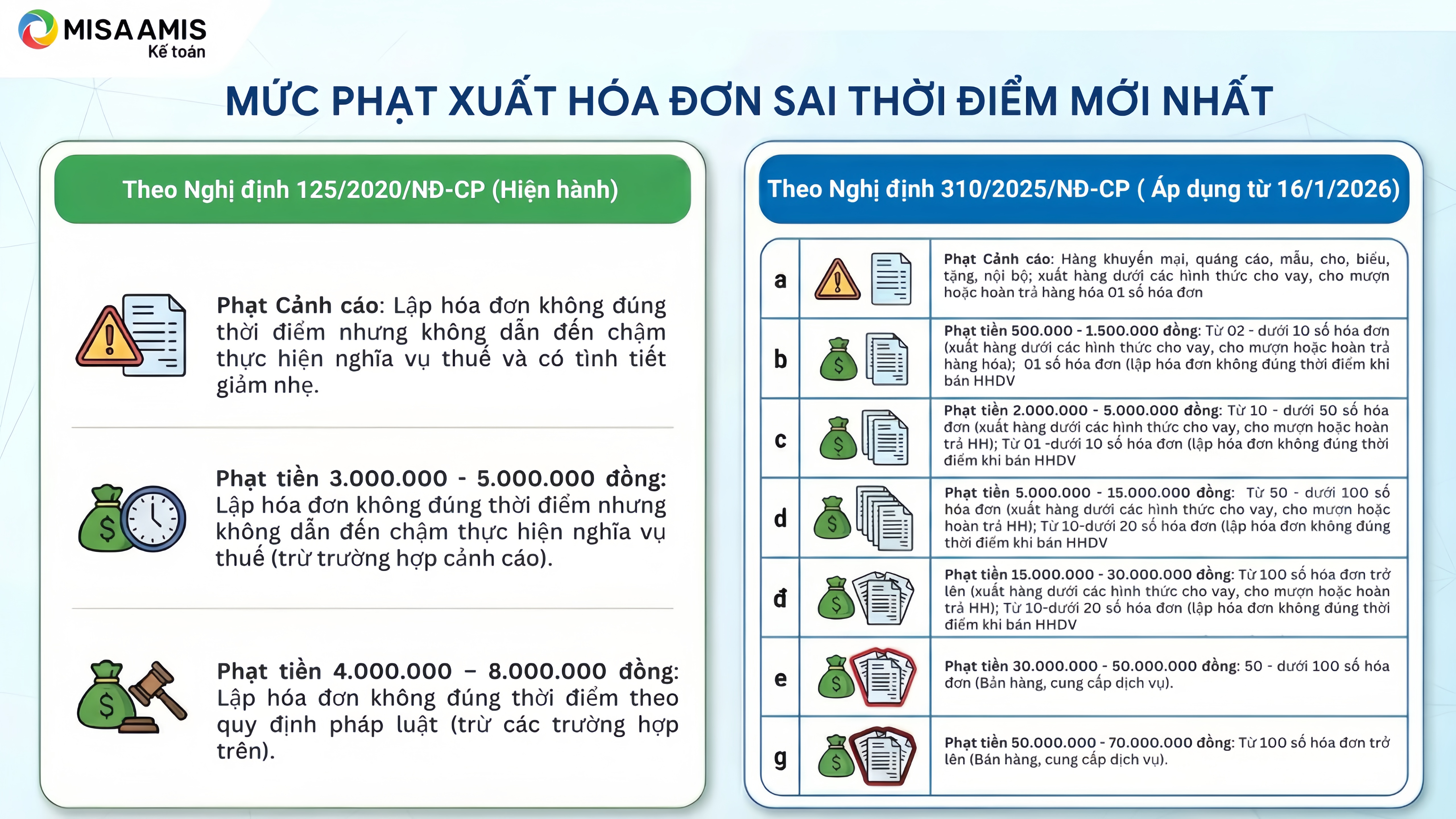
Sektir vegna útgáfu reikninga á röngum tíma
Samkvæmt tilskipun 125/2020/ND-CP (gildir til 16. janúar 2026)
- Áminning: Gildir þegar reikningur er gefinn út á röngum tíma en það seinkar ekki skattskyldu og eru mildandi aðstæður
- Sektir frá 3.000.000 til 5.000.000 dong: Gildir þegar reikningur er gefinn út á röngum tíma en það leiðir ekki til tafar á skattskyldu
- Sektir frá 4.000.000 til 8.000.000 dong: Gildir fyrir það að gefa út reikning á röngum tíma samkvæmt reglum um sölu á vörum og þjónustu
Samkvæmt tilskipun 310/2025/ND-CP (gildir frá 16. janúar 2026)
Sektir eru ákvarðaðar samkvæmt fjölda reikninga sem brjóta reglur:
- Aðvörun: Varningur, auglýsingar, sýni, gjafir; innri; sendingar undir þeim formerkjum að lána, leigja út eða skila vörum; útgáfa á 01 reikningsnúmeri
- Sektir 500.000 - 1.500.000 Dong: Frá 02 - undir 10 reikningsnúmerum (sendingar undir þeim formerkjum að lána, leigja út eða skila vörum); 01 reikningsnúmer (úthlutun reiknings á röngum tíma við sölu á vörum/þjónustu)
- Sektir 2.000.000 - 5.000.000 Dong: Frá 10 - undir 50 reikningsnúmerum (sendingar undir þeim formerkjum að lána, leigja út eða skila vörum); Frá 01 - undir 10 reikningsnúmerum (úthlutun reiknings á röngum tíma við sölu á vörum/þjónustu)
- Sektir 5.000.000 - 15.000.000 Dong: Frá 50 - undir 100 reikningsnúmerum (sendingar undir þeim formerkjum að lána, leigja út eða skila vörum); Frá 10 - undir 20 reikningsnúmerum (úthlutun reiknings á röngum tíma við sölu á vörum/þjónustu)
- Sektir 15.000.000 - 30.000.000 Dong: Frá 100 reikningsnúmerum eða fleiri (sendingar undir þeim formerkjum að lána, leigja út eða skila vörum); Frá 10 - undir 20 reikningsnúmerum (úthlutun reiknings á röngum tíma við sölu á vörum/þjónustu)
- Sektir 30.000.000 - 50.000.000 Dong: 50 - undir 100 reikningsnúmerum (sala á vörum, þjónustu)
- Sektir 50.000.000 - 70.000.000 Dong: Frá 100 reikningsnúmerum eða fleiri (sala á vörum, þjónustu)
Hvernig á að takast á við reikninga sem gefnir eru út á röngum tíma
Fyrir seljanda
- Staðfestu aftur tíma raunverulegrar viðskipta
- Skilaðu virðisaukaskatti og skráðu tekjur til tekjuskatts í tímabilinu þar sem viðskiptin áttu sér stað, ekki samkvæmt útgáfudegi reiknings
- Leiðréttu skýrslur ef rangt tímabil hefur verið tilkynnt
Fyrir kaupanda
- Skilaðu virðisaukaskatti vegna innkaupa á tímabilinu sem reikningurinn barst
- Skráðu kostnað vegna tekjuskatts á tímabilinu þar sem raunveruleg viðskipti áttu sér stað
Ef reikningur á röngum tíma er uppgötvaður, ætti kaupanda að krefjast þess að seljandinn leiðrétti hann tímanlega til að forðast hættu á notkun ógilds reiknings.
Dæmi
Reikningur gefinn út 1. janúar 2026 en vörur afhentar 31. desember 2025:
- Seljandi skráir tekjur og tilkynnir skatta á desember 2025
- Kaupanda tilkynnir virðisaukaskatt á janúar 2026, en skráir kostnað á árið 2025
Villa 2: Útgáfa á fölskum reikningum eða notkun ógildra reikninga
Hvað er falskur reikningur?
Falskur reikningur er reikningur sem endurspeglar ekki raunveruleg efnahagsleg viðskipti, þar með talin:
- Fölsuð eyðublöð, engar raunverulegar viðskipti: Eyðublöð hafa fullar upplýsingar en viðskipti með vörur eða þjónustu áttu sér ekki stað raunverulega, eða aðeins að hluta.
- Endurspeglar ekki raunverulegt gildi: Eyðublöð sýna hærra eða lægra verð en raunverulegt verð á vörum eða þjónustu sem seld var.
- Eyðublöð skortir skylduinnihald: Eyðublöð vantar nauðsynlegar upplýsingar eins og nafn, heimilisfang, skattnúmer seljanda og kaupanda, dagsetningu, lýsingu á vörum/þjónustu, einingaverð, magn, heildarverð samkvæmt reglum.
- Eyðublöð með ólöglegri eyðingu eða breytingu: Eyðublöð hafa verið eyðilögð eða breytt án þess að fara eftir reglum um breytingar á eyðublöðum.
- Munur á milli eintaka af eyðublaði: Verðmæti á milli eintaka af sama eyðublaði eru ójöfn og passa ekki saman.
- Notað eyðublað frá annarri stofnun eða einstaklingi til að réttlæta: Notað er eyðublað sem ekki er frá eigin fyrirtæki til að sanna innkaup eða útflutning á vörum eða þjónustu.
- Notað eyðublað sem lögbær yfirvöld hafa úrskurðað ólöglegt: Eyðublað hefur verið úrskurðað ólöglegt af skattayfirvöldum, lögreglu eða öðrum lögbærum yfirvöldum.
- Eyðublað gefið út af stofnun sem hefur ekki heimild til að gefa út eyðublöð, eða eyðublað sem hefur ekki gildi til notkunar.
Viðurlög vegna útgáfu falskra eyðublaða
Sektir fyrir rangar upplýsingar sem leiða til of lítilla skatta eða aukinnar skattafyllingar, lækkunar eða endurgreiðslu
Sektir að upphæð 20% af vanreiknuðum sköttum eða sköttum sem of mikið hefur verið fengið af í formi undanþágu, lækkunar eða endurgreiðslu, vegna notkunar á ógildum eyðublöðum eða skjölum til bókhalds á verðmæti keyptra vara eða þjónustu, sem leiðir til minni skattgreiðslu eða aukinnar skattendurgreiðslu, undanþágu, lækkunar, en þegar skattyfirvöld hafa farið fram á rannsókn eða úttekt, hefur kaupandinn sannað að brotið við notkun á ógildum eyðublöðum eða skjölum sé söluaðilans og kaupandinn hefur lokið við bókhald samkvæmt reglum.
Sektir fyrir skattasvik (grein 17 í tilskipun 125/2020/ND-CP): Fer eftir alvarleika brotsins og hvaða aðstæður vega þyngra eða léttara, eru sérstakar sektir sem hér segir:
- Sektir að jafnvirði 1 falinnar skattaupphæðar, ef brotamenn hafa að minnsta kosti eina mildandi aðstæðu
- Sektir að jafnvirði 1,5 falinnar falinnar skattaupphæðar, ef engar þyngjandi eða mildandi aðstæður eru
- Sektir að jafnvirði 2 falinnar falinnar skattaupphæðar, ef ein þyngjandi aðstæða er
- Sektir að jafnvirði 2,5 falinnar falinnar skattaupphæðar, ef tvær þyngjandi aðstæður eru
- Sektir að jafnvirði 3 falinnar falinnar skattaupphæðar, ef að minnsta kosti þrjár þyngjandi aðstæður eru
Í alvarlegum tilfellum geta einstaklingar og lögaðilar verið sóttir til saka samkvæmt hegningarlögum.
Hvernig á að bregðast við þegar grunur leikur á fölsuðu eyðublaði
Þegar grunur leikur á eyðublaði sem endurspeglar ekki rétt viðskipti:
- Hætta að nota viðkomandi reikning til skattframtals
- Endurskoða alla samninga, móttökuskírteini, greiðsluskírteini
- Leiðrétta bókhaldið og skjalavörslu ef rangt hefur verið bókað
- Vinna aðsóknarráð með skattyfirvöldum ef mikil áhætta er
Áframhaldandi notkun á röngum reikningi eftir að hafa uppgötvað hana getur verið talin viljandi brot, sem leiðir til þyngri refsinga.
Refsitími vegna brota á reikningsreglum
Samkvæmt lögum um refsingu fyrir stjórnsýslubrot í skatta- og reikningsmálum er refsitími fyrir stjórnsýslubrot vegna reikninga 02 ár
Hvernig á að reikna út upphaf refsitíma:
- Fyrir lokið brot, refsitíminn reiknast frá degi loks brots
- Fyrir stundarbrota, refsitíminn reiknast frá degi þegar heimilt yfirvald uppgötvar það
Þetta þýðir að jafnvel þótt fyrirtæki hafi leiðrétt villuna, er áhætta á refsingu ennþá til staðar í 2 ár.
Niðurstaða
Villur við útgáfu reikninga, allt frá röngum tímasetningum til útskriftar á fölskum reikningum, hafa öll skýran refsikvóta og refsitíma allt að 02 ár. Í síauknum rafrænum gagna-stýrðum skattaeftirliti, er útgáfa reikninga sem ekki endurspegla eðli viðskipta, felur í sér mikla áhættu vegna refsinga, endurgreiðslna og lagalegrar ábyrgðar.
Það að stýra virkjast viðskiptum, tekjum og tímasetningu útgáfu reikninga frá upphafi er lykilatriði til að hjálpa fyrirtækjum að lágmarka áhættu. Með miðlægum stjórnunarvettvangi eins og GTG CRM, getur fyrirtækið fylgst með pöntunum, tekjum og reikningum í einu kerfi, og þar af leiðandi úthlutað reikningum á réttum tíma, gagnsæjum sölugögnum og styðja skattaaðlögun, sérstaklega fyrir einstaklinga og lítil fyrirtæki sem eru undir álagi vegna skatta og skattaeftirlits.
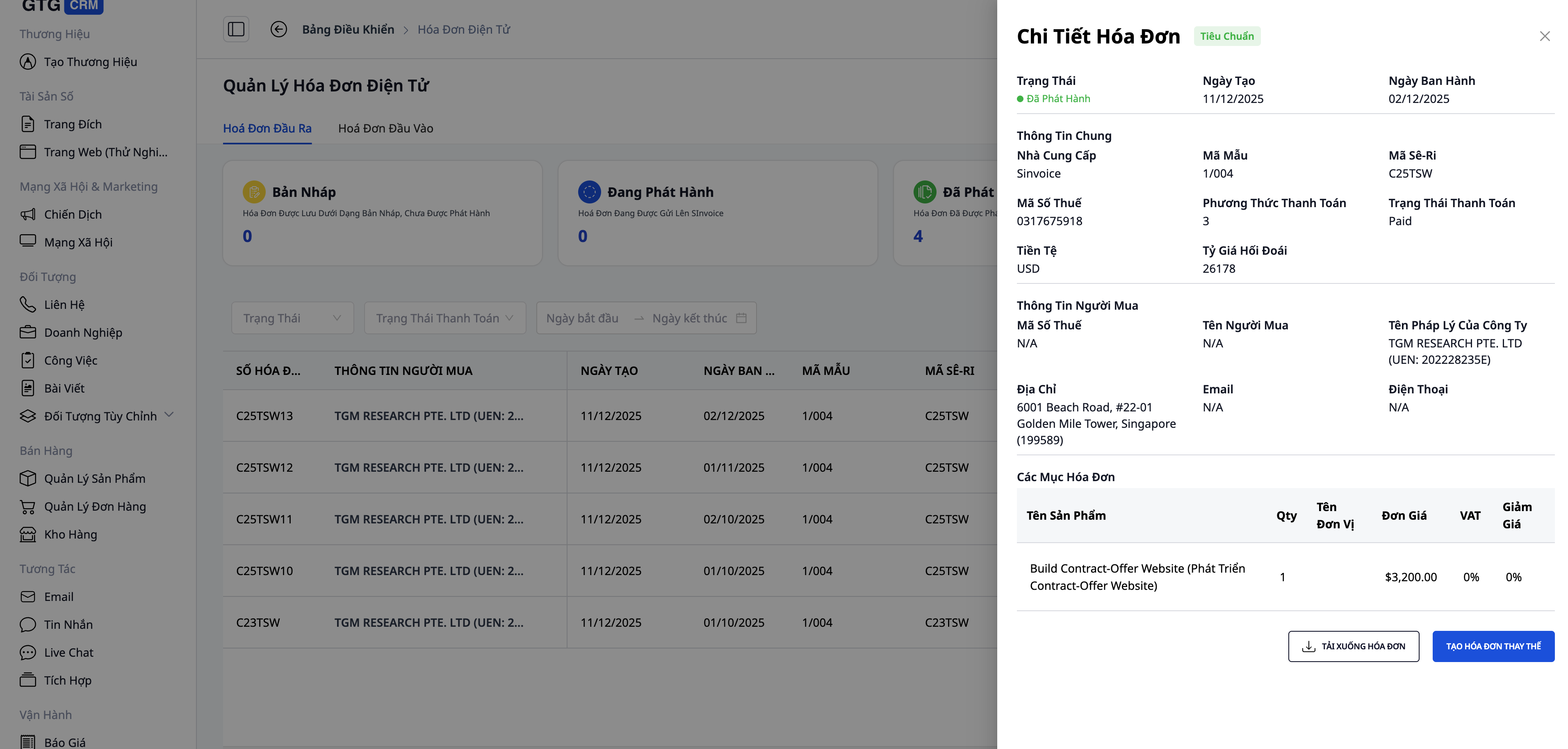
Dæmi um reikning búinn til af GTG CRM
Gerðu það sem þú hefur lesið að veruleika — notaðu GTG CRM strax, ókeypis.
Notaðu strax