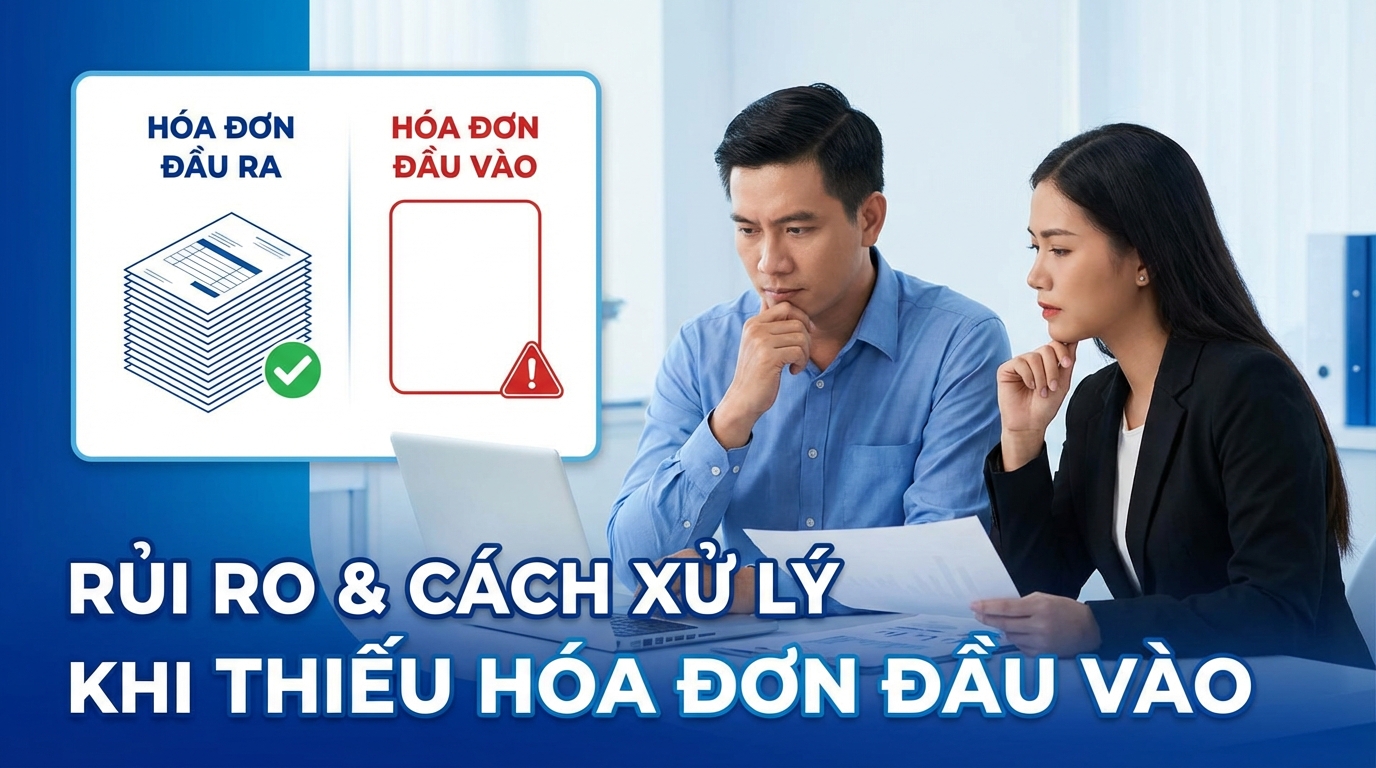
Í daglegum rekstri fyrirtækja, verslana og einstaklinga er ekki óalgengt að mæta þeirri stöðu að hafa gefið út reikning til viðskiptavinar en ekki enn fengið kaupskjöl frá birgja. Þetta getur stafað af seinkun birgjans eða ófullnægjandi innra ferli, en sama hvað orsökin er, felur skortur á innkaupareikningum í sér alvarlegar afleiðingar.
Þetta er ekki aðeins tæknilegt bókhaldsmál, heldur hefur það bein áhrif á skattskyldu, leyfilegan kostnað og jafnvel lagalega tilveru fyrirtækisins. Ef ekki er brugðist við þessu tímanlega og á réttan hátt getur fyrirtækið þurft að greiða sektir, verða krafist um vangreidda skatta eða horfast í augu við hættuna á að vera talið nota ólöglega reikninga.
Þessi grein mun hjálpa þér að skilja tengdar lagareglur, sérstakar áhættur vegna skorts á innkaupaskjölum, hvernig á að leita og sannreyna rafræna reikninga, ásamt snjöllum lausnum til að stjórna reikningum til að koma í veg fyrir brot.
Hvað eru innkaupareikningar og hvers vegna eru þeir mikilvægir?
Samkvæmt tilskipun 123/2020/ND-CP eru reikningar opinber bókhaldsskjöl sem seljandi gefur út við afhendingu vöru eða þjónustu. Innkaupareikningar eru skjöl sem fyrirtæki fær frá birgjum þegar þau kaupa hráefni, vörur, þjónustu eða eignir til framleiðslu- og viðskiptastarfsemi.
Hlutverk innkaupareikninga nær ekki aðeins til staðfestingar á kaup- og sölusamningum. Þeir eru einnig grundvöllur til að draga frá virðisaukaskatt, reikna út leyfilegan kostnað við álagningu tekjuskatts fyrirtækja og sanna uppruna vöru þegar yfirvöld framkvæma eftirlit. Skortur á innkaupareikningi þýðir að fyrirtæki getur ekki sannað tilkostnað sem hefur orðið, þrátt fyrir að hafa greitt að fullu.
Leyfir löggjöfin að gefa út út reikninga án innkaupareikninga?
Í samræmi við 9. grein tilskipunar 123/2020, eins og breytt var með tilskipun 70/2025, eru reglur um útgáfu út reikninga tilgreindar sérstaklega sem hér segir:
Fyrir sölu á vörum er tíminn til að gefa út reikning þegar eigenda- eða notendarréttur yfir vörum er afhentur kaupanda, óháð því hvort greiðsla hefur verið móttekin. Fyrir þjónustu skal gefinn út reikningur strax eftir að þjónustan hefur verið veitt, eða þegar greiðsla hefur verið móttekin ef hún er fyrirframgreidd eða greidd á meðan þjónusta er veitt.
Þessi regla krefst ekki þess að fyrirtæki hafi innkaupareikning áður en út reikningur er gefinn út. Þetta þýðir þó ekki að fyrirtæki geti stundað viðskipti frjálst án innkaupaskjala. Löggjöfin krefst þess að allir kaup- og sölusamningar á vörum og þjónustu frá stofnunum eða einstaklingum með rekstrarleyfi hafi reikning. Ef ekki er hægt að framvísa innkaupareikningum þegar þess er krafist, mun fyrirtækið standa frammi fyrir fjölda alvarlegra lagalegra og fjárhagslegra afleiðinga.
Sérstakar áhættur vegna skorts á innkaupareikningum
Tap á rétti til að draga frá virðisaukaskatt
Þegar engir gildir innkaupareikningar eru til staðar fær fyrirtækið ekki að draga frá virðisaukaskatt sem greiddur var til birgjans. Þetta eykur verulega þá upphæð sem þarf að greiða í skatt. Til dæmis, ef þú selur vörur og gefur út reikning upp á 220 milljónir króna, þar af 20 milljónir í virðisaukaskatt, en áttir enginn kaupareikning til að draga frá, verður þú að greiða allar 20 milljónirnar í stað aðeins mismunsins á út- og innkomuskatti.
Kostnaður ekki viðurkenndur við álagningu skatta
Til þess að kostnaður teljist leyfilegur þarf hann að hafa fullnægjandi reikninga og skjöl. Ef innkaupareikningar vantar verður öllum kostnaði við kaup á vörum og þjónustu sleppt úr þeim kostnaði sem hægt er að draga frá við útreikning á tekjuskatti fyrirtækja. Niðurstaðan er sú að skattlagningarhagnaður eykst og fyrirtækið greiðir meira í tekjuskatt en raun ber vitni um.
Hætta á sektum
Samkvæmt tilskipun 98/2020 og breytingum á henni, ef fyrirtæki stundar viðskipti með vörur af óljósan uppruna og upprunastað, getur sektarupphæðin verið allt að tugum milljóna króna, allt eftir verðmæti vörunnar. Nánar tiltekið, ef verðmæti vörunnar er 100 milljónir króna eða meira, getur sektin verið frá 40 til 50 milljónum króna.
Verður krafist um vangreidda skatta og dráttarvexti
Þegar skattyfirvöld framkvæma eftirlit og athugun munu þau bera saman innkaupa- og útflutningsreikninga. Ef upplýsingar um innkaupapappír vantar, getur fyrirtækið orðið fyrir skattkröfum fyrir bæði virðisaukaskatt og tekjuskatt fyrirtækja, ásamt dráttarvöxtum á dag. Þetta er umtalsvert fjárhagslegt tjón, sérstaklega fyrir lítil fyrirtæki.
Áhrif á orðspor og viðskiptarekstur
Skortur á gagnsæi í bókhaldi vekur grun um lögmæti viðskipta hjá samstarfsaðilum, bönkum og stjórnvöldum. Þetta hefur áhrif á getu til að fá lán, taka þátt í útboðum og eiga samstarf við stóra samstarfsaðila.
Hætta á refsiverðri ábyrgð
Ef grunur leikur á svikum eða notkun ólöglegra reikninga getur fyrirtækið átt yfir höfði sér refsiverða ábyrgð. Þetta er alvarlegasta áhættan, sem getur leitt til fangelsisrefsingar eða stöðvunar á starfsemi fyrirtækisins.
Hvernig á að leita að og staðfesta rafræna innkaupareikninga
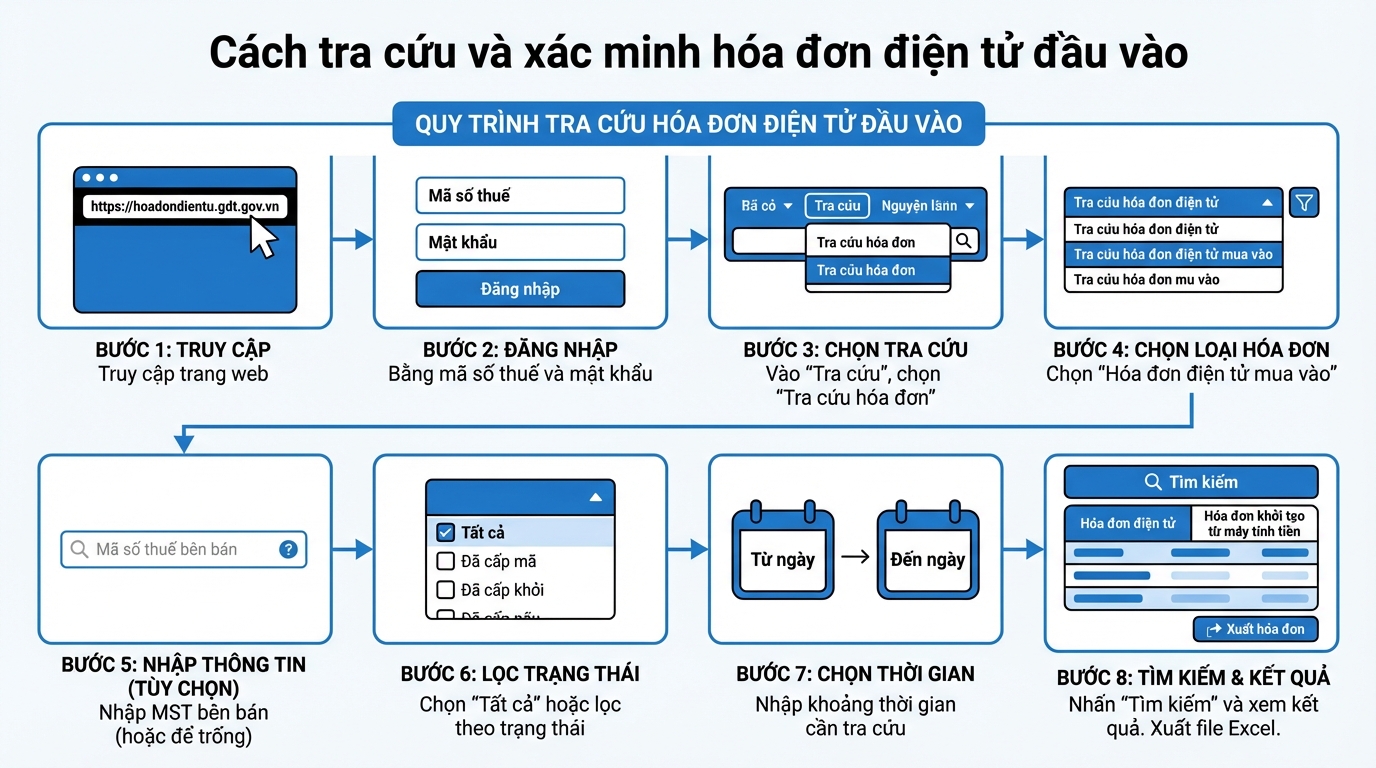
Til að stjórna og athuga lögmæti innkaupareikninga með virkum hætti geta fyrirtæki leitað beint á vefgátt skattstofu. Hér er ítarleg skref-fyrir-skref leiðbeining:
Skref 1: Farðu á vefsíðuna https://hoadondientu.gdt.gov.vn
Skref 2: Skráðu þig inn með skattnúmerinu þínu og lykilorði sem skattyfirvöld hafa útgefið.
Skref 3: Í aðalviðmótinu skaltu velja „Leit“ og síðan „Leita að reikningum“.
Skref 4: Veldu síðan „Leita að rafrænum innkaupareikningum“.
Skref 5: Sláðu inn skattnúmer seljanda ef þú vilt leita að reikningum frá tilteknum birgi. Ef þú vilt skoða alla innkaupareikninga geturðu skilið þetta reit auðan.
Skref 6: Veldu „Allt“ undir „Athugunarniðurstöður“ eða síaðu samkvæmt tiltekinni stöðu ef þörf krefur.
Skref 7: Sláðu inn tímabilið sem þú vilt leita á undir „Reikningsdagsetning“.
Skref 8: Smelltu á „Leita“. Kerfið mun sýna niðurstöður undir tveimur flipum: „Rafrænir reikningar“ (sem inniheldur reikninga með skattmerki) og „Reikningar stofnaðir úr POS-skjal“ (ef við á).
Ef þú þarft að flytja út lista yfir reikninga geturðu smellt á hnappinn „Flytja út reikninga“ til að hlaða niður Excel skrá til að bera saman og geyma.
Lausn fyrir snjalla reikningsstjórnun með GTG CRM
Til að forðast hættu á skorti á innkaupareikningum og tryggja lagalega samræmi, þurfa fyrirtæki að hafa ítarlegt og sjálfvirkt kerfi til að stjórna skjölum. GTG CRM býður upp á alhliða reikningsstjórnun, sem hjálpar fyrirtækjum að hafa fulla stjórn á bæði útflutnings- og innkaupareikningum.
Sjálfvirk og nákvæm útgáfa útflutningsreikninga
GTG CRM gerir fyrirtækjum kleift að gefa út rafræna útflutningsreikninga strax eftir sölufærslu. Kerfið samstillir upplýsingar sjálfkrafa frá pöntunum, sem sparar tíma og dregur úr villum. Allir reikningar eru geymdir á öruggan hátt, auðvelt að leita að og bera saman þegar þörf krefur.
Sjálfvirk söfnun og stjórnun innkaupareikninga
Ein af áberandi eiginleikum GTG CRM er geta þess til að safna innkaupareikningum sjálfkrafa. Kerfið tengist beint við tölvupóst, hleður sjálfkrafa niður og geymir alla innkaupareikninga (reikninga sem sendir eru á tölvupóstinn). Þetta gerir það að verkum að starfsfólk bókhalds þarf ekki lengur að hafa áhyggjur af glötuðum skjölum eða að gleyma að bera saman reikninga.
Hagnýt ávinningur af notkun GTG CRM
Í fyrsta lagi hafa fyrirtæki alltaf fullnægjandi innkaupskjöl til að sanna uppruna vöru, forðast sektir eða skattkröfur. Í öðru lagi er samanburður á innkaupa- og útflutningsreikningum einfaldur og fljótur, sem hjálpar til við að greina frávik eða skorti í tæka tíð. Í þriðja lagi geta fyrirtæki dregið virðisaukaskatt að fullu, hagrætt skattaskuldbindingar og dregið úr óþarfa kostnaði.
Í, öll skjöl eru vistuð rafrænt og auðvelt er að nálgast þau þegar þörf krefur fyrir skýrslugerð, úttektir eða skattaskil. Að lokum hjálpar kerfið fyrirtækjum að fara að öllum lagalegum reglum um reikninga, forðast lagalega áhættu og vernda orðspor fyrirtækisins.
Niðurstaða
Útgáfa úttekninga án innkominna reikninga er ekki aðeins tæknilegt vandamál heldur felur einnig í sér lagalega og fjárhagslega áhættu. Fyrirtæki þurfa að vera virk í því að hafa strangt eftirlit með skjölum, nota stuðningsverkfæri til að sjálfvirka ferli og tryggja fulla samræmi við reglugerðir. GTG CRM með möguleika á að gefa út úttekningar og sjálfvirkt safna innkomnum reikningum er alhliða lausn sem hjálpar fyrirtækjum að starfa á gegnsærari, skilvirkari og öruggari hátt á stafrænu tímabili.
Breyttu því sem þú hefur lesið í raunverulegar niðurstöður — notaðu það strax með GTG CRM, ókeypis.
Notaðu það strax