In recent years, selling on multiple e-commerce platforms has become a popular trend. Instead of just selling on one platform, many shop owners expand to Shopee, Lazada, and TikTok Shop to reach more customers.
Ms. Lan Anh, 35, is one of them. She has been selling women's fashion online for nearly 3 years and currently sells her products on all three platforms. By effectively leveraging traffic from these platforms, her store has stable revenue and a high rate of returning customers.
However, as orders began to increase, multi-channel selling also brought challenges she hadn't anticipated.
When Orders Increase, Management Becomes Chaotic
Every day, Ms. Lan Anh has to process about 40–60 orders from three different platforms. What seems like a simple task is actually quite complex.
Every morning, the first thing she has to do is open the management systems of each platform one by one:
- Shopee Seller Center
- Lazada Seller Center
- TikTok Shop Seller Center
She has to check for new orders, print shipping labels, cross-reference product information, and confirm orders.
Switching between multiple systems takes up a lot of her time. Sometimes, just checking orders can take hours every day.
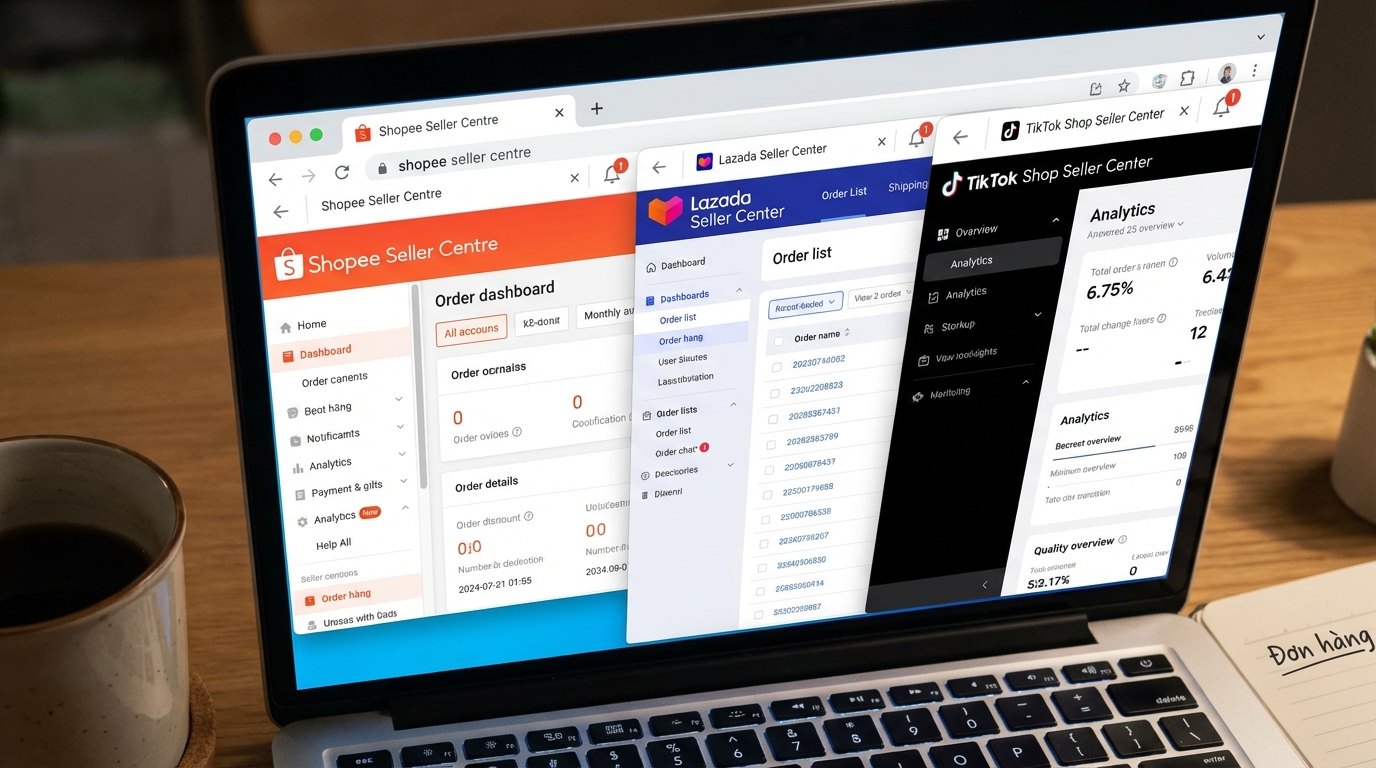
Multi-channel sellers often have to check orders on multiple platforms
Multi-Channel Inventory: A Major Pain Point for Online Sellers
Ms. Lan Anh's biggest difficulty isn't receiving orders, but managing inventory when selling on multiple platforms.
Her store has about 50 clothing designs, each with multiple sizes and colors. The total number of actual SKUs reaches hundreds of variations.
The problem is that each e-commerce platform manages inventory independently.
Real-life Example:
Her actual warehouse has 50 products remaining, but the platforms display:
- Shopee: 30 products
- Lazada: 30 products
- TikTok Shop: 30 products
If a popular product sells out simultaneously on multiple platforms, the total number of orders can exceed the actual stock in the warehouse.
In such cases, she is forced to:
- Cancel orders
- Contact customers to exchange products
- Apologize for being out of stock
This directly impacts the shop's rating and customer experience.
Warehouse Staff Also Face Difficulties in Order Processing
As the number of orders increased, Ms. Lan Anh hired additional warehouse staff to assist with packing and preparing goods.
However, because orders are spread across different platforms, preparing the goods also became chaotic. Staff frequently have to ask:
- Which platform is this order from?
- Where is the order ID?
- What is the product to be picked from the warehouse?
Just cross-referencing orders with products in the warehouse takes a considerable amount of time.
During peak days, errors in packing or preparing goods are also more likely to occur.
As Tax Regulations Change, Issuing Invoices Becomes More Complicated
In addition to order and inventory issues, Ms. Lan Anh also faces the requirement of issuing electronic invoices when customers request VAT invoices.
Previously, whenever a customer requested an invoice, she had to:
- Reopen the order information on the platform
- Enter the data into the electronic invoice software
- Double-check the products and quantities
This process wasn't overly complicated, but as the number of orders increased, manual data entry easily led to mistakes and took up too much time.
She realized that if she wanted to continue expanding her business, she needed a system that could connect all aspects of her sales operations.
GTG CRM – The Solution to Centralize All Sales Activities
After researching various multi-channel sales management tools, Ms. Lan Anh decided to try GTG CRM.
What caught her attention was that this system not only managed orders but also connected inventory, products, and invoices within a single platform.
Creating Warehouses in the System
The first thing she did was create warehouses within GTG CRM.
She entered basic information such as:
- Warehouse name
- Warehouse address
- Warehouse manager
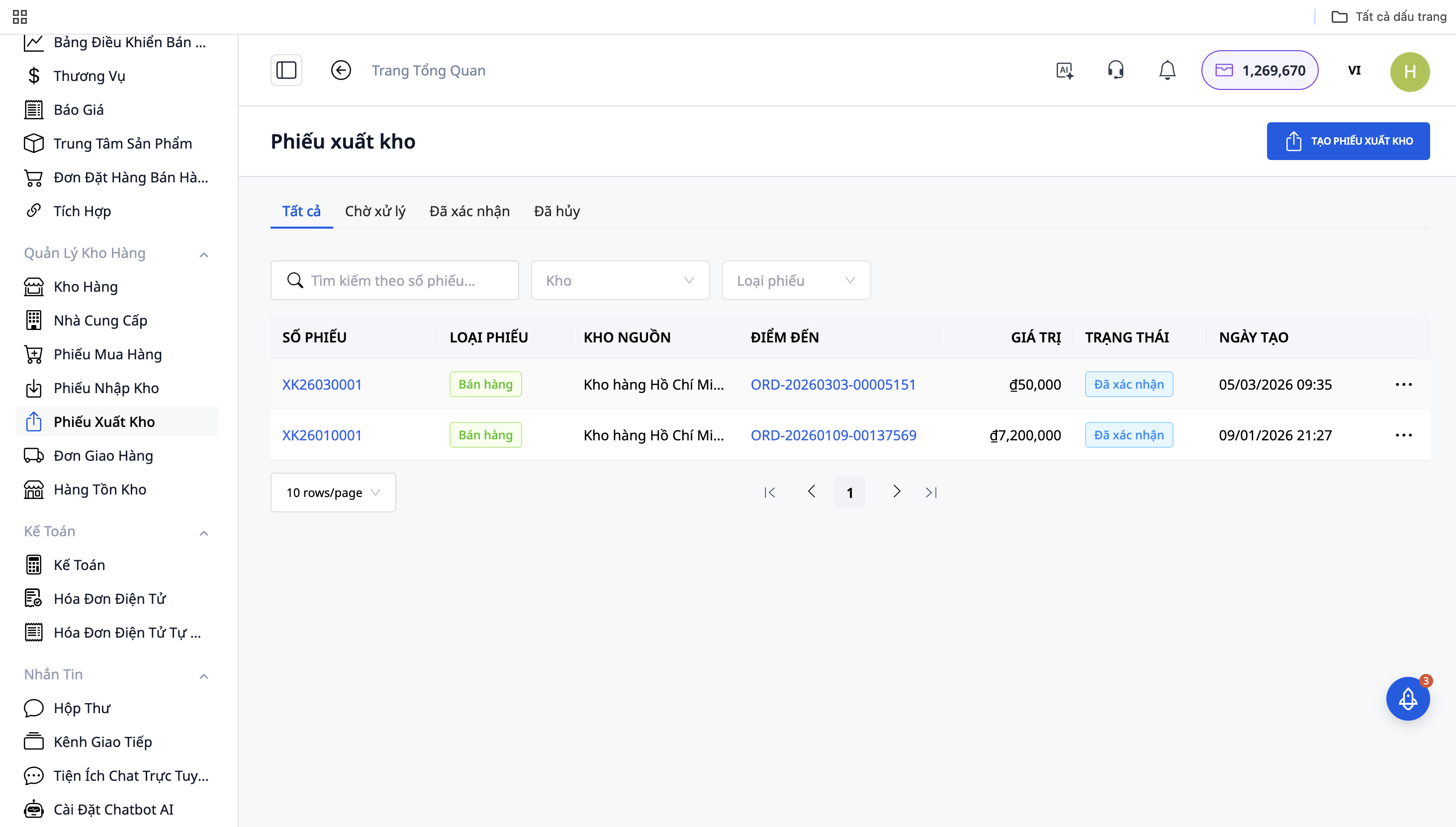
As a result, all future warehouse receiving and shipping activities are recorded in the system.
Creating Products and SKUs
Next, she imported all her products into the Product Hub.
Each product was assigned a unique SKU, for example:
DAM-LUA-D1AO-KHOAC-K2QUAN-JEAN-J3
Thanks to SKUs, the system can identify the same product even when sold on different platforms.
This helps in more accurate inventory management.
Connecting Shopee, Lazada, and TikTok Shop
After setting up her warehouses and products, she connected GTG CRM to her sales accounts on the platforms.
Once the connection was complete, a single button press to "sync" brought orders from:
- Shopee
- Lazada
- TikTok Shop
all into one unified interface.
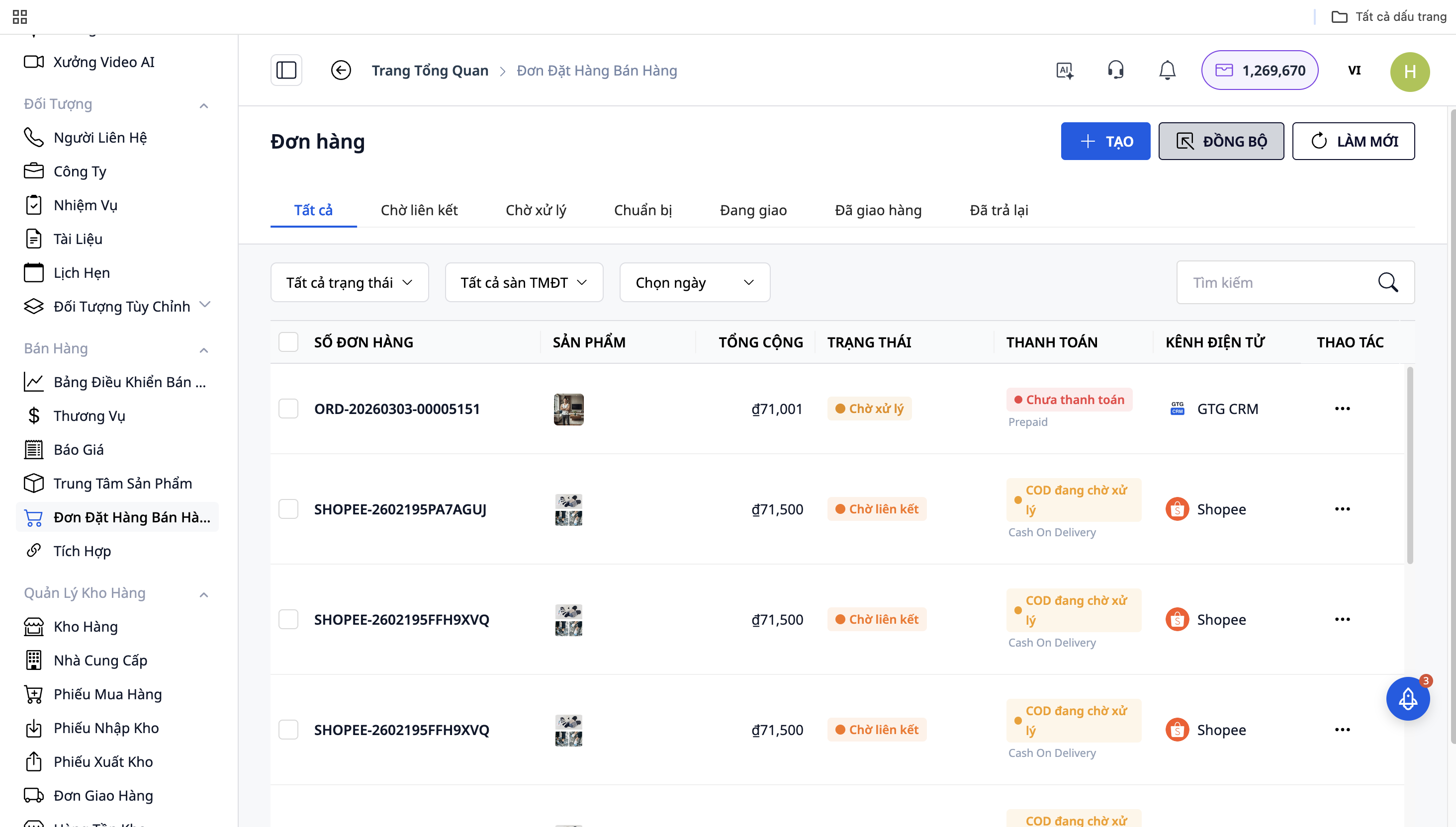
Orders are consolidated into a single location
The Order Processing Workflow Becomes Simpler
After using GTG CRM, Ms. Lan Anh's sales process has changed significantly.
The New Workflow:
- Orders appear in the GTG CRM dashboard
- She changes the order status to pending pickup
- The system generates a delivery order
- Warehouse staff prepare the products according to the delivery order
This way, warehouse staff no longer need to check each platform; they only need to work on one interface.
Electronic Invoices Are Generated Automatically
Another feature that helps Ms. Lan Anh save time is the automatic generation of electronic invoices.
She only needs to set it up once in the settings:
- Invoice creation time
- Invoice status
- Default invoice template
After an order is confirmed for shipment, the system automatically creates the corresponding invoice.
If an order's product quantity changes, GTG CRM also supports automatic adjustment invoices, making tax declarations more accurate.
Results After 6 Months of Using GTG CRM
After about half a year of using the system, Ms. Lan Anh has noticed significant improvements:
Time Savings
She used to spend many hours each day checking orders on each platform. Now, everything is consolidated on a single dashboard.
Savings: 3–4 working hours per day
Accurate Inventory Management
Inventory management has become more precise. The system automatically updates stock quantities after each order, significantly reducing instances of overselling.
Order cancellation rate reduced: from 8% to 2%
Improved Ratings
Shop ratings on the platforms have also improved due to fewer order cancellations and more accurate deliveries.
More Efficient Staff Performance
Her warehouse staff also work more efficiently as they no longer need to manually cross-reference orders as before.
Conclusion
Ms. Lan Anh's story is a typical example of the challenges faced by many multi-channel sellers.
When order volume is low, manual management might still be controllable. However, as the number of orders increases and sales occur on multiple platforms simultaneously, the lack of a centralized management system can lead to a chaotic business operation.
With such a system, sellers can operate their stores more efficiently and focus on business growth rather than handling manual tasks.
Your business can achieve similar results — start for free.
Start Your Journey