Prompt AI là gì? Tại sao nhiều người dùng không prompt ra đúng ý?
Prompt AI là câu lệnh hoặc chỉ dẫn bạn đưa ra cho công cụ trí tuệ nhân tạo (AI) để yêu cầu thực hiện một nhiệm vụ cụ thể. Ví dụ, khi bạn viết prompt AI để tạo nội dung blog hoặc ý tưởng quảng cáo, kết quả tốt hay dở phụ thuộc tới 80% vào chất lượng prompt. Nếu prompt thiếu bối cảnh, mục tiêu mơ hồ hoặc không chỉ định dạng đầu ra, AI sẽ trả lời chung chung, dài dòng và khó áp dụng cho SEO hay Ads.
Vấn đề không phải AI "yếu", mà nằm ở brief chưa rõ ràng. Nhiều marketer khi viết prompt AI thường bỏ qua yếu tố này, dẫn đến nội dung không tối ưu từ khóa, thiếu cấu trúc hoặc không phù hợp với đối tượng. Kết quả là, bạn mất thời gian chỉnh sửa, thậm chí phải bắt đầu lại từ đầu. Hiểu rõ cách viết prompt AI sẽ giúp bạn kiểm soát đầu ra tốt hơn, tăng hiệu quả công việc.
Thành phần cơ bản của một prompt AI content hiệu quả
Khi viết prompt AI, không phải lúc nào cũng cần dùng hết các thành phần, nhưng nắm vững chúng sẽ giúp prompt của bạn rõ ràng hơn:
- Instruction (Yêu cầu): Xác định AI cần làm gì, dành cho ai và mục tiêu là gì. Ví dụ: "Viết bài blog về prompt AI để hướng dẫn marketer mới bắt đầu."
- Context (Ngữ cảnh): Cung cấp thông tin nền như sản phẩm, thị trường, chân dung khách hàng, USP (Unique Selling Point) và quy chuẩn thương hiệu.
- Input Data (Dữ liệu đầu vào): Tài liệu cụ thể, đoạn nội dung, câu hỏi hoặc vấn đề cần giải quyết.
- Output (Đầu ra): Chỉ định định dạng mong muốn, như độ dài, cấu trúc (H2/H3, bảng, checklist), giọng văn hoặc loại tệp.
Công thức viết prompt AI content chuẩn
Một công thức đơn giản để viết prompt AI: [Vai trò] + [Nhiệm vụ] + [Ngữ cảnh/Dữ liệu] + [Ràng buộc/Quy chuẩn] + [Định dạng Output] + [Giọng văn].
Ví dụ: "Bạn là chuyên gia SEO. Nhiệm vụ: Đề xuất 10 chủ đề blog về prompt AI. Ngữ cảnh: Đối tượng marketer Việt Nam, tập trung vào cách viết prompt AI cho content. Ràng buộc: Mỗi chủ đề phải có từ khóa chính. Đầu ra: Bảng với cột [Chủ đề] [Từ khóa]. Giọng văn: Chuyên nghiệp, dễ hiểu."
Công thức này giúp prompt AI của bạn ngắn gọn nhưng đầy đủ, giảm nguy cơ "không ra đúng ý".
Cách viết content với AI đỉnh cao
Để viết prompt AI hiệu quả, bạn cần tập trung vào việc làm rõ yêu cầu, ngữ cảnh và mong muốn của bạn để AI đưa ra câu trả lời chính xác nhất dưới đây là các tips:
Viết rõ ràng trong câu lệnh
Sai: “Hãy viết bài quảng cáo về mỹ phẩm thiên nhiên”
Đúng: “Hãy viết 3 mẫu quảng cáo Facebook cho shop mỹ phẩm thiên nhiên, đối tượng khách hàng là nữ 25–35 tuổi, tập trung vào lợi ích ‘làm đẹp an toàn’, độ dài dưới 100 chữ, có CTA rõ ràng.”
Tip: Luôn hình dung trước output bạn muốn để đưa thông tin chính xác.
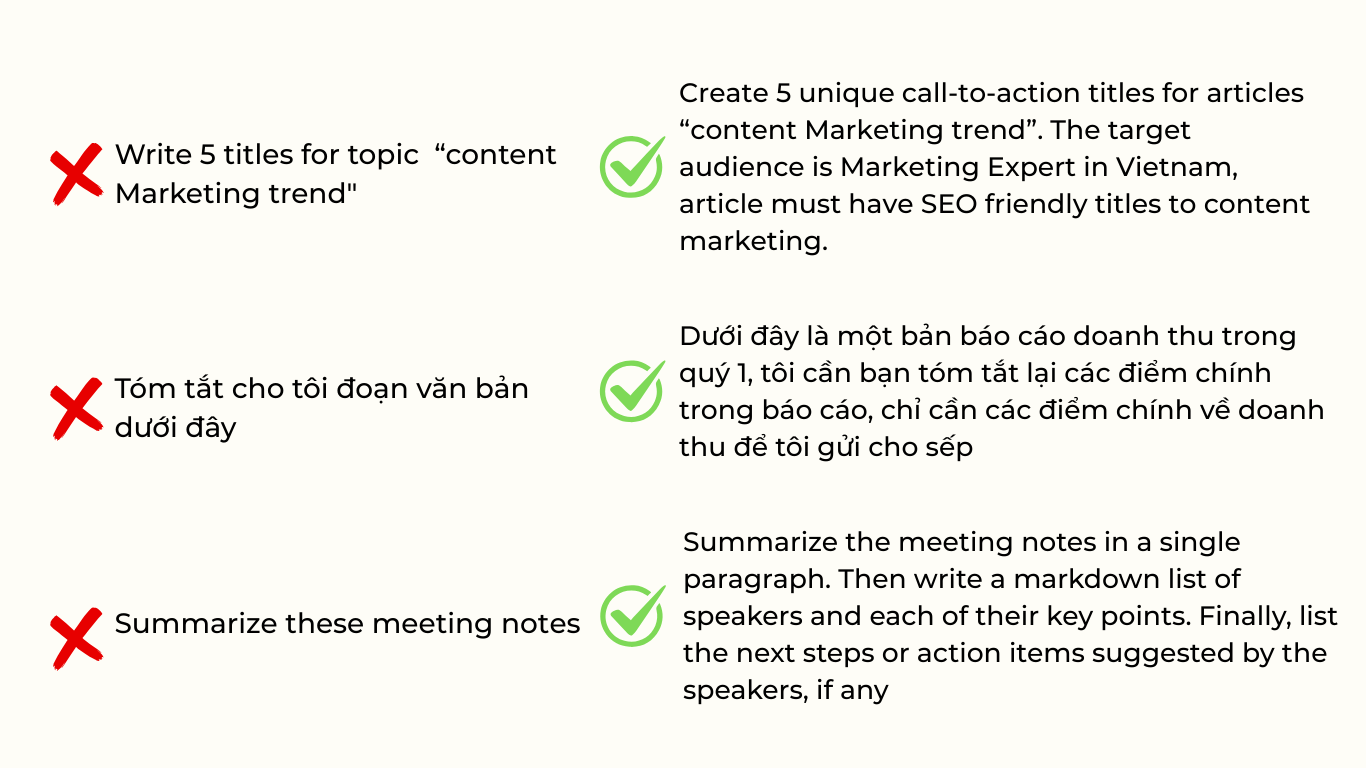
Bạn cần cung cấp đủ thông tin và ngữ cảnh cho câu lệnh của mình
Cá nhân hoá AI theo vai trò
Bạn có thể yêu cầu AI đóng vai. Ví dụ:
“Bạn là một copywriter chuyên viết quảng cáo Facebook, hãy tạo 5 mẫu tiêu đề thu hút cho sản phẩm serum chống lão hoá, độ dài dưới 30 ký tự.”
Điều này giúp AI “vào vai” và tạo nội dung sát thực tế hơn.
Đưa ví dụ mẫu
Đưa ví dụ giúp AI hiểu chính xác phong cách bạn muốn.
Ví dụ: “Hãy viết bài blog 800 từ về cách chọn laptop cho sinh viên. Văn phong giống như ví dụ dưới đây: ‘Ngắn gọn, gần gũi, nhiều ví dụ thực tế’.”
Chia nhỏ yêu cầu lớn
Thay vì yêu cầu AI viết một bài 3.000 từ ngay, hãy chia nhỏ thành từng ý như sau:
Bước 1: “Hãy viết dàn ý chi tiết cho bài blog…”
Bước 2: “Viết phần mở đầu theo dàn ý trên…”
Bước 3: “Viết từng H2 chi tiết…”
Cách này giúp nội dung chặt chẽ, logic, không bị lan man.
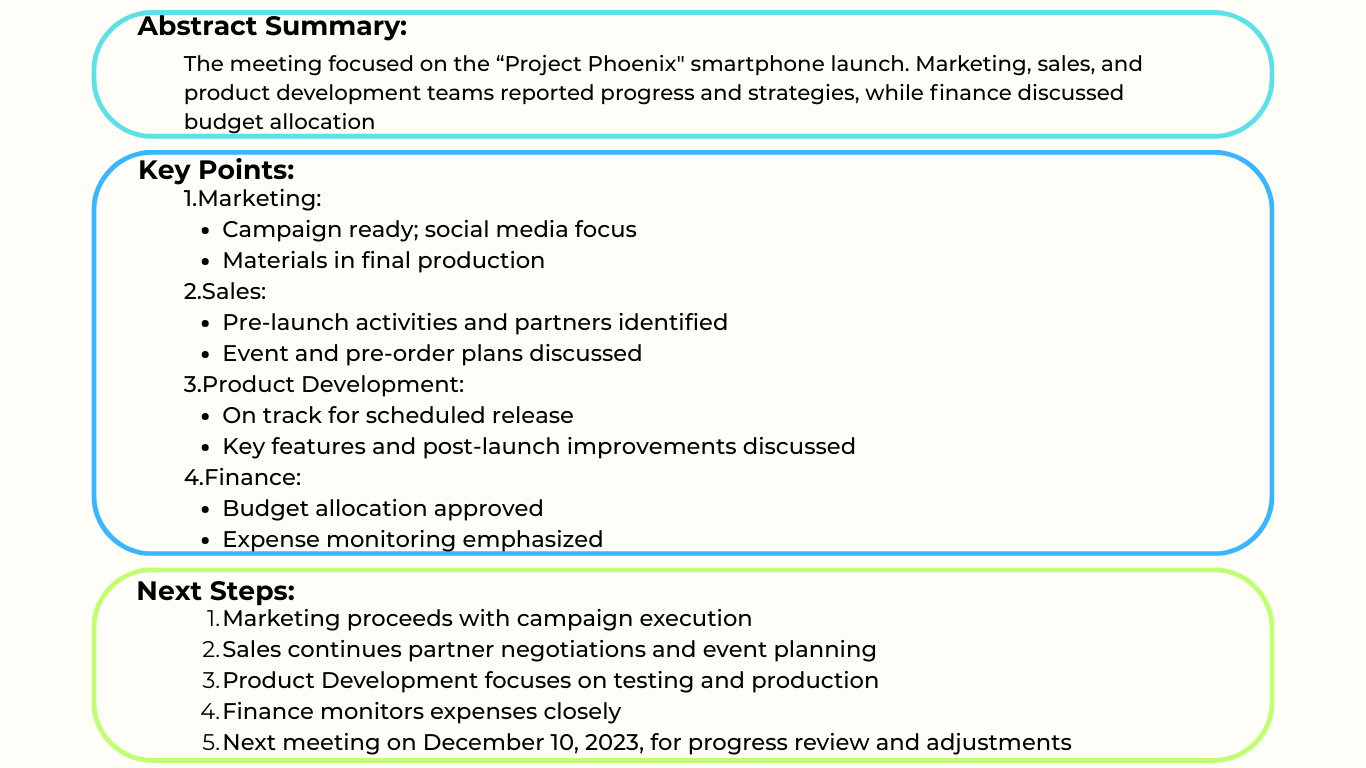
Ví dụ thực tế câu prompt với yêu cầu tóm tắt cuộc họp
Xác nhận và đánh giá lại
Một điều mà rất nhiều bạn bỏ qua là không nhờ AI kiểm tra lại câu trả lời, hãy để AI tự kiểm tra lại theo các tiêu chí mà bạn đưa ra.
Ví dụ: “Hãy kiểm tra lại xem bài viết có bám sát tiêu đề ‘Chiến lược SEO cho shop online’ không, có logic, mạch lạc, và hấp dẫn chưa. Nếu chưa, hãy chỉnh sửa lại.”
Một số giới hạn và lưu ý khi Prompt AI
Để viết prompt AI hiệu quả, cần nắm rõ giới hạn của AI.
- Giới hạn context window: Không nhồi quá nhiều thông tin vào một lượt. Với nội dung lớn, chia thành nhiều phần nhỏ để AI trả lời chính xác hơn. Khi cần nhắc lại, tóm tắt ngắn dữ liệu cũ.
- Giới hạn bộ nhớ tạm: Chat dài, AI có thể quên chi tiết. Sau 5-6 lượt, nhắc lại yêu cầu cốt lõi trong 2-3 dòng.
- Tình trạng “ảo tưởng/đoán mò” (hallucination): Yêu cầu AI "Chỉ dùng thông tin tôi cung cấp. Nếu không chắc chắn, hãy trả lời “Không có đủ dữ liệu để khẳng định”. Với dữ kiện cần kiểm chứng, yêu cầu nguồn hoặc cách kiểm tra.
Ứng dụng thực tế: Tạo một bài blog chuẩn SEO từ A-Z bằng cách viết Prompt AI (Copy & dùng ngay)
Dưới đây là workflow mẫu để tạo bài blog về "máy pha cà phê mini" bằng prompt AI.
Bước 1: Nghiên cứu chủ đề & keyword: "Bạn là chuyên gia SEO. Mục tiêu: Xây dàn chủ đề blog 90 ngày cho niche “máy pha cà phê mini”. Đầu ra: Bảng 5 cột [Chủ đề] [KW chính] [KW phụ] [Search intent] [Ưu tiên: Cao/Trung bình/Thấp]. Đối tượng: Nam/nữ 22–35, thích tự pha cà phê tại nhà, ngân sách 2–5 triệu."
Bước 2: Dàn ý chi tiết cho 1 bài: "Hãy tạo dàn ý chi tiết cho bài “Cách chọn máy pha cà phê mini cho căn hộ nhỏ”. Yêu cầu: 1 intro (120-150 từ), 5-7 H2, mỗi H2 có 1-2 H3, 1 kết luận + CTA. Thêm danh sách FAQ 5 câu theo People Also Ask."
Bước 3: Viết từng phần (chia nhỏ): "Viết phần Giới thiệu 120-150 từ, giọng trung lập–thân thiện, tránh sáo rỗng, có hook 1 câu đầu." Sau đó viết từng H2 như "Viết H2.1 (200-250 từ): “Xác định nhu cầu sử dụng”. Có ví dụ tình huống (1 người, 2 người), tần suất dùng, loại cà phê phù hợp."
Bước 4: Tối ưu SEO on-page: "Tạo Meta Title (≤60 ký tự), Meta Description (≤160 ký tự), Slug URL, TL; DR 2 câu. Chèn từ khóa chính 3-4 lần tự nhiên; thêm 5 từ khóa phụ ở các H2/H3."
Bước 5: Tự kiểm lỗi & sửa đổi: "Hãy tự chấm bài theo 5 tiêu chí: Tính hữu ích, chiều sâu, cấu trúc rõ, độ mượt, đáng tin (1-5). Đề xuất 5 chỉnh sửa ưu tiên cao để nâng điểm. Sau đó áp dụng vào bản cuối."
FAQ - Những câu hỏi thường gặp khi học cách viết Prompt AI
- Prompt AI dài mới tốt? Không. Quan trọng là rõ mục tiêu + đủ bối cảnh + output cụ thể.
- Làm sao để AI “đúng brand voice”? Cung cấp mẫu văn phong (2–3 đoạn), hướng dẫn quy tắc, từ nên/không nên dùng.
- Prompt AI cho SEO khác gì prompt cho Ads? SEO cần độ sâu & cấu trúc, Ads cần ngắn–sắc–test biến thể.
- Làm sao giảm “ảo tưởng” khi viết prompt AI? Yêu cầu không bịa, đòi nguồn/kiểm chứng, hạn chế câu hỏi quá mơ hồ.
- Có nên 1 prompt AI làm tất cả? Nên chia nhỏ theo giai đoạn (nghiên cứu → dàn ý → viết → tối ưu → kiểm lỗi).
Bằng cách áp dụng các tip trên, bạn sẽ viết prompt AI hiệu quả hơn, giúp nội dung SEO của mình nổi bật và đạt kết quả mong muốn. Nếu bạn đang gặp khó khăn với prompt AI, hãy thử workflow mẫu ngay hôm nay!
Kết luận
Sử dụng AI hiệu quả không nằm ở công cụ, mà ở cách bạn prompt. Một prompt tốt sẽ biến AI thành cộng sự thực sự giúp bạn tạo nội dung SEO, quảng cáo, email hay social post chất lượng.
Hãy thử ngay checklist này cho công việc của bạn. Bạn sẽ thấy AI không chỉ tiết kiệm thời gian mà còn nâng cao chất lượng nội dung, từ đó giúp bạn tăng traffic, tỷ lệ chuyển đổi và doanh thu.
Biến những gì vừa đọc thành kết quả thực tế — áp dụng ngay với GTG CRM, miễn phí.
Áp dụng ngay