Don't Create Content Based on Inspiration, Create it Based on a Funnel
Are you creating content haphazardly, "posting whatever seems interesting" without a clear direction? This is a common situation, especially for small businesses and individuals in business. The consequences are:
- Fragmented Content: Potential customers encounter information in a piecemeal fashion, not clearly understanding the product, service, or value you offer.
- Lack of "Conversion Momentum": Content doesn't guide readers through specific steps, making it difficult for them to make purchasing decisions.
- Missed Opportunities: Customers easily overlook your brand because they don't find a connection or a solution to their problems.
For content to be truly effective, you need to follow the customer journey, also known as the marketing funnel. This is a logical process that guides potential customers from when they know nothing about you to when they take purchasing action and become loyal customers.
This funnel is often described through stages: Awareness - Interest - Desire - Action - Retention.
By understanding which stage a customer is in, you can provide the right type of content they need, at the right time, to encourage them to move deeper into the funnel.
Funnel Content Strategy - What Should You Post at Each Stage?
To turn strangers into loyal customers, building a robust content strategy, flexibly adjusted for each stage of the funnel, is crucial. Here's the strategy you should focus on at each step to maximize effectiveness:
Stage 1: Awareness
In this initial stage, your main goal is to introduce your brand and solutions to people who know nothing about you. Content here should focus on educating, highlighting problems, and sharing value, without being directly sales-oriented:
- Blog posts, infographics, videos sharing industry insights
- Useful tips, basic guides related to your field
- Real-life stories about common problems your target customers face
- Updates on new trends, interesting statistics
Main Goal: Capture the attention of strangers, position yourself as a reliable source of information.
Stage 2: Interest
Once customers have recognized and become interested in you, it's time to delve deeper into positioning your product/service. Content at this stage will spark their interest by clarifying the benefits and unique differentiators you offer. At this stage, your content can be:
- Success case studies, stories of customers who solved problems with your help
- Mini tutorials on how to use a part of the product or a feature
- Behind-the-scenes of production, work processes to increase transparency
- Detailed answers to frequently asked questions (FAQs)
Main Goal: Encourage potential customers to learn more, and you can start inviting them to fill out forms, receive gifts (ebooks, checklists) to collect lead information.
Stage 3: Desire
At this stage, potential customers are interested and actively seeking solutions, comparing options. Your content needs to focus on building strong trust and creating a powerful desire for them to want to own your product/service. You can implement content based on the following suggestions:
- Genuine feedback videos, testimonials from satisfied customers
- Detailed product demo videos, showcasing outstanding features
- Articles about specific customer stories
- Personalized content: "Who should use this product?" or "How does this product solve problem X for group Y?"
Main Goal: Reinforce trust, drive the desire to own, often used effectively in nurturing email marketing campaigns or remarketing.
Stage 4: Action
This is the decision-making moment, when you need to "close the deal." Content at this stage must be extremely clear, direct, and create a strong push for customers to make a purchase or sign up for a service. Content at this stage can be:
- Limited-time offers (flash sales, weekend promotions)
- Free trials, special experience packages
- Utilizing scarcity tactics (only X products left, offer ends in Y hours)
- Highly optimized landing pages with clear, visible CTAs
Main Goal: Convert potential customers into actual customers, often combined with immediate follow-up messages or emails after they interact with a CTA.
Stage 5: Retention
The customer journey doesn't end when they make a purchase. This stage focuses on maintaining relationships, creating long-term value, and turning old customers into loyal brand advocates. Accordingly, you must also adapt your content, suggested ideas include:
- Post-purchase care emails, satisfaction surveys
- Birthday wishes, appreciation gifts for loyal customers
- Articles, videos on how to use products more effectively, maximizing features
- Information about new products/services, loyalty programs
- Building customer communities for interaction and experience sharing
Main Goal: Retain customers, encourage repeat purchases (upsell/cross-sell), and turn them into voluntary "ambassadors" for your brand.
GTG CRM - The System to Implement Your Funnel Content Strategy
GTG CRM is an "all-in-one" CRM platform specifically designed to help small and medium-sized businesses, and even solo founders, build and execute effective content strategies. GTG CRM is the powerful tool to support your sustainable growth:
Create Breakthrough Content in an Instant with AI
Short on ideas? Don't have time to write numerous posts, emails, or ad scripts? GTG CRM immediately solves these worries with its powerful AI Content feature:
- Generate Diverse Content: From social media posts, email marketing to landing page content, AI helps you quickly create ideas and drafts with quality.
- Save Time & Money: No need to hire copywriters, no need to rack your brain; you can still produce a large volume of high-quality content.
- Always Have New Ideas: AI helps you discover fresh content angles, diversify your messaging, suitable for each funnel stage.
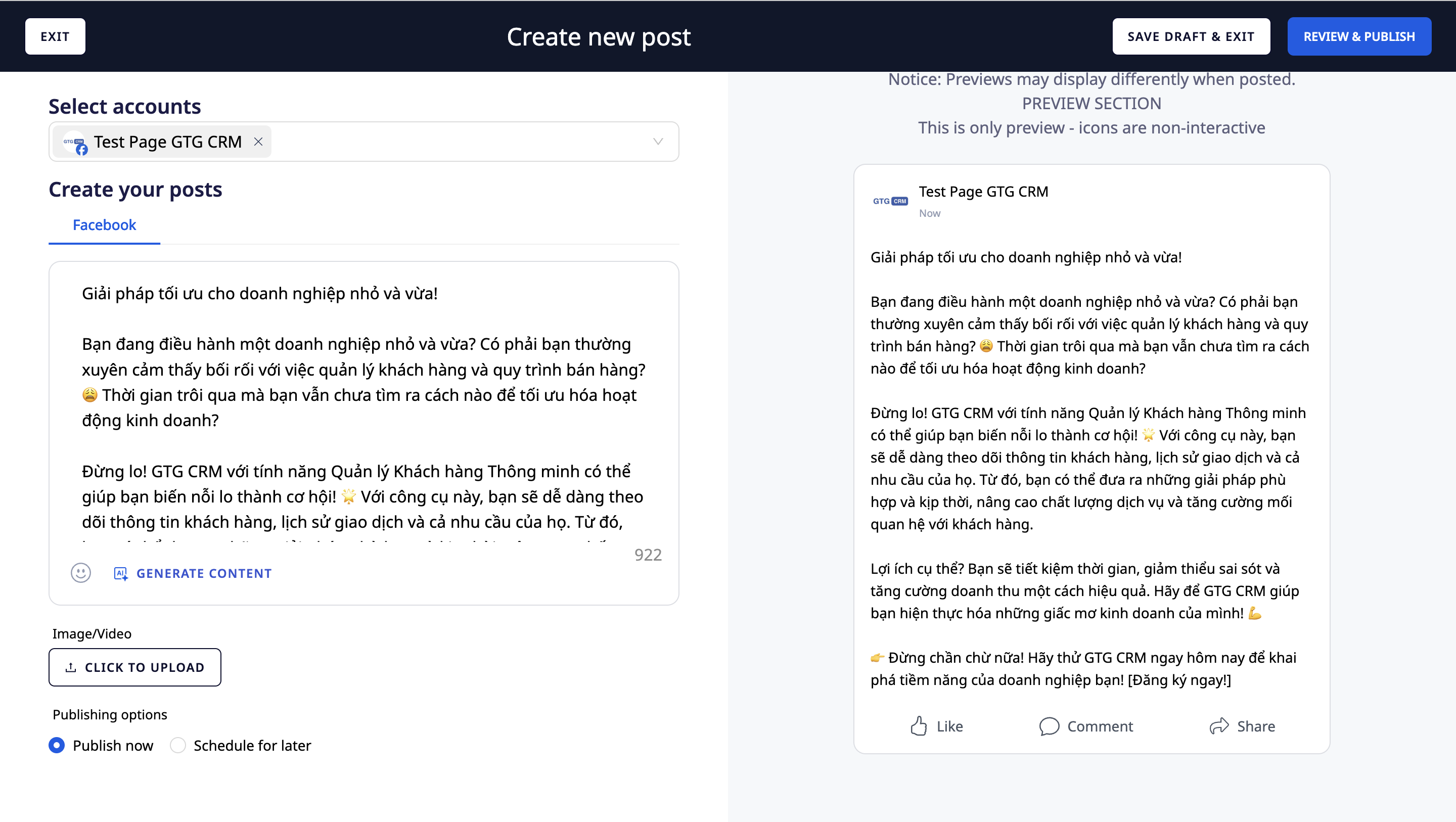
GTG CRM's AI helps you brainstorm engaging content ideas for each platform.
Schedule Multi-Channel Content Posting, No Manual Reminders Needed
Forget about logging into each social media platform to schedule posts. With GTG CRM's Social Hub, you can easily sync and manage all your marketing channels from a single place:
- Connect Popular Platforms: Facebook, YouTube, LinkedIn for easy post scheduling.
- Significant Time and Cost Savings: Centralized management optimizes resources.
- Ensure Consistency: Easily schedule content for specific stages of the customer journey.

Schedule posts according to your plan.
Tag & Segment Customers by Content Reading Behavior
To personalize customer experience and optimize campaigns, understanding the behavior of each potential customer is crucial. GTG CRM helps you do this conveniently and intelligently:
- CRM Feature for Customer Segmentation by Behavior: Segment customers based on their actions. For example, customers coming from an Education landing page will have their information automatically collected by the CRM system and categorized under Education.
- Build Personalized Customer Lists: Segment customers based on their "warmth" level to implement appropriate nurturing strategies.
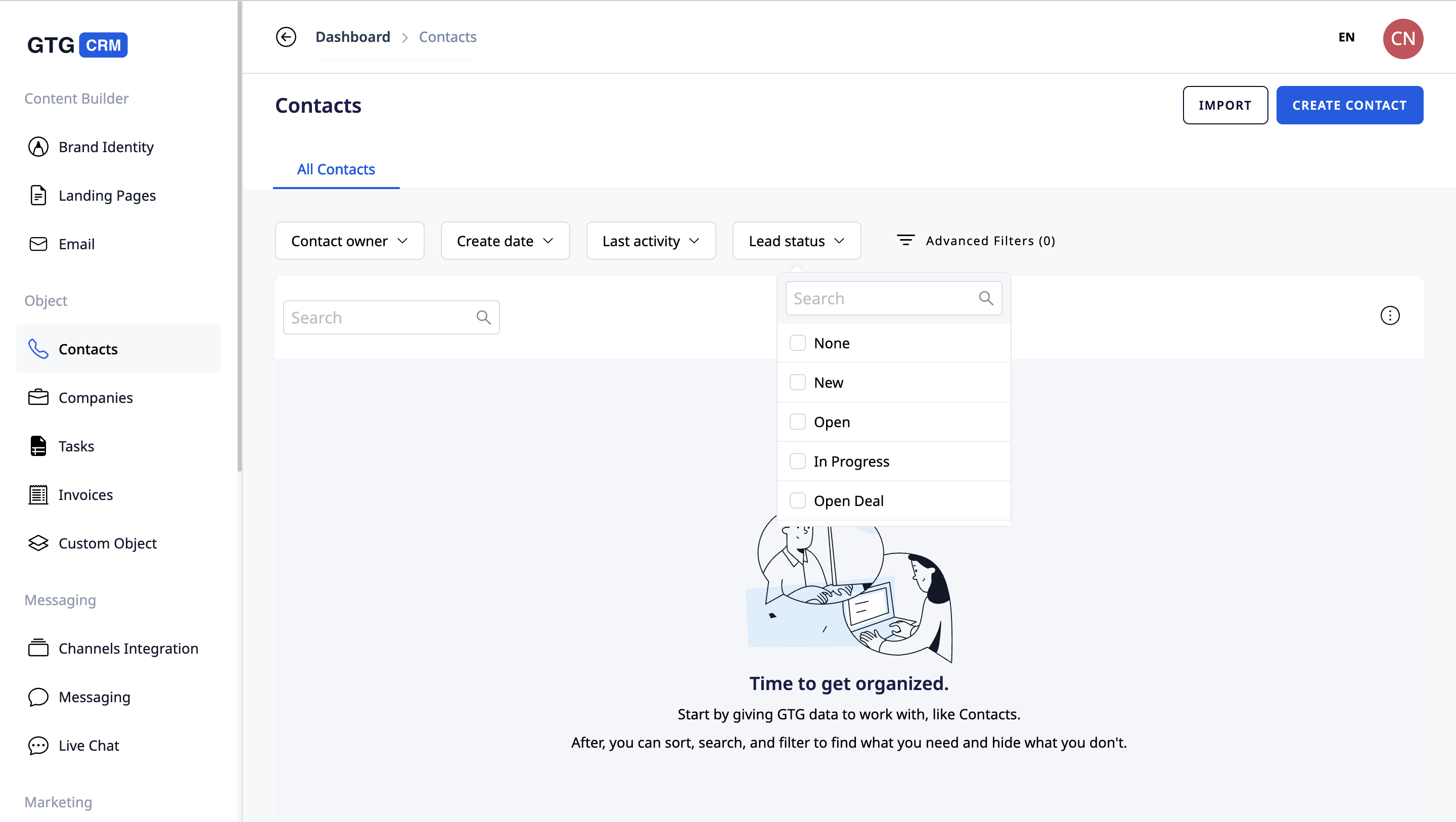
Segment customers by their status.
Send Automated Content to the Right Person at the Right Time
The true power of an effective content strategy lies in its ability to deliver the right message to the right person at the right time. GTG CRM provides powerful automation features to ensure this:
- Automation Workflow: Set up automated email sending processes for leads.
- Scheduled Nurturing Emails: Schedule email dispatches according to your plan, without manual reminders.

GTG CRM allows you to send emails automatically after a specific action.
Conclusion
In an increasingly competitive market, having a strategic approach to content creation not only helps you attract customers but also serves as an effective way to build an automated and sustainable sales system. GTG CRM is the comprehensive solution to empower your business in mastering this process.
Turn what you've just read into real results — apply it now with GTG CRM, for free.
Apply Now