Paljud ettevõtted on veebisaite pikka aega kasutanud, kuid veebisaidid ei ole suutnud oma rolli klientide meelitamisel ja konversioonide toetamisel piisavalt hästi täita. Mõnes kohas eksisteerib veebisait lihtsalt selleks, et see oleks olemas, mõnes kohas ei näe liides eriti halb välja, kuid tulemuslikkus on väga madal, mõnes kohas investeeritakse pidevalt reklaamile, kuid kliendid lahkuvad, jätmata mingit jälge.
See on üsna levinud olukord interneti-ettevõtete puhul, eriti nende puhul, kes soovivad suurendada müügivihjeid, tõsta usaldusväärsust ja ehitada korralikum müügisüsteem. Probleem ei peitu alati tootes või reklaamieelarves. Sageli on veebisait ise takistuseks.
Hea veebisait ei pea olema ainult ilus. See peab aitama kliendil mõista, mida ettevõte pakub, miks teda peaks usaldama, miks peaks kohe ühendust võtma ja mida nad järgmisena tegema peaksid. Kui veebisait neid asju ei tee, siis tõenäoliselt kaotab ettevõte iga päev palju võimalusi.
Miks nõrk veebisait jätab ettevõtted klientidest ilma?
Veebisait on sageli üks tähtsamatest kontaktpunktidest kliendi teekonnal. Nad võivad teid näha reklaamis, sotsiaalmeedias, Google'i otsingutes, e-posti teel või saada soovituse kellegi käest. Kuid kui nad soovivad kontrollida usaldusväärsust, uurida lähemalt või teha otsus, naasevad nad sageli veebisaidile.
Kui veebisait on ebaselge, mittepiisavalt veenev või kasutuskogemus ei ole piisavalt hea, ei pea kliendid enne lahkumist ütlema, et nad on rahulolematud. Nad lihtsalt lahkuvad lehelt.
Väärib märkimist, et paljud ettevõtted arvavad endiselt, et nende veebisait on "korras", sest see töötab endiselt. Kuid töötav veebisait ei tähenda automaatselt, et see toob kliente.
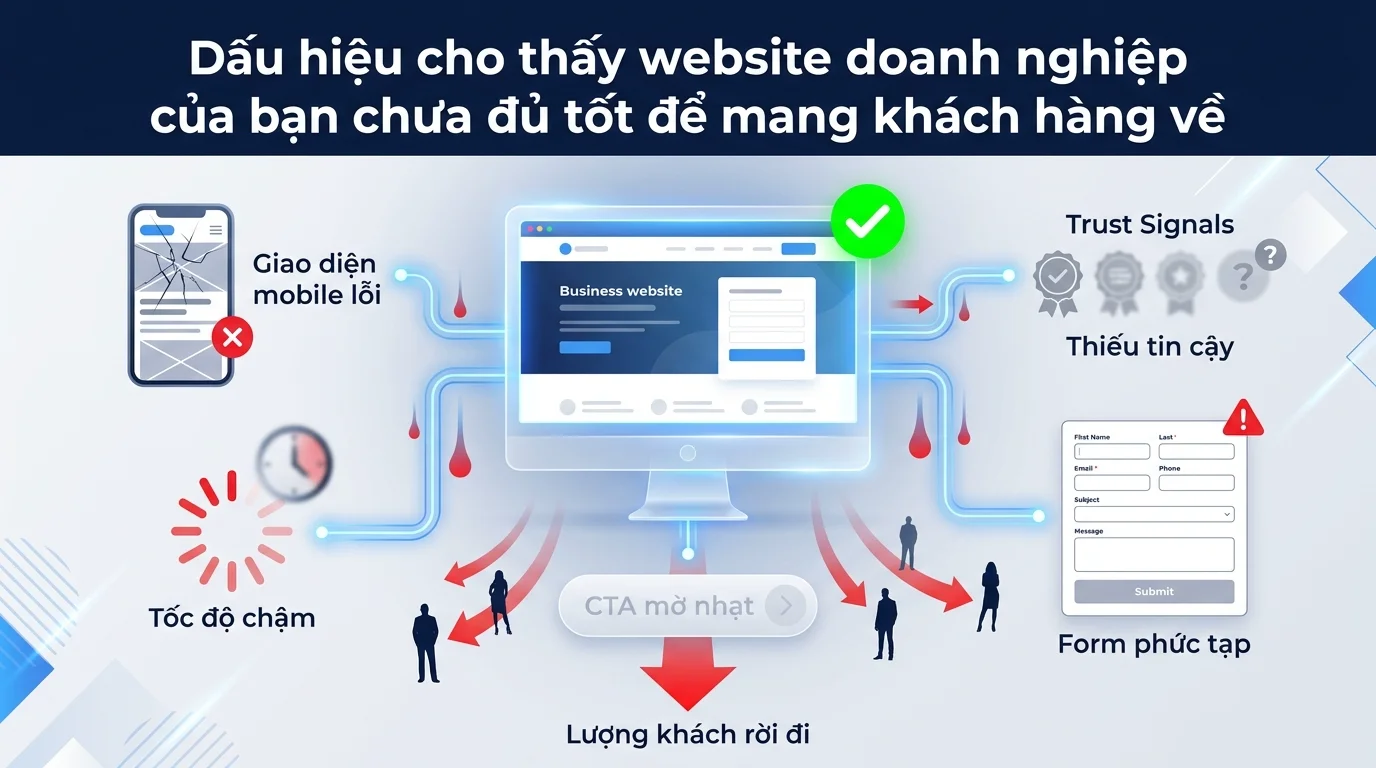
Tšekkinimekirja, mis näitab, et teie ettevõtte veebisait ei pruugi olla piisavalt hea
Siin on mõned väga levinud märgid. Kui teie veebisait vastab mitmele punktile, on aeg tõsiselt selle uuendamise üle mõelda.
1. Selge CTA puudumine
Üks suurimaid vigu ettevõtte veebisaitidel on see, et kliendid saavad neid vaadata, kuid nad ei tea, mida edasi teha.
Kliendid loevad ja ei leia silmapaistvat kontaktinuppu, selget registreerimisvormi, piisavalt tugevat üleskutset tegutsemisele või CTA on paigutatud liiga raskesti leitavasse kohta. Sel juhul, isegi kui nad on huvitatud, on tegutsemise tõenäosus madal.
Tõhus veebisait peab juhendama klienti selgelt edasi: registreeruge konsultatsiooniks, hankige pakkumine, jätke oma kontaktandmed, vaadake demo, ostke kohe või saatke sõnum konsultatsiooni saamiseks. Kui veebisait peatub ainult "tutvustusel", on raske saavutada reaalseid konversioone.
2. Usaldust tekitavate elementide puudumine
Paljudel veebisaitidel on olemas kõik põhiteave, kuid neist puudub üks väga oluline asi: põhjus, miks kliendid peaksid uskuma.
Kliendid, eriti uued, küsivad alati loomulikult mõningaid küsimusi. Kas see ettevõte on usaldusväärne. Kelle jaoks nad on teinud. Kas on olemas tegelikku tagasisidet. Millised on poliitikad. Kas tööprotsess on selge.
Kui veebisaidilt puuduvad sellised elemendid nagu selge tutvustus, tegelikud pildid, klientide tagasiside, juhtumiuuringud, partnerite logod, läbipaistev kontaktteave või võimekust tõendavad dokumendid, on kliendil raske oma andmeid jätta. Nad ei pruugi teile vastuseisata. Nad lihtsalt ei ole piisavalt rahulikud, et sammu edasi astuda.
3. Aeglane lehe laadimiskiirus
See on viga, mis põhjustab paljude veebisaitide klientide kaotuse, millele ettevõte ei pruugi tähelepanu pöörata.
Kui veebisait laeb aeglaselt, lahkuvad kliendid enne, kui jõuavad sisu vaadata. See on eriti ohtlik, kui ettevõte reklaamib, sest iga pooleli jäänud klikk on reaalne rahaline raiskamine.
Aeglane veebisait mitte ainult ei mõjuta kasutajakogemust, vaid vähendab ka kogu liikluse meelitamise tegevuse tõhusust. Olenemata sellest, kui hea sisu on, kui klient ei jõua seda ära oodata, et seda näha, siis veebisait ebaõnnestub juba esimeses etapis.
4. Halb mobiilikogemus
Suur osa praegustest klientidest külastab veebisaite mobiiltelefoniga. Kuid mitte vähesed veebisaidid on endiselt disainitud nii, et need näevad arvutil välja korras, kuid mobiiltelefonis muutuvad segaseks, tekst on väike, pildid nihkes, nupud raskesti vajutatavad, vormid raskesti täidetavad.
Kui mobiilne versioon pole hea, kaotab ettevõte suure osa konversioonivõimalustest. Kliendid ei "anna andeks" raskesti kasutatava veebisaidi eest. Nad lihtsalt lähevad üle teisele, lihtsamini kasutatavale valikule.
Kui ettevõte investeerib sisusse, SEO-sse või reklaamisse, kuid veebisait pole mobiilseadmetes optimeeritud, siis üldine efektiivsus väheneb oluliselt.
5. Vormid pole piisavalt head, et koguda müügivihjeid
Paljudel veebisaitidel on vormid, kuid vormid on paigutatud raskesti märgatavatesse kohtadesse, sisu pole piisavalt veenev või nõutakse liiga palju teavet juba alguses. See paneb kliendid kõhklema ja nad katkestavad pooleli.
Tõhus vorm peab olema piisavalt lühike, piisavalt selge ja ilmuma õigel ajal. Mis veelgi olulisem, klient peab mõistma, miks ta peaks vormi just praegu täitma. Kui on olemas ainult lihtne sisestusväli ilma konteksti, eeliste ja sobiva üleskutseta, ei täida vorm oma rolli.
Teie veebisaidi kiire auditeerimine
Saate kiiresti ise kontrollida järgmise kontrollnimekirjaga:
- [ ] Veebisaidil on selge üleskutse tegevusele lehe alguses
- [ ] On olemas usaldust suurendavad elemendid, nagu tagasiside, partnerid, juhtumiuuringud või selge ettevõtte tutvustus
- [ ] Lehe laadimiskiirus on piisavalt kiire, et kliendid ei lahkuks liiga vara
- [ ] Liides kuvatakse mobiiltelefonides hästi
- [ ] Vormid on lühikesed, kergesti täidetavad ja õiges kohas
- [ ] Veebisaidi sisu selgitab, mida klient saab
- [ ] Koduleht või olulised lehed sisaldavad konkreetseid tegevusi suunavaid juhiseid
- [ ] Veebisait peegeldab õigesti praegust brändi kuvandit
Kui teil on palju puudusi, on see märk sellest, et veebisait pole piisavalt tugev, et äri toetada.
Nõrk veebisait mitte ainult ei kaota kliente, vaid vähendab ka teiste kanalite efektiivsust
Mitte hea veebisait ei mõjuta mitte ainult seda ise. See vähendab ka paljude teiste tegevuste efektiivsust.
Reklaamide käitamisel vähendab nõrk veebisait klikkimisjärgset konversioonivõimet.
SEO tegemisel paneb nõrk veebisait kliente kiiresti lahkuma.
Brändi loomisel vähendab nõrk veebisait professionaalsuse ja usaldusväärsuse tunnet.
Kui müügimeeskond saadab kliendile viite, et tutvuda, siis nõrk veebisait vähendab võimalust tehinguni jõuda.
Teisisõnu, veebisait pole enam kõrvalteema. Online-ettevõtluse jaoks on see keskne platvorm, kus koguda tähelepanu erinevatest kanalitest ühte kohta.
Veebisaidi uuendamine ei tähenda enam keerulist algusest peale tegemist
Üks põhjus, miks paljud ettevõtted veebisaitide uuendamisega viivitavad, on see, et nad arvavad, et see võtab palju aega. Nad kujutavad ette, et peavad palkama palju osapooli, kirjutama ümber kogu sisu, tegema iga sektsiooni uuesti, muutma liidest mitu korda ja et on raske tegutseda, kui hiljem vaja kiiresti muudatusi teha.
Just siis muutuvad uue põlvkonna veebisaidi loomise tööriistad vajalikuks. Ettevõtted ei vaja mitte ainult ilusat veebisaiti, vaid ka kiiremat, paindlikumat ja paremini konversioone toetavat viisi veebisaidi loomiseks.
Kuidas GTG CRM aitab ettevõtetel veebisaiti uuendada?
GTG CRM pakub SEO-standarditele vastavaid veebisaidi malle, et ettevõtted saaksid kiiremini alustada selge struktuuri, lihtsa juurutamise ja sobiva aluse loomise kaudu oma veebipõhise kohaloleku jaoks.
Lisaks toetab GTG CRM täiesti uue veebisaidi loomist AI abil. See on väga märkimisväärne punkt ettevõtetele, kes ei soovi alustada keerulisest kujundusest või vajavad kiiresti veebisaiti, et olla valmis kampaania käivitamiseks.
AI GTG CRM-is ei piirdu ainult kogu veebisaidi loomisega, vaid võib aidata luua iga sektsiooni eraldi. Näiteks, kui soovite lisada sooduskampaaniate loendurit, peate lihtsalt kirjeldama mõne peamise idee ja süsteem aitab teil luua sobiva sektsiooni, mille saate veebisaidile lisada. See lähenemine muudab ettevõtte palju paindlikumaks, kui on vaja sisu värskendada vastavalt müügiprogrammile, kampaaniahooajale või uutele konversioonieesmärkidele.
Oluline on see, et ettevõtte ei pea veebisaiti vaatama kui staatilist, valmis asja, mis tehakse ja jäetakse. GTG CRM-iga saab veebisaiti paindlikult kohandada, täiendada ja arendada vastavalt ettevõtte tegelikele vajadustele.

Järeldus
Kui teie ettevõtte veebisaidilt puuduvad CTA-d, usaldusväärsus, see laadib aeglaselt, kuvatakse halvasti mobiilis või vormid pole piisavalt head, siis on tõenäoline, et teil on veebipresentatsioon, kuid mitte piisavalt hea veebisait, mis tooks kliente.
See ei ole ainult välimuse küsimus. See on küsimus külastajate hoidmise võimest, usalduse loomisest ja nende viimisest lõpliku tegevuseni.
Mida olulisem on veebisait kontaktpunktina, seda vähem peaks ettevõte laskma sellel „rahuldaval“ tasemel töötada. On aeg vaadata veebisaiti kui konversioone loovat tööriista, mitte ainult info esitamise kohta.
GTG CRM-iga saab ettevõte hakata oma veebisaiti uuendama lihtsamalt, kiiremini ja paindlikumalt, alustades SEO-ga optimeeritud veebimallide kasutamisest, AI abil uue veebisaidi loomisest, isegi üksikute osade lisamisest vastavalt tegelikele vajadustele vaid mõne lühikese kirjelduse põhjal.
Kui teie praegune veebisait pole piisavalt hea klientide hankimiseks, siis selle uuendamine pole enam kaalutlus. See on midagi, mida tuleks alustada varakult.
Muutke äsja loetu tegelikeks tulemusteks — rakendage seda GTG CRM-iga kohe, tasuta.
Rakendage kohe