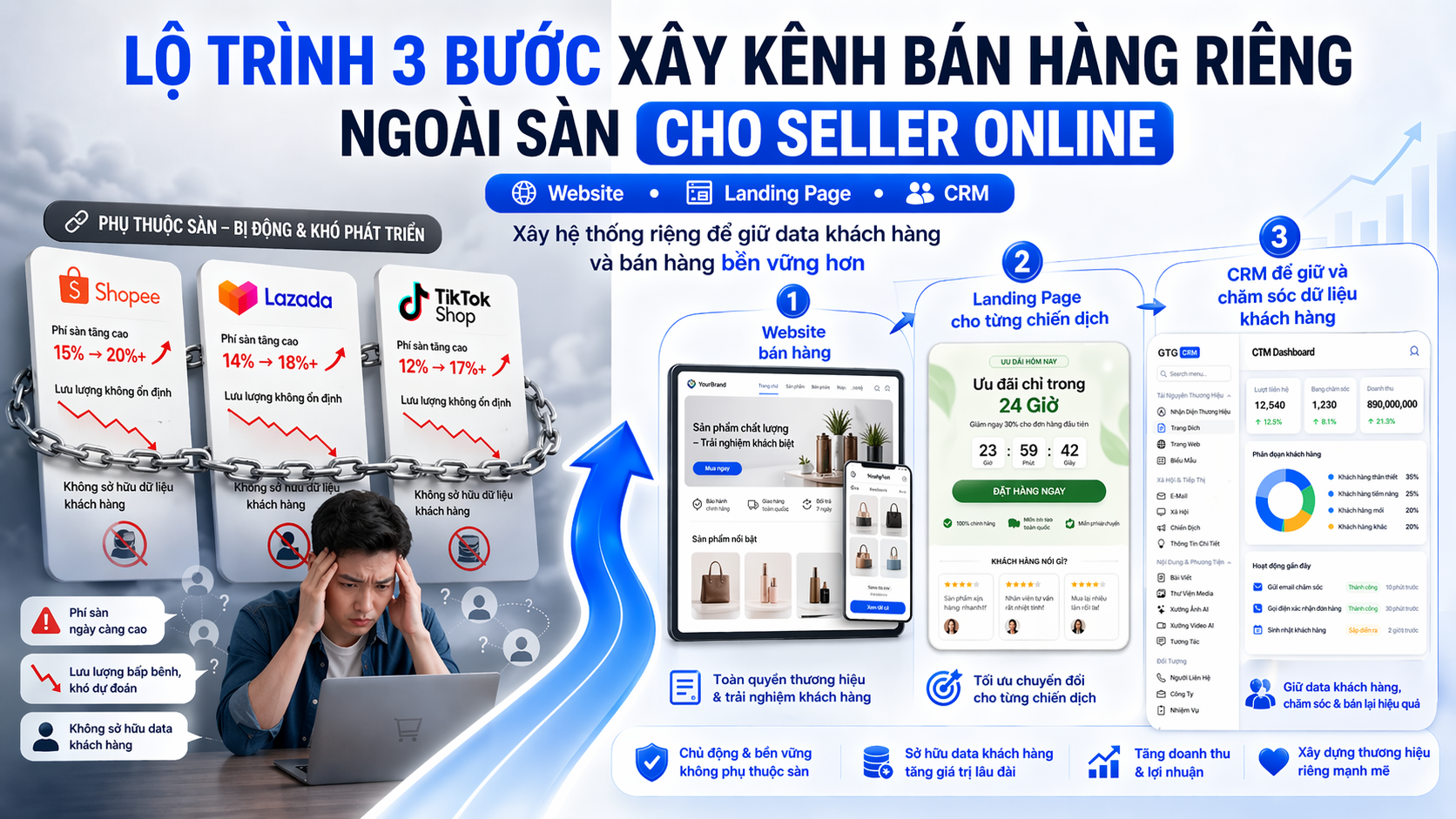
Til að byggja eigin sölurásir utan markaðssvæða þurfa seljendur skýra vegáætlun í stað þess að reyna að innleiða allt í einu. Rétt 3 þrepa vegáætlun er: byrja með eigin vefsíðu til að skapa sjálfstæðan grunn, síðan smíða lendingarsíður fyrir hverja sérstaka herferð, og að lokum tengja CRM til að halda utan um og viðhalda viðskiptavinagögnum. Þegar grunnurinn er sterkur geta seljendur fyrst farið að stækka yfir í tölvupóstmarkaðssetningu og sjálfvirkni til að hámarka langvarandi rekstur.

Margar netverslanir selja vel á rafrænum markaðsvettvangi eins og Shopee, Lazada eða TikTok Shop. Sala er stöðug, pantanir reglulegar, allt virðist vera á réttri leið. En þegar farið er yfir heildarmyndina gera margir sér grein fyrir einu: þeir eru of háðir þriðja aðila vettvangi.
Stöðubreytingar, hækkandi gjöld, breyttir reikniritar, skyndileg lækkun umferðar. Allir þessir þættir eru utan seilingar seljenda. Og enn mikilvægara, gögn viðskiptavina, dýrmætasta eign hvers netsölustaðar, tilheyrir ekki þeim með öllu.
Margir seljendur hafa gert sér þetta grein fyrir og eru farnir að hugsa um að byggja upp eigið sölukerfi. En þegar þeir byrja, verða þeir oft yfirbugaðir af of miklu til að innleiða: vefsíður, lendingarsíður, CRM, tölvupóstmarkaðssetningu, sjálfvirkni, auglýsingar, gagna greiningu. Síðan hætta þeir miðri leið, eða vinna af handahófi án áherslu, og eyða bæði tíma og peningum.
Reyndar, að byggja eigin sölurásir utan markaðssvæða þýðir ekki að gera allt í einu, og það þýðir ekki að yfirgefa markaðssvæðið strax. Það sem seljendur þurfa er skýr vegáætlun, skref fyrir skref, í réttri forgangsröð byggð á raunverulegri viðskiptarökfræði.
Hvers Vegna Margir Seljendur Vilja Eigið Kerfi En Sitja Oft Fastir
Hugmyndin um að þurfa að gera of marga hluti á sama tíma
Þegar ákveðið er að byggja eigin sölurásir, er eðlileg viðbrögð margra seljenda að hugsa strax um fullkomið kerfi: verður að vera falleg vefsíða, verður að vera góð CRM, verður að vera sjálfvirk tölvupóstmarkaðssetning, verður að vera spjallandi, verður að vera farsímaforrit. Listinn heldur áfram að lengjast og álagið eykst.
Afleiðingin er sú að seljendur vita ekki hvar þeir eiga að byrja. Þeir ráða gerð vefsíðu en eru óljósir um markmið, kaupa CRM en hafa engi viðskiptavini til að stjórna, setja upp tölvupóstmarkaðssetningu en hafa enga móttakendalista. Allt er innleitt ótengt, án rökrétts sambands, og að lokum skilar það ekki væntum árangri.
Skortur á skilningi á forgangsröð
Ein af helstu ástæðum þess að seljendur sitja fastir er skortur á skilningi á forgangsröð. Þeir vita ekki að áður en þeir hugsa um sjálfvirka viðskiptavinaumhirðu, verða þeir að hafa viðskiptavini fyrst. Áður en þeir hafa viðskiptavini, verða þeir að hafa stað til að safna upplýsingum um viðskiptavini. Og áður en þeir safna upplýsingum, verða þeir að hafa stað þar sem viðskiptavinir geta lært um vörur og vörumerki.
Vefsíður, lendingarsíður, CRM, tölvupóstmarkaðssetning og sjálfvirkni eru ekki skiptanlegir verkfæri. Þau eru samfelld lög í kerfi. Ef undirlagið vantar, munu efri lögin ekki virka á skilvirkan hátt.
Áhyggjur af miklum kostnaði og fyrirhöfn
Margir seljendur halda að til að hafa fullkomið eigin sölukerfi þurfi þeir að fjárfesta mikinn pening og tíma strax frá byrjun. Þeir heyra um flókin CRM kerfi, um tölvupóstmarkaðsherferðir sem taka marga mánuði að byggja, um sjálfvirknuferla sem krefjast háþróaðrar tækni.
Í raunveruleikanum, ef fylgt er réttri vegáætlun, geta seljendur byrjað með einföldum og hagkvæmum skrefum. Mikilvægt er að skilja vel hvaða stigi maður er á, hvað á að forgangsraða fyrst, og smám saman byggja hvert lag upp á traustan hátt.
Rétt hugsun þegar eigin sölurásir eru byggðar utan markaðssvæða
Byggja lag fyrir lag samkvæmt þróunarrökfræði
Í stað þess að reyna að gera allt á sama tíma, ætti seljandi að hugsa um að byggja kerfi í lögum. Hvert lag hefur skýrt markmið og þjónar sem grunnur fyrir næsta lag.
Fyrsta lagið er einkaherbergi. Þetta er staðurinn þar sem viðskiptavinir geta fræðst um vörumerkið þitt og vörur án þess að vera bundnir af viðmóti og stefnum reiklagsvefsíðna. Eigin vefsíða seljanda er lausn fyrir þetta lag.
Annað lagið er staðurinn til að loka viðskiptum fyrir tiltekna herferð. Þegar seljandi hefur almenna vefsíðu mun sköpun síðna sem einbeita sér að tiltekinni vöru eða kynningaráætlun hjálpa til við að auka viðskiptahlutfall. Viðskiptasíður fyrir seljendur gegna þessu hlutverki.
Þriðja lagið er kerfi til að geyma og stjórna viðskiptavinagögnum. Þegar þú hefur gesti og þeir skilja eftir upplýsingar, er geymsla og skipulagning þessara gagna á vísindalegan hátt lykillinn að því að geta selt aftur og þjónustað viðskiptavini til langs tíma. Þetta er þegar CRM fyrir netverslun verður nauðsynlegt.
Eftir að þessi þrjú grunnlög hafa starfað stöðugt, ætti seljandi fyrst að stækka yfir í hagræðingartæki eins og netpóstsmarkaðssetningu fyrir netverslun seljanda og sjálfvirkni fyrir netverslun.
Þarft ekki að yfirgefa reikningsvefsíðuna strax
Mikilvægt er að gera eitt ljóst: að byggja upp eigin sölurás þýðir ekki að þú þurfir að yfirgefa reikningsvefsíðuna strax. Reikningsvefsíðan er enn góð umferðar- og sölulind, sérstaklega á upphafsstigi þegar eigið kerfi er enn ungt.
Rétt leið er að halda áfram að selja á reikningsvefsíðunni til að viðhalda sjóðstreymi, á meðan verið er að byggja upp eigin rás smám saman. Þegar eigin rás er orðin nægilega sterk, getur seljandi verið virkari í úthlutun auðlinda og dregið smám saman úr háðri reikningsvefsíðunni.
Einbeittu þér að því að halda viðskiptavinagögnum
Ein stærsta ástæðan fyrir því að byggja eigin sölurás er að halda viðskiptavinagögnum. Á reikningsvefsíðunni á seljandi ekki upplýsingar um viðskiptavini. Í hvert skipti sem þú selur, þarftu að byrja upp á nýtt, háð umferðinni sem reikningsvefsíðan færir.
Þegar þú ert með þitt eigið kerfi, í hvert skipti sem viðskiptavinur skilur eftir upplýsingar, ertu að byggja upp verðmæta eign. Þessi eign er hægt að nota til að ná til, þjónusta og selja aftur og aftur í framtíðinni án þess að eyða auglýsingakostnaði eins og í fyrsta skipti.
3 þrepa leið til að byggja upp eigin sölurás
Skref 1: Byggðu verslunarvefsíðu
Af hverju vefsíða er góð byrjun
Verslunarvefsíða er fyrsta grunnurinn í leiðinni til að byggja upp eigin sölurás utan reikningsvefsíðunnar. Þetta er staðurinn þar sem seljandi skapar sjálfstætt tilvistarrými, þar sem viðskiptavinir geta fræðst um vörumerkið, skoðað allar vörur og fundið fyrir sögunni sem seljandi vill koma á framfæri.
Ólíkt verslun á reikningsvefsíðu sem er takmörkuð af sniðmátum og almennum stefnum, leyfir eigin vefsíða seljanda að sýna fram á vörumerkjapersónuleika, skipuleggja vörur á sinn hátt og byggja upp traust við viðskiptavini á þann hátt sem hann hefur fulla stjórn á.
Að auki er vefsíðan opinber áfangastaður þegar seljandi rekur auglýsingar eða deilir efni á samfélagsmiðlum. Frekar en að beina umferð að verslun á reikningsvefsíðu, þar sem viðskiptavinir geta dreifst til annarra keppinauta, hjálpar vefsíðan seljanda að halda viðskiptavinum innan síns eigin vistkerfis.
Það sem þarf í vefsíðu á upphafsstigi
Vefsíða á upphafsstigi þarf ekki að vera of flókin. Seljandi ætti að einbeita sér að kjarnatriðum: heimaskjár sem kynnir heildaryfirlit, vörusíður með skýrum lýsingum og myndum, kynningarsíða um vörumerkið, tengiliðasíða og sölustefnur.
Það mikilvægasta er að vefsíðan sé auðveld í notkun, hleðst hratt, birtist vel á farsímum og hafi skýra tengiliðaleið. Viðskiptavinir þurfa að líða öruggir þegar þeir versla frá nýrri vefsíðu, svo þættir sem skapa traust eins og umsagnir viðskiptavina, skiptistefnur og gagnsæjar tengiliðaupplýsingar eru mjög nauðsynlegir.
Vísbendingar sem þarf að hafa áhyggjur af á vefsíðustigi
Á upphafsstigi þegar vefsíðan er ný, ætti seljandi að fylgjast með grunnvísum eins og:
- Vefsíðuskoðanir á dag/viku
- Hraður brottfallshraði af síðu
- Hvaða síður eru mest skoðaðar
- Meðal tími sem viðskiptavinir eyða á síðu
- Fjöldi viðskiptavina sem smella á tengiliðahnapp eða Zalo/Messenger
Þessar mælingar hjálpa seljendum að skilja hvort viðskiptavinir hafi áhuga á efninu, hvaða síður þurfa umbætur og hvort vefsíðan virki sem árangursríkt kynningartæki.
Skref 2: Búðu til Landing Pages fyrir hverja herferð
Af hverju þarf Landing Page þegar þú ert með vefsíðu
Vefsíða í heild sinni er frábær til að kynna vörumerki og allar vörur. En þegar seljandi keyrir ákveðna herferð, eins og helgarútsölu eða nýja vöruútgáfu, mun það að senda viðskiptavini á almenna heimasíðu draga úr umbreytingaráhrifum.
Landing pages fyrir seljendur eru lausn á þessu vandamáli. Þetta eru síður hannaðar til að einbeita sér að einu markmiði: að fá viðskiptavini til að framkvæma ákveðna aðgerð eins og að fylla út eyðublað, skrá sig til að fá upplýsingar eða kaupa afsláttarvöru strax.
Árangursrík landing page hefur stutt efni, áberandi myndir, skýra kalli til aðgerða og ekki of marga möguleika til að fara frá síðunni. Viðskiptavinir sem koma á síðuna vita nákvæmlega hvað þeir eiga að gera næst.
Hvenær á að byrja að byggja Landing Pages
Seljendur ættu að byrja að byggja landing pages þegar þeir eru með virka vefsíðu og byrja að keyra sérstakar markaðsherferðir. Ef seljandi auglýsir á Facebook um nýja vöru, eða er með sérstakt afsláttartilboð, þá er kominn tími á sérstaka landing page.
Landing pages eru einnig mjög gagnlegar þegar seljendur vilja safna upplýsingum frá mögulegum viðskiptavinum. Í stað þess að biðja viðskiptavini um að kaupa strax, getur seljandi búið til landing page til að bjóða upp á ókeypis rafbók, afsláttarmiða eða gagnlegt efni í skiptum fyrir tengiliðaupplýsingar.
KPI sem þarf að fylgjast með á Landing Page stigi
Þegar landing pages eru komnar í notkun þarf seljandi að fylgjast með eftirfarandi mælingum:
- Umbreytingarhlutfall: hversu margir gestir framkvæma æskilega aðgerð
- Fjöldi fullbúinna eyðublaða
- Auglýsingakostnaður á umbreytingu
- Hvaða umferðarheimildir skila flestum umbreytingum
- Hvaða kalli til aðgerða-hnappar eru mest smellaðir á
Þessar upplýsingar hjálpa seljendum að hagræða landing pages og dreifa auglýsingafjárhagsáætlun á skilvirkan hátt.
Skref 3: Tengdu CRM til að halda utan um og sjá um viðskiptavinagögn
Af hverju CRM er mikilvægasta skrefið
Ef vefsíður og landing pages hjálpa seljendum að ná til og laða að viðskiptavini, þá er CRM fyrir netverslun tækið sem hjálpar til við að halda utan um og sjá um þessa viðskiptavini. Þetta er staðurinn þar sem allar upplýsingar sem viðskiptavinir hafa skilið eftir eru geymdar: nafn, símanúmer, tölvupóstur, áhugaverðar vörur, samskiptasaga.
Þegar enginn CRM er til staðar, geymir seljandi oft upplýsingar um viðskiptavini á mismunandi stöðum: hluti í Excel, hluti í Zalo skilaboðum, hluti í símaskránni. Þetta gerir stjórnun og umönnun viðskiptavina ruglingslega og óskilvirka.
CRM hjálpar seljendum að skipuleggja gögn á vísindalegan hátt, flokka viðskiptavini eftir hópum, eftir hegðun, eftir áhuga. Þar af leiðandi getur seljandinn haft frumkvæði að því að ná til réttra viðskiptavina á réttum tíma með réttum skilaboðum.
Mikilvægast er, CRM hjálpar seljendum að þurfa ekki að byrja upp á nýtt í hvert skipti sem þeir vilja selja. Í stað þess að auglýsa í hvert skipti til að finna nýja viðskiptavini, getur seljandinn selt aftur til viðskiptavina sem hafa treyst og keypt áður með mun lægri kostnaði.
Hvernig CRM tengist vefsíðum og landing pages
Til að CRM virki árangursríkt þarf það að vera tengt beint við eyðublöðin sem safna upplýsingum á vefsíðum og landing pages. Þegar viðskiptavinir fylla út eyðublað til að fá ráðgjöf eða afsláttarmiða, fara gögnin sjálfkrafa til CRM í stað þess að þurfa að slá inn handvirkt.
Þessi samþætting hjálpar seljendum að spara tíma, draga úr villum og tryggja að engir mögulegir viðskiptavinir verði gleymdir. Um leið og nýjar upplýsingar berast er hægt að setja upp umönnunarferli strax.
KPI sem þarf að fylgjast með á CRM stiginu
Þegar CRM er komið upp ætti seljandi að fylgjast með mælingum eins og:
- Heildarfjöldi tengiliða vistaðir í kerfinu
- Fjöldi nýrra tengiliða í hverri viku
- Hlutfall mögulegra viðskiptavina sem verða raunverulegir viðskiptavinir
- Meðalfjöldi samskipta sem þarf til að loka sölum
- Hlutfall endurtekinna viðskiptavina sem kaupa aftur
Þessar mælingar hjálpa seljanda að meta skilvirkni viðskiptavinarstjórnunar og þjónustu, og þar með að aðlaga viðeigandi stefnur.
Útvíkkun: Netfangamarkaðssetning og Sjálfvirkni
Hvenær á að byrja með netfangamarkaðssetningu fyrir netverslun
Eftir að vefsíða, kynningarsíða og CRM starfa með góðum árangri, mun seljandi hafa nægilegt magn af gögnum viðskiptavina til að byrja að hugsa um netfangamarkaðssetningu. Þetta er útvíkkunarstig, ekki grunnstig.
Netfangamarkaðssetning fyrir netverslun gerir kleift að senda upplýsingar um nýjar vörur, kynningar eða gagnlegt efni til lista yfir tiltekna viðskiptavini. Ólíkt greiddri auglýsingasem kostar fyrir hvern snertipunkt, hjálpar netfangamarkaðssetning seljendum að hafa samskipti við viðskiptavini án þess að greiða auka auglýsingakostnað.
Hins vegar er netfangamarkaðssetning aðeins árangursrík þegar seljandi hefur gæðalista yfir netföng, safnað frá fólki sem hefur raunverulegan áhuga á vörunni. Ef listinn er ekki nægilega stór eða ekki vel flokkaður, mun netfangsending ekki skila æskilegum árangri.
Hlutverk sjálfvirkni í netverslun
Þegar kerfið starfar stöðugt og margir viðskiptavinir hafa samskipti, mun seljandi gera sér grein fyrir því að sum endurtekin verkefni geta verið sjálfvirk. Dæmi eru að senda velkominnetföng til nýrra viðskiptavina, senda áminningar til viðskiptavina sem yfirgefa körfu, senda afmælisafslætti eða bjóða upp á þjónustu eftir kaup.
Sjálfvirkni í netverslun hjálpar seljendum að setja upp sjálfvirkar þjónustuferli fyrir viðskiptavini byggt á hegðun og tilteknum tíma. Þetta sparar tíma, tryggir að enginn viðskiptavinur gleymist og skapar samfellda upplifun.
Hins vegar ætti sjálfvirkni aðeins að vera notuð þegar seljandi hefur góðan skilning á ferðalagi viðskiptavinarins og hefur virkað handvirkt þjónustuferli. Ef sjálfvirkni er gerð of snemma þegar ferlið er óljóst, verður niðurstaðan ekki eins og vonast var til.
KPI sem þarf að fylgjast með á útvíkkunarstigi
Þegar netfangamarkaðssetning og sjálfvirkni er notuð ætti seljandi að fylgjast með:
- Hlutfall opna á netföngum
- Hlutfall smella á tengla í netföngum
- Hlutfall afskráninga
- Sölutekjur frá netfangakampagnefndum
- Skilvirkni hvers sjálfvirka vinnuflæðis
Þessar mælingar hjálpa seljanda að vita hvaða herferðir virka vel, hvaða efni vekur áhuga viðskiptavina og hvað þarf að aðlaga til að hámarka skilvirkni.
Tímabil 30-60-90 dagar: Raunhæf leiðsögn fyrir seljendur
Fyrstu 30 dagarnir: Einbeita sér að byggingu vefsíðu
Á fyrstu 30 dögum ætti seljandi að einbeita sér algjörlega að byggingu og fullkomnun vefsíðu fyrir sölu. Þetta er stigið til að skapa grunninn.
Viku 1-2: Skipuleggja efni, undirbúa vörumyndir, skrifa vörulýsingar og ákvarða uppbyggingu síðunnar. Ef þegar er til efni frá verslun á markaðsvettvangi, er þetta rétti tíminn til að breyta og uppfæra til að passa við eigin vefsíðu.
Viku 3: Framkvæma vefsíðu, setja upp grunn síður, setja upp mælingarverkfæri eins og Google Analytics til að mæla umferð.
Viku 4: Grundvallarprófanir, fínstilling hleðsluhraða síðu, tryggja góða birtingu á farsímum, og byrja að prófa að leiða umferð frá núverandi rásum eins og persónulegum Facebook eða viðskiptavinahópum.
Markmið í lok fyrsta mánaðar: hafa stöðuga, notendavæna vefsíðu sem er tilbúin til að taka á móti viðskiptavinum.
Næstu 60 dagar: Bæta við kynningarsíðum og byrja að safna gögnum
Eftir að vefsíðan starfar og hefur upphaflega umferð, er næstu 60 dagarnir tíminn sem seljandi ætti að byggja kynningarsíður fyrir tiltekin verkefni og byrja að safna gögnum viðskiptavina á skipulegan hátt.
Vika 5-6: Ákveðið hvaða vörur eða dagskrá þarf eigin forsíðu. Það getur verið mest selda varan, ný vara eða komandi kynningarstarfsemi. Hannaðu einfalda forsíðu með skýrum tilgangi.
Vika 7-8: Prófaðu litlar auglýsingaherferðir sem vísa á forsíðuna, fylgstu með viðskiptum og gerðu breytingar á efni eða hönnun ef þörf krefur.
Vika 9-10: Innleið grunn CRM, tengdu eyðublöð á vefsíðunni og forsíðunni við CRM svo upplýsingar um viðskiptavini séu vistaðar sjálfkrafa. Byrjaðu að flokka viðskiptavini eftir uppruna og áhuga.
Vika 11-12: Prófaðu handvirka viðskiptavinaþjónustuferla. Hringdu eða sendu skilaboð til viðskiptavina sem hafa skilið eftir upplýsingar til að skilja ferðalag þeirra og bera kennsl á þætti sem þarf að bæta.
Markmið í lok annars mánaðar: Eiga að minnsta kosti eina virka og skilvirka forsíðu og byrja að safna upplýsingum um viðskiptavini í CRM.
Næstu 90 dagar: Að hagræða kerfinu og íhuga stækkun
Eftir fyrstu 90 dagana er seljandinn með grunnkerfi í gangi: vefsíðu, forsíðu og CRM. Þetta er tíminn til að hagræða og íhuga stækkunarþrep.
Vika 13-16: Greindu gögn frá fyrstu 3 mánuðum. Hvaða síður höfðu hæsta viðskiptahlutfallið? Hvaða umferðaruppruni var skilvirkastur? Hvaða viðskiptavinir hafa tilhneigingu til að snúa aftur til kaupa oft?
Vika 17-20: Byggt á greindum gögnum, hagræddu vefsíðuefni, bættu forsíðuna og fínstilltu þjónustuferla viðskiptavina.
Vika 21-24: Ef þú hefur safnað nægum upplýsingum um viðskiptavini og flokkað þær skýrt, geturðu byrjað að prófa markaðssetningu með tölvupósti með litilli herferð. Sendu verðmætar upplýsingar eða sérstök tilboð til ákveðins hóps viðskiptavina og fylgstu með viðbrögðum.
Vika 25 og áfram: Haltu áfram að hagræða og stækka smám saman. Ef markaðssetning með tölvupósti skilar góðum árangri, getur þú sett upp einfalda sjálfvirka vinnuflæði til að sjá um viðskiptavini sjálfkrafa.
Markmið í lok þriðja mánaðar: Eiga stöðugt kerfi, hafa skýr gögn um skilvirkni hvers rásar og vera tilbúinn til að stækka eða fjárfesta meira í skilvirkum rásum.
Samanburður: Að gera allt á sama tíma vs. fara í gegnum áfanga
Tilfelli A: Seljandi gerir allt á sama tíma
Seljandi ákvað að byggja upp eigin sölurás. Hann réð til að gera vefsíðu, keypti CRM, skráði sig í tölvupóstmarkaðssetningarþjónustu og byrjaði að auglýsa mikið. Allt innan við 2 vikur.
Niðurstaða: Vefsíðan var ekki enn hagrædd hvað varðar efni, CRM hafði engin gögn til að stjórna, tölvupóstmarkaðssetning hafði enga lista yfir móttakendur. Auglýsingar brenndu peningum en það var engin leið að hagræða því það var óljóst hvað var hnúturinn. Eftir 2 mánuði fannst seljandanum hann vera ofhlaðinn, vissi ekki hvert hann átti að leggja áherslu á og byrjaði að efast um hvort eigin rás væri raunverulega hentugur fyrir hann.
Tilfelli B: Seljandi fer í gegnum áfanga
Annar seljandi ákvað líka að byggja upp eigin rás, en byrjaði á því að einbeita sér algjörlega að vefsíðunni í fyrsta mánuðinum. Hann breytti efninu vandlega, hagræddi myndum og byrjaði að leiða umferð frá persónulegum Facebook til að prófa.
Eftir að hafa séð að vefsíðan virkaði vel, bjó hann til forsíðu fyrir helgar útsölu og keyrði litla auglýsingu. Þegar viðskiptavinir skiluðu upplýsingum byrjaði hann að nota CRM til að vista og fylgja eftir.
Niðurstaða: Eftir 3 mánuði var þessi seljandi með einfalt en skilvirkt kerfi. Hann vissi nákvæmlega hvað hver hluti skilaði, vissi hvar hann ætti að fjárfesta meira og fannst hann öruggur til að halda áfram að stækka.
Smámálasaga: Frá því að vera háður markaði yfir í að eiga eigið kerfi
Lan hefur selt snyrtivörur á Shopee í 2 ár. Sala í hverjum mánuði er um 50-70 milljónir, nokkuð stöðug. En hún áttaði sig á því að í hvert sinn sem Shopee breytti reikniritum eða hækkaði gjöld, lækkaði hagnaður hennar strax. Mikilvægara er að hún á engan hátt að geta haft samband við viðskiptavini sem hafa keypt vörur nema þeir snúi sjálfkrafa aftur.
Hún ákvað að byggja upp eigin sölurás en vissi ekki hvar hún ætti að byrja. Eftir að hafa rannsakað valið hennar var að fara eftir skref-fyrir-skref leið.
Fyrsti mánuðurinn, einbeitti hún sér að því að búa til vefsíðu til að kynna helstu vörulínur. Hún reyndi ekki að gera vefsíðuna of flókna, einbeitti sér aðeins að því að kynna vörur á fallegan hátt, með skýrum lýsingum og tengiliðaformi. Hún byrjaði að deila vefslóðinni á persónulegum Facebook-reikningi sínum og í hópa með trygga viðskiptavini.
Annar mánuðurinn, tók hún eftir því að ein húð sermisvara var mjög vinsæl hjá viðskiptavinum. Hún bjó til sérstaka lending síðu fyrir þessa vöru með tilboði um að kaupa 2 fá 1. Hún lét keyra litla Facebook auglýsingar sem bentu á lending síðuna og bað viðskiptavini um að fylla út form til að fá ráðgjöf. Niðurstaðan var sú að á 2 vikum safnaði hún yfir 100 upplýsingum um hugsanlega viðskiptavini.
Á þessum tíma byrjaði hún að nota CRM til að geyma og flokka þessa viðskiptavini. Hún skipti þeim í hópa eftir því hvort þeir höfðu keypt, hvort þeir höfðu áhuga en ekki keypt, og hvort þeir þurftu aukna þjónustu. Hún hafði frumkvæði að því að hringja og senda Zalo skilaboð til hvers hóps með viðeigandi skilaboðum.
Eftir 3 mánuði átti hún lista yfir meira en 300 hugsanlega viðskiptavini í CRM. Hún byrjaði að senda vikulega tölvupósta með ráðum um húðvörur og kynningum á nýjum vörum. Opnunarhlutfall tölvupósts var upphaflega um 20-25%, og um 5-7% viðskiptavina sneru aftur til að kaupa eftir hverja tölvupóstsherferð.
Lan hætti ekki á Shopee, en nú hefur hún sinn eigin sölurás sem starfar samhliða. Þegar viðskiptavinir kaupa á Shopee sendir hún með þakkarspjald með vefslóð og afsláttarmiða fyrir næstu kaup. Smám saman flyst hluti af viðskiptavinum frá Shopee til að kaupa beint í gegnum hennar eigin rás, þar sem hún getur haft frumkvæði að því að annast og endurselja án þess að þurfa að deila gjöldum með pallinum.
Meta sjálfan sig í hvaða áfanga ferðarinnar er verið
Til að vita hvað ætti að forgangsraða næst, getur seljandi metið sig út frá eftirfarandi spurningum:
Um vefsíðu: - Ertu með eigin vefsíðu? - Birtist vefsíðan vel í síma? - Finna viðskiptavinir auðveldlega upplýsingar um vörur og tengiliði? - Fylgist þú með heimsóknum og hegðun viðskiptavina á vefsíðunni?
Um lending síðu: - Ertu með lending síðu fyrir tiltekna vöru eða kynningu? - Er lending síðan með skýran viðskiptamarkmið? - Safnar þú upplýsingum um viðskiptavini í gegnum eyðublað?
Um CRM: - Hvar geymir þú upplýsingar um viðskiptavini? - Getur þú auðveldlega fundið upplýsingar um tiltekinn viðskiptavin? - Flokkar þú viðskiptavini eftir hópum eða hegðun? - Ertu í virkum samskiptum við gamla viðskiptavini?
Um tölvupóst og sjálfvirkni: - Ertu með nægilega stóran lista yfir tölvupóstföng viðskiptavina? - Sendir þú reglulega markaðssetningartölvupóst? - Ertu með einhverja sjálfvirka þjónustuferla fyrir viðskiptavini í gangi?
Ef flest svörin við vefsíðuhlutanum eru „ekki enn“ eða „nei“, þá er það merki um að þú ættir að einbeita þér að fyrsta áfanga. Ef þú ert með vefsíðu en ekki lending síðu eða safnar ekki gögnum kerfisbundið, skaltu fara í annan áfanga. Ef þú ert með vefsíðu og lending síðu en gögn viðskiptavina eru enn í sundur, þá er kominn tími til að forgangsraða þriðja áfanga með CRM.
GTG CRM: Lausn sem hjálpar seljendum að fara léttari leið
Þegar seljendur skilja vel 3-áfanga ferðina og eru staðráðnir í að hrinda henni í framkvæmd, er næsta spurning: hvaða tól á að nota til að framkvæma hana?
Ein stærsta áskorunin seljenda er að þurfa að nota mörg mismunandi verkfæri fyrir hvern áfanga. Vefsíða notar eitt kerfi, lending síða annað, CRM er sérstakt kerfi, og tölvupóstmarkaðssetning þarf að vera samþætt frá þriðju aðila. Hvert verkfæri hefur sína eigin notkun, sinn eigin kostnað og tenging þeirra saman er oft flókin.
GTG CRM er smíðað með það að markmiði að hjálpa seljendum að fylgja þessari leið á einfaldari hátt. Í einu kerfi getur seljandi:
- Byggja vefsíðu með mörgum síðum og faglegu viðmóti
- Búa til forsíðu fyrir hverja kynningarátak eða vöru
- Nota eyðublöð til að safna upplýsingum frá viðskiptavinum
- Gögn úr eyðublöðum fara sjálfkrafa í CRM til umsýslu
- Geyma og flokka tengiliði viðskiptavina á vísindalegan hátt
- Senda markaðstölvupóst með einföldum drag-og-sleppa tólum
- Setja upp sjálfvirka vinnuflæði til að sinna viðskiptavinum samkvæmt ferli
Þetta þýðir að seljandi þarf ekki að eyða tíma í að læra að nota mörg mismunandi verkfæri, þarf ekki að hafa áhyggjur af samþættingum og þarf ekki að greiða fyrir mörg aðskilin þjónustu. Allt er innan eins sameinaðs kerfis, sem hjálpar seljanda að einbeita sér að sölu og þjónustu við viðskiptavini í stað þess að glíma við tækni.
Fyrir nýliða seljendur hjálpar GTG CRM við að innleiða vegvísi frá skrefi 1 til skref 3 á hnökralausan hátt. Fyrir seljendur sem eru með eigin vefsíðu en ekki CRM, hjálpar GTG CRM að bæta við vantar lög án þess að þurfa að byggja upp frá grunni.
Niðurstaða
Að byggja upp eigin sölurás utan markaðssvæða er ekki skyndilegt ákvörðun eða verkefni sem þarf að klára á mánuði. Þetta er langtímaferðalag sem krefst skýrrar stefnu og þrautseigju.
3-skrefa vegvísi gefur seljanda skýra leið til að fylgja: byrja með sölusíðu til að skapa eigin stað, halda áfram með forsíðu fyrir seljendur til að auka viðskipti eftir átaki, og klára með CRM fyrir netverslun til að halda gögnum viðskiptavina og sinna þeim til langs tíma. Þegar grunnurinn er sterkur verður auðveldara og skilvirkara að stækka yfir í tölvupóstmarkaðssetningu fyrir netverslunarseljendur og sjálfvirkni fyrir netverslun.
Mikilvægast er að seljandi ætti ekki að reyna að gera allt á sama tíma. Einbeittu þér að hverju skrefi, byggðu hvern þátt stöðugt, mældu árangur og aðlagaðu áður en þú ferð á næsta stig. Það er eina leiðin til að byggja upp sjálfbæra eigin sölukerfi sem skilar raunverulegu langtímagildi.
Ef þú ert netverslunarseljandi og leitar leiða til að losna undan háðinu á markaðnum, byrjaðu á fyrsta skrefi í dag. Þú þarft ekki að yfirgefa markaðinn strax, en þú þarft að byrja að byggja upp eigin kerfi ef þú vilt sjálfbærari framtíð í viðskiptum.
Byrjaðu með sölusíðu með GTG CRM í dag til að byggja fyrsta grunninn að eigin sölurás.
Algengar Spurningar
1. Þarf ég að hætta á netmarkaðssvæðum þegar ég bygg eigin sölurás?
Ekki endilega. Að byggja eigin sölurás utan markaðar þýðir ekki að þú þurfir að hætta á markaðnum strax. Seljendur ættu að halda áfram að selja á markaðnum til að viðhalda peningaflæði, á meðan þeir byggja smám saman upp sitt eigið kerfi. Þegar eigin kerfi er orðið nógu sterkt geturðu haft meiri stjórn á ráðstöfun auðlinda.
2. Frá hvaða skrefi ætti ég að byrja ef ég er ekki með neitt?
Ef þú ert ekki með neitt, byrjaðu á skrefi 1 með eigin vefsíðu fyrir seljendur. Þetta er grunngerðin til að skapa sjálfstæða nærveru. Eftir að vefsíðan er orðin stöðug, haltu áfram með forsíðu og CRM í réttri röð.
3. Hversu langan tíma tekur það að fá eigin sölukerfi til að virka á skilvirkan hátt?
Með 3-skrefa vegvísinum getur seljandi haft grunnkerfi í gang innan 3 mánaða. Fyrstu 30 dagarnir eru helgaðir vefsíðunni, næstu 60 dagar bæta við forsíðu og CRM, og næstu 90 dagar eru til að fínstilla kerfið. Hins vegar veltur sérstakur tími á auðlindum og einbeitingu hvers seljanda.
4. Hver er kostnaðurinn við að byggja eigin sölurás?
Kostnaðurinn veltur á verkfærum og stærð framkvæmdar. Ef þú notar samþættan vettvang eins og GTG CRM geturðu sparað kostnað miðað við að kaupa mörg aðskilin verkfæri. Mikilvægast er að fjárfesta smám saman eftir fjárhagslegri getu frekar en að reyna að gera allt í einu og fara yfir fjárhagsáætlunina.
5. Ég er ekki tæknilega þekkur, get ég byggt vefsíðu og forsíðu sjálfur?
Já. Nútvíntækni eins og GTG CRM er hönnuð þannig að fólk án tæknilegrar þekkingar geti smíðað eigin vefsíður og innkaupasíður með einföldu drag-og-sleppa viðmóti. Þú þarft ekki að kunna að forrita eða hafa djúpa hönnunarþekkingu til að byrja.
6. Hvenær ætti ég að byrja að nota markaðssetningu í tölvupósti og sjálfvirkni?
Tölvupóstmarkaðssetningu og sjálfvirkni ætti að innleiða eftir að þú hefur komið þér upp virkri vefsíðu, innkaupasíðu og CRM kerfi, og hefur safnað nægilegum viðskiptavinagögnum. Ef þú byrjar of snemma án gagna eða án þess að skilja ferðlag viðskiptavina, verður árangurinn ekki mikill.
7. Hvernig veit ég hvort sölurás mín er að skila árangri?
Fylgstu með lykilárangursvísbendingum (KPI) sem passa við hvern áfanga: vefsíðuheimsóknir, umbreytingarhlutfall á innkaupasíðu, fjöldi nýrra tengiliða í CRM, hlutfall endurtekinna kaupa. Mikilvægt er að bera saman kostnað við að fá nýja viðskiptavini við kostnað við að endurselja til fyrri viðskiptavina til að sjá raunverðmæti þess að halda viðskiptavinagögnum.
8. Get ég flutt viðskiptavinagögn frá markaðstorgum yfir í eigið kerfi?
Venjulega bjóða rafrænir markaðstorgar seljendum ekki upp á nákvæmar tengiliðaupplýsingar viðskiptavina. Þess vegna er mikilvægt að byggja eigin rásir og safna gögnum beint frá viðskiptavinum. Þú getur boðið viðskiptavinum sem hafa keypt á markaðstorgi að taka þátt í eigin rás með sérstökum tilboðum eða tryggðaráætlunum.
Breyttu því sem þú hefur lesið í raunverulegan árangur — notaðu GTG CRM núna, ókeypis.
Notaðu núna