Så hvordan blir du en "utmerket annonsør" i Googles øyne?
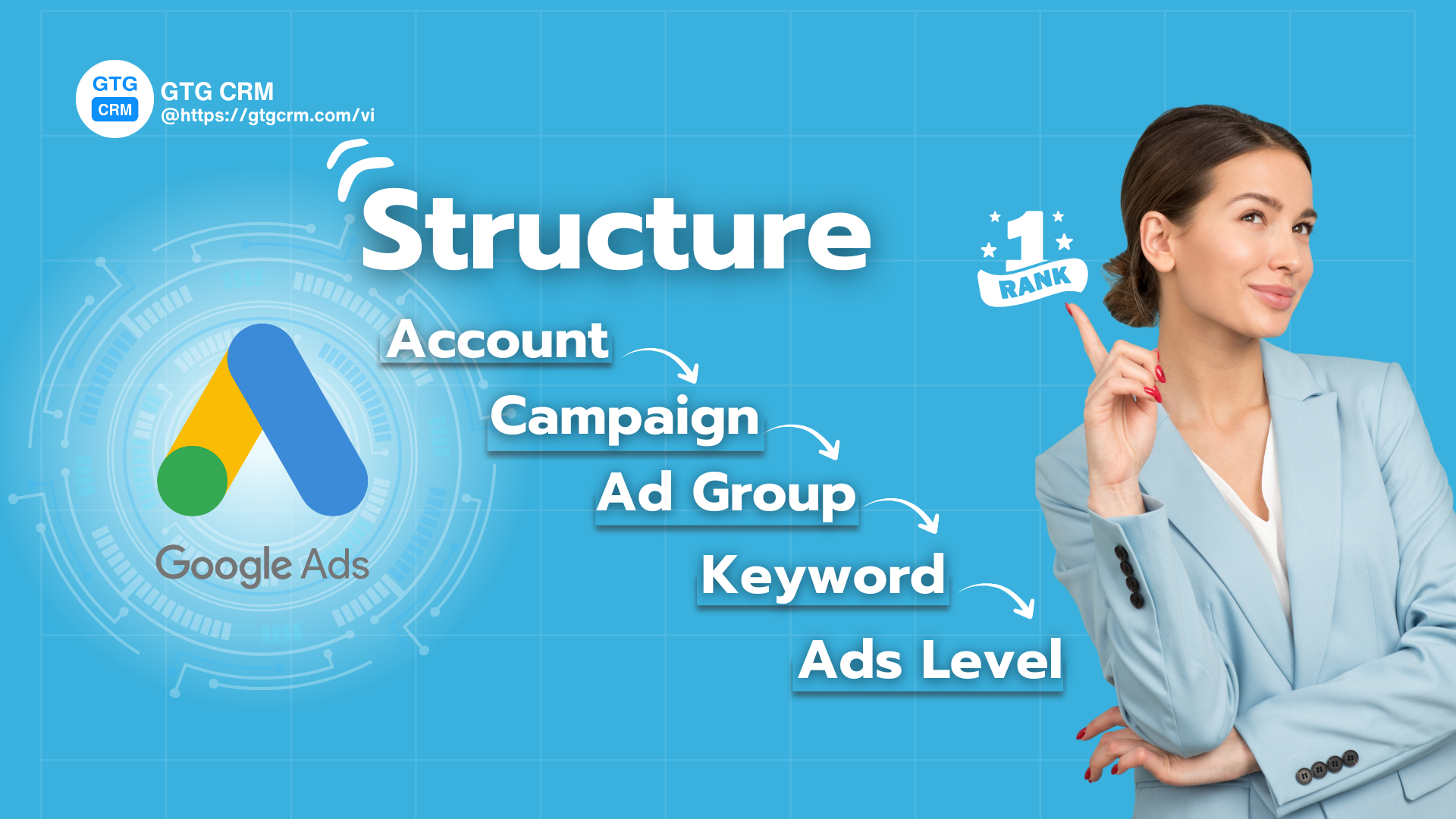
Standard Google Ads kampanjestruktur - GTG CRM
Det betyr at du må skape en sømløs opplevelse fra det øyeblikket brukeren søker til de besøker nettstedet ditt. Alt må "passe" perfekt sammen:
- Søkeordet må gjenspeile brukerens søkeintensjon korrekt.
- Annonsen din må inneholde disse søkeordene og tilby en attraktiv løsning.
- Destinasjonssiden må være det ideelle reisemålet, der brukeren finner nøyaktig det de trenger, med lynrask lastetid.
Når disse tre elementene kombineres, vil din kvalitetsrangering skyte i været, og Google vil "belønne" deg ved å prioritere annonsen din til lavest mulig kostnad. Kort sagt, ikke jag budsjettet, fokuser på relevans og brukeropplevelse - det er veien til bærekraftig fortjeneste.
La oss utforske hvordan du bygger et solid "Google Ads-hus", etasje for etasje, med GTG CRM.
Etasje 1: Konto (Kontonivå) - Fundamentet for Suksess
Google Ads-kontoen er der alle dine annonsekampanjer er samlet. Helt fra starten må du tydelig definere:
- Forretningsmål: Hva annonserer du for? Øke salget, samle leads, eller øke merkevarekjennskapen?
- Logisk organisering: Hver konto bør kun være for ett merke eller én bedrift. Dette gjør det enkelt å spore ytelse og analysere data uten forvirring.
- Sporingskoblinger: Dette er et ekstremt viktig steg. Sørg for at du har koblet til Google Analytics 4 (GA4), Google Tag Manager og satt opp konverteringssporing. En konto med full sporing vil hjelpe deg med å nøyaktig måle effekten av hver utgift, og dermed ta riktige optimaliseringsbeslutninger.
Etasje 2: Kampanje (Kampanjenivå) - Deling av Store Mål
Kampanjer er som de store avdelingene i huset, hver med sitt eget distinkte mål.
Du bør dele kampanjer basert på:
- Hovedmål: For eksempel: "Leadgenerering" for kurs, "Salg" for produkt A.
- Produkt-/tjenestekategorier: "Marketing Automation" kampanje og "Sosiale medieadministrasjons" kampanje for GTG CRM-produkter.
- Annonsekanaler: Skille mellom Søk, Display, Video eller Performance Max kampanjer for å unngå budsjettoverlapping og enkelt kontrollere ytelsen.
- Budsjett & Målretting: Hver kampanje vil ha sitt eget budsjett og spesifikke målretting (geografi, enheter, tid).
Beste praksis: Navngi kampanjer systematisk, for eksempel: [Land] - [Kanal] - [Produkt] som i "NO – Søk – Markedsføringskurs".
Nivå 3: Annonsegruppe (Ad Group Level) - Tematisk Spesialisering
Hvis kampanjen er de store rommene, så er annonsegruppene de små arkivskapene i hvert rom. Hver annonsegruppe må sentrere rundt ett smalt tema eller en spesifikk søkeintensjon .
Eksempel: I kampanjen "Digital markedsføringskurs" kan du opprette annonsegrupper:
- Annonsegruppe 1: "Digital markedsføringskurs Oslo" (fokus på søkeord med sted).
- Annonsegruppe 2: "Digital markedsføringskurs Online" (fokus på søkeord for nettkurs).
Vanlig feil: Legg alle søkeord inn i én gruppe. Dette gjør annonsen irrelevant, reduserer Kvalitetsscore og øker budprisen.
Nivå 4: Søkeord (Keyword Level) - Der Potensielle Kunder Møtes
Søkeord er koblingen mellom brukere og annonsene dine. Å bruke søkeordstyper for matching på en fornuftig måte er avgjørende:
- Eksakt treff (Exact Match): Maksimal kontroll, egnet for kjerne-søkeord.
- Frasetreff (Phrase Match): Moderat utvidelse, fanger flere varianter.
- Ekskluderingssøkord (Negative Keyword): Oppdater kontinuerlig for å fjerne irrelevante søk, slik at trafikken alltid er ren.
Optimaliseringstips: For viktige søkeord, bruk SKAG (Single Keyword Ad Group) strukturen. Det vil si at hver annonsegruppe kun har ett enkelt søkeord. Dette sikrer at annonsen matcher perfekt brukerens søk, noe som fører til økt CTR og økt Kvalitetsscore.
Funksjonen for å opprette og administrere Google-annonser i GTG CRM - Integrert med AI foreslår automatisk potensielle søkeord og grupperer søkeord basert på brukernes søkeintensjon ( kjøp, informasjonsinnhenting, produktsammenligning... ), noe som hjelper deg med å bygge en nøyaktig annonsegruppestruktur fra starten. Basert på kunde- og konkurrentatferd blir det enklere å administrere og opprette Google Ads-annonser, optimalisere søkeordforskning, og hjelpe deg med å bygge en standard annonsekonto-struktur.
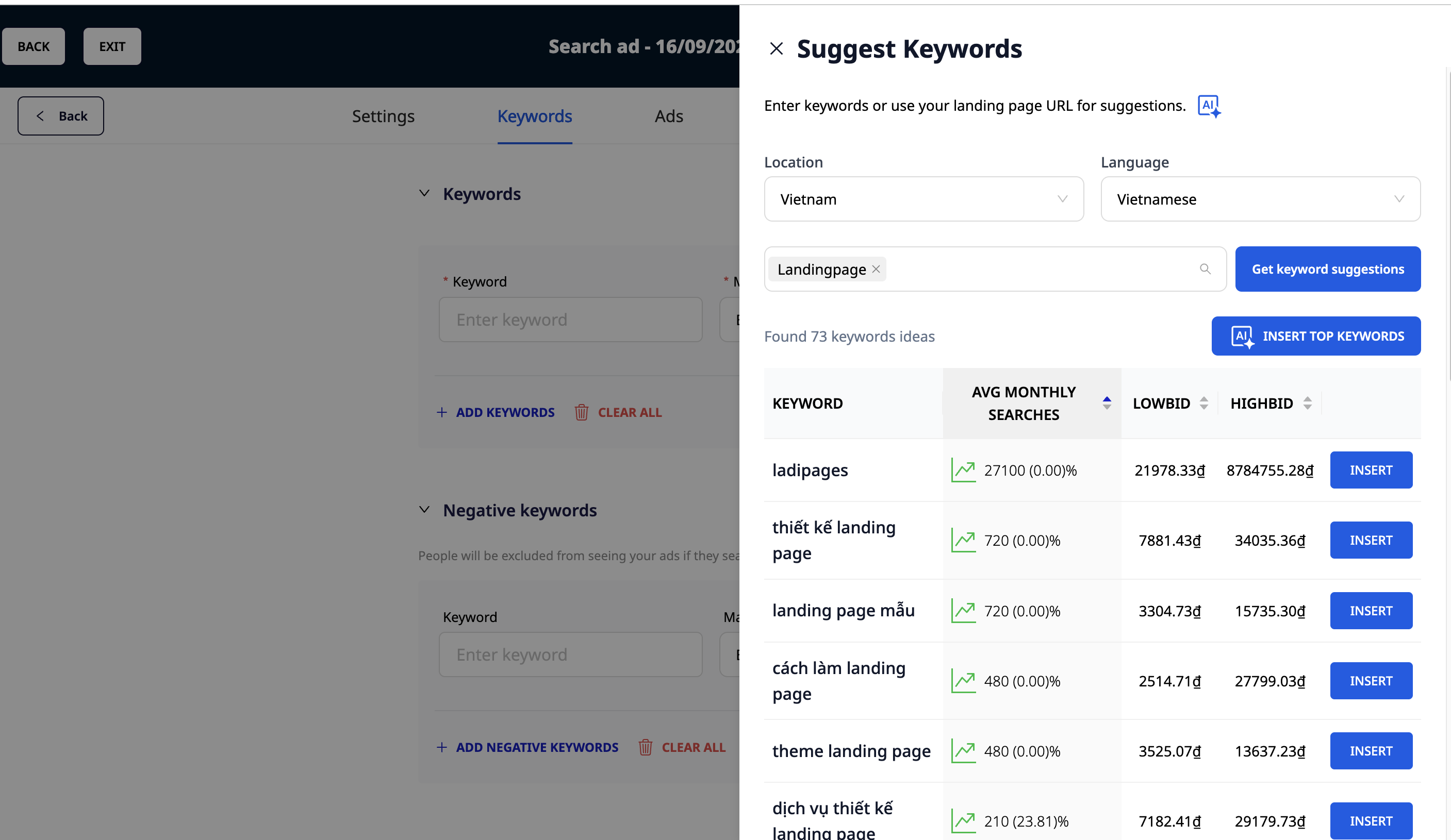
GTG CRM foreslår søkeord med AI
Nivå 5: Annonser (Ad Level)
Hver annonsegruppe trenger minst 2-3 annonsevarianter, inkludert Responsive Search Ads (RSA) slik at Google automatisk kan teste og finne den mest effektive versjonen.
Prinsipper for god annonseskriving:
- Inkluder hovednøkkelord: Bør vises i tittel og beskrivelse.
- Fremhev unik verdi (UVP): Hvorfor skal brukerne velge deg?
- Tydelig oppfordring til handling (CTA): "Registrer deg nå", "Finn ut mer", "Prøv gratis" ...
- Bruk annonseutvidelser: Sitelink, Callout, Structured Snippets... gjør annonsen mer synlig og øker CTR.
Landingsside & Kvalitetsscore: To avgjørende faktorer for suksess
Alle disse anstrengelsene vil være forgjeves hvis landingssiden din ikke er god. Landingssiden må være synkronisert med nøkkelordene og annonsens innhold. En landingsside med rask lastehastighet, relevant innhold og optimalisert for konverteringer (CRO) vil være et stort plusspoeng for Kvalitetsscore.
Kvalitetsscore er en kombinasjon av:
- Forventet klikkrate (CTR): Er annonsen din tiltalende?
- Relevans av annonsen: Matcher annonsen nøkkelordene?
- Landingssideopplevelse: Er landingssiden god og relevant?
Konklusjon
En standard Google Ads-struktur hjelper deg med å tiltrekke deg trafikk av høy kvalitet, men det endelige målet er å konvertere potensielle kunder til inntekt.
Dette er øyeblikket da GTG CRM spiller sin rolle:
- Automatiser leadstyring: GTG CRM kan automatisk registrere og kategorisere leads fra Google Ads-kampanjer, slik at salgsteamet kan følge opp umiddelbart.
- Detaljert måling: GTG CRMs rapporter lar deg analysere dypere: Hvilken kampanje gir de beste leadsene? Hvilke søkeord konverterer flest ordre?
- Flerkanalsintegrasjon: GTG CRM hjelper deg med å spore kundereisen fra de klikker på en Google Ads-annonse til de interagerer på Facebook, Zalo eller e-post.
Gjør det du nettopp leste til virkelige resultater – ta GTG CRM i bruk gratis nå.
Bruk nå