Wanneer u meerdere campagnes uitvoert en veel producten verkoopt, is de vraag wanneer een website nodig is en wanneer een landingspagina nodig is niet altijd duidelijk te beantwoorden. Als uw doel is om een langetermijnfundament op te bouwen met een breed scala aan producten en diverse inhoud, moet u prioriteit geven aan een verkoopwebsite. Omgekeerd, als u zich moet concentreren op één campagne, één aanbieding of één specifiek product om de conversies te maximaliseren, is een productlandingspagina de meer geschikte keuze. Deze twee tools sluiten elkaar niet uit, maar dienen twee verschillende rollen in het online verkoopproces.

Dit artikel helpt u te begrijpen wanneer u een website moet gebruiken, wanneer u een landingspagina moet gebruiken en hoe u deze twee tools het meest effectief kunt combineren.
Waarom Zijn Veel Verkopers Verward Bij Het Kiezen Tussen Een Website En Een Landingspagina?
Veel verkopers die net beginnen of hun activiteiten uitbreiden, komen vaak in deze situatie: te veel producten, te veel verschillende campagnes, maar slechts één homepage om klanten naartoe te leiden. Het resultaat is een vervaagd bericht, klanten weten niet waar ze zich op moeten concentreren en de conversieratio daalt.
De belangrijkste reden hiervoor is het onduidelijk begrijpen van de rol van elk platform. Websites en landingspagina's zijn beide hulpmiddelen om klanten te bereiken, maar elk type dient een eigen doel. Als u een website gebruikt om alle advertentiecampagnes uit te voeren, zult u moeite hebben met het meten van de effectiviteit van elke campagne. Als u alleen een landingspagina gebruikt zonder een algeheel fundament, zult u moeite hebben om langdurig vertrouwen op te bouwen bij uw klanten.
Het kiezen van de verkeerde tool verspilt niet alleen verkeer, maar kost u ook tijd en geld aan verkeerde inspanningen.
Wat Is Het Verschil Tussen Een Website En Een Landingspagina?
Website: Een Algemeen Fundament Voor Het Merk
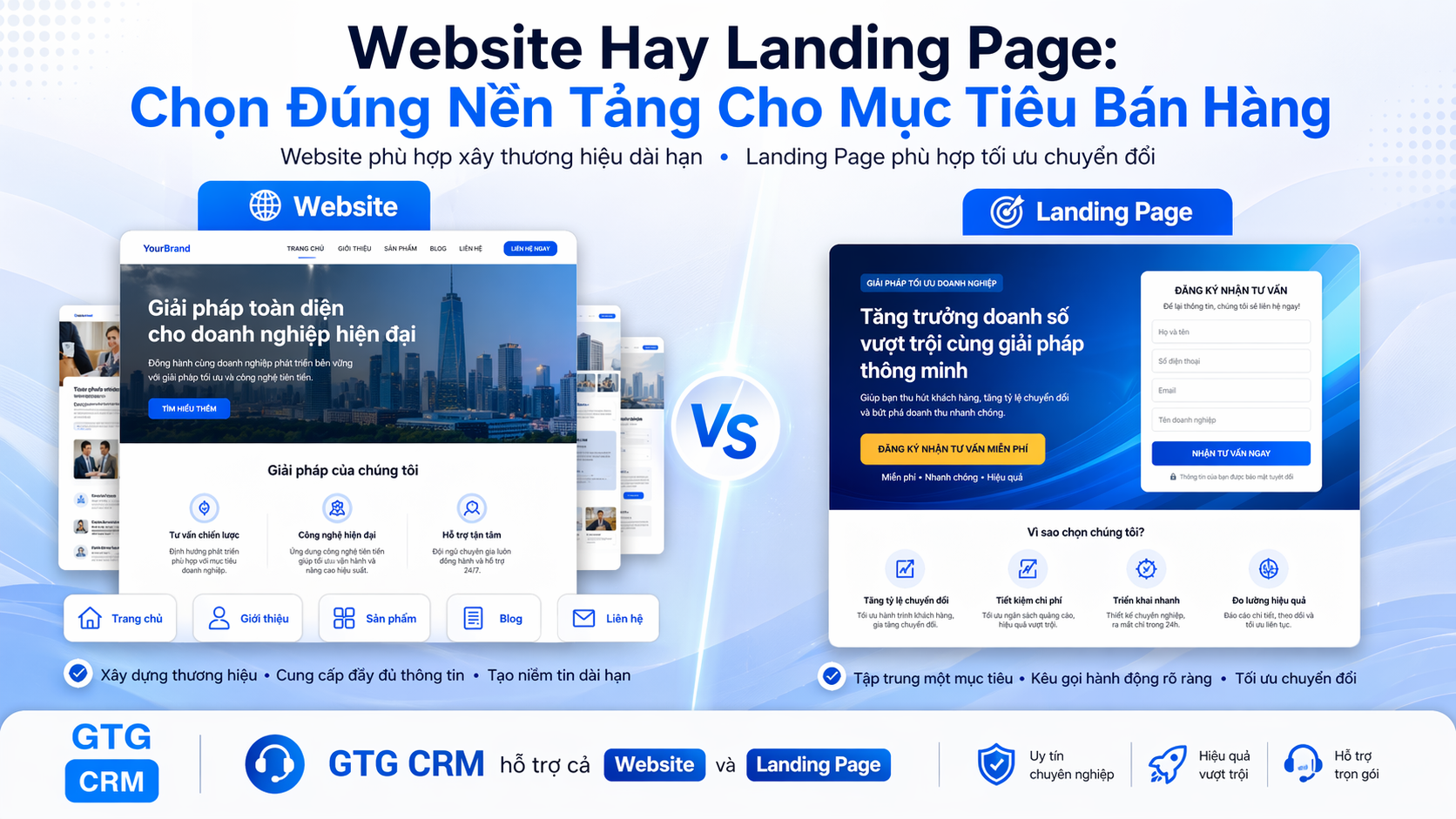
Een website is waar u een alomvattend beeld van uw merk, producten en diensten opbouwt. Een website heeft meestal meerdere pagina's, waaronder een startpagina, een over ons-pagina, een productpagina, een blog, een contactpagina en andere pagina's. Klanten kunnen vrij tussen pagina's navigeren om meer informatie te vinden.
Een verkoopwebsite is geschikt wanneer u een plek nodig heeft waar klanten herhaaldelijk terugkomen, verschillende producten kunnen ontdekken, nuttige inhoud kunnen lezen en zich veilig voelen over de betrouwbaarheid van het merk. Dit is een langetermijnfundament dat u helpt een duurzaam verkoopsysteem op te bouwen.
Landingspagina: Gericht Op Eén Enkel Doel
Een landingspagina voor verkopers is een enkele pagina die is ontworpen om een heel specifiek doel te dienen: een bestelling afronden, contactgegevens verzamelen, zich inschrijven voor een programma of een document downloaden. Een landingspagina heeft geen complex menu, geen meerdere links die de klant ver weg leiden, maar concentreert zich alleen op één bericht en één hoofdfunctie.
Een productlandingspagina wordt vaak gebruikt voor advertentiecampagnes, flashverkopen, lanceringen van nieuwe producten of tijdelijke promotionele programma's. Omdat het gefocust is, is de conversieratio van een landingspagina doorgaans hoger dan wanneer u klanten naar een drukke website-homepage stuurt.
Vergelijking Van Rollen In Online Verkoop
Websites blinken uit in het presenteren van veel informatie, waardoor klanten een algemeen beeld krijgen en vertrouwen wordt opgebouwd. Landingspagina's blinken uit in focus, waardoor u de klantreis kunt beheersen en de aankoopbeslissing kunt versnellen.
Als u twijfelt tussen een website of landingspagina voor verkoop, vraag uzelf dan af: wat is mijn huidige doel? Als het gaat om het opbouwen van een langetermijnimago en het bedienen van meerdere klantgroepen, kies dan voor een website. Als het gaat om het optimaliseren van een specifieke campagne met een duidelijk advertentiebudget, kies dan voor een landingspagina.
Wanneer Moeten Verkopers Prioriteit Geven Aan Het Maken Van Een Website?
Wanneer U Een Langetermijnfundament Moet Opbouwen
Als je net begint met online verkopen en een officiële plek wilt waar klanten meer over je te weten kunnen komen, is een website de eerste prioriteit. Klanten zijn tegenwoordig erg voorzichtig voordat ze iets kopen, ze zullen zoeken naar informatie over het merk, de introductie lezen, andere producten bekijken die je verkoopt, en zelfs controleren of je een blog of nuttige content hebt.
Een website helpt je een professionele en betrouwbare indruk te maken. Het is de plek waar je het merkverhaal kunt vertellen, kunt uitleggen waarom je producten goed zijn, en langdurige banden met klanten kunt opbouwen.
Wanneer Je Veel Producten Of Veel Categorieën Hebt
Als je veel soorten producten verkoopt, van mode tot accessoires, of verschillende productlijnen verkoopt aan verschillende klantgroepen, is een website het beste hulpmiddel om informatie te organiseren. Je kunt duidelijke menu's maken, categorieën opdelen en klanten helpen gemakkelijk te vinden wat ze nodig hebben.
In dit geval is een online winkel website niet alleen een plek om producten te presenteren, maar ook een centrum voor het beheren van de klantervaring. Klanten kunnen alle producten bekijken, vergelijken, meer informatie lezen en comfortabel een aankoopbeslissing nemen.
Wanneer Je Een Plek Wilt Waar Klanten Terug Komen
Een website is een plek waar klanten kunnen opslaan en vele malen terug kunnen komen. Ze kunnen de blog lezen, nieuwe producten bekijken, meer leren over garantiebeleid of gebruikershandleidingen. Als je een loyale klantenkring wilt opbouwen, is een website een onmisbaar platform.
Wanneer Je SEO Wilt Optimaliseren En Op Google Wilt Verschijnen
Een website met veel contentpagina's, blogs en gedetailleerde informatie helpt je betere kansen te krijgen om te verschijnen in zoekmachines. Als je wilt dat klanten je vinden wanneer ze zoeken naar trefwoorden die verband houden met je producten of branche, is investeren in een complete website noodzakelijk.
Wanneer Moet Een Verkoper Prioriteit Geven Aan Het Maken Van Een Landing Page?
Wanneer Je Reclame Maakt Voor Een Specifiek Product Of Aanbieding
Als je Facebook-, Google Ads- of TikTok Ads-advertenties uitvoert voor een specifiek product of promotiecampagne, zal het leiden van klanten naar een product landing page je conversieratio maximaliseren. Een landing page elimineert alle afleidende elementen en focust volledig op de boodschap die je wilt overbrengen in de advertentiecampagne.
Wanneer klanten op een advertentie klikken, verwachten ze precies te zien wat je in die advertentie hebt beloofd. Als je ze naar de homepage van de website leidt met allerlei informatie, zullen ze afgeleid raken en kunnen ze vertrekken zonder enige actie te ondernemen.
Wanneer Je Snel Een Productidee Of Nieuwe Aanbieding Wilt Testen
Voordat je groots investeert in een nieuwe productlijn of een complex verkoopplan, kun je een landing page maken om de markt te testen. Je voert kleine advertentiecampagnes uit, meet hoeveel mensen geïnteresseerd zijn, hoeveel mensen hun informatie achterlaten of kopen, en beslist vervolgens of je doorgaat of niet.
Een landing page helpt je tijd en kosten te besparen, omdat je geen ingewikkelde website hoeft te bouwen om alleen maar een idee te testen.
Wanneer Je Leads Of Klantgegevens Wilt Verzamelen
Landing pages voor verkopers zijn zeer effectief wanneer je contactgegevens van potentiële klanten wilt verzamelen. Je kunt een aantrekkelijke aanbieding aanbieden, zoals een kortingscode, een gratis e-book, of de kans om deel te nemen aan een speciale promotie om in ruil daarvoor een e-mailadres of telefoonnummer te krijgen.
Wanneer klanten hun informatie op de landing page achterlaten, kunnen deze gegevens worden opgeslagen in een klantbeheersysteem zodat je ze later kunt verzorgen en opnieuw kunt benaderen. Dit is een effectieve manier om een lijst met potentiële klanten op te bouwen zonder direct te hoeven verkopen.
Wanneer Je De Effectiviteit Van Elke Campagne Duidelijk Wilt Meten
Elke landingspagina dient een specifiek doel, zodat je gemakkelijk kunt meten welke campagnes effectief zijn en welke aangepast moeten worden. Als je dezelfde homepage voor elke campagne gebruikt, wordt het moeilijk om te weten waar het verkeer vandaan komt, hoe ze zich gedragen, en of de advertentieboodschap overeenkomt met de inhoud van de bestemmingspagina.
Proces voor het kiezen van de juiste tool op basis van bedrijfsdoelstellingen
Om je te helpen eenvoudig te beslissen wanneer je een website nodig hebt en wanneer een landingspagina, stel jezelf de volgende vragen:
Wat is mijn hoofddoel?
- Als je je merk wilt opbouwen, de bekendheid wilt vergroten en een plek wilt hebben waar klanten algemene informatie kunnen vinden, kies dan voor een website.
- Als je je wilt richten op een specifieke actie, zoals kopen, registreren of informatie achterlaten, kies dan voor een landingspagina.
Hoeveel producten of diensten heb ik?
- Als je veel producten, veel categorieën hebt en wilt dat klanten vrij kunnen ontdekken, is een website de betere keuze.
- Als je je wilt concentreren op slechts één product of een specifieke combo voor een bepaalde periode, is een landingspagina effectiever.
Voer ik momenteel een advertentiecampagne uit?
- Als dat zo is, en de campagne is gericht op een specifieke aanbieding of een specifiek product, dan moet je hiervoor een aparte landingspagina maken.
- Als je alleen de algehele merkbekendheid wilt vergroten, kun je bezoekers naar je website leiden.
Moet ik de effectiviteit van elke campagne afzonderlijk meten?
- Als dat zo is, is een landingspagina het beste hulpmiddel, omdat het je in staat stelt om het gedrag van klanten van een specifieke verkeersbron nauwkeurig te volgen.
- Als je alleen een algemeen overzicht nodig hebt, is een website met algemene analysed tools ook voldoende.
Vijf realistische scenario's om je te helpen de juiste tool te kiezen
Scenario 1: Nieuwe verkoper, heeft een professionele online aanwezigheid nodig
Je bent net begonnen met ondernemen, hebt een paar hoofdproducten en wilt een professioneel imago opbouwen. Je hebt nog geen groot budget om veel complexe advertentiecampagnes te voeren.
Oplossing: Geef prioriteit aan het maken van een website. De website zal de plek zijn waar je jezelf introduceert, producten presenteert en vertrouwen opbouwt bij klanten. Zodra je een stabiele website hebt, kun je later geleidelijk landingspagina's toevoegen voor elke campagne.
Scenario 2: Verkoper voert momenteel advertenties uit voor een specifiek product of verkoopprogramma
Je bereidt je voor op een 3-daagse flash sale met 30% korting voor een best-seller product. Je hebt een advertentiebudget en wilt het aantal bestellingen maximaliseren.
Oplossing: Maak een aparte landingspagina voor dit verkoopprogramma. De landingspagina concentreert zich alleen op dat product, toont duidelijk de aanbieding, creëert een gevoel van urgentie en heeft een prominente knop om te kopen. Dit helpt je de klantreis te beheersen en de conversieratio te verhogen.
Scenario 3: Verkoper heeft veel producten en wil dat klanten algemeen informatie vinden
Je runt een kledingwinkel met veel productlijnen: shirts, broeken, accessoires, schoenen. Je wilt dat klanten vrijelijk door alle producten kunnen bladeren, vergelijken en kiezen.
Oplossing: Bouw een complete website met een duidelijk menu, onderverdeeld per categorie. Klanten kunnen gemakkelijk zoeken, producten filteren en ontdekken wat je aanbiedt. Een website helpt je ook om een indruk te wekken van schaal en professionaliteit.
Scenario 4: Verkoper wil snel een nieuw aanbod testen voordat hij groots investeert
Je hebt een idee voor een nieuw productcombo, maar je weet niet zeker of de markt het leuk zal vinden. Je wilt een kleine advertentiecampagne proberen om de reacties te meten.
Oplossing: Maak een landingspagina voor die combo, voer een paar dagen advertenties uit en meet de resultaten. Als de reactie positief is, kun je de campagne uitbreiden of producten aan je hoofdwebsite toevoegen. Als het niet effectief is, kun je stoppen zonder veel moeite te verspillen.
Scenario 5: Verkoper heeft al een website, maar heeft aparte pagina's nodig voor elke campagne
Je hebt een complete website met veel producten. Nu wil je aparte advertentiecampagnes draaien voor specifieke gelegenheden zoals Black Friday, Tết, of de lancering van een nieuw product.
Oplossing: Behoud de website als hoofdplatform, maar maak aparte landingspagina's voor elke campagne. Elke landingspagina heeft een eigen boodschap en aanbieding, waardoor je de effectiviteit gemakkelijk kunt meten en elke campagne onafhankelijk kunt optimaliseren.
Hoe Kunnen Websites En Landingspagina's Samenwerken?
Veel verkopers denken dat ze moeten kiezen tussen de twee, maar in werkelijkheid is een website of een landingspagina voor verkoop geen uitsluitende keuze. Je kunt ze allebei gebruiken om de klantreis te optimaliseren.
Effectief Samenwerkingsmodel
Je kunt de website gebruiken als algemeen platform, waar je het merk introduceert, alle producten presenteert en nuttige inhoud biedt. Tegelijkertijd creëer je aparte landingspagina's voor elke advertentiecampagne of elk belangrijk product.
Bijvoorbeeld: klanten zien een advertentie voor een speciale aanbieding, klikken erop en worden naar een landingspagina geleid die zich alleen op die aanbieding richt. Nadat ze hun actie hebben voltooid, kunnen ze teruggeleid worden naar de website om meer producten te ontdekken of meer te weten te komen over het merk.
Voordelen Van Combinatie
Wanneer je beide combineert, heb je zowel een stevig fundament voor het opbouwen van langetermijnvertrouwen als een flexibel instrument om kortetermijncampagnes te optimaliseren. De website helpt je bestaande klanten te behouden en nieuwe klanten aan te trekken via organische zoekresultaten. Landingspagina's helpen je snelle conversies te sluiten en de effectiviteit duidelijk te meten.
Beheer Van Klanten Uit Beide Bronnen
Ongeacht of klanten van de website of een landingspagina komen, je hebt een plek nodig om hun informatie op te slaan en te beheren. Wanneer klanten een formulier invullen op een landingspagina of website, kan de gegevens naar het CRM-systeem voor verkopers worden gestuurd, zodat je ze gemakkelijk kunt volgen, categoriseren en in de toekomst kunt verzorgen.
Het koppelen van websites, landingspagina's en CRM zorgt ervoor dat je geen enkele kans mist, terwijl je ook een professioneel en effectief verkoopproces opbouwt.
Praktijkvoorbeeld: Een Online Kledingwinkel
Stel je voor dat je eigenaar bent van een online kledingwinkel met ongeveer 50 producten. In het begin had je alleen een Facebook-pagina en gebruikte je die pagina om al je advertentiecampagnes te draaien. Het resultaat was dat klanten de pagina bezochten, te veel informatie zagen, niet wisten waar ze zich op moesten concentreren en uiteindelijk vertrokken zonder iets te kopen.
Na onderzoek besloot je een complete website te bouwen met duidelijke productcategorieën, een introductiepagina en een blog voor stylingtips. De website werd de plek waar klanten meer over het merk konden leren en al je producten konden bekijken.
Tegelijkertijd, wanneer er een uitverkoop was of een nieuwe collectie werd gelanceerd, creëerde je aparte landingspagina's voor elke campagne. Bijvoorbeeld, bij het adverteren voor de zomercollectie, leidde je klanten naar een landingspagina die alleen zomerproducten met 20% korting toonde. Deze landingspagina had geen complex menu, geen links naar andere producten, maar was alleen gericht op het laten bekijken en direct kopen door de klant.
Het resultaat was een duidelijke toename van de conversieratio vanuit advertenties, terwijl de website de rol behield als plek waar klanten terugkwamen om meer te weten te komen. Je verzamelde ook klantgegevens uit beide bronnen en beheerde deze in één enkel CRM-systeem.
GTG CRM: De Oplossing Voor Zowel Websites Als Landingspagina's
Als je op zoek bent naar een tool waarmee je zowel websites als landingspagina's eenvoudig kunt implementeren, is GTG CRM de juiste keuze. Het systeem biedt een tool voor het maken van websites met meerdere pagina's en een duidelijk menu en navigatie, terwijl je ook snel drag-and-drop landingspagina's kunt maken voor specifieke campagnes.
U kunt de website gebruiken als een alomvattend verkoopplatform om uw merk te introduceren en producten te presenteren. Wanneer u een advertentiecampagne wilt uitvoeren, hoeft u alleen maar een aparte bestemmingspagina te maken met een gerichte boodschap en duidelijke call-to-actions (CTA's). Alle informatie die klanten achterlaten op de website of bestemmingspagina wordt automatisch opgeslagen in het CRM-systeem, zodat u uw klanten later gemakkelijk kunt beheren en onderhouden.
GTG CRM vereist niet dat u kiest tussen een website of een bestemmingspagina, maar stelt u in staat beide tools flexibel te gebruiken, afhankelijk van de bedrijfsdoelstellingen op dat moment. U kunt formulieren maken om leads te verzamelen, menu's en navigatie voor uw website te beheren en eenvoudig inhoud te bewerken zonder programmeerkennis.
Als u gedetailleerd advies wilt over of u moet beginnen met een website of een bestemmingspagina op basis van uw huidige bedrijfssituatie, staat het GTG CRM-team klaar om u te helpen de juiste oplossing te kiezen en deze snel te implementeren.
Conclusie
Wanneer een website nodig is en wanneer een bestemmingspagina nodig is, hangt af van uw bedrijfsdoelstellingen, middelen en ontwikkelingsfase. Een website is geschikt als u een langetermijnplatform wilt opbouwen, veel producten wilt presenteren en vertrouwen wilt opbouwen bij klanten. Een bestemmingspagina is geschikt als u zich wilt richten op één campagne, één product of één specifieke aanbieding om de conversies te maximaliseren.
U hoeft niet noodzakelijk voor één van beide te kiezen. Het redelijk gebruik van zowel websites als bestemmingspagina's helpt u zowel langetermijn- als kortetermijndoelstellingen te optimaliseren, terwijl u tegelijkertijd uw verkoopresultaten gemakkelijk kunt meten en verbeteren.
Het belangrijkste is om de rol van elke tool goed te begrijpen, het juiste moment te kiezen om deze te gebruiken en ze te integreren in een professioneel verkoopproces. Als u dit goed doet, zult u merken dat verkeer niet langer verspild wordt, de boodschap duidelijker wordt en de conversieratio aanzienlijk stijgt.
Veelgestelde Vragen
Ik begin net met online verkopen, moet ik eerst een website of een bestemmingspagina maken?
Als u veel producten hebt en een langetermijnmerk wilt opbouwen, geef dan prioriteit aan het maken van een website. Als u slechts één product wilt testen of een kleine campagne wilt uitvoeren, bespaart een bestemmingspagina u meer tijd en kosten.
Kan een bestemmingspagina een website vervangen?
Een bestemmingspagina kan een website niet vervangen als u een alomvattend platform nodig hebt om uw merk te introduceren, veel producten te presenteren en langetermijnbetrouwbaarheid op te bouwen. Een bestemmingspagina is alleen geschikt voor kortetermijn- en gerichte doelstellingen.
Kan ik tegelijkertijd een website en een bestemmingspagina gebruiken?
Absoluut. Veel verkopers gebruiken een website als hun belangrijkste platform en maken aparte bestemmingspagina's voor elke advertentiecampagne of elk belangrijk product. Deze aanpak helpt u zowel een solide basis te hebben als flexibel te zijn in elke campagne.
Wanneer moet ik een aparte bestemmingspagina voor een product maken?
Wanneer u adverteert voor een specifiek product, een tijdelijke aanbieding of een speciale promotiecampagne. Een bestemmingspagina helpt u de boodschap te concentreren en de conversieratio van advertenties te verhogen.
Hoe weet ik of mijn campagne een aparte bestemmingspagina nodig heeft?
Als uw campagne een duidelijk doel, een specifieke boodschap en één hoofdactie heeft die u wilt dat klanten ondernemen, moet u een aparte bestemmingspagina maken. Als u alleen de algemene merkbekendheid wilt vergroten, is het voldoende om klanten naar uw website te leiden.
Kan ik klanten beheren vanaf zowel de website als de bestemmingspagina?
Ja, u moet een CRM-systeem gebruiken om klantgegevens van beide bronnen op te slaan en te beheren. Wanneer klanten een formulier invullen op de website of bestemmingspagina, wordt de gegevens naar het CRM gestuurd, zodat u ze gemakkelijk kunt volgen en onderhouden.
Zet wat u net gelezen hebt om in tastbare resultaten — pas het nu toe met GTG CRM, gratis.
Nu toepassen