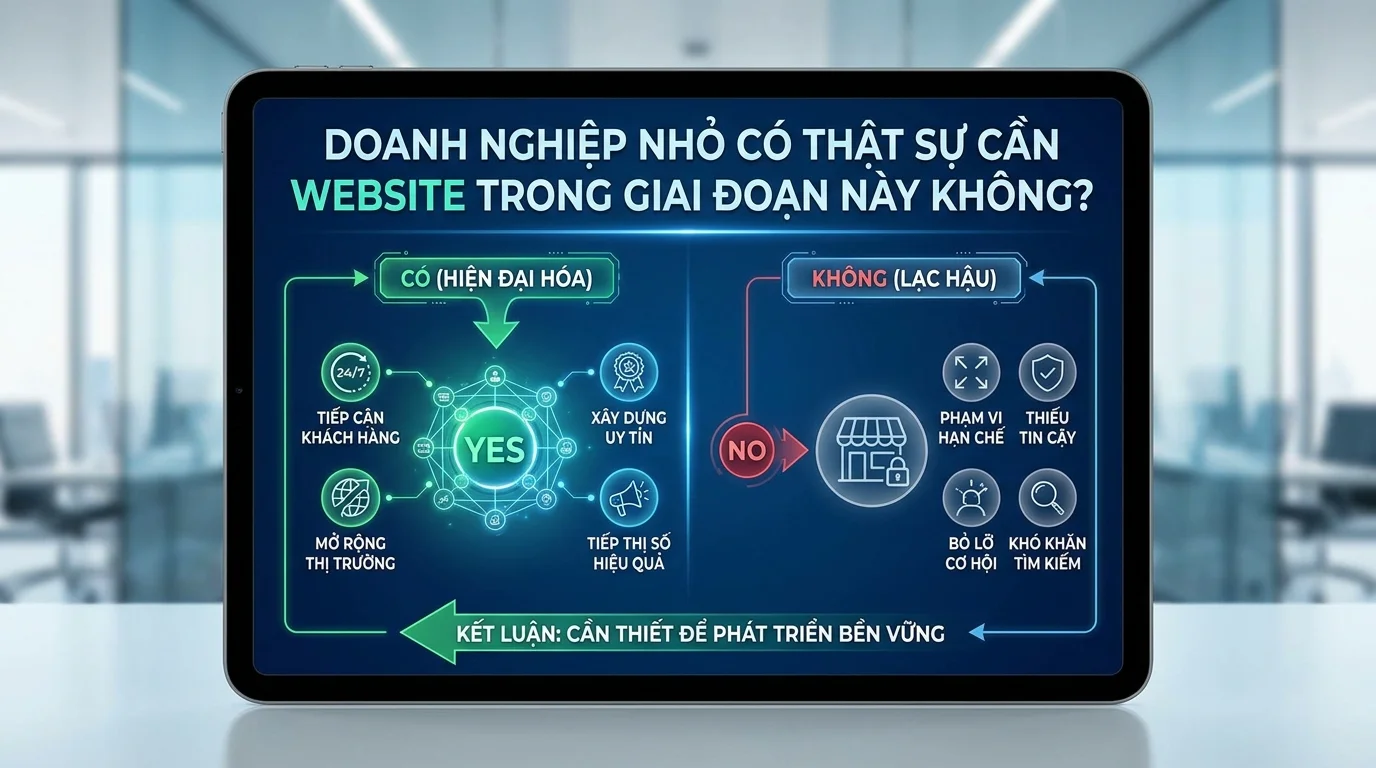
Številni lastniki malih podjetij še vedno dobro poslujejo s Facebookom, Zalo ali platformami za e-trgovino in se pogosto sprašujejo, ali resnično potrebujejo naložiti v spletno stran. Odgovor ni vedno "takoj", vendar ko podjetje začne graditi zaupanje z novimi strankami, potrebuje osrednje mesto za uradne informacije ali želi bolj učinkovito oglaševati, spletna stran postane nepogrešljiva platforma za resno in strukturirano spletno prisotnost.

Ta članek vam bo pomagal bolje razumeti vprašanje, ali **mala podjetja potrebujejo spletne strani**, v katerih primerih so resnično potrebne in zakaj so spletne strani pomembne za fazo rasti podjetja.
Zakaj mnoga mala podjetja še nimajo spletnih strani?
Dejstvo je, da veliko malih in srednjih podjetij deluje popolnoma na podlagi kanalov, kot so Facebook, Zalo, platforme za e-trgovino ali ustno izročilo. Ti kanali prinašajo precej dobre začetne rezultate, stranke hitro komunicirajo, stroški so nizki in enostavni za upravljanje.
Zato mnogi lastniki podjetij menijo, da izdelava spletne strani ni potrebna ali jo lahko odložijo. Nekaj pogostih razlogov, zakaj je uvedba spletne strani odložena, vključuje:
- Začetni stroški: Skrb glede stroškov oblikovanja, programiranja in vzdrževanja spletne strani
- Pomanjkanje tehničnega znanja: Občutek, da je upravljanje spletne strani preveč zapleteno in zahteva strokovnjaka
- Nenazadnje nejasna potreba: Ker posel še vedno dobro raste preko obstoječih kanalov
- Ne vedo, kje začeti: Nejasnost glede tega, kaj je potrebno, kakšna vsebina ali kakšno oblikovanje
Te pomisleki so povsem upravičeni. Vendar pa, ko podjetje začne rasti in potrebuje dostop do novih strank ali širitev trga, samo zanašanje na ločene kanale razkrije veliko omejitev.
Kdaj mala podjetja resnično potrebujejo spletno stran?
Ne glede na to, ali **spletna stran za mala podjetja** vedno predstavlja prvo prioriteto. Vendar obstajajo obdobja in specifične situacije, ko spletna stran postane nujna za bolj trajnostno rast podjetja.
1. Ko želite ustvariti profesionalno in zaupanja vredno podobo
Današnje stranke, še posebej poslovne stranke ali posamezne stranke z visoko vrednostjo naročila, želijo pred nakupom podrobno preučiti. Iskali bodo informacije o podjetju na Googlu, in če najdejo le osebno Facebook stran ali ničesar, se bo stopnja zaupanja znatno zmanjšala.
Dobro strukturirana **spletna stran za malo podjetje** pomaga pokazati, da podjetje deluje resno, z jasnimi informacijami o izdelkih, storitvah, ekipi in načinih stika.
2. Ko imate veliko informacij za popolno predstavitev
Facebook in Zalo sta dobra kanala za hitro interakcijo, vendar je težko organizirati informacije na logičen in popoln način. Ko podjetje potrebuje predstaviti številne storitve, cenike, delovne procese, študije primerov ali garancijske pogoje, bo spletna stran z jasno strukturo strankam veliko lažje dostopna do informacij.
3. Ko oglašujete in potrebujete uradno mesto za privabljanje prometa
Če podjetje oglašuje na Google Ads, Facebook Ads ali TikTok Ads, je usmerjanje strank na Facebook stran ali Zalo inbox pogosto neprofesionalno in lahko vzbuja dvom. **Vstopna stran za malo podjetje** ali spletna stran z ustrezno vsebino bo povečala stopnjo konverzije in bolje izkoristila proračun za oglaševanje.
4. Ko želite uradni kanal za vračanje strank
Za razliko od objav na družbenih omrežjih, ki se hitro izgubijo ali jih je težko ponovno najti, je spletna stran stalna destinacija, kamor se lahko stranke kadarkoli vrnejo, da bi poiskale informacije, pregledale izdelke ali navezale stik. Je dolgotrajna digitalna lastnina podjetja.
5. Ko potrebujete sistematično zbiranje podatkov o strankah
Če želi podjetje zgraditi bazo podatkov potencialnih strank, je spletna stran s kontaktnimi obrazci ali prijavami zelo uporabno orodje. Podatke s spletne strani je mogoče integrirati v CRM sistem za učinkovitejše upravljanje in skrb za stranke.
Znaki, ki kažejo, da podjetju manjka spletna stran
Včasih potreba po spletni strani ne izhaja iz načrtovanja, temveč iz dejanskih težav med poslovanjem. Spodaj so navedeni pogosti znaki, ki kažejo, da podjetje težko posluje, ker nima ustrezne spletne strani.
Stranke se veliko sprašujejo, a je težko poslati povzetek informacij
Ko nove stranke stopijo v stik preko Zalo ali Messengra, pogosto sprašujejo o cenah, storitvah, postopkih, pravilnikih. Če morate vsakič, ko vas stranka povpraša, poslati dolga sporočila, PDF datoteke ali ločene povezave, je to jasen znak, da podjetje potrebuje osrednje mesto za informacije.
Informacije so razpršene po različnih kanalih
Nekatera podjetja objavljajo cene na Facebooku, storitve predstavljajo na Zalo, dejanske fotografije pa so na Instagramu. Stranke morajo prebrskati več mest, da bi dobile popolno sliko, kar jih zlahka utrudi in odvrne.
Nove stranke težko preverijo verodostojnost
Ko stranke na Googlu iščejo ime podjetja in ne najdejo ničesar drugega kot nekaj objav na Facebooku ali pa sploh ničesar, dvomijo o verodostojnosti. Spletna stran podjetja s popolnimi informacijami, poslovnimi dovoljenji, naslovom, telefonsko številko bo ustvarila spletno verodostojnost za podjetje že ob prvem stiku.
Izgubljene priložnosti, ker stranke ne najdejo informacij dovolj hitro
Veliko strank nima časa za klepet ali čakanje na odgovor. Preden se odločijo za stik, želijo hitro poiskati informacije. Če nimate spletne strani, podjetje morda izgublja te potencialne stranke, ne da bi se tega zavedalo.
Prodajna ekipa mora ponavljati odgovore na osnovna vprašanja
Če morajo prodajniki vsaki novi stranki ponovno razlagati o izdelkih, storitvah, postopkih ali pravilnikih, je to znak, da potrebujete spletno prisotnost, kjer si lahko stranke same poiščejo informacije, kar prihrani čas obema stranema.
Dejanske poslovne koristi spletne strani za mala podjetja
Veliko lastnikov podjetij še vedno misli, da je spletna stran le "nekaj, da je", vendar v resnici, če je pravilno implementirana, spletna stran prinaša zelo konkretne poslovne vrednosti.
Ustvari uradno in zaupanja vredno stičišče
Spletna stran je kot virtualna pisarna, kjer lahko stranke kadar koli obiščejo, da bi izvedele več o podjetju. To je edino mesto, kjer imate popoln nadzor nad vsebino, slikami in sporočili, ki jih posredujete, ne da bi bili odvisni od algoritmov družbenih omrežij ali pravilnikov platform za e-trgovino.
Poveča doseg do novih strank
Ko imate spletno stran z osnovno SEO optimizacijo, ima podjetje možnost, da se prikaže v rezultatih iskanja Google. To pomaga doseči stranke, ki aktivno iščejo izdelke ali storitve, ki jih ponujate, namesto da bi le čakali, da slučajno naletijo na objavo na družbenih omrežjih.
Služi kot osnova za trženjske kampanje
Vse trženjske dejavnosti, kot so oglaševanje, pošiljanje e-pošte, deljenje na družbenih omrežjih, potrebujejo jasno destinacijo. Spletna stran deluje kot center marketinškega ekosistema, kjer se združuje promet z vseh kanalov in se pretvarja v potencialne stranke.
Sistematično zbiranje podatkov o strankah
Z obrazci za stik, obrazci za prijavo na posvet ali pojavnimi okni za zbiranje e-poštnih sporočil spletna stran podjetjem pomaga sistematično graditi bazo potencialnih strank. Te podatke je nato mogoče vnesti v sistem CRM za učinkovitejšo nego in konverzijo.
Zmanjšanje stroškov posvetovanj in podpore strankam
Ko so informacije o izdelkih, storitvah, procesih in pravilnikih jasno predstavljene na spletni strani, si jih lahko stranke predhodno ogledajo same. To zmanjša število osnovnih vprašanj, s katerimi se mora ukvarjati prodajna ekipa, in jim omogoča, da se osredotočijo na stranke, ki imajo resnično visoko potrebo.
Ustvarjanje dolgoročne digitalne lastnine za podjetje
Za razliko od plačanih oglasov ali objav v družabnih omrežjih s kratko življenjsko dobo, je spletna stran dolgoročna digitalna lastnina. Ko je enkrat dobro zgrajena in optimizirana, bo podjetju še vrsto let prinašala vrednost.
Resnična zgodba: Kako je pomanjkanje spletne strani podjetju preprečilo priložnosti
Manjše podjetje, specializirano za storitve svetovanja pri notranjem oblikovanju, je v prvih dveh letih poslovalo precej dobro zaradi priporočil obstoječih strank in nekaj objav na Facebooku. Lastnik podjetja je menil, da je samo stran na družbenem omrežju dovolj, saj so stranke pogosto neposredno kontaktirale preko Messengerja.
Vendar, ko so začeli oglaševati s Facebook Ads za razširitev baze strank, je bila stopnja konverzije zelo nizka. Po analizi so ugotovili, da številne potencialne stranke, ki so kliknile na oglas in obiskale stran družbenega omrežja, niso našle popolnih informacij o storitvah, delovnem procesu, referenčnih cenikih ali opravljenih projektih. Morali so sproti pošiljati sporočila z vprašanji, vendar niso vsi bili potrpežljivi pri čakanju na odgovor.
Nekatere stranke so iskale ime podjetja na Googlu, da bi preverile njegovo verodostojnost, preden so se odločile za stik, vendar niso našle nič drugega kot stran na družbenem omrežju. Začele so dvomiti in so preusmerile svoje zanimanje na konkurentske ponudnike z bolj profesionalnimi spletnimi stranmi.
Ko so prepoznali težavo, se je podjetje odločilo zgraditi preprosto spletno stran s stranmi za predstavitev storitev, portfeljem projektov, delovnim procesom in obrazcem za stik. Rezultat je bil opazno povečanje stopnje konverzije oglasov in tudi povečanje števila strank, ki so pustile svoje podatke preko obrazca. Pomembneje je, da jim ni bilo več treba zapravljati časa z odgovarjanjem na osnovna vprašanja.
Spletna stran ne nadomešča družbenih omrežij, ampak je uradna platforma
Pogosta zmota je, da spletne strani ni več treba uporabljati družbenih omrežij, ali obratno, da je s spletnimi mesti družbenih omrežij ni več potrebna. V resnici sta obe pomembni in imata različni vlogi v marketinškem ekosistemu podjetja.
Vloga družbenih omrežij
Facebook, Zalo, Instagram, TikTok so odlični kanali za:
- Neposredno in hitro interakcijo s strankami
- Gradnjo skupnosti in ustvarjanje povezanosti
- Oglaševanje po ugodnih cenah
- Deljenje kratkih, privlačnih in lahko razširljivih vsebin
Vendar pa imajo ti kanali velike omejitve: ne morete nadzorovati algoritmov, ne posedujete popolnoma podatkov o strankah in vsebina se zlahka izgubi ali izgine s časom.
Vloga spletne strani
Spletna stran je nasprotno platforma, ki jo popolnoma nadzorujete. To je mesto, kjer:
- So zbrane popolne in organizirane informacije
- Je prikazana profesionalnost in verodostojnost
- Je dobrodošel promet z vseh marketinških kanalov
- So zbrani in upravljani podatki o strankah
- Je optimiziran SEO za prikaz na Googlu
Idealna kombinacija je uporaba družbenih omrežij za doseganje in interakcijo s strankami, nato pa jih usmeriti na spletno stran, da se podrobneje seznanijo in konvertirajo v dejanske stranke. Na primer, objava na Facebooku lahko pritegne pozornost, vendar ko si stranke želijo podrobneje ogledati, bodo kliknile na povezavo do spletne strani, da si ogledajo podrobne informacije, cene, proces in pustijo svoje kontaktne podatke.
Manjša podjetja za začetek ne potrebujejo zapletenih spletnih strani
Velika ovira, zaradi katere mnoga mala podjetja nimajo spletne strani, je prepričanje, da mora biti spletna stran obsežna, zelo lepa in draga. V resnici za začetek potrebujete le spletno stran, ki je dovolj jasna, dovolj zaupanja vredna in dovolj funkcionalna.
Kaj potrebuje osnovna spletna stran?
Preprosta spletna stran za prodajo ali predstavitvena spletna stran podjetja za mala podjetja običajno potrebuje:
- Domača stran: Splošna predstavitev podjetja, glavnih izdelkov/storitev
- Stran o nas: Zgodba, temeljne vrednote, ekipa
- Stran z izdelki/storitvami: Podroben opis vsakega izdelka ali storitve
- Kontaktna stran: Kontaktni podatki, zemljevid, obrazec za pustitev podatkov stranke
- Spletni dnevnik (blog) (neobvezno): Deljenje znanja, študije primerov, novice
Ni potrebe po preveč zapletenih učinkih ali domiselnih funkcijah. Pomembno je, da so informacije jasne, lahko najdljive, lahko berljive in omogočajo enostaven stik.
Postopno širjenje glede na potrebe
Lahko začnete s preprosto spletno stranjo, nato pa postopoma dodajate nove strani in funkcije, ko se podjetje razvija. Na primer, sprva potrebujete le predstavitveno stran in kontaktni obrazec, kasneje pa lahko dodate blog za deljenje znanja ali ciljne strani za mala podjetja za vsako specifično oglaševalsko akcijo.
Rešitev s strani GTG CRM: Urejena spletna stran za mala podjetja
Za mala podjetja, ki iščejo rešitev za začetek gradnje spletne strani brez potrebe po zapletenem tehničnem znanju ali velikem proračunu, GTG CRM ponuja orodje za ustvarjanje spletnih strani, vgrajeno v ekosistem upravljanja podjetja.
Kaj podpira GTG CRM
GTG CRM pomaga malim podjetjem pri gradnji urejene spletne strani s funkcijami:
- Ustvarjanje večstranske spletne strani: Enostavna gradnja strani, kot so domača stran, o nas, izdelki, storitve, kontakt
- Upravljanje menijev in navigacije: Logična organizacija informacij, ki strankam olajša iskanje
- Ustvarjanje namenskih ciljnih strani: Primerno za vsako oglaševalsko akcijo ali specifičen cilj
- Osnovna podpora za SEO: Prilagajanje naslovov, opisov, URL-jev za vsako stran za lažjo uvrstitev na Googlu
- Domena po meri: Uporaba lastne domene podjetja za večjo profesionalnost
- Obrazci za zbiranje podatkov: Podatki o strankah iz obrazcev se lahko neposredno vnesejo v sistem CRM za upravljanje in nego
Prednosti uporabe GTG CRM
Namesto najemanja ločenega podjetja za oblikovanje spletnih strani ali učenja uporabe zapletenih platform, vam GTG CRM omogoča samostojno ustvarjanje in upravljanje spletne strani v istem sistemu z drugimi orodji za prodajo, nego strank in trženje.
To malim podjetjem pomaga prihraniti čas in denar, predvsem pa ustvari enoten podatkovni ekosistem: od trenutka, ko stranka obišče spletno stran, pusti podatke, do skrbi zanjo in pretvorbe v resnično stranko.
Zaključek
Vprašanje ali mala podjetja potrebujejo spletno stran nima univerzalnega odgovora. Vendar pa, ko podjetje začne potrebovati vzbujanje zaupanja pri novih strankah, potrebuje prostor za zbiranje uradnih informacij ali želi bolje izkoristiti oglaševalske kampanje, spletna stran postane nepogrešljivo orodje.
Spletna stran ni nujno obsežna ali zapletena, vendar mora biti dovolj jasna, da stranke razumejo, kdo je podjetje, kaj počne, zakaj mu lahko zaupajo in kako stopiti v stik. To ni nesmiseln strošek, temveč dolgoročno digitalno premoženje, ki podjetju pomaga povečati profesionalnost, zmanjšati izgubo potencialnih strank in ustvariti trdne temelje za nadaljnje trženjske in prodajne dejavnosti.
Če ste v fazi, ko potrebujete dobro strukturirano spletno stran za malo podjetje, da bi resneje začeli svojo spletno prisotnost, razmislite o znakih in prednostih, predstavljenih v tem članku. In če potrebujete preprosto, lahko uresničljivo rešitev, ki še vedno izpolnjuje vse vaše potrebe, je ustvarjanje spletne strani podjetja z GTG CRM morda pravi začetek za vas.
Pogosto zastavljena vprašanja
1. Ali podjetja, ki prodajajo samo na Facebooku, potrebujejo spletno stran?
Če prodajate samo stalnim kupcem ali majhni skupini, je lahko Facebook dovolj. Če pa želite razširiti svoje poslovanje, vzbuditi zaupanje pri novih kupcih ali učinkovito voditi oglaševalske kampanje, spletna stran pomaga ustvariti uradno destinacijo in povečati stopnjo konverzije.
2. Koliko strani potrebuje spletna stran malega podjetja?
Za začetek je dovolj 3-5 strani: domača stran, o nas, izdelki/storitve, kontakt. Kasneje lahko postopoma dodajate blog, cenike ali ciljne strani za posamezne kampanje.
3. Ali je izdelava spletne strani draga?
Stroški so odvisni od načina izvedbe. Najem zasebnega oblikovalca lahko stane od nekaj milijonov do nekaj deset milijonov. Vendar pa obstaja veliko platform, ki podpirajo mala podjetja pri ustvarjanju lastnih spletnih strani z nizkimi stroški ali so že vključene v sisteme upravljanja, kot je GTG CRM.
4. Ali spletna stran pomaga podjetjem povečati prihodke?
Spletna stran ne poveča samodejno prihodkov, vendar ustvarja platformo za podjetja, da dosežejo nove stranke, povečajo profesionalnost, zbirajo podatke o strankah in podpirajo učinkovitejše trženjske kampanje.
5. Ali mala podjetja potrebujejo SEO za svojo spletno stran?
Osnovni SEO je nujen, da se spletna stran prikaže v Googlu, ko uporabniki iščejo. Ni vam treba takoj začeti s kompleksnim SEO-jem, vendar poskrbite, da bo vsaka stran imela jasen naslov, opis in kakovostno vsebino.
6. Kakšna je razlika med ciljno stranjo in spletno stranjo?
Ciljna stran je običajno ena sama stran, osredotočena na poseben cilj, kot je registracija, prenos dokumenta ali nakup. Spletna stran je zbirka več strani s splošnim namenom predstavitve podjetja in zagotavljanja podrobnejših informacij.
7. Nimam tehničnega znanja, ali lahko naredim spletno stran sam?
Danes obstaja veliko orodij, ki podpirajo podjetja pri ustvarjanju lastnih spletnih strani brez znanja programiranja, kot so platforme povleci in spusti ali sistemi, ki so vključeni v programsko opremo za upravljanje podjetij. GTG CRM je primer, ki malim podjetjem pomaga enostavno zgraditi lastne spletne strani.
8. Kako pogosto naj posodabljam vsebino spletne strani?
Odvisno od narave poslovanja. Priporočljivo je posodobiti, ko imate nove izdelke, spremenite storitve ali podatke za stik. Če imate blog, je priporočljivo objavljati redno, da povečate verodostojnost in podprete SEO.
Spremenite prebrano v resnične rezultate — takoj poskusite z brezplačnim GTG CRM.
Poskusite zdaj