Hur blir man då en "utmärkt annonsör" i Googles ögon?
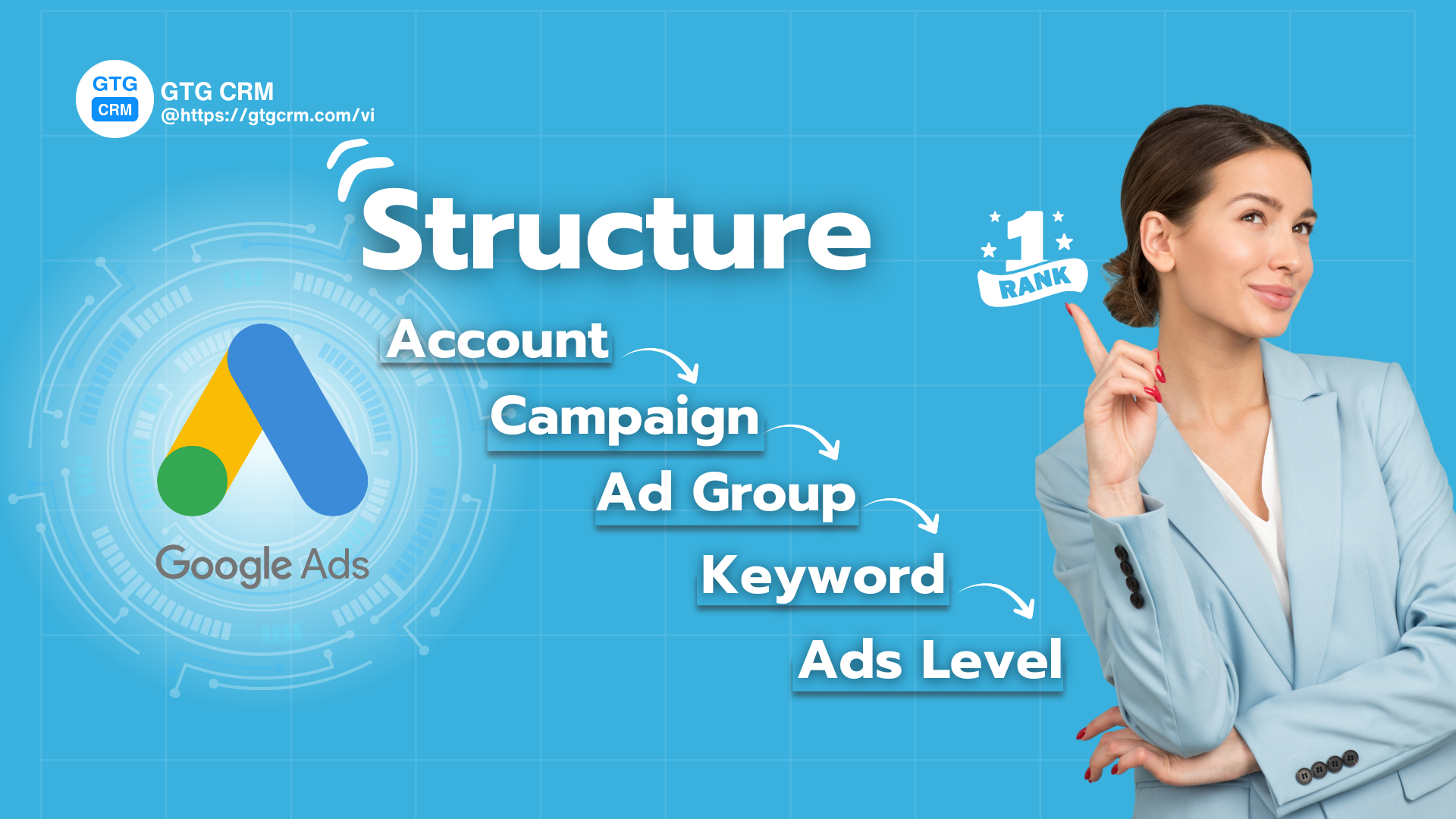
Standardstruktur för Google Ads-kampanjer - GTG CRM
Det handlar om att skapa en sömlös upplevelse från det att användaren söker tills de besöker din webbplats. Allt måste "passa ihop" perfekt:
- Nyckelorden måste spegla användarens exakta sökintention.
- Din annons måste innehålla dessa nyckelord och erbjuda en attraktiv lösning.
- Landningssidan måste vara den idealiska destinationen, där användarna hittar exakt vad de behöver, med en blixtsnabb laddningshastighet.
När dessa tre faktorer kombineras, kommer din Kvalitetspoäng att skjuta i höjden, och Google kommer att "belöna" dig genom att prioritera visningen av dina annonser till lägsta möjliga kostnad. Kort sagt, jaga inte budgeten, fokusera på relevans och användarupplevelse - det är vägen till hållbar lönsamhet.
Låt oss med GTG CRM utforska hur man bygger ett stabilt "Google Ads-hus", våning för våning.
Våning 1: Konto (Kontonivå) - Grunden för framgång
Google Ads-kontot är där alla dina annonskampanjer finns. Redan från början behöver du tydligt definiera:
- Affärsmål: Vad annonserar du för? Öka försäljningen, samla leads, eller öka varumärkeskännedomen?
- Logisk organisation: Varje konto bör endast vara för ett varumärke eller ett företag. Detta gör det enklare för dig att följa upp prestanda och analysera data utan att bli förvirrad.
- Spårningskopplingar: Detta är ett extremt viktigt steg. Se till att du har kopplat ditt Google Analytics 4 (GA4)-konto, Google Tag Manager och konfigurerat konverteringsspårning. Ett konto med fullständig spårning hjälper dig att exakt mäta effekten av varje spenderad krona, och därmed fatta rätt optimeringsbeslut.
Våning 2: Kampanj (Kampanjnivå) - Dela upp stora mål
Kampanjer kan liknas vid stora avdelningar i huset, där varje rum har ett eget specifikt mål.
Du bör dela upp kampanjer baserat på:
- Huvudmål: Till exempel: Kampanj för "Leadgenerering" för kursen, Kampanj för "Försäljning" för produkt A.
- Stora produkt-/tjänstekategorier: Kampanj för "Marketing Automation" och Kampanj för "Social Media Management" för GTG CRM-produkter.
- Annonseringskanaler: Separera kampanjer för Sök, Display, Video eller Performance Max för att undvika överlappande budgetar och enkelt kunna kontrollera prestanda.
- Budget & Målriktning: Varje kampanj kommer att ha sin egen budget och sina egna målriktningar (geografisk plats, enheter, tid).
Bästa praxis: Namnge kampanjen systematiskt, till exempel: [Land] - [Kanal] - [Produkt] som i ”VN – Sök – Marknadsföringskurs”.
Nivå 3: Annonsgrupper (Ad Group Level) - Fördjupad teman
Om kampanjen är de stora rummen, då är annonsgrupperna små arkivskåp i varje rum. Varje annonsgrupp måste kretsa kring ett smalt tema eller en specifik sökintention .
Exempel: I kampanjen ”Digital Marknadsföringskurs” kan du skapa annonsgrupper:
- Annonsgrupp 1: ”Digital Marknadsföringskurs HCMC” (fokuserar på sökord med plats).
- Annonsgrupp 2: ”Digital Marknadsföringskurs Online” (fokuserar på sökord för onlinekurser).
Vanliga misstag: Att samla alla sökord i en enda grupp. Detta gör att annonserna blir irrelevanta, minskar Kvalitetsresultatet och ökar buden.
Nivå 4: Sökord (Keyword Level) - Där potentiella kunder möts
Sökord är kopplingen mellan användaren och din annons. Att använda sökordsmatchningstyperna på ett rimligt sätt är den avgörande faktorn:
- Exakt matchning (Exact Match): Maximal kontroll, lämplig för nyckelsökord.
- Frasmatchning (Phrase Match): Måttlig utvidgning, fångar fler varianter.
- Negativa sökord (Negative Keyword): Uppdatera kontinuerligt för att eliminera irrelevanta sökningar, vilket håller trafiken ren.
Optimeringsknep: För viktiga sökord, implementera SKAG (Single Keyword Ad Group) strukturen. Det vill säga, varje annonsgrupp innehåller endast ett enda sökord. Detta säkerställer att annonsen matchar perfekt med användarens sökning, vilket leder till ökad CTR och ökad Kvalitetsresultat.
Funktionen för att skapa och hantera Google-annonser GTG CRM - Integrerad med AI föreslår automatiskt potentiella sökord och grupperar sökord baserat på användarens sökintention ( köp, informationssökning, produktjämförelse... ), vilket hjälper dig att bygga en korrekt annonsgruppsstruktur från början. Baserat på kundens och konkurrenternas beteende blir hanteringen och skapandet av Google Ads-annonser enklare, optimerar sökordsforskningen och hjälper dig att bygga en standardiserad annonskontostruktur.
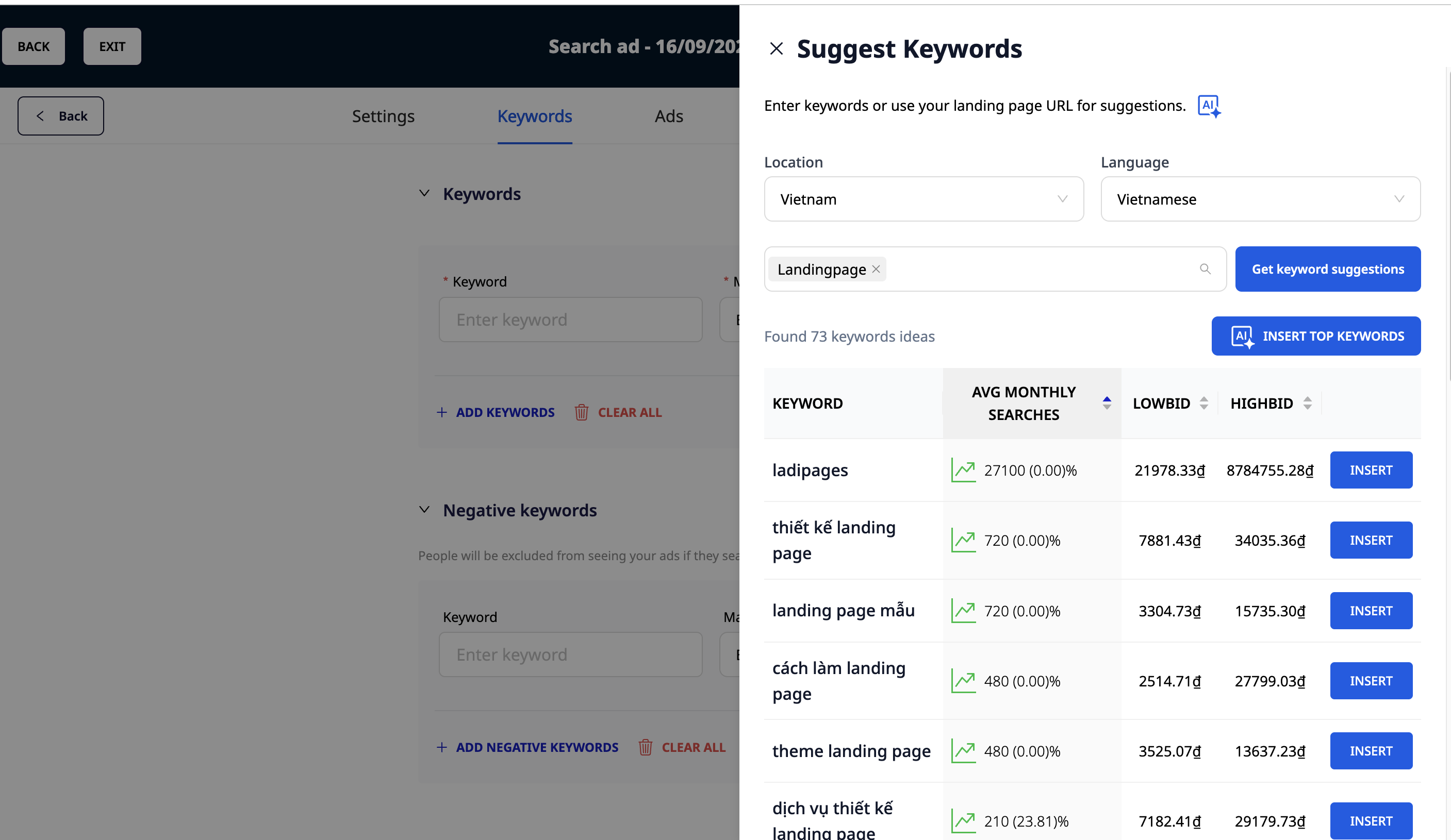
GTG CRM föreslår sökord med AI
Nivå 5: Annonser (Ad Level)
Varje annonsgrupp behöver minst 2-3 annonsvarianter, inklusive Responsive Search Ads (RSA) så att Google automatiskt kan testa och hitta den mest effektiva versionen.
Principer för att skriva standardannonser:
- Inkludera huvudnyckelordet: Det bör finnas i rubriken och beskrivningen.
- Framhäv ditt unika värdeerbjudande (UVP): Varför ska användarna välja dig?
- Tydlig Call to Action (CTA): "Registrera dig nu", "Läs mer", "Prova gratis"...
- Utnyttja annextillägg (Ad Extensions): Sitelinks, Callouts, Structured Snippets... gör annonserna mer framträdande och ökar CTR.
Landningssida & Kvalitetsresultat: Två Avgörande Faktorer För Framgång
Alla ovanstående ansträngningar blir meningslösa om din landningssida inte är bra. Landningssidan måste vara i linje med nyckelordet och annonsinnehållet. En landningssida med snabb laddningstid, relevant innehåll och optimerad för konverteringar (CRO) kommer att vara en stor "pluspoäng" för Kvalitetsresultatet.
Kvalitetsresultatet är en kombination av:
- Förväntad klickfrekvens (CTR): Är din annons tilltalande?
- Annonsens relevans: Matchar annonsen nyckelordet?
- Landningssidans upplevelse: Är landningssidan bra och relevant?
Slutsats
En standardiserad Google Ads-struktur hjälper dig att attrahera högkvalitativ trafik, men att omvandla potentiella kunder till intäkter är det yttersta målet.
Det är här GTG CRM spelar sin roll:
- Automatisering av leadhantering: GTG CRM kan automatiskt registrera och klassificera leads från Google Ads-kampanjer, vilket hjälper säljteamet att följa upp omedelbart.
- Detaljerad mätning: GTG CRM:s rapporter låter dig analysera djupare: Vilken kampanj ger bäst leads? Vilka nyckelord resulterar i flest ordrar?
- Integration över flera kanaler: GTG CRM hjälper dig att följa kundresan från det att de klickar på en Google Ads-annons tills de interagerar på Facebook, Zalo eller via e-post.
Gör det du precis läst till verkliga resultat – använd GTG CRM nu, gratis.
Använd nu