Πώς λοιπόν μπορείτε να γίνετε "εξαιρετικός διαφημιστής" στα μάτια της Google;
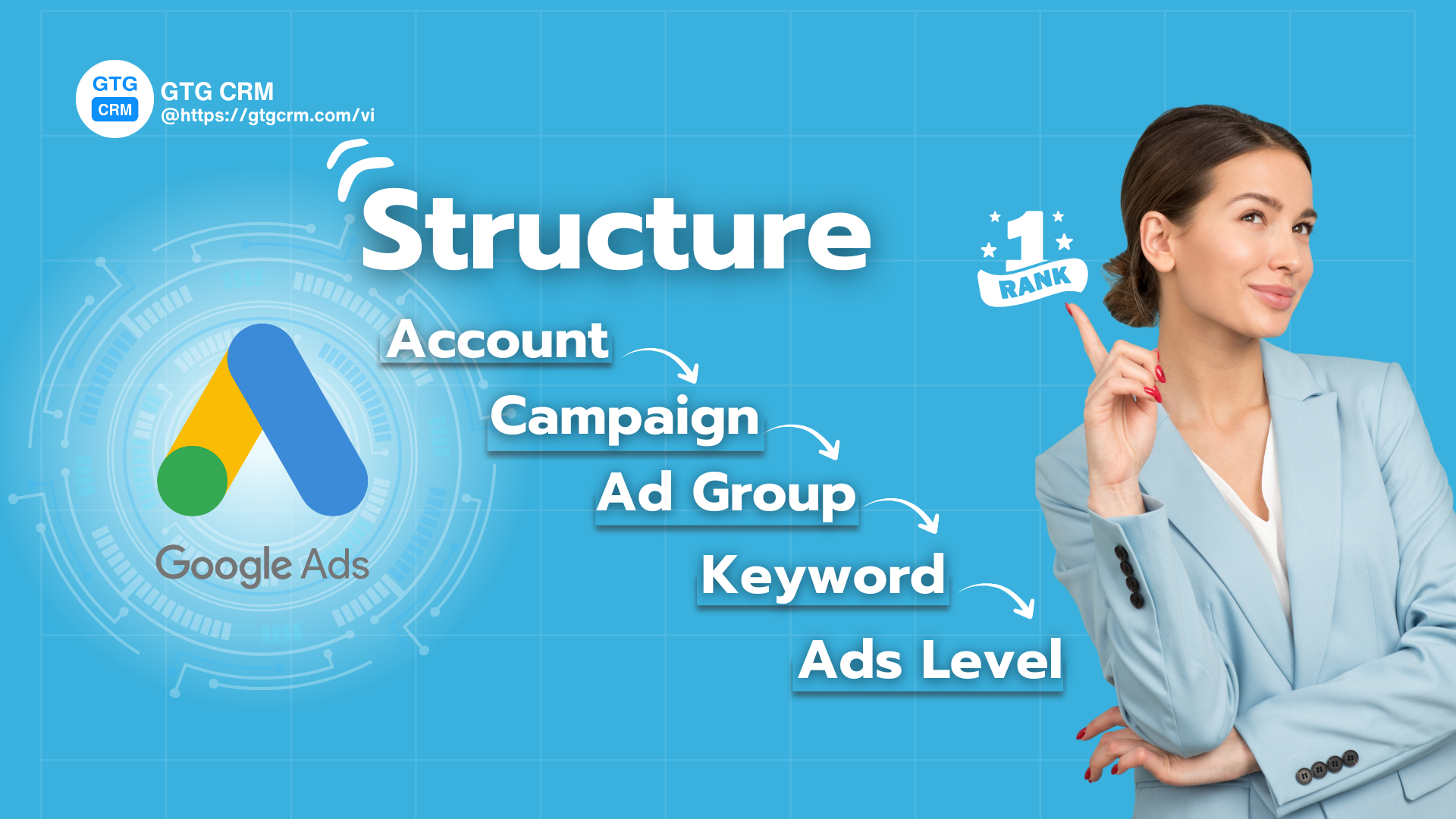
Δομή Καμπάνιας Google Ads Έτοιμη - GTG CRM
Αυτό σημαίνει ότι πρέπει να δημιουργήσετε μια απρόσκοπτη εμπειρία από τη στιγμή που ο χρήστης κάνει αναζήτηση μέχρι να επισκεφθεί τον ιστότοπό σας. Όλα πρέπει να "ταιριάζουν" τέλεια:
- Οι λέξεις-κλειδιά πρέπει να αντανακλούν σωστά την πρόθεση αναζήτησης του χρήστη.
- Η διαφήμισή σας πρέπει να περιέχει αυτές τις λέξεις-κλειδιά και να προσφέρει μια ελκυστική λύση.
- Η σελίδα προορισμού πρέπει να είναι ο ιδανικός προορισμός, όπου ο χρήστης βρίσκει ακριβώς αυτό που χρειάζεται, με αστραπιαία ταχύτητα φόρτωσης.
Όταν αυτοί οι τρεις παράγοντες συνδυάζονται, το Quality Score σας θα εκτοξευθεί, και η Google θα σας "ανταμείψει" δίνοντας προτεραιότητα στην προβολή των διαφημίσεών σας με το χαμηλότερο κόστος. Εν ολίγοις, μην κυνηγάτε τον προϋπολογισμό, εστιάστε στη σχετικότητα και την εμπειρία χρήστη – αυτός είναι ο δρόμος προς τη βιώσιμη κερδοφορία.
Ας ανακαλύψουμε μαζί με το GTG CRM πώς να χτίσουμε ένα ισχυρό "σπίτι Google Ads", στρώμα προς στρώμα.
Στρώμα 1: Λογαριασμός (Account Level) - Το Θεμέλιο της Επιτυχίας
Ο λογαριασμ��ς Google Ads είναι ο χώρος όπου περιέχονται όλες οι διαφημιστικές σας καμπάνιες. Από την αρχή, πρέπει να προσδιορίσετε σαφώς:
- Επιχειρηματικοί στόχοι: Γιατί κάνετε διαφημίσεις; Για να αυξήσετε τις πωλήσεις, να συλλέξετε leads, ή να αυξήσετε την αναγνωρισιμότητα της επωνυμίας;
- Λογική οργάνωση: Κάθε λογαριασμός πρέπει να είναι αφιερωμένος μόνο σε μία επωνυμία ή μία επιχείρηση. Αυτό σας βοηθά να παρακολουθείτε εύκολα την απόδοση και να αναλύετε δεδομένα χωρίς σύγχυση.
- Σύνδεση Tracking: Αυτό είναι ένα εξαιρετικά σημαντικό βήμα. Βεβαιωθείτε ότι έχετε συνδέσει τον λογαριασμό σας Google Analytics 4 (GA4), το Google Tag Manager και έχετε ρυθμίσει το Conversion Tracking. Ένας πλήρως παρακολουθούμενος λογαριασμός θα σας βοηθήσει να μετρήσετε με ακρίβεια την αποτελεσματικότητα κάθε κόστους, ώστε να λαμβάνετε σωστές αποφάσεις βελτιστοποίησης.
Στρώμα 2: Καμπάνια (Campaign Level) - Διαίρεση Μεγάλων Στόχων
Οι καμπάνιες παρομοιάζονται με μεγάλα τμήματα στο σπίτι, όπου κάθε τμήμα έχει τον δικό του ξεχωριστό στόχο.
Θα πρέπει να διαχωρίζετε τις καμπάνιες με βάση:
- Κύριοι στόχοι: Για παράδειγμα: Καμπάνια "Συλλογή Leads" για σεμινάρια, Καμπάνια "Πωλήσεις" για προϊόν Α.
- Μεγάλες κατηγορίες προϊόντων/υπηρεσιών: Καμπάνια "Marketing Automation" και Καμπάνια "Διαχείριση Social Media" για τα προϊόντα GTG CRM.
- Κανάλια διαφήμισης: Διαχωρίστε ξεχωριστά τις καμπάνιες Search, Display, Video ή Performance Max για να αποφύγετε την αλληλοκάλυψη του προϋπολογισμού και να ελέγχετε εύκολα την απόδοση.
- Προϋπολογισμός & Target: Κάθε καμπάνια θα έχει τον δικό της προϋπολογισμό και ξεχωριστό στόχο στοχεύσεως (γεωγραφική τοποθεσία, συσκευή, χρόνος).
Βέλτιστη πρακτική: Ονομάστε τις καμπάνιες συστηματικά, για παράδειγμα: [Χώρα] - [Κανάλι] - [Προϊόν] όπως "GR – Search – Μαθήματα Marketing".
Επίπεδο 3: Ομάδες Διαφημίσεων (Ad Group Level) - Εξειδίκευση Θέματος
Αν οι καμπάνιες είναι μεγάλα δωμάτια, τότε οι ομάδες διαφημίσεων είναι μικρά αρχειοθήκες σε κάθε δωμάτιο. Κάθε ομάδα διαφημίσεων πρέπει να περιστρέφεται γύρω από ένα στενό θέμα ή μια συγκεκριμένη πρόθεση αναζήτησης .
Παράδειγμα: Στην καμπάνια "Μαθήματα Ψηφιακού Marketing", μπορείτε να δημιουργήσετε τις εξής ομάδες διαφημίσεων:
- Ομάδα Διαφήμισης 1: "Μαθήματα Ψηφιακού Marketing Αθήνα" (επικεντρώνεται σε λέξεις-κλειδιά με τοποθεσία).
- Ομάδα Διαφήμισης 2: "Μαθήματα Ψηφιακού Marketing Online" (επικεντρώνεται σε λέξεις-κλειδιά για online μαθήματα).
Συνηθισμένο λάθος: Συγκέντρωση όλων των λέξεων-κλειδιών σε μία ομάδα. Αυτό κάνει τις διαφημίσεις άσχετες, μειώνει το Βαθμό Ποιότητας και αυξάνει το κόστος ανά κλικ.
Επίπεδο 4: Λέξεις-Κλειδιά (Keyword Level) - Ο τόπος συνάντησης με πιθανούς πελάτες
Οι λέξεις-κλειδιά είναι το νήμα που συνδέει τους χρήστες με τις διαφημίσεις σας. Η ορθή χρήση των τύπων αντιστοίχισης λέξεων-κλειδιών είναι ο κρίσιμος παράγοντας:
- Ακριβής αντιστοίχιση (Exact Match): Μέγιστος έλεγχος, κατάλληλο για βασικές λέξεις-κλειδιά.
- Αντιστοίχιση φράσης (Phrase Match): Μέτρια επέκταση, πιάνει περισσότερες παραλλαγές.
- Αρνητικές λέξεις-κλειδιά (Negative Keyword): Συνεχής ενημέρωση για την αφαίρεση άσχετων αναζητήσεων, διατηρώντας την επισκεψιμότητα καθαρή.
Συμβουλή βελτιστοποίησης: Για τις σημαντικές λέξεις-κλειδιά, εφαρμόστε τη δομή SKAG (Single Keyword Ad Group). Δηλαδή, κάθε ομάδα διαφημίσεων περιέχει μόνο μία λέξη-κλειδί. Αυτό διασφαλίζει ότι η διαφήμιση ταιριάζει απόλυτα με την αναζήτηση του χρήστη, οδηγώντας σε αύξηση του CTR και αύξηση του Βαθμού Ποιότητας.
Η λειτουργία δημιουργίας και διαχείρισης Διαφημίσεων Google GTG CRM - Με ενσωματωμένο AI προτείνει αυτόματα πιθανές λέξεις-κλειδιά και ομαδοποιεί τις λέξεις-κλειδιά με βάση τον σκοπό αναζήτησης του χρήστη ( αγορά, αναζήτηση πληροφοριών, σύγκριση προϊόντων... ), βοηθώντας σας να δημιουργήσετε μια ακριβή δομή ομάδας διαφημίσεων από την αρχή. Με βάση τη συμπεριφορά των πελατών και των ανταγωνιστών, η διαχείριση και η δημιουργία διαφημίσεων Google Ads γίνεται ευκολότερη, βελτιστοποιώντας την έρευνα λέξεων-κλειδιών, βοηθώντας σας να δημιουργήσετε μια τυπική δομή λογαριασμού διαφημίσεων.
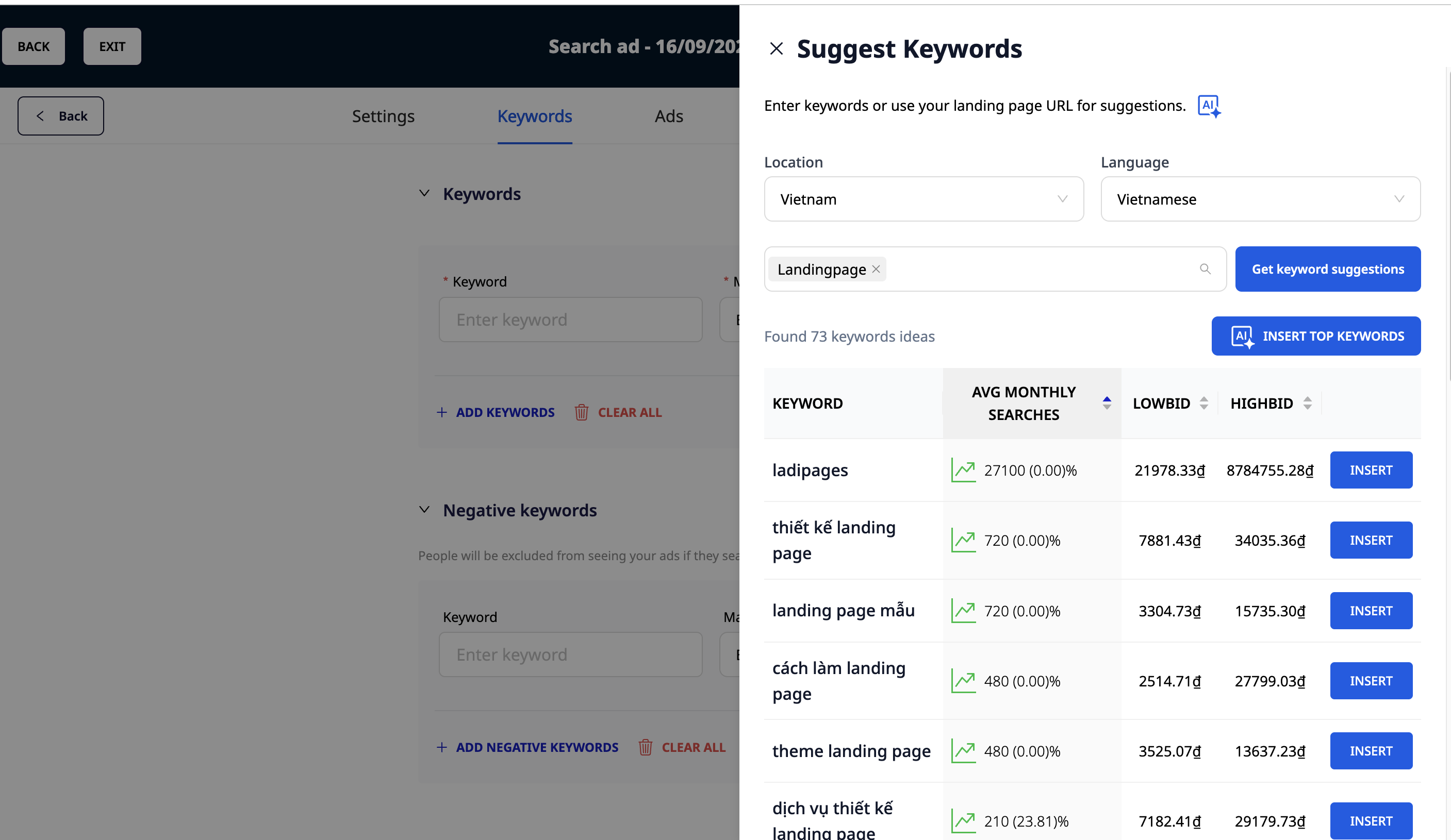
Το GTG CRM προτείνει λέξεις-κλειδιά με AI
Επίπεδο 5: Διαφημίσεις (Ad Level)
Κάθε ομάδα διαφημίσεων χρειάζεται τουλάχιστον 2-3 διαφημιστικά πρότυπα, εκ των οποίων Responsive Search Ads (RSA) ώστε η Google να μπορεί να δοκιμάσει και να βρει την πιο αποτελεσματική έκδοση αυτόματα.
Αρχές για τη σύνταξη τυπικών διαφημίσεων:
- Περιέχει βασικές λέξεις-κλειδιά: Εμφανίζεται στον τίτλο και στην περιγραφή.
- Τονίζει τη μοναδική αξία (UVP): Γιατί ο χρήστης πρέπει να επιλέξει εσάς;
- Σαφής παρότρυνση για δράση (CTA): "Εγγραφείτε τώρα", "Μάθετε περισσότερα", "Δοκιμάστε δωρεάν"...
- Εκμεταλλευτείτε τις επεκτάσεις διαφημίσεων (Ad Extensions): Sitelink, Callout, Structured Snippets… βοηθούν τη διαφήμιση να ξεχωρίζει και αυξάνουν το CTR.
Landing Page & Βαθμολογία Ποιότητας: Δύο Παράγοντες Που Αποφασίζουν την Επιτυχία
Όλες οι παραπάνω προσπάθειες θα πάνε χαμένες αν η σελίδα προορισμού σας δεν είναι καλή. Η Landing Page πρέπει να είναι συγχρονισμένη με τις λέξεις-κλειδιά και το περιεχόμενο της διαφήμισης. Μια σελίδα προορισμού με γρήγορη ταχύτητα φόρτωσης, σχετικό περιεχόμενο και βελτιστοποιημένη για μετατροπές (CRO) θα αποτελέσει ένα μεγάλο "συν" για τη Βαθμολογία Ποιότητας.
Η Βαθμολογία Ποιότητας είναι ο συνδυασμός των εξής:
- Προβλεπόμενο ποσοστό κλικ (CTR): Είναι ελκυστική η διαφήμισή σας;
- Συνάφεια της διαφήμισης: Η διαφήμιση ταιριάζει με τις λέξεις-κλειδιά;
- Εμπειρία σελίδας προορισμού: Είναι καλή και σχετική η σελίδα προορισμού;
Συμπέρασμα
Η τυπική δομή του Google Ads σας βοηθά να προσελκύσετε ποιοτική επισκεψιμότητα, αλλά η μετατροπή των δυνητικών πελατών σε έσοδα είναι ο τελικός στόχος.
Εδώ είναι που το GTG CRM αναλαμβάνει ρόλο:
- Αυτοματοποίηση διαχείρισης leads: Το GTG CRM μπορεί να καταγράφει και να κατηγοριοποιεί αυτόματα τα leads που προέρχονται από καμπάνιες Google Ads, επιτρέποντας στην ομάδα πωλήσεων να τα φροντίσει άμεσα.
- Λεπτομερής μέτρηση: Οι αναφορές του GTG CRM σας επιτρέπουν να αναλύετε σε βάθος: Ποιες καμπάνιες φέρνουν τα ποιοτικότερα leads; Ποιες λέξεις-κλειδιά κλείνουν τις περισσότερες παραγγελίες;
- Διασυνδεσιμότητα πολλαπλών καναλιών: Το GTG CRM σας βοηθά να παρακολουθείτε το ταξίδι του πελάτη από τη στιγμή που θα κάνει κλικ σε μια διαφήμιση Google Ads μέχρι τη στιγμή που θα αλληλεπιδράσει στο Facebook, το Zalo ή το Email.
Μετατρέψτε όσα μόλις διαβάσατε σε πραγματικά αποτελέσματα — εφαρμόστε τώρα με το GTG CRM, δωρεάν.
Εφαρμόστε τώρα