The Current State of Marketing Tools Adoption in Businesses
In recent years, Marketing tools have become an indispensable "right-hand" for many businesses. From small startups to medium and large companies, applying marketing software helps save time, optimize budgets, and improve business efficiency.
However, quite a few businesses still choose to purchase multiple disjointed tools at once or fail to fully leverage the power of Marketing Tools . They only stop at "trying out" a few software programs without building a comprehensive and synchronized marketing system.
Therefore, understanding the pros and cons of each Marketing Tool, as well as choosing solutions that fit the needs and scale of the business, has become a key factor for competing and developing sustainably in the digital era.
Top 10 Marketing Tools You Should Try
1. GTG CRM
GTG CRM is an all-in-one marketing solution developed in Vietnam, targeting SMEs, online shop owners, and individuals who want a streamlined, cost-effective yet powerful tool. The standout feature of GTG CRM is its ability to integrate multiple functions into a single platform, replacing the need to use 5 to 7 separate software programs.
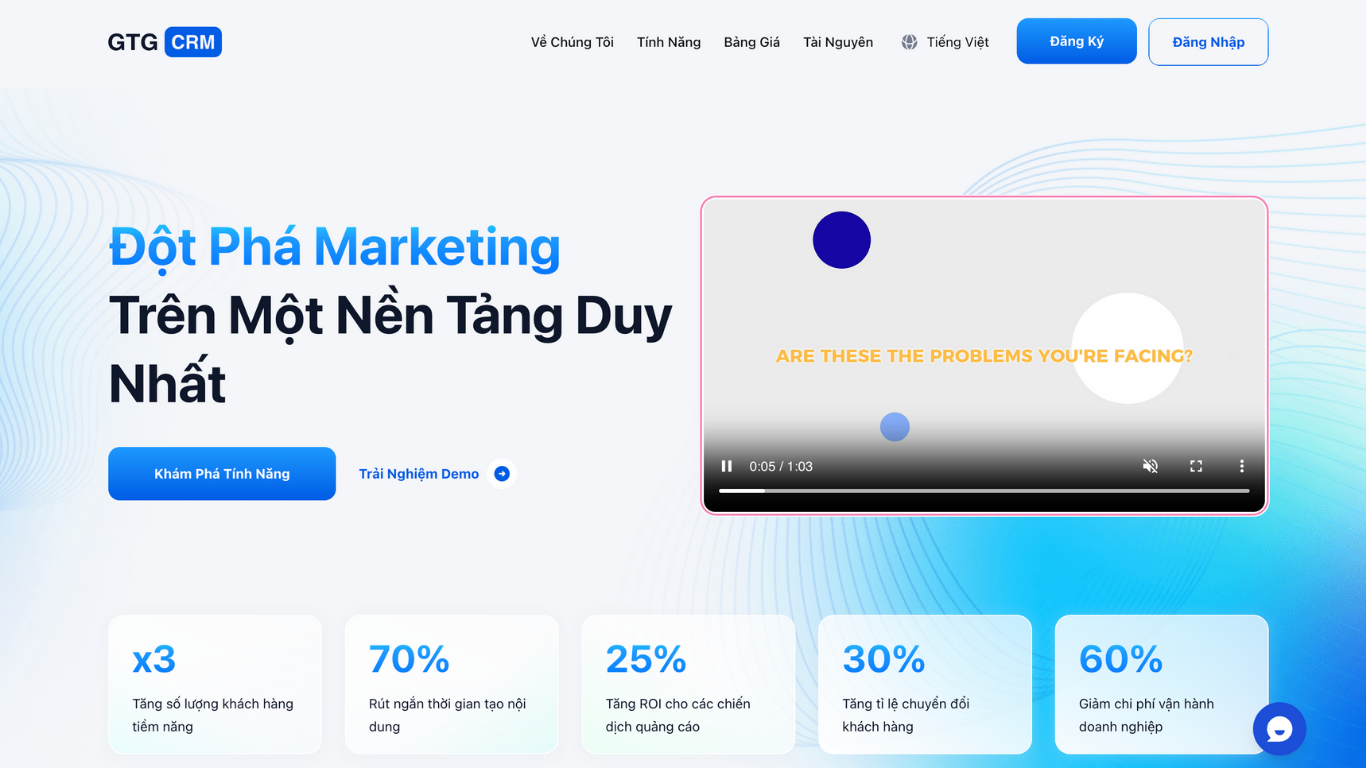
GTG CRM website interface
Key Features
GTG CRM provides a comprehensive solution to help optimize business processes.
- Professional Landing Page Creation: With an easy-to-use drag-and-drop builder, you can create professional Landing Pages powered by AI to help write SEO-optimized content, generate eye-catching illustrations, and connect directly with customers via Live Chat, Messenger, and Zalo. As a result, businesses can save significant costs and time
- Smart CRM System: Automatically collects and stores customer information from multiple channels, ensuring no potential customer is missed. In addition, you can flexibly customize information fields to gain a clear, visual overview of your customer data
- Multi-Channel Message Management: Allows you to take care of customers via Facebook, Gmail, Zalo, WhatsApp, SMS, Yahoo, and Outlook within one unified, convenient interface, with AI integrated to suggest professional customer replies
- Multi-Channel Social Media Management: Lets you manage posts and videos on Facebook, LinkedIn, and YouTube, supports quick creation of posts and images with AI, and enables simultaneous publishing across multiple platforms, saving up to 15 hours per week
- Automations: Design intelligent automated customer care workflows that provide comprehensive customer support without the need for a professional sales team
- Professional Email Templates: GTG CRM provides ready-made templates that you only need to adjust with your own content and images, plus AI that generates polished email content, helping optimize customer engagement via Gmail
- Brand Identity: Helps SMEs quickly build their brand, from creating logos and defining their mission to developing their vision in just minutes, effectively solving the challenge of establishing brand identity
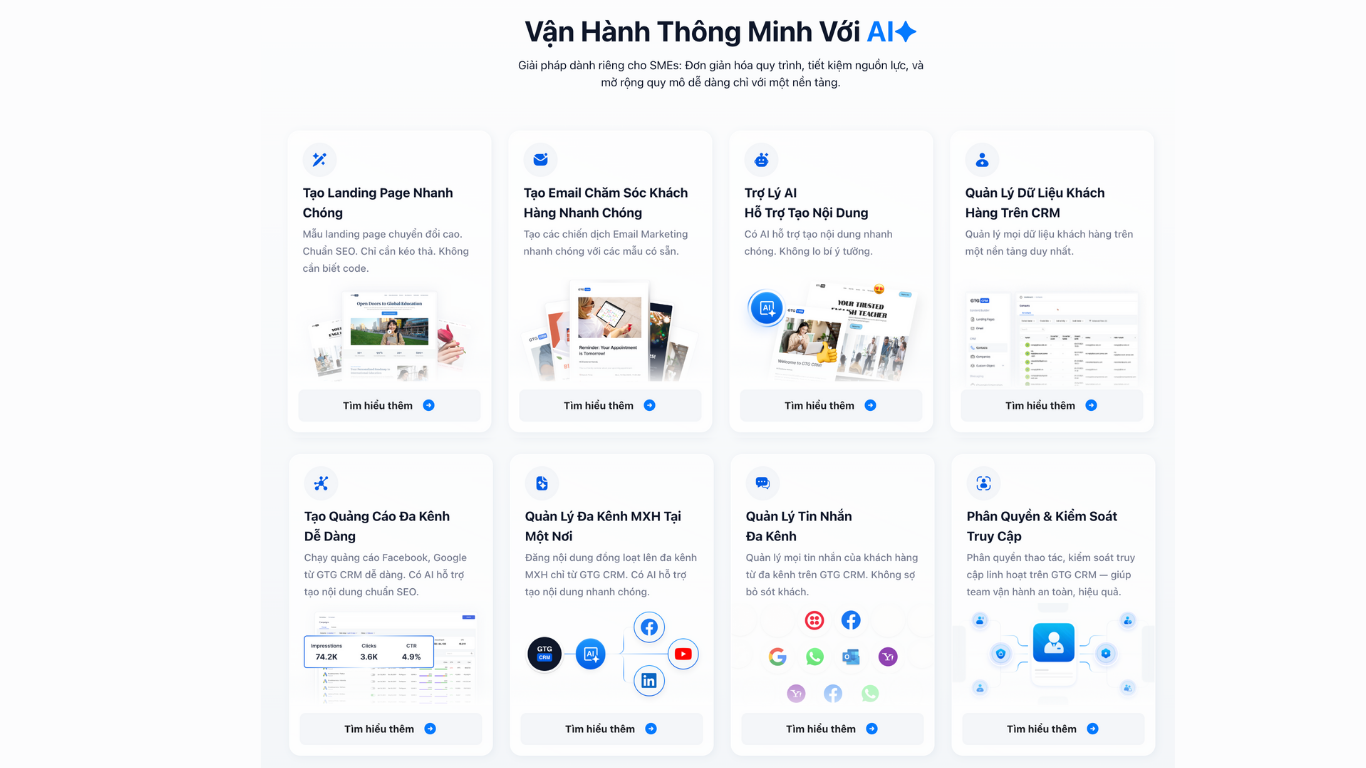
GTG CRM's standout features combined with AI
Advantages
- User-friendly interface with support for a wide variety of languages worldwide
- Integrates many features to meet all the essential needs of a business in its operations
- Built-in Live Chat, Zalo, and Messenger directly on Landing Pages, helping users bridge the gap with customers.
- GTG CRM is easy to use, so even those who have never run ads, have no technical expertise, or cannot design websites can operate it.
- Thanks to integrated AI, users can quickly write content, design landing pages, run ads, and much more in just a few steps.
- Reasonable pricing, starting from 299,000 VND/month (Starter plan), with the option to top up credits as needed.
Disadvantages
As a newly launched tool, it is not yet widely known.
Pricing
GTG CRM offers several flexible pricing plans:
- Starter: 299,000đ/month (USD price: $12/month), 90,000 credits per month
- Growth: 499,000đ/month (USD price: $19/month), 150,000 credits per month
2. Getfly CRM
Getfly CRM is a "made in Vietnam" customer management software aimed at SMEs, helping to manage sales, customer care, and automated marketing.
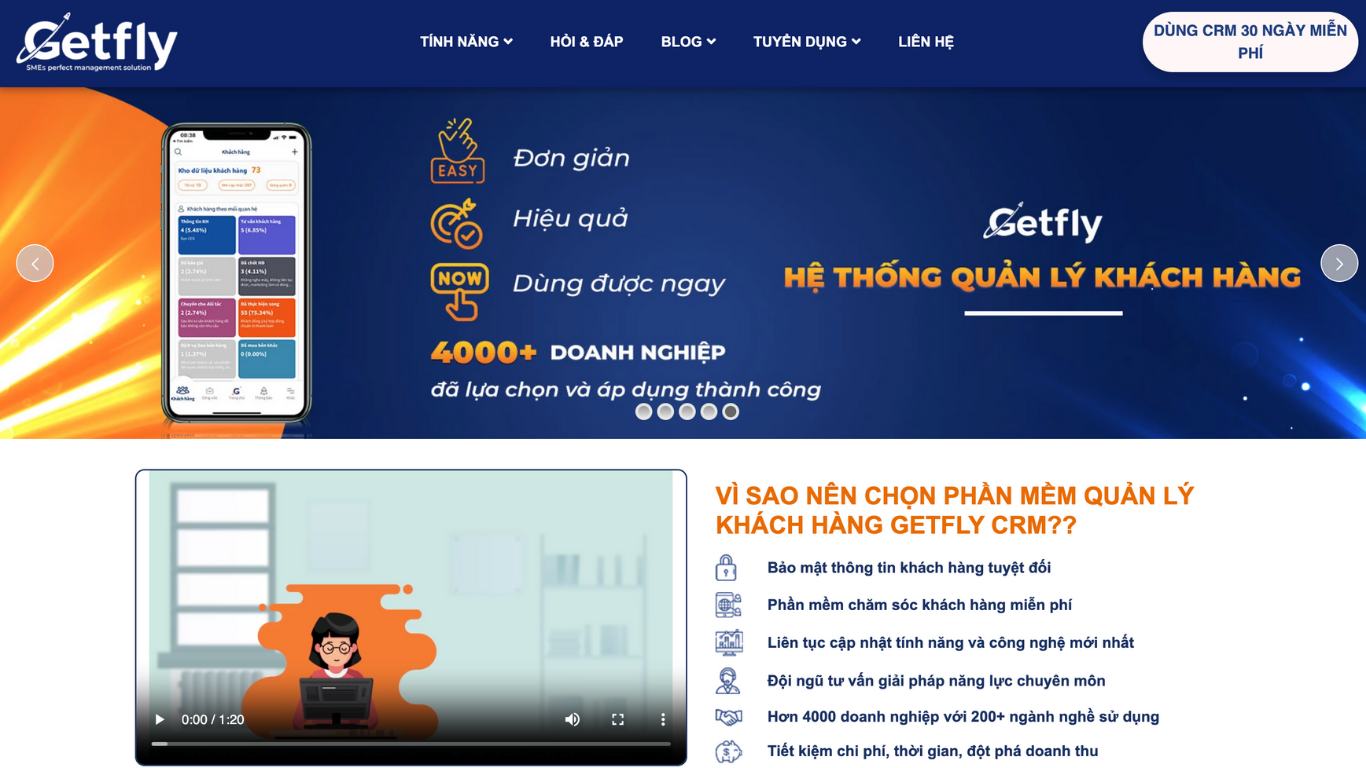
Getfly - "Made in Vietnam" Customer Management System
Key Features
- Clear KPI management system: Businesses can easily assign targets to each employee and monitor progress. Customer journey management tracks the entire process from lead to closed deal, providing a comprehensive and detailed overview.
- Email and SMS marketing automation with ready-made workflows: Ensures customers are continuously nurtured without requiring much manual effort
- Creating landing pages, managing customer feedback (especially useful for customer service), as well as managing project tasks to ensure marketing campaigns stay on schedule.
- Automatic lead assignment: Helps distribute potential customers to the right responsible employees
Advantages
Getfly's strengths are its relatively complete system, reasonable pricing for the Vietnamese market, and dedicated training support. The Vietnamese interface helps SMEs get familiar with it easily.
Disadvantages
Getfly is not suitable for large enterprises, and its customization and integration capabilities are limited. The interface is not very user-friendly, and users may need support to use advanced features.
Pricing
Plans range from 521,000đ/month for 3 users, up to 1,651,000đ/month for 50 users.
3. Ladipage
Ladipage is one of the popular Landing Page creation platforms. Originally developed as a tool for quickly creating landing pages, Ladipage has since expanded into a marketing ecosystem with many features supporting website building, blogging, online sales, and customer management.
Key Features
- Create Landing Page: With simple drag-and-drop operations, suitable for users without programming skills, AI Landing Page automatically suggests layouts and content tailored to the product, shortening design time
- Workflow automation: Create professional nurturing scenarios, from sending bulk messages to setting up message sequences based on predefined scripts
- Advertising tool support: Includes banner ads, popupX pop-up windows to boost conversions, and funnelX to automatically build sales funnels
- Basic CRM integration: Allows storing and categorizing customers, combined with segmentation features to group audiences by behavior or characteristics
- Helps customers manage sales activities: Includes products, orders, promotions, and shipping bills
- Overview reports (traffic, conversion rate, revenue): and custom reports based on needs
Advantages
Ladipage has a large ecosystem, is trusted by many users, and offers many features serving both marketing and sales.
Disadvantages
Although there is a free plan, it has many limited features, forcing users to upgrade to paid plans if they want to deploy effectively over the long term.
The builder interface is difficult to use, especially for those who are not familiar with design. Deep customization can sometimes be complicated.
Some advanced features (such as FunnelX or Dynamic Page) require users to invest time in learning how to use them. In addition, the cost of fully leveraging the entire ecosystem can be high for small SMEs.
Pricing
- Core: 3,360,000 VND/user/year
- Grow: 1,800,000 VND/user/year
- Max: 1,440,000 VND/user/year
4. Misa Amis AiMarketing
Misa Amis AiMarketing is part of the MISA enterprise management software ecosystem - a well-known technology brand in Vietnam. This product was developed with the goal of helping businesses implement Marketing Automation and optimize the process of reaching out to and caring for customers.
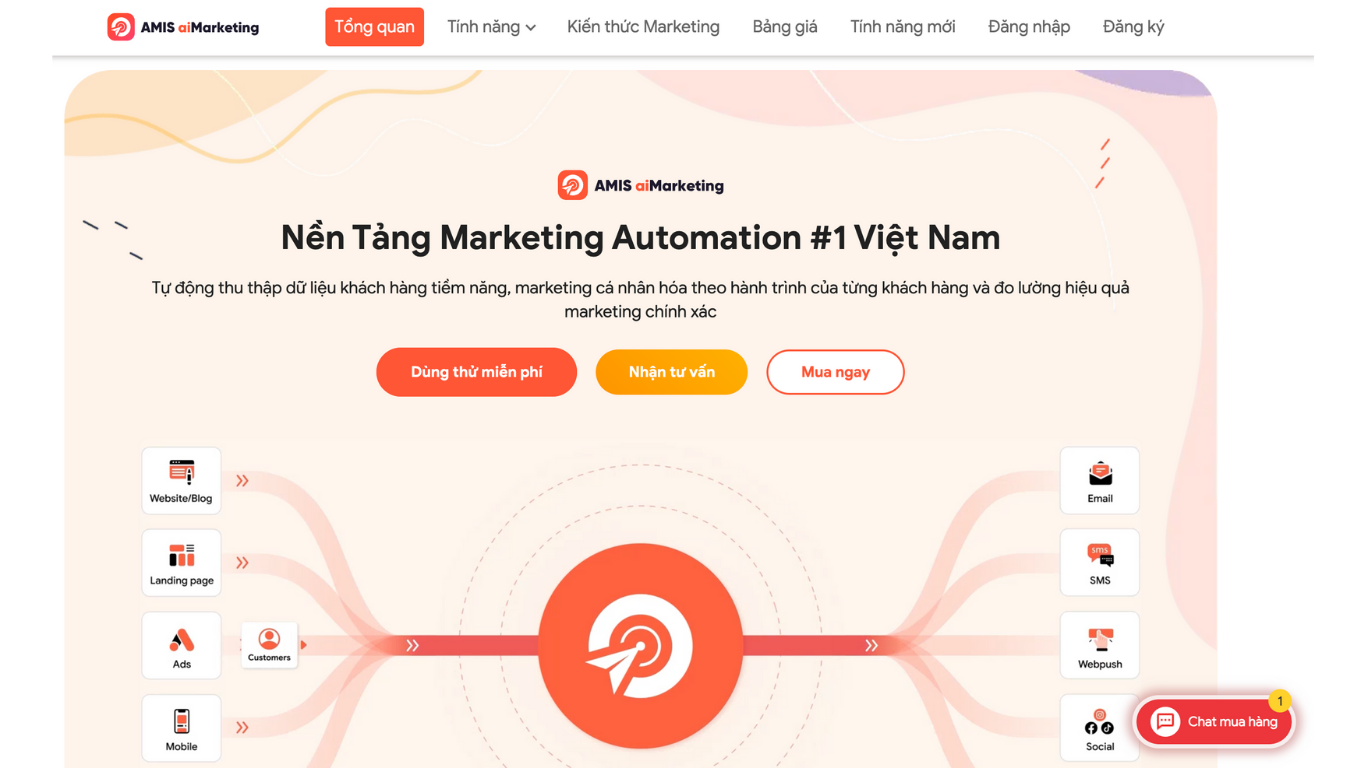
Amis AIMarketing website interface
Key Features
- Bulk email sending: Businesses can compose emails using ready-made templates and send them to thousands of customers at once
- Create professional Landing Pages: Users can quickly build attractive landing pages to introduce products or services, or to run advertising campaigns
- SMS Marketing: In addition to email, Misa Amis also supports sending SMS marketing messages to customers
- Form creation: Businesses can set up registration forms to collect customer information (email, phone number, needs...
- Workflow – Automated customer nurturing campaigns: The system allows users to build automated action flows
- Reporting & performance measurement: Misa Amis provides detailed campaign performance reports, such as email open rates, CTA click counts, and conversion rates from Landing Pages
Advantages
The strength of Misa Amis AiMarketing lies in its simplicity and focus. Small businesses do not need to combine multiple different tools; with just one platform, they can manage email, SMS, Landing Pages, and Workflows.
Disadvantages
However, this system does not yet have strong AI support like some other tools, and content personalization still depends heavily on Marketers. Businesses must invest time in training staff to use the tool. In addition, its integrated channels are still limited (mainly email and SMS) and not as diverse as those of other platforms.
Pricing
- Email Marketing: 2,900,000 VND/year (60,000 emails, 10,000 stored contacts)
- Starter: 8,900,000 VND/year (60,000 emails, 15,000 contacts, 10 automated workflows)
- Standard: 15,900,000 VND/year (200,000 emails, 50,000 contacts, 25 automated workflows)
- Professional: 31,900,000 VND/year (800,000 emails, 125,000 contacts, unlimited workflows)
- Enterprise: 63,900,000 VND/year (2,000,000 emails, 300,000 contacts, unlimited workflows)
- Ultimate: Contact us for a detailed quote
5. Pancake
Pancake is a multi-channel sales and marketing software ecosystem developed in Vietnam. Rather than focusing on a single isolated area, Pancake brings together many essential tools for e-commerce and retail businesses, from order management and website creation to chatbots, CRM, and internal social networking.
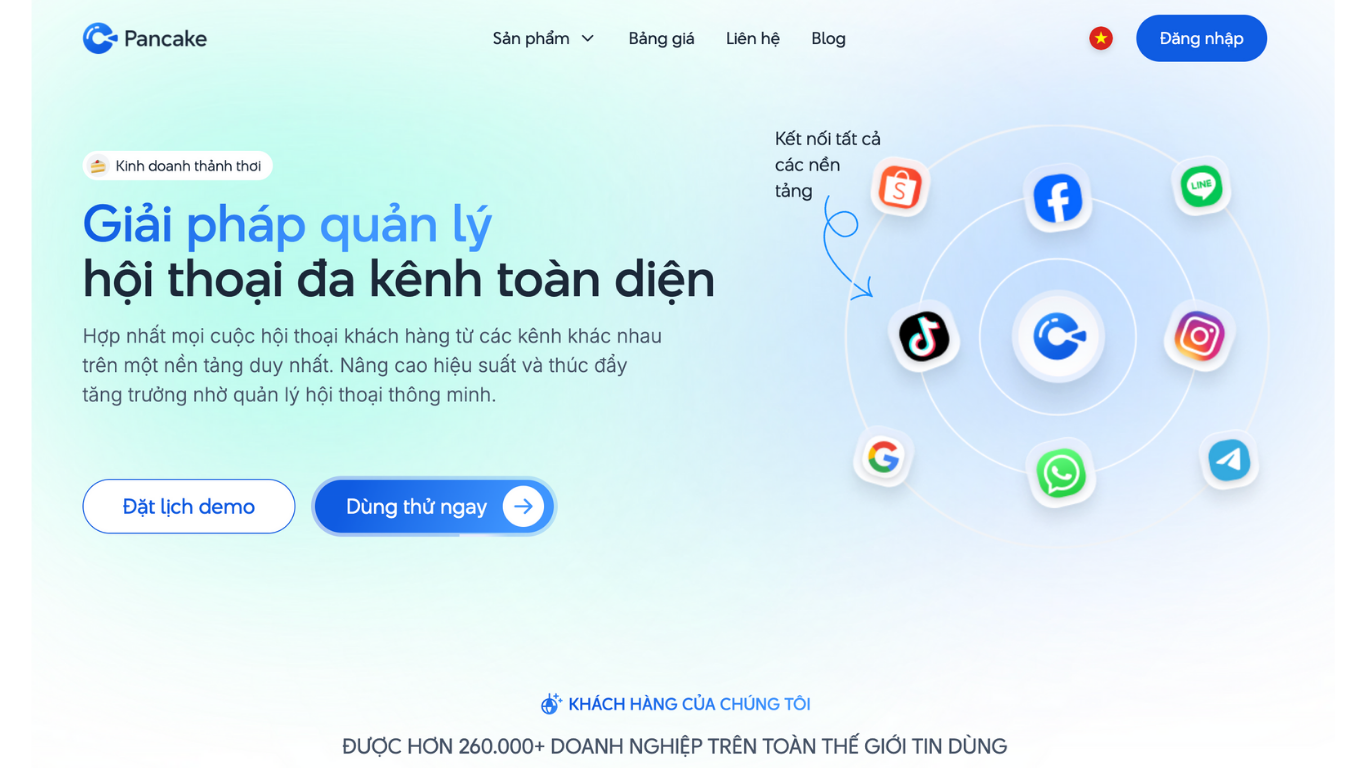
Pancake website interface
Key Features
- Pancake: Manages and engages customers across multiple social media platforms at once, helping staff never miss messages or comments from customers.
- POS: A point-of-sale system (Point of Sale) that combines online and in-store sales, syncs orders, and optimizes advertising through purchase signals.
- Webcake: A tool for creating websites or landing pages in just a few minutes, helping shop owners establish a professional "online storefront" without any coding skills.
- Storecake: Supports building online stores with drag-and-drop operations, making it easy to add products, create shopping carts, and optimize the shopping experience.
- Botcake: A chatbot with pre-built automated reply scripts, enabling instant customer responses and reducing the workload of customer care staff.
- Pancake CRM: Stores and analyzes customer data, giving businesses a more comprehensive view of customer behavior and value.
- Pancake Work: An internal social network platform that allows company members to exchange work information, manage tasks, and collaborate effectively.
Advantages
Pancake stands out for its comprehensive ecosystem. Instead of selling standalone software, Pancake provides a complete, integrated suite of tools, from message management and in-store sales to website building and CRM.
Disadvantages
However, each feature is a separate product, which sometimes makes management difficult and requires users to get familiar with multiple different interfaces. Some features, such as creating landing pages or managing ads, are not yet truly robust and may encounter errors during testing. Pancake also lacks an integrated ad-running feature like some other platforms offer.
Pricing
- POS: Free
- Multi-channel social media management: From 550,000 VND/3 users/6 months, with prices varying based on the number of users and duration of use
- Other products such as Storecake, Botcake, Pancake CRM… are sold in separate packages, and users need to contact the company to receive a specific quote
6. HubSpot
HubSpot is one of the most popular CRM and Marketing Automation platforms in the world, particularly strong in inbound marketing. With a diverse ecosystem including Marketing Hub, Sales Hub, Service Hub, CMS Hub, and Operations Hub, HubSpot CRM helps businesses manage customers, nurture leads, and optimize marketing campaigns comprehensively.
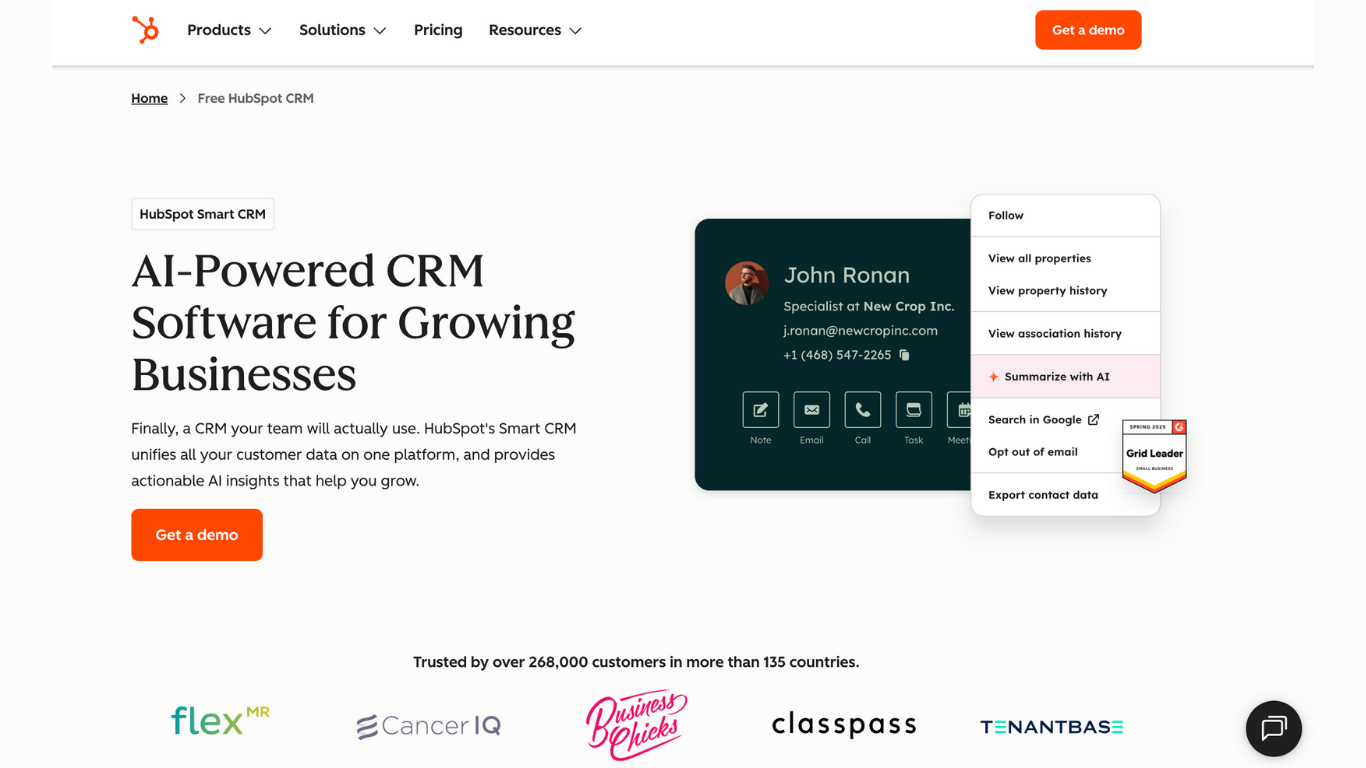
HubSpot is the most popular CRM & Marketing Automation platform in the World
Key Features
- Contact Management: Stores customer information, interaction history, and website and email behavior
- Email Marketing & Automation: Integrates automated email sending tools based on workflows, and measures performance through metrics such as open rate and click-through rate
- Lead Scoring & Tracking: An automated system that scores leads based on behavior, helping businesses focus on their most promising prospects
- Marketing Hub: Supports creating landing pages, blogs, and data collection forms, optimizing SEO, and managing Google and Facebook ads directly from the platform
- Sales Pipeline Management: Manages sales opportunities visually on a Kanban board, helping sales teams easily track progress and close deals
- Reporting & Analytics: Powerful dashboards that track revenue, marketing performance, and measure ROI for each campaign
Advantages
The biggest advantage of HubSpot CRM is that the free version is already sufficient for small businesses just starting to manage customers, including contact storage, email sending, and basic behavior tracking.
Disadvantages
However, when businesses need advanced features, HubSpot's costs can be quite high, especially with the Professional or Enterprise plans. Another limitation is that if you are not familiar with inbound marketing, setting up workflows and automation in HubSpot can be challenging at first.
Pricing
- Free: Basic CRM with unlimited contact storage, email tracking, and deal pipeline
- Starter: From 50 USD/month (~1,250,000 VND), suitable for SMEs just starting with basic automation
- Professional: From 800 USD/month (~20 million VND), adds advanced automation, custom reporting, and in-depth analytics
- Enterprise: From 2,400 USD/month (~60 million VND), designed for large businesses with complex CRM and marketing needs
7. Zoho
Zoho CRM is one of the world's well-known customer relationship management solutions, part of the Zoho ecosystem with over 50 different business applications. Founded in 1996, Zoho now has a presence in more than 180 countries and serves hundreds of thousands of businesses.
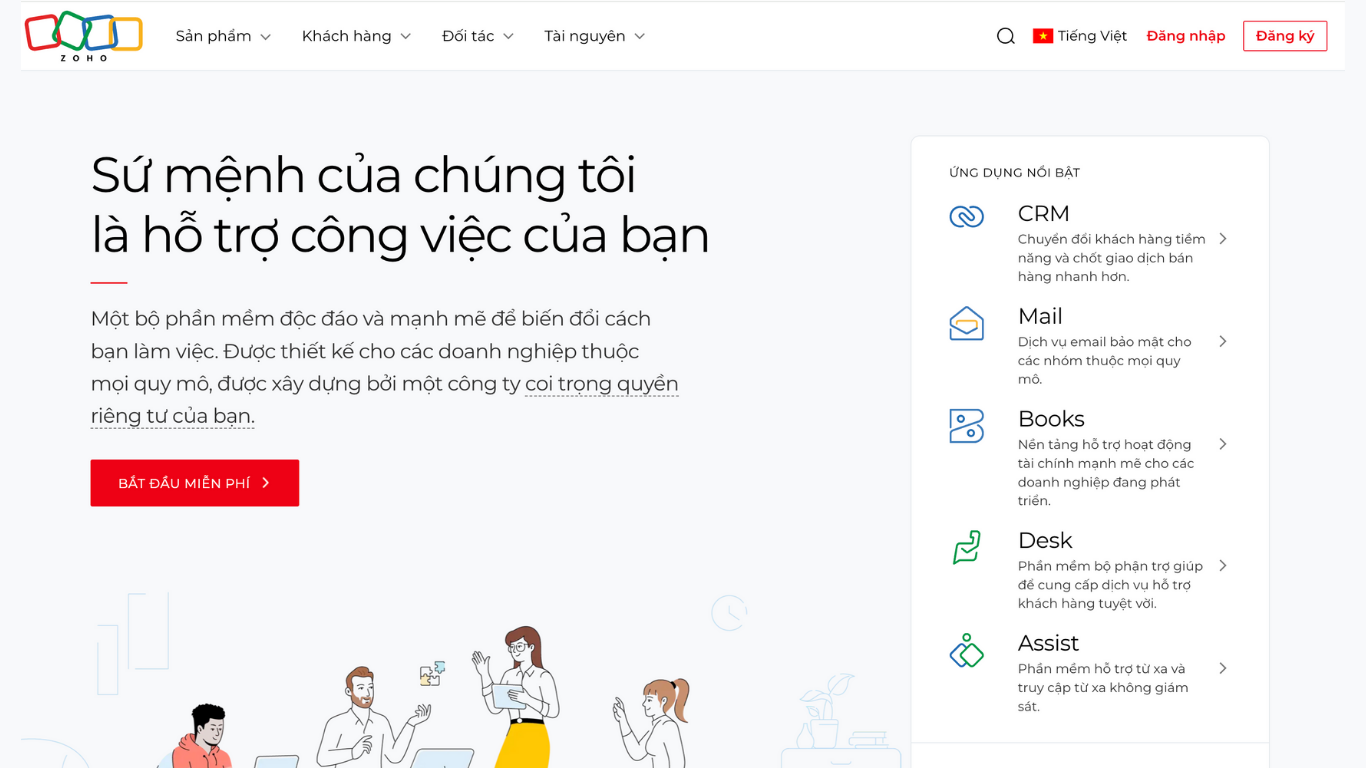
Zoho - A globally renowned customer management solution
Key Features
- Multi-channel Customer Management: Integrates with email, phone, chat, and social media (Facebook, Twitter) so businesses can engage with and track customers across multiple channels
- Lead & Deal Management: Manage prospective customers, track the pipeline, and automatically score leads based on behavior
- Workflow Automation: Set up automated processes such as sending emails, assigning tasks, or updating lead statuses to save time
- AI Assistant (Zia): An AI assistant that supports sales forecasting, suggests next actions, and analyzes customer sentiment from emails and conversations
- Reporting & Analytics: Provides detailed reports and customizable dashboards to monitor sales, marketing, and customer care performance
- Mobile CRM: A mobile app that helps sales staff easily update data, track progress, and communicate with customers directly from their smartphones
Advantages
Zoho CRM's advantages include affordable pricing, with a free plan for up to 3 users , making it an excellent fit for startups and small businesses. It has a friendly, easy-to-use interface while remaining powerful, with the Zia AI assistant supporting forecasting and intelligent analytics. Its ability to integrate with other Zoho applications (such as Zoho Mail, Zoho Books, and Zoho Campaigns) is also a major advantage.
Disadvantages
However, the free version is quite limited in features. If businesses want to use more advanced features such as advanced automation or custom reporting, they need to upgrade to a higher-tier plan, which is not cheap. Additionally, although the interface is user-friendly, using many Zoho applications at the same time can confuse newcomers.
Pricing
Plans range from 14 USD/user/month to 52 USD/user/month.
8. ActiveCampaign
ActiveCampaign is a marketing automation software combined with CRM, founded in the United States in 2003. The tool stands out for its marketing automation capabilities, helping businesses personalize customer experiences and effectively nurture leads.
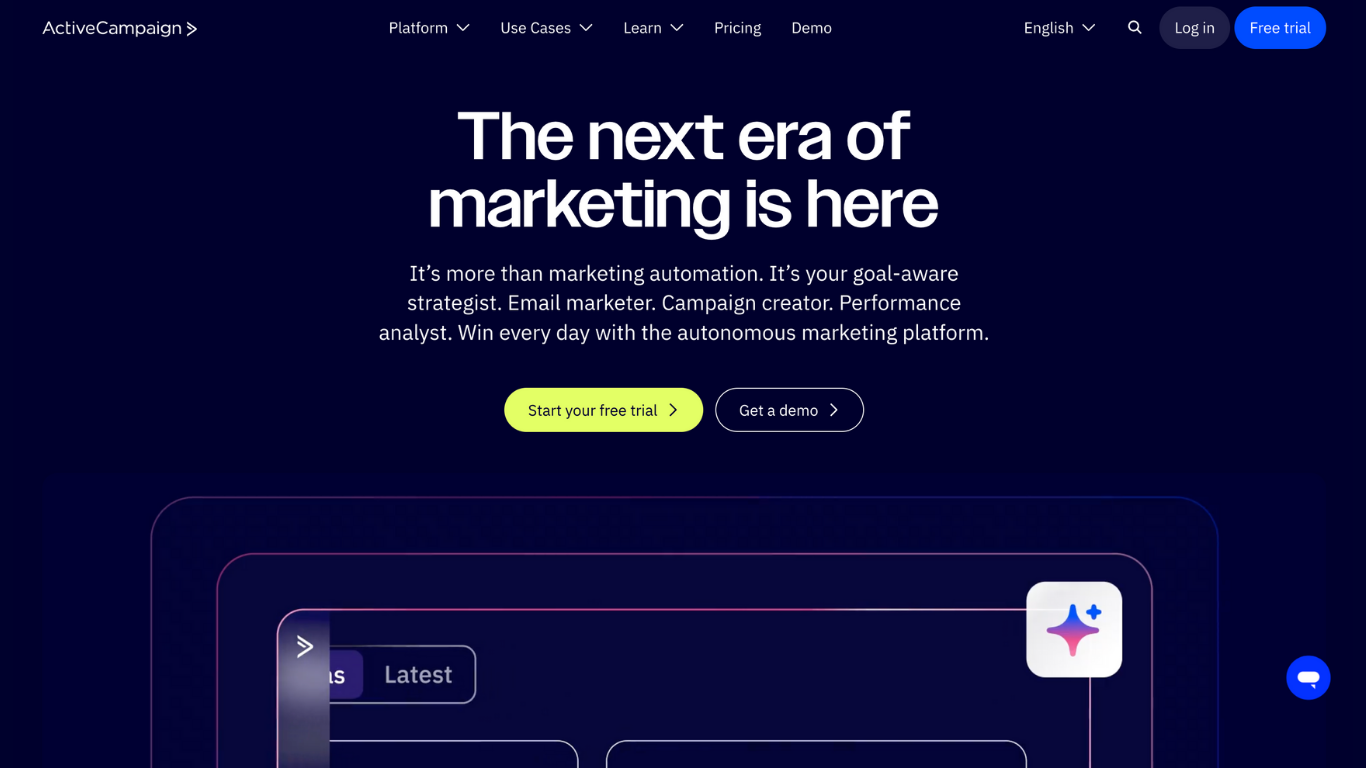
ActiveCampaign website interface
Key Features
- Advanced Email Marketing: Allows creation of email campaigns personalized to each customer's behavior
- Marketing Automation: Build visual workflows with drag & drop, automating the entire customer journey from lead to closed deal
- Integrated CRM: Manage sales pipelines, automatically assign leads to sales staff, and update deal status based on customer behavior
- Customer Segmentation: The system automatically divides customers into groups based on behavior, location, or purchase history
- Machine Learning & Predictive Sending: AI predicts when customers are most likely to open emails and automatically sends them at that time
- Multi-platform Integration: Connects with Shopify, WooCommerce, Zapier, Facebook Ads, WordPress, and more, making it well suited for e-Commerce and Digital Marketing
Advantages
ActiveCampaign has powerful automation capabilities, making it especially suitable for businesses that need to nurture leads and personalize email marketing at a high level. The tool also features an intuitive visual workflow interface that is easy to use right away.
Disadvantages
However, ActiveCampaign does not offer a free plan. Its basic plan is also relatively expensive compared to other options, which may pose challenges for small startups. Additionally, since it focuses heavily on automation, businesses that only need a simple CRM may find it redundant.
Pricing
Plans range from $29 USD/month to $149 USD/month.
9. Mailchimp
Mailchimp is one of the most popular email marketing and marketing automation platforms in the world, launched in 2001 in the United States. Originally focused on email marketing, Mailchimp has since expanded into a versatile marketing tool supporting email, landing pages, simple CRM, and multi-channel advertising.
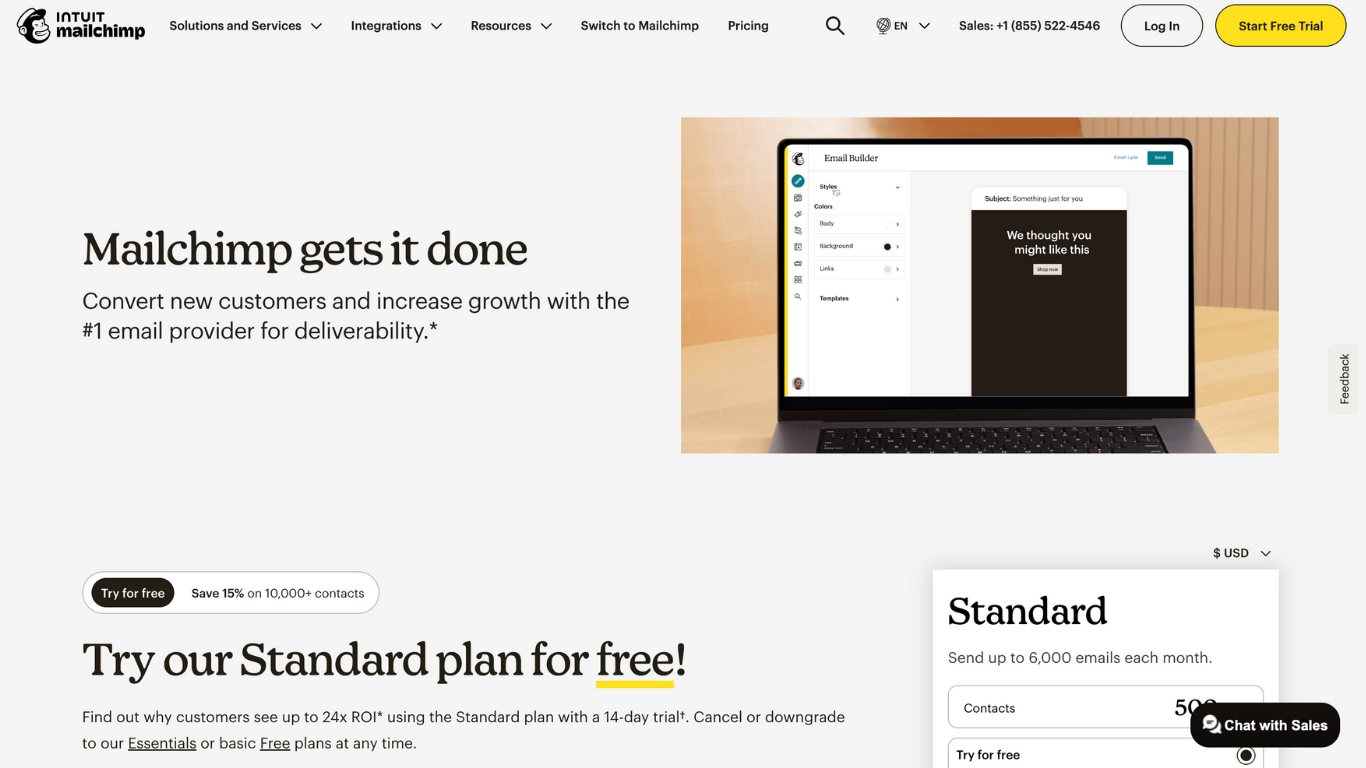
Mailchimp - The most popular email marketing and marketing automation platform in the world
Key Features
- Email Marketing: Provides hundreds of ready-made email templates that are easy to customize with drag & drop
- Marketing Automation: Automates email sending based on triggers such as a new customer sign-up, birthday, first purchase, or abandoned cart
- Audience Management: Stores and manages contact lists, and applies tags to segment customers and personalize messages
- Landing Page & Form Builder: Integrates tools for creating simple landing pages and email sign-up forms
- Basic CRM: Stores customer information, interaction history, and email open behavior. While not as powerful as dedicated CRM software, it is sufficient for SMEs
- Reporting & Analytics: Provides detailed statistics on open rates, click rates, and unsubscribes, helping marketers optimize campaigns
- Multi-platform Integration: Connects well with Shopify, WooCommerce, WordPress, Facebook Ads, Google Ads, Zapier, and more…
Advantages
Mailchimp stands out for its ease of use and wide range of available templates, making it suitable for beginners without technical knowledge.
Disadvantages
Although there is a free plan, as businesses grow, the cost of upgrading Mailchimp can be quite high. Advanced features such as complex automation, A/B testing, or multichannel support are only available in paid plans. In addition, Mailchimp's CRM is quite limited and not strong enough to replace a professional CRM.
Pricing
A free plan is available, with paid plans ranging from 13 USD/month to 350 USD/month.
10. Hootsuite
Hootsuite is a globally renowned social media management platform, founded in 2008 in Canada. This tool helps businesses and marketers manage multiple social media accounts from a single interface, saving time, maintaining brand consistency, and measuring the effectiveness of social media activities.
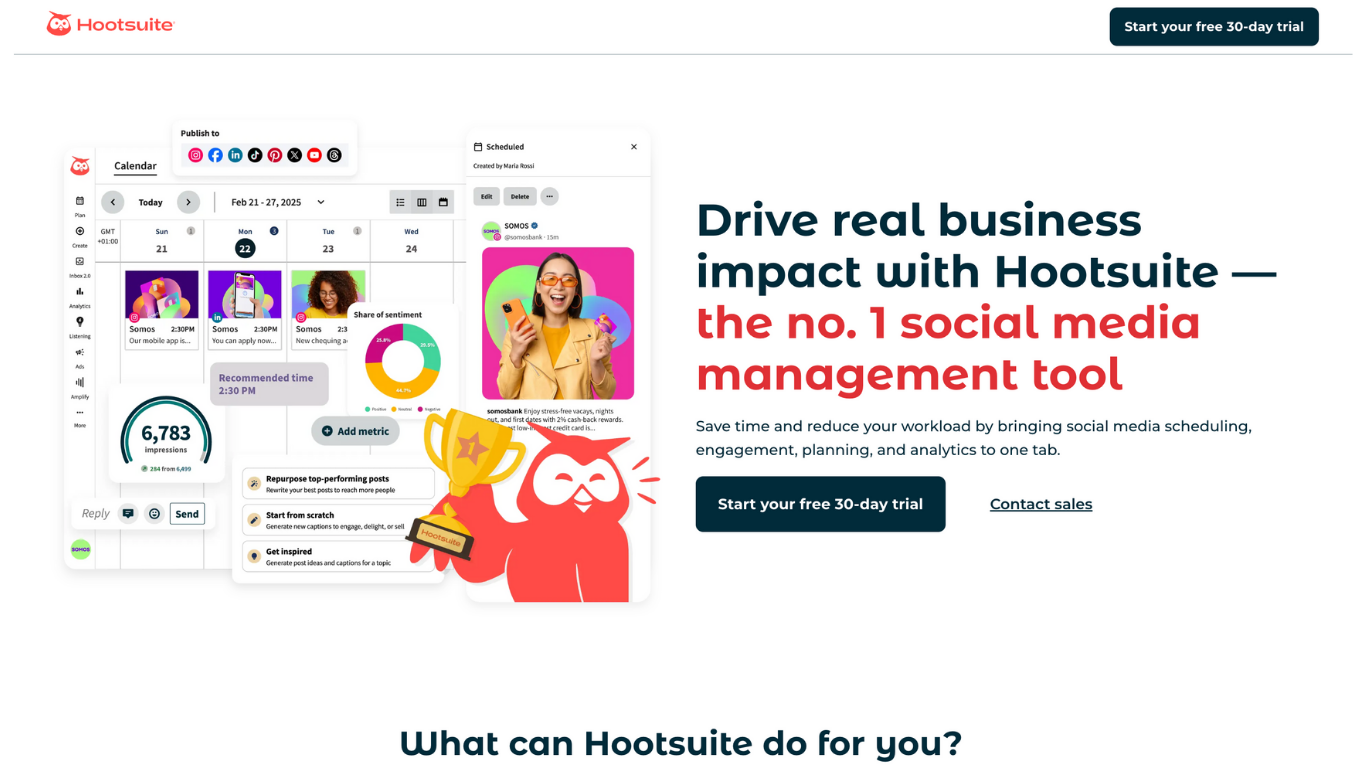
Hootsuite - A Global Social Media Management Platform
Key Features
- Multi-channel social media management: Hootsuite supports most major platforms such as Facebook, Instagram, LinkedIn, Twitter (X), TikTok, and YouTube
- Automated post scheduling: Allows you to plan and schedule weekly and monthly content for marketing campaigns
- Monitoring and listening (Social Listening): Hootsuite lets you track keywords, hashtags, and mentions to spot trends, respond to customer feedback, or keep an eye on competitors
- Data analytics: Provides detailed reports on post performance, engagement, and follower growth
- Team management: Assigns permissions so multiple team members can collaborate on managing social media accounts
- Ad integration: Hootsuite integrates ad management for Facebook, Instagram, and Google Ads
Pros
Hootsuite is especially strong in managing and analyzing social media at scale, making it well suited for medium-sized and large businesses or marketing agencies.
Cons
Hootsuite can be quite complex for beginners, and its interface with many features can be overwhelming. Additionally, Hootsuite is not cheap, especially when adding many team members. Advanced analytics and social listening features are only available in the premium plans.
Pricing
Plans start at $99 USD/month and up.
Conclusion
Each tool on this list has its own strengths and limitations. Businesses should carefully consider their actual needs, budget, and operations team to choose the most suitable solution. If you are an SME or an online shop owner looking for a streamlined, easy-to-use tool with reasonable costs that still covers essential activities, from landing pages and email marketing to social posting, CRM management, and automation, then GTG CRM is definitely an option worth considering.
Turn what you've just read into real results — start today with GTG CRM, free of charge.
Get started now