When starting to run ads, many people hear about TOF, MOF, BOF concepts but apply them mechanically. Some people only run BOF from the beginning to "close deals quickly," while others group all customers into one campaign without differentiating stages.
In reality, TOF – MOF – BOF is not a rigid formula to copy-paste, but a mindset for building the customer journey. If you misunderstand this core concept, even if you divide into three stages, ads will still struggle to generate sales.
What are TOF – MOF – BOF actually?
TOF, MOF, BOF are three stages in the customer's decision-making journey, not three separate types of ads.
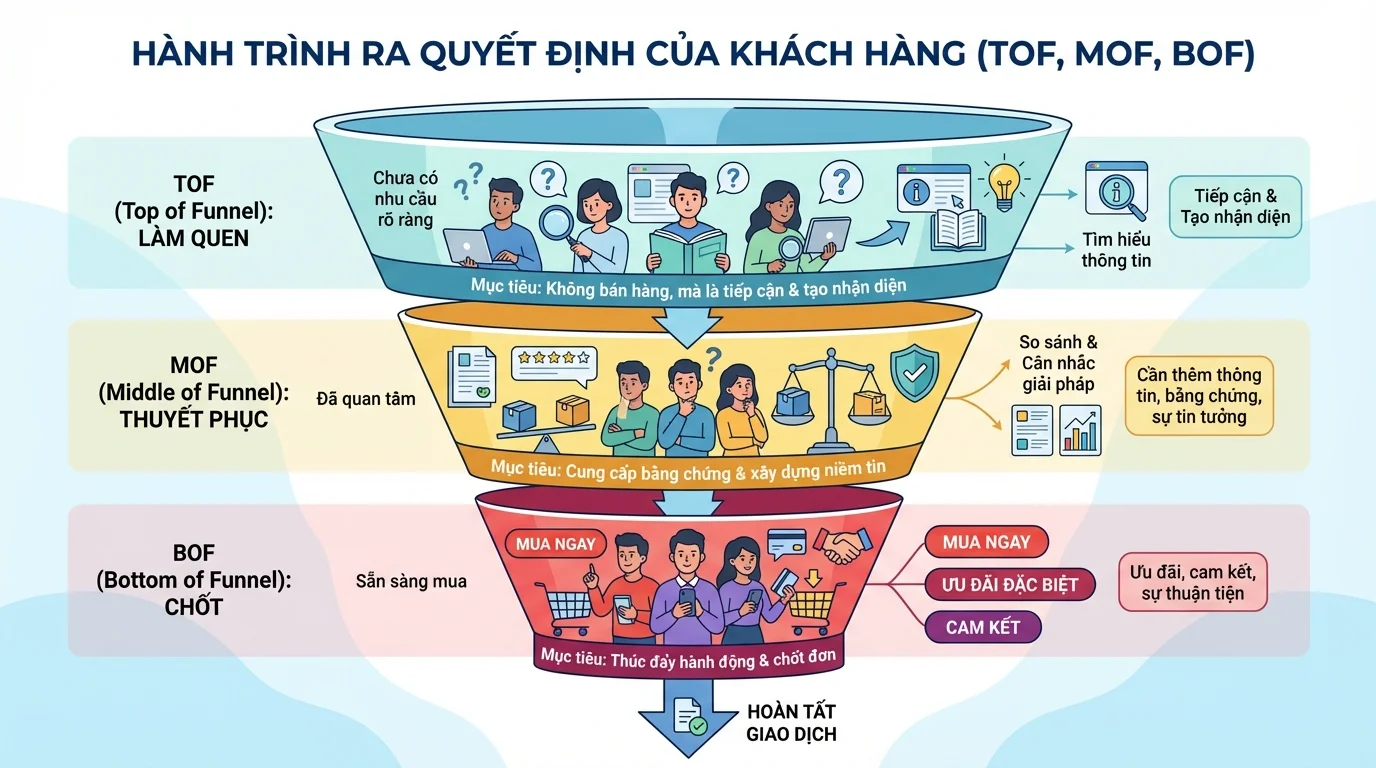
TOF (Top of Funnel) – Top of the Funnel: The stage where customers don't have a clear purchase intent. The goal is to reach the right potential audience, build brand awareness, and spark interest by identifying problems. TOF content typically includes educational articles, tutorial videos, case studies, and infographics.
MOF (Middle of Funnel) – Middle of the Funnel: The stage where customers are interested and begin to compare and consider options. The goal is to explain why your solution is suitable, provide social proof, and build trust. MOF content often includes webinars, demos, detailed case studies, and product comparisons.
BOF (Bottom of Funnel) – Bottom of the Funnel: The stage where customers are ready to buy, only lacking a strong reason to act immediately. BOF content typically includes sales landing pages, discount codes, bundled gifts, and return policies.
Simply put: TOF is introduction, MOF is persuasion, BOF is closing.
Common Mistakes When Running Funnel Ads
Wanting to Sell Immediately at TOF
The most common mistake is running ads to cold audiences but using direct sales content. Customers lack sufficient trust and a clear understanding of the product's value. This results in high costs and low conversions.
Running Disconnected Ads Without Linkage
Many people run TOF, MOF, BOF ads in isolation, without relying on previous customer behavior data. The advertising funnel is only truly effective when each stage inherits data from the previous stage.
Skipping or Reversing Stages
For new markets or new products, skipping TOF and MOF causes BOF costs to skyrocket while conversions remain low.
How to Build TOF - MOF - BOF Ad Funnels for Beginners
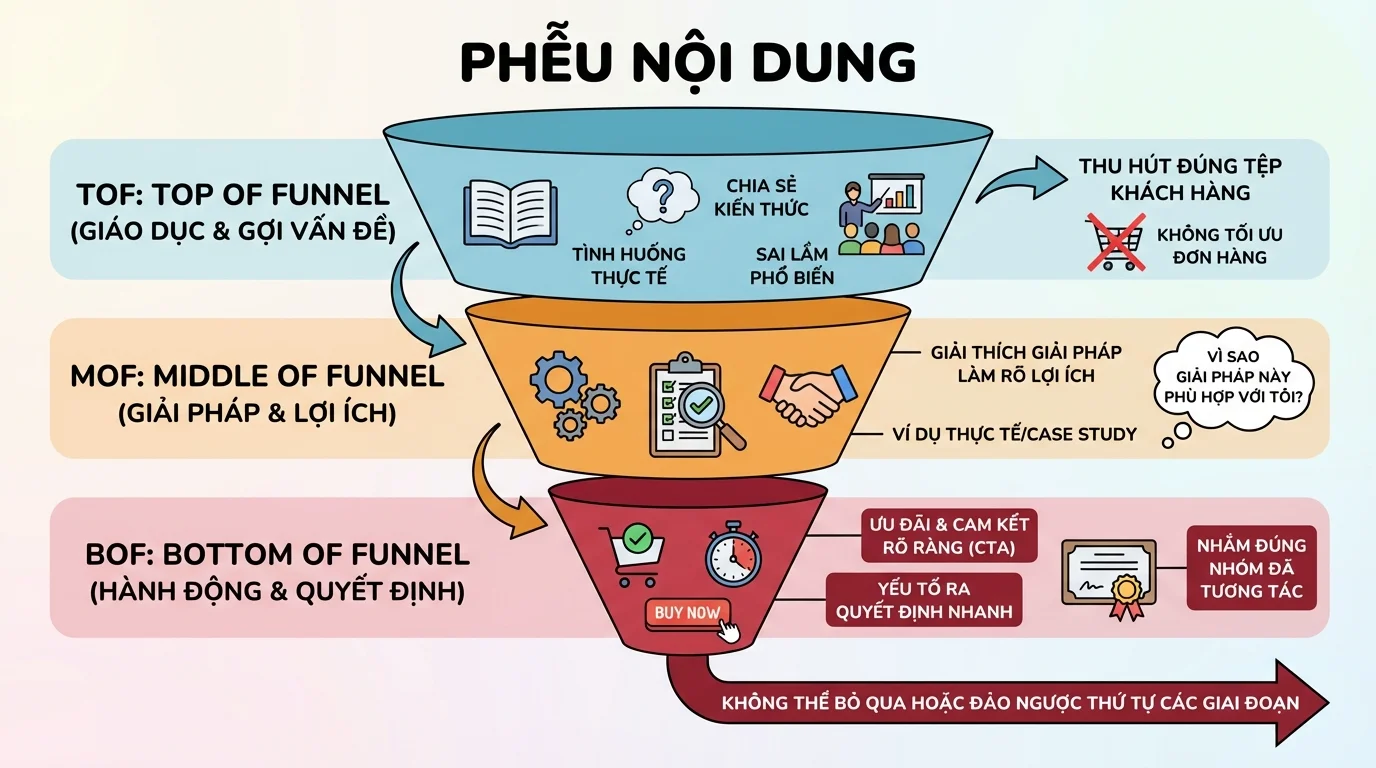
At the TOF stage, focus on educational content and problem identification to attract the right audience who are likely to be interested.
Once you have data from TOF, the MOF stage begins to take effect: explaining solutions, clarifying benefits, and providing real-world examples.
At BOF, only then should you use action-driving content: promotions, guarantees, and clear calls to action.
Data is the Foundation of Ad Funnels
A true advertising funnel is not just created by content, but by customer behavior data. Businesses need to know who viewed TOF content, who interacted with MOF, and who is ready for BOF.
GTG CRM Supports Customer Funnel Management
GTG CRM provides AI for generating funnel-specific ad content. With just a few simple prompts, users can create countless pieces of content for each funnel without spending too much time.
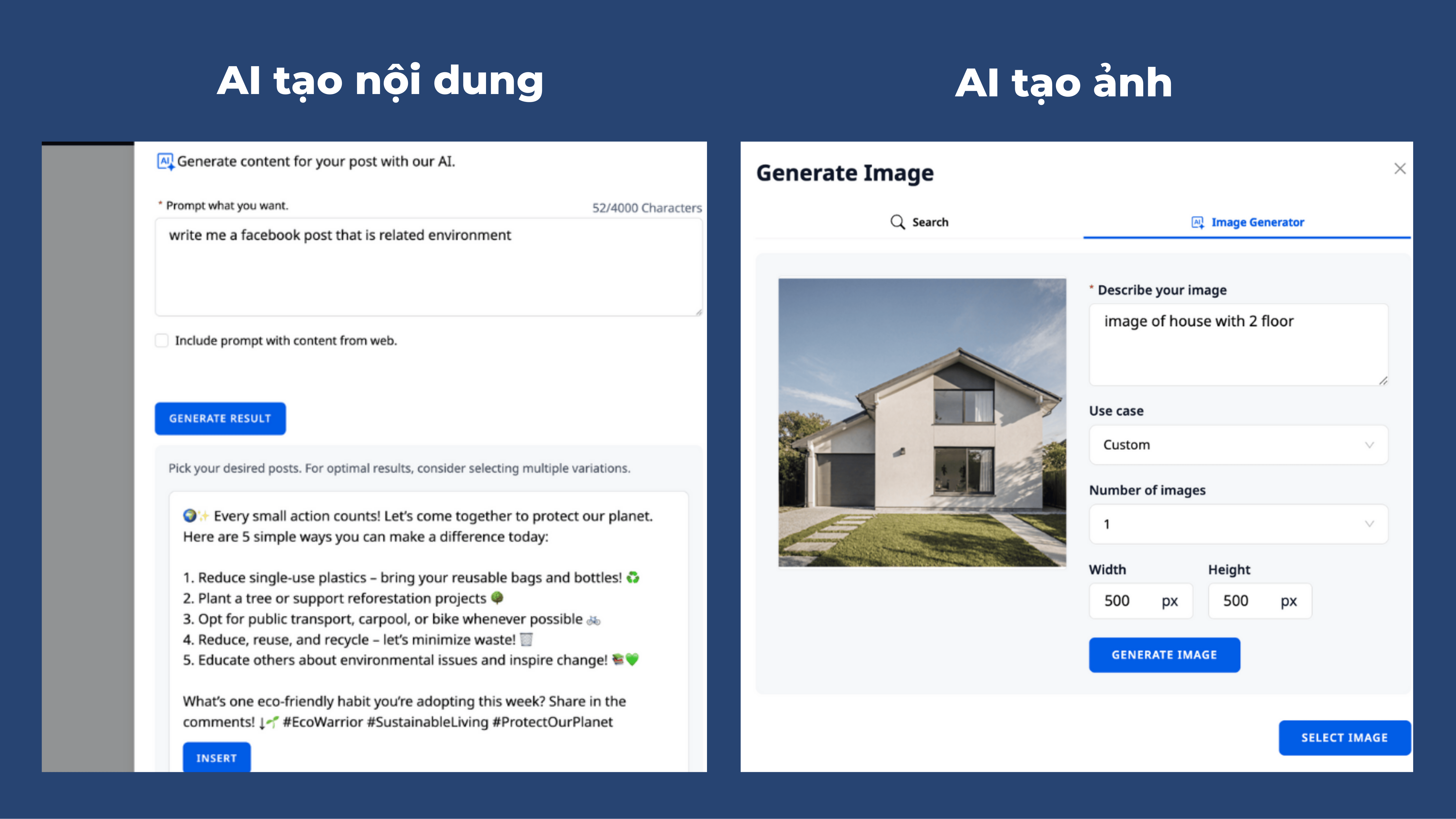
Furthermore, GTG CRM can help users run ads more easily with its powerful AI system, which automatically suggests keywords, headlines, and descriptions for Google Ads, as well as content and images for Facebook Ads.
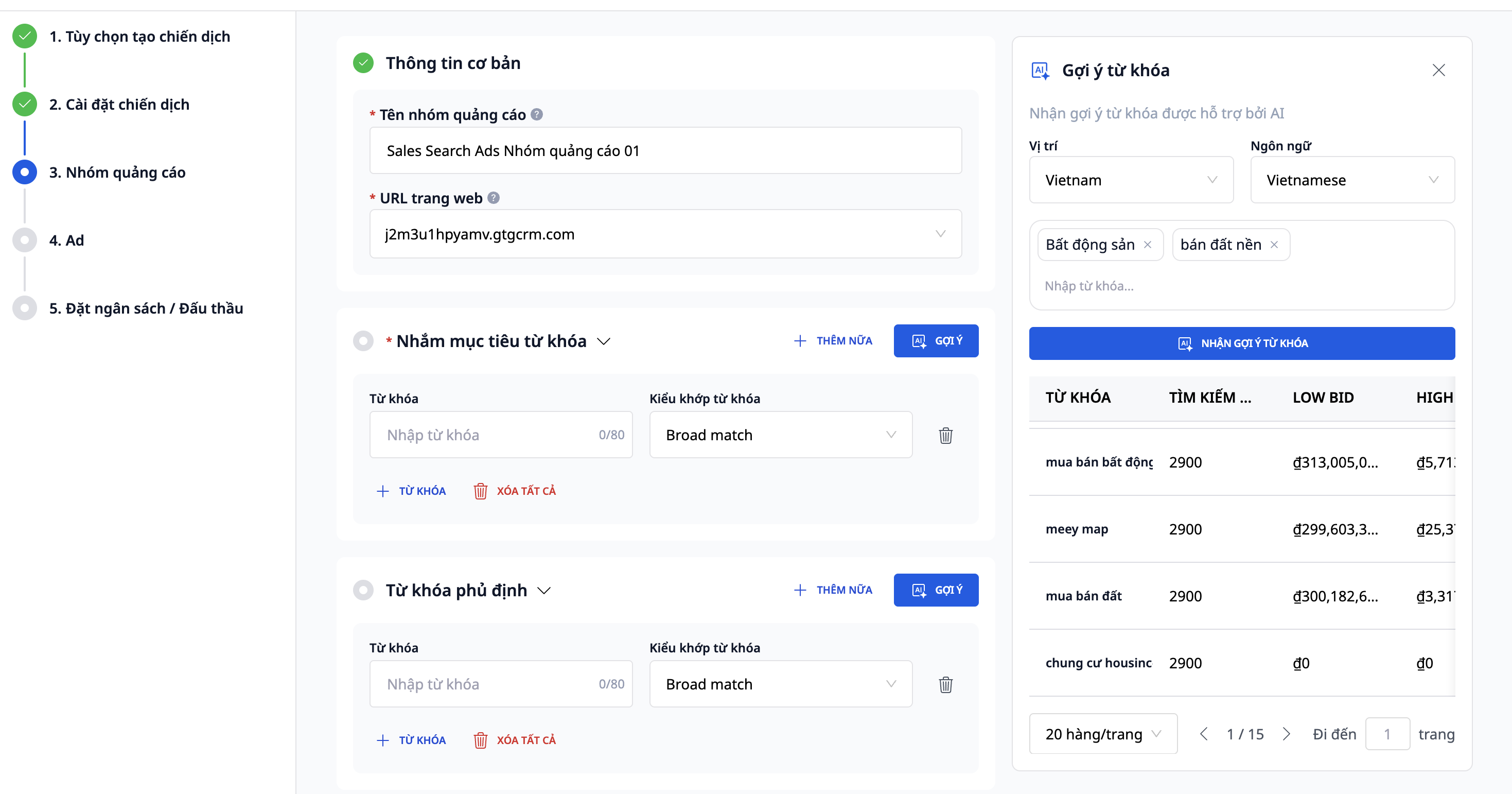
At the same time, all customer information from advertising sources is automatically created in the CRM. Instead of running disconnected ads, GTG CRM helps businesses gradually perfect their advertising funnel based on real data.
Read more: A guide to running ads with Facebook and running Google Ads with AI.
Conclusion
TOF – MOF – BOF are not terms for professionals, but fundamental concepts that beginners need to understand correctly from the outset. When building funnels correctly and with appropriate support systems, ads not only generate sales but also create sustainable growth.
Turn what you've just read into real results — apply it now with GTG CRM, for free.
Apply now