Many small and medium-sized businesses today have fan pages, run ads, post regularly, and even have sales teams actively consulting. But when customers want to learn more, they still tend to ask very basic questions: who is this business, are they trustworthy, who have they worked with, is there clear information, where can they be contacted, what is their workflow like?
This is exactly when a website becomes a crucial touchpoint.
For many customers, a website is not just a place to view information. It's where they check a business's credibility before leaving their contact details, sending a consultation request, or making a purchase decision. In other words, a website doesn't just help customers know who you are. A good website also helps customers trust you faster.
Therefore, if a business wants to increase its online credibility, build a more professional image, and improve conversions, investing in a website is not just about presence. It's about building trust.
Why does a website strongly influence customer trust?
When a customer hears about your business through ads, social media, or referrals, they rarely make a decision immediately. Most will do a follow-up check. They search the brand name on Google, visit the website, see what you do, if it's clear, if it's professional.
If at that point the business doesn't have a website, or the website is too rudimentary, lacks information, or is poorly presented, customers will tend to hesitate. They don't necessarily think your business is bad. But they don't have enough grounds to trust.
Conversely, when a website clearly shows who the business is, what it offers, what it has done, provides transparent information, and has a clear layout, customers will understand faster and feel more at ease. This is the greatest value of a business website that builds trust.
Signs that indicate customers need a website to trust you more
1. Customers repeatedly ask very basic questions
If the sales or customer care team frequently has to re-explain what the business does, its process, its experience, who it has worked with, this is a sign that the website is not effectively supporting trust.
A good website should answer many questions upfront so the team doesn't have to start from scratch in every consultation.
2. Customers visit but take no action
There are many cases where customers are interested, have visited, and even spent a considerable amount of time browsing, but still don't fill out forms, call, or message for consultation. The reason might not be the product itself, but rather that the website isn't persuasive enough for the customer to proceed.
3. The business has an online presence but lacks a professional feel
A well-functioning fan page is still essential. However, a fan page alone is often not enough to create the impression that a business has a solid foundation. A website helps customers see you as more serious, methodical, and trustworthy.
How does a business website help customers understand and trust you faster?
1. Helps customers understand the business from the very first seconds
A good website allows a business to clearly present who it is, who it serves, what problems it solves, and what makes it different. When customers visit, they don't need to spend too much time guessing.
Understand quickly: customers know what the business does.
Trust faster: customers see that the business has a clear positioning and a professional presentation.
This is why the introductory section, main headline, and core message on the website are so important.
2. Provides clear trust signals
Online trust doesn't come from one-sided claims like "we are trustworthy." Trust comes from specific signs that customers can see and evaluate for themselves.
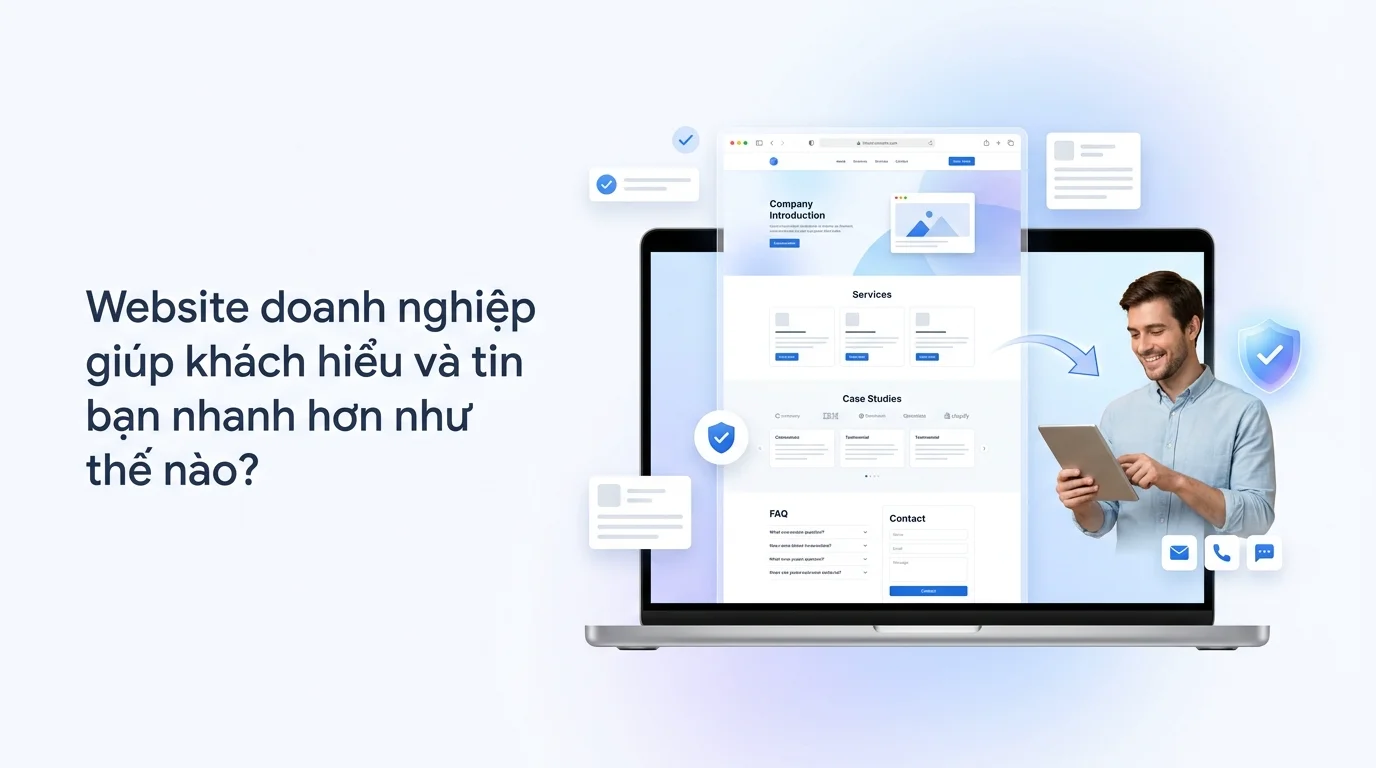
A business website should have content categories that help reinforce trust, such as:
Clear company information: business name, field of operation, contact methods, address, email, or other basic identification information.
Case studies or completed projects: this is an excellent way for customers to see that the business doesn't just talk, but has practical experience.
Feedback or social proof: customer or partner feedback, real-life photos, or notable results greatly increase credibility.
Clear FAQs: when a business proactively answers frequently asked questions, customers feel better guided and experience less hesitation.
Easy-to-find contact information: a website lacking a clear contact section often reduces a sense of security, especially for new customers.
Which sections on a website usually boost trust the most?
Here are the sections that are highly recommended if a business wants to increase its online business credibility through its website.
1. Business introduction section
This is where customers understand who the business is, what its background is, and which customer group it serves. This section doesn't need to be excessively long, but it must be clear and to the point.
2. Services or solutions section
Customers need to know what the business offers. The clearer the presentation, the easier it is for customers to assess if you meet their needs.
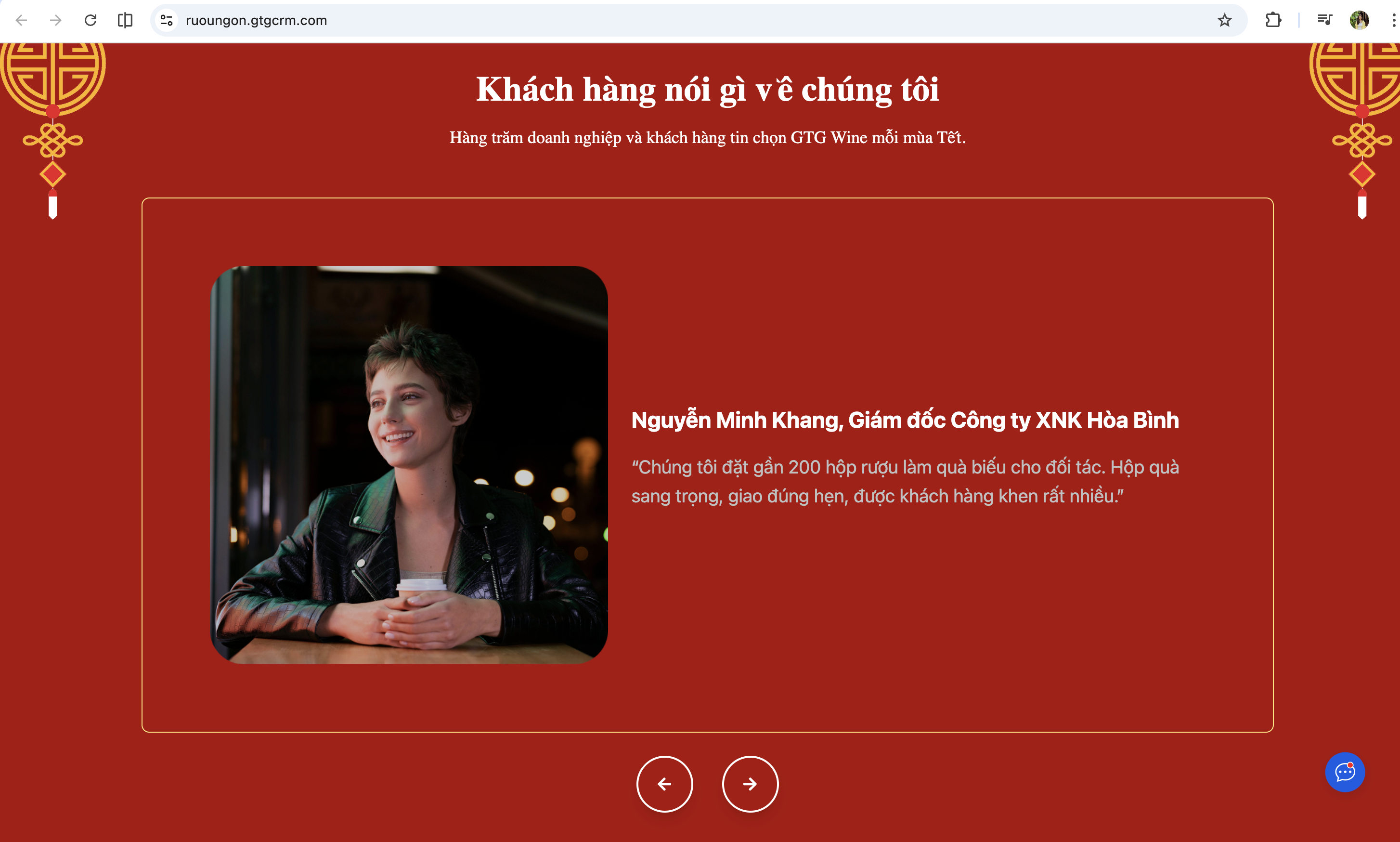
3. Case study or featured client section
This is one of the strongest trust signals. When customers see that the business has worked with others, they have a practical basis for trust.
4. Contact section
A company introduction website with a vague or hard-to-find contact section will significantly reduce trust. Contact buttons, consultation forms, phone numbers, or emails should be placed in clear positions.
5. FAQ section
FAQs are not just for answering questions. They are also a way for businesses to demonstrate professionalism and proactively address customer concerns.
Why is having only a fan page or social media profile not enough?
Social media is excellent for outreach, interaction, and frequent content updates. However, when customers want to assess a business's seriousness, they usually need a more structured platform.
A website allows businesses to proactively organize information logically for trust-building. Visitors to a website can understand the brand, see capabilities, view services, review case studies, and find contact information within a seamless journey. This is something social media often cannot fully replace.
In other words, social media helps customers become aware of you. A website helps customers trust you enough to act.
A business website that builds trust doesn't need to be overly complex
Many businesses think that to have a good website, they need to invest heavily, write a lot of content, or create an overly elaborate structure. In reality, what customers need is not a complex website. They need a clear, easy-to-understand website with sufficient trust signals.
An effective company introduction website typically only needs to do the core tasks well:
Convey the right information: customers understand what the business does.
Create a professional impression: clear interface, concise content, good user experience.
Provide trust signals: include case studies, contact information, FAQs, real evidence.
Guide action: have clear CTAs so customers know the next step.
How does GTG CRM help businesses build trust-building websites?
GTG CRM supports businesses in creating websites in a faster and more proactive way, especially suitable for those looking to enhance their online credibility without opting for overly complex website implementations.
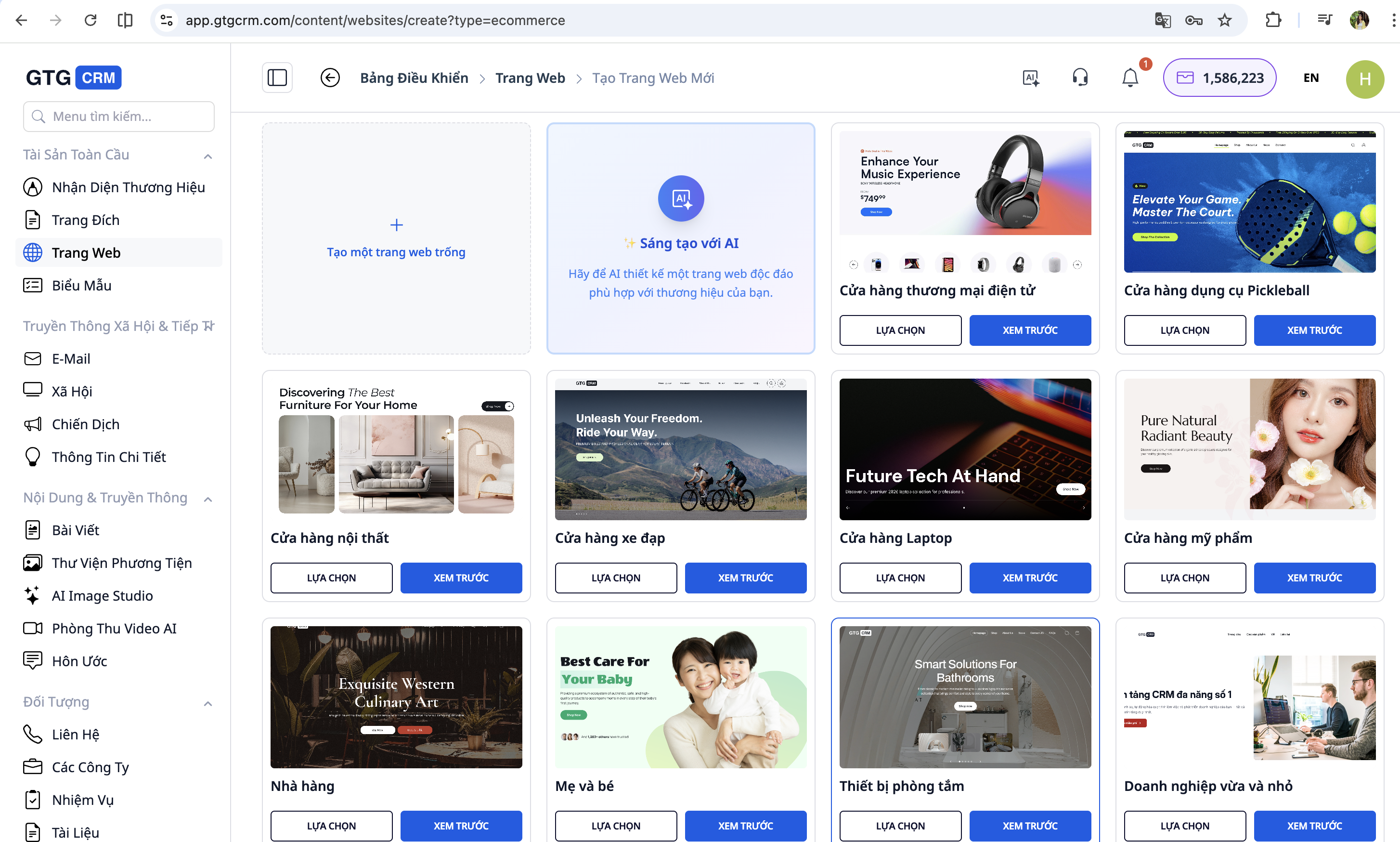
The system provides SEO-friendly website templates, allowing businesses to start with a clear structure, easily optimize content, and build a more professional image in the digital space.
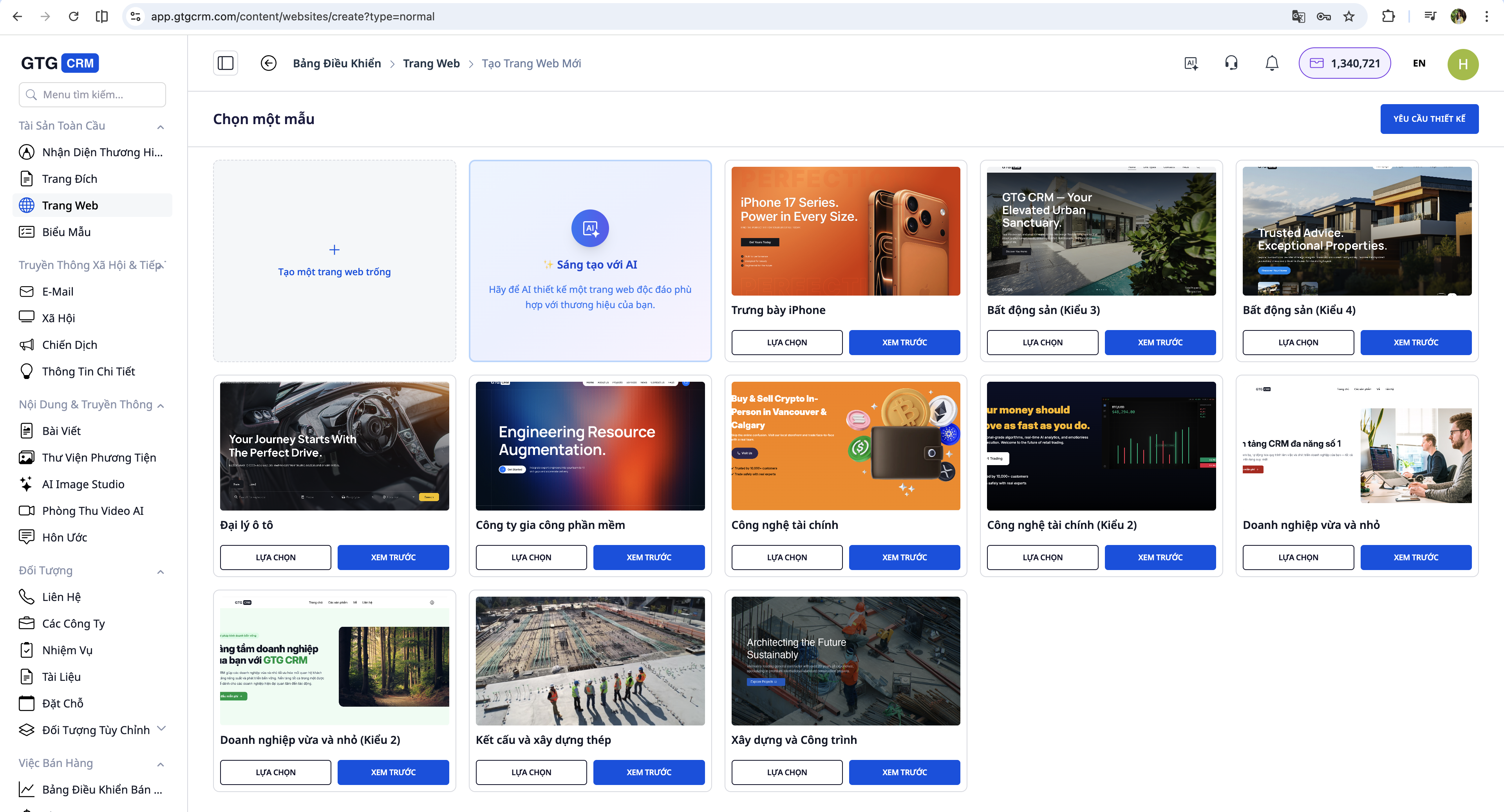
Furthermore, GTG CRM supports creating new websites from AI, significantly shortening the startup time. This is highly beneficial for small and medium-sized businesses that need to launch quickly but still want a well-structured website.
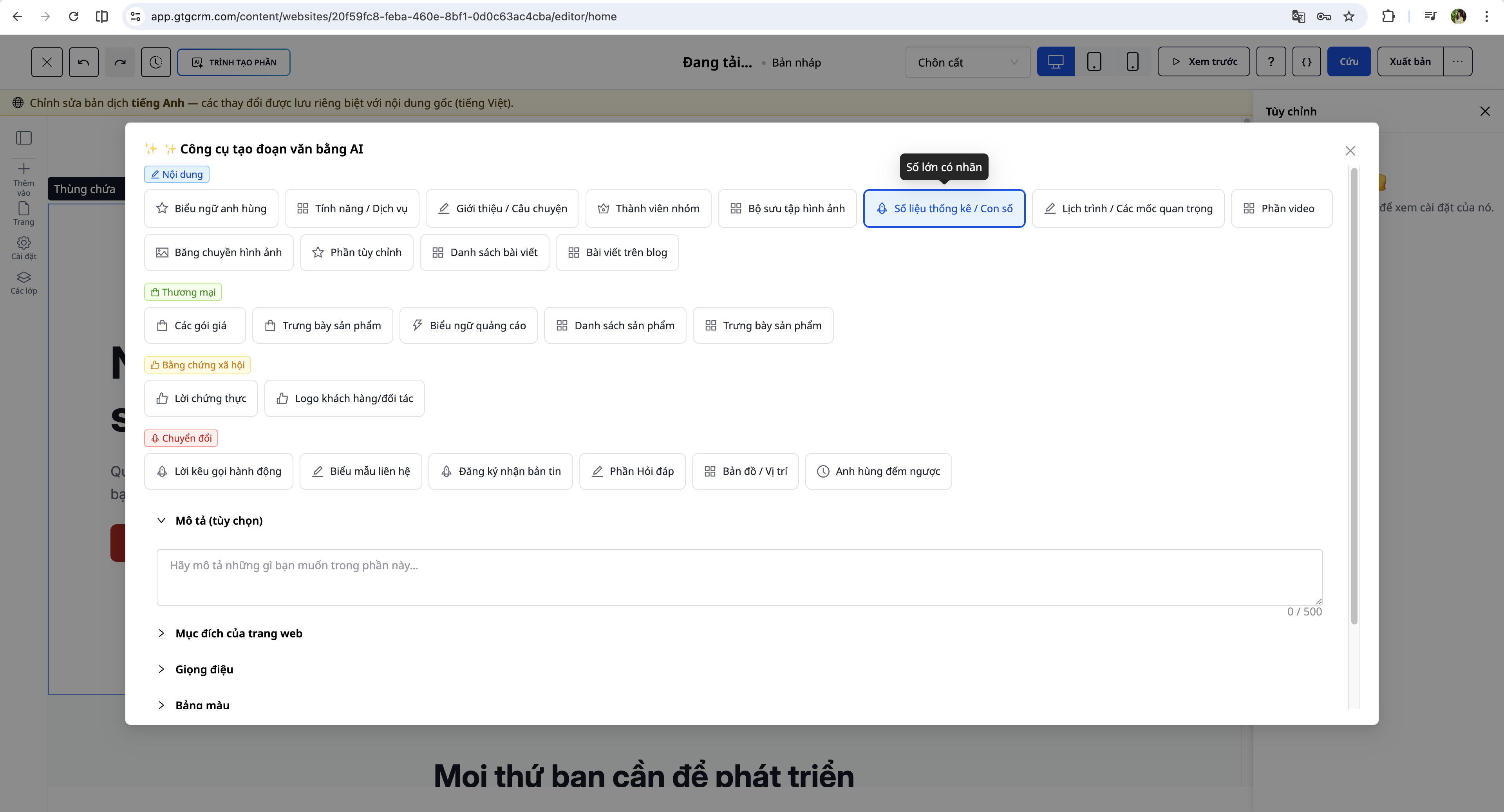
Another notable advantage is that AI can assist in creating individual website sections. This is very useful when businesses want to add important sections to boost trust, such as the company introduction, case studies, FAQs, CTAs, or sections for campaign objectives. With just a few brief descriptions, businesses can quickly generate suitable content sections instead of having to rebuild everything manually.
 This means a website is no longer a rigid, difficult-to-edit item. Businesses can flexibly update it to better support trust and conversions over time.
Conclusion
Customers don't just need to know you exist. They need enough reasons to trust you.
In that journey, a website plays a very important role. A good website helps customers understand the business faster, see capabilities more clearly, and feel more secure when deciding to contact or purchase.
If a business aims to increase its online business credibility, build a more professional image, and create a better foundation for conversions, then a website is no longer an option. It is an asset to have.
With GTG CRM, businesses can start in a more streamlined way through SEO-friendly website templates, AI-powered website creation, and the addition of necessary sections to boost trust with just a few short descriptions.
If you're looking to build a website not just for presence, but to help customers understand and trust you faster, now is the time to start with the right website structure.
Turn what you've just read into real results — apply now with GTG CRM, for free.
Apply Now