Many small businesses today have no shortage of interested parties. They have visitors to their websites, people messaging their fan pages, leads from ads, and individuals showing interest in learning more. But the problem is: customer interest doesn't automatically mean the business will retain them.
In many cases, customers don't leave because the product is poor or the price is unsuitable. They leave simply because they aren't responded to quickly enough, don't know who to contact, or start a conversation that then gets dropped. For SMBs with small teams, this is a very common pitfall.
The truth is, when a customer is hot, every minute of delay reduces the chance of conversion. They might be on your website, having just viewed a service, read an offer, or clicked on an ad. If there isn't a clear chat point at that moment, or if there is one but it's not handled promptly, leads can easily go cold before sales can even reach them.
That's why Live Chat and Messaging are no longer just support tools. For many small businesses, they are becoming an essential part of the lead closing journey.
Why do small businesses often miss out on interested customers?
When looking at marketing reports, many businesses see traffic, messages, and form submissions. But when they look at the actual number of opportunities moving forward, the results are disproportionate. One of the major reasons lies in the stage between "customer starts showing interest" and "business responds in time."
This is a gap that is easily overlooked.
Customers aren't always ready to fill out a form immediately. Many want to ask a quick question first, want to see if anyone responds, want to check if the business is professional enough to assist them. If the website only has static information without a convenient chat point, businesses are making things difficult for themselves at a crucial moment.
It can be simply visualized like this:
- Customer sees an ad and clicks to the website
- Customer browses services or products
- Customer starts having questions
- Customer looks for ways to contact
- If contact is easy and response is fast, the chance of retaining the lead increases
- If not, the customer leaves and looks elsewhere
The difference often lies at that very step.
Where do customers commonly drop off?
Not all customers drop off at the final step. Many hot leads are lost in moments very close to conversion.
1. Dropping off when a customer has a question but doesn't know where to ask
Customers visit the website, view information, start to get interested, but don't see a clear contact point. The form is too far down the page, the phone number is hard to find, and they're unsure if anyone is online on the fan page. Just a few seconds of hesitation can lead them to exit.
2. Dropping off when a customer messages but doesn't get a quick enough response
This is a very common situation for small businesses with limited staff. Customers message the fan page, website, or another channel, but only get a reply several hours later. By then, their initial interest has significantly diminished.
3. Dropping off when the conversation gets disconnected from the lead handling process
Some businesses do respond to customers, but the discussions are scattered across different channels. The consultant lacks full context, the next person doesn't know what was discussed previously, and a hot lead becomes a vague one simply because the handling process isn't seamless.
Why is response time so important?
When a customer actively messages, it's a very strong signal. Compared to just reading an article or browsing a website, the action of opening a chat window to ask a question indicates they are closer to making a decision.
However, precisely because of this, the window of opportunity is shorter.
People who are in an interested state generally don't want to wait too long. They don't see messaging as a high-commitment step. They are simply testing how well the business responds. If the initial experience is slow, disjointed, or unclear, trust will rapidly decrease.
For SMBs, the challenge isn't necessarily having a large team online all the time. The challenge is about how to make it easy for customers to start a conversation, and once the conversation starts, how the business doesn't let it fall through the cracks.
How do Live Chat and Messaging help SMBs?
If viewed correctly, Live Chat and Messaging solve two very practical issues.
First, they create a clear point of contact for interested customers.
Instead of customers having to figure out how to contact you, businesses provide them with a clear entry point directly on the website or familiar messaging channels.
Second, they shorten the distance from interest to handling.
When a customer starts messaging, the business has an opportunity to respond faster, understand their needs sooner, and guide them to the next step instead of waiting for them to return.
For small businesses, this is a huge benefit because not every lead will fill out a form or make a call right away. Many good opportunities start with a very short question.
Some common scenarios for small businesses
Scenario 1: Customer visits the website outside of business hours
A customer is viewing services in the evening and wants to ask a quick question before making a decision. If the website only has static content, the customer is likely to leave. But if there's a website chat widget, customers will find it easier to initiate a conversation.
Scenario 2: Customer comes from an ad and wants further confirmation
Many leads from ads are not ready to fill out a form immediately. They want to ask if the service is suitable, about the price range, or the implementation timeline. A clear chat window helps businesses not miss that moment.
Scenario 3: Small team makes it easy to miss messages
Businesses have few people, and each person manages different channels. Messages from the website, fan page, or other channels don't flow into a single stream, making responses and follow-ups easily interrupted.
This is precisely where messaging for SMBs becomes important, because the issue isn't just about having a chat channel, but how that chat channel integrates into the lead handling process.
How should a hot lead handling flow work?
A good flow doesn't need to be overly complex, but it needs to be clear enough for a small team to follow.
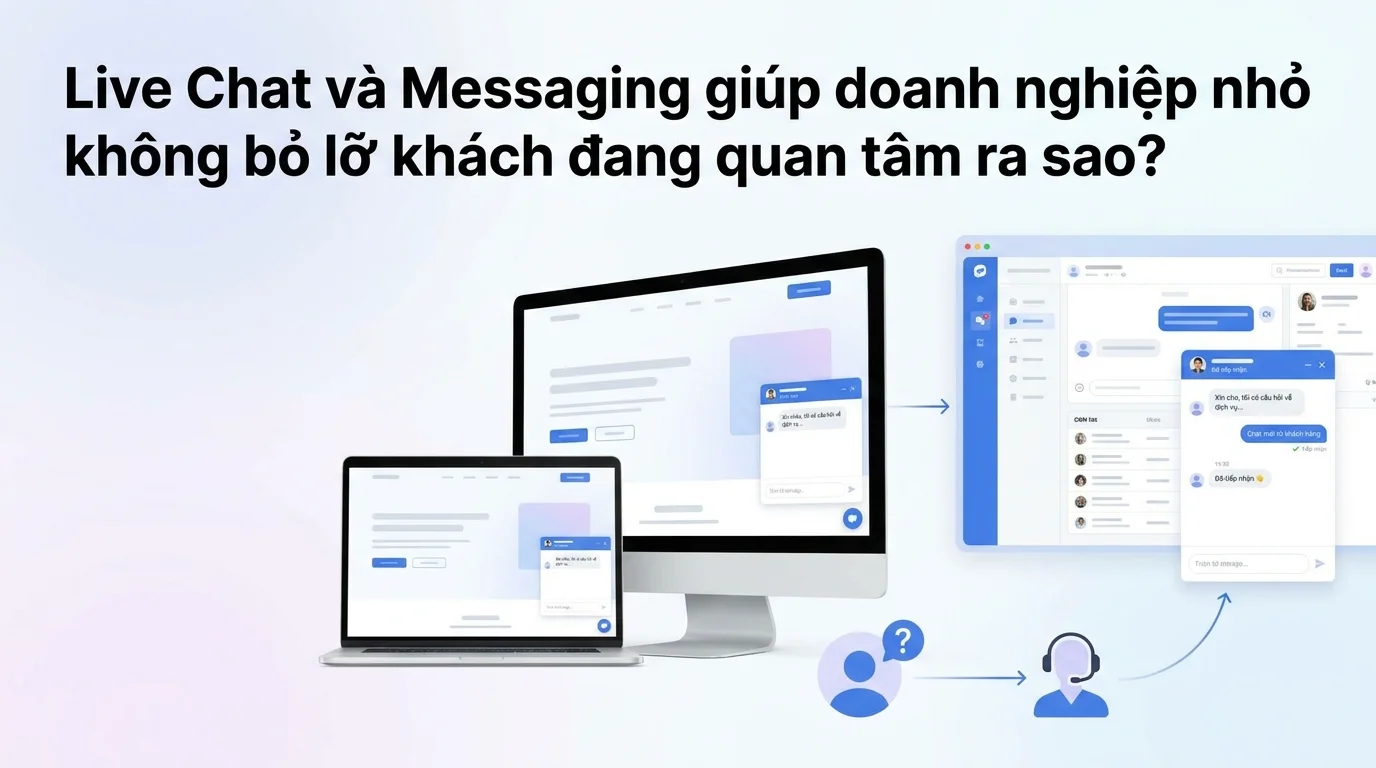
A basic flow can be visualized as follows:
- Customer visits the website or landing page
- Customer starts chatting via widget or messaging channel
- Business receives the question and identifies the initial need
- Customer information is recorded in the tracking system
- The conversation continues instead of falling out of the loop
- Sales or the responsible person can follow up at the right time
The key here is: chat should not stop at just answering the question; it needs to become part of the flow to move the lead to the next stage of processing.
How should websites, chat, and CRM work together?
This is where many small businesses start to see the problem. If the website is just for introductions, chat is just for scattered responses, and customer data resides elsewhere, the system remains disconnected.
A better structure usually involves:
- The website as the place to capture needs
- Live Chat or Messaging as the interaction point as soon as a customer shows interest
- CRM as the place to record and track customers thereafter
When these three components are connected, businesses will significantly reduce the situation where customers show interest but no one follows up.
How does GTG CRM support small businesses with this challenge?
GTG CRM helps small businesses create a more seamless flow between website, chat, and CRM.
Businesses can embed a Live Chat widget on their website or landing page, making it easy for customers to start a conversation right at the moment they are interested. This is particularly useful for businesses that need to improve fast lead response without making customers search for contact methods.
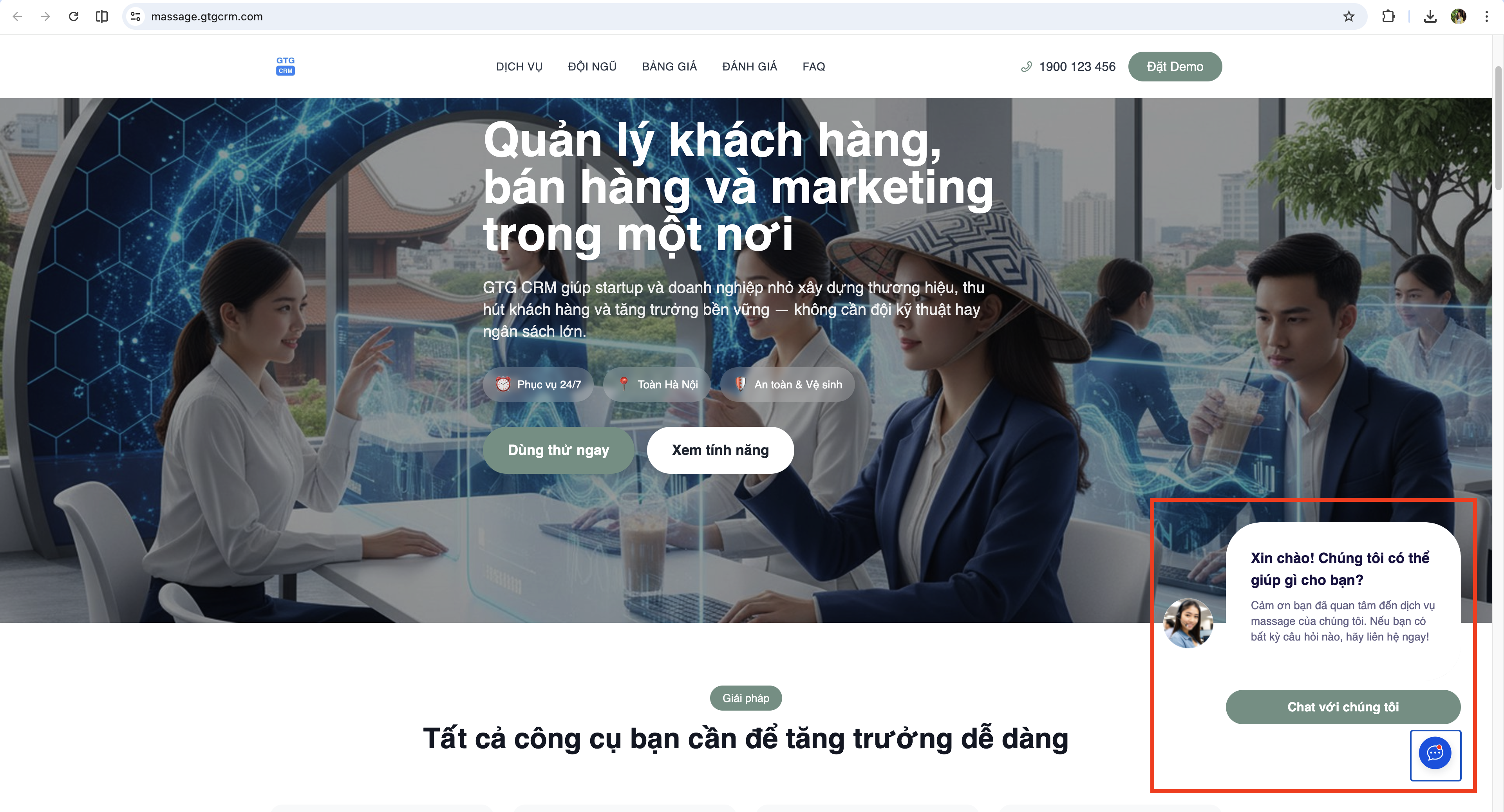 In addition, GTG CRM has a Messaging feature to help manage customer interactions on a single, clear platform, rather than having conversations scattered across multiple places. When combined with the CRM, customer data and conversation history are more easily tracked seamlessly throughout the handling process.
The greatest value isn't in having an extra chat box on the website. The value lies in businesses starting to build a better flow from customer visits the website, starts chatting, to when the information enters the CRM for follow-up.
Conclusion
For small businesses, losing customers isn't always due to a lack of traffic or leads. Many opportunities are missed simply because a customer showed interest but wasn't responded to in time or lacked a convenient touchpoint to start a conversation.
Live Chat and Messaging help fill that gap. They create a clearer point of contact for customers, reduce response times, and help businesses avoid losing hot leads.
If your website is getting visitors, if your ads are grabbing attention, and if your business wants to respond faster while keeping the system streamlined, it's time to view Live Chat and Messaging as a more essential part of the conversion journey.
Turn what you just read into real results — apply now with GTG CRM, free.
Apply Now