In the context of rising advertising costs and increasingly complex consumer behavior, focusing solely on acquiring new customers is no longer an effective strategy. A significant portion of actual revenue comes from individuals who have interacted but have not yet made a purchase decision.
Retargeting is no longer a "supplementary" technique but has become a cornerstone of modern marketing strategies, especially for businesses in online sales, e-commerce, and B2B services.
What is Retargeting?
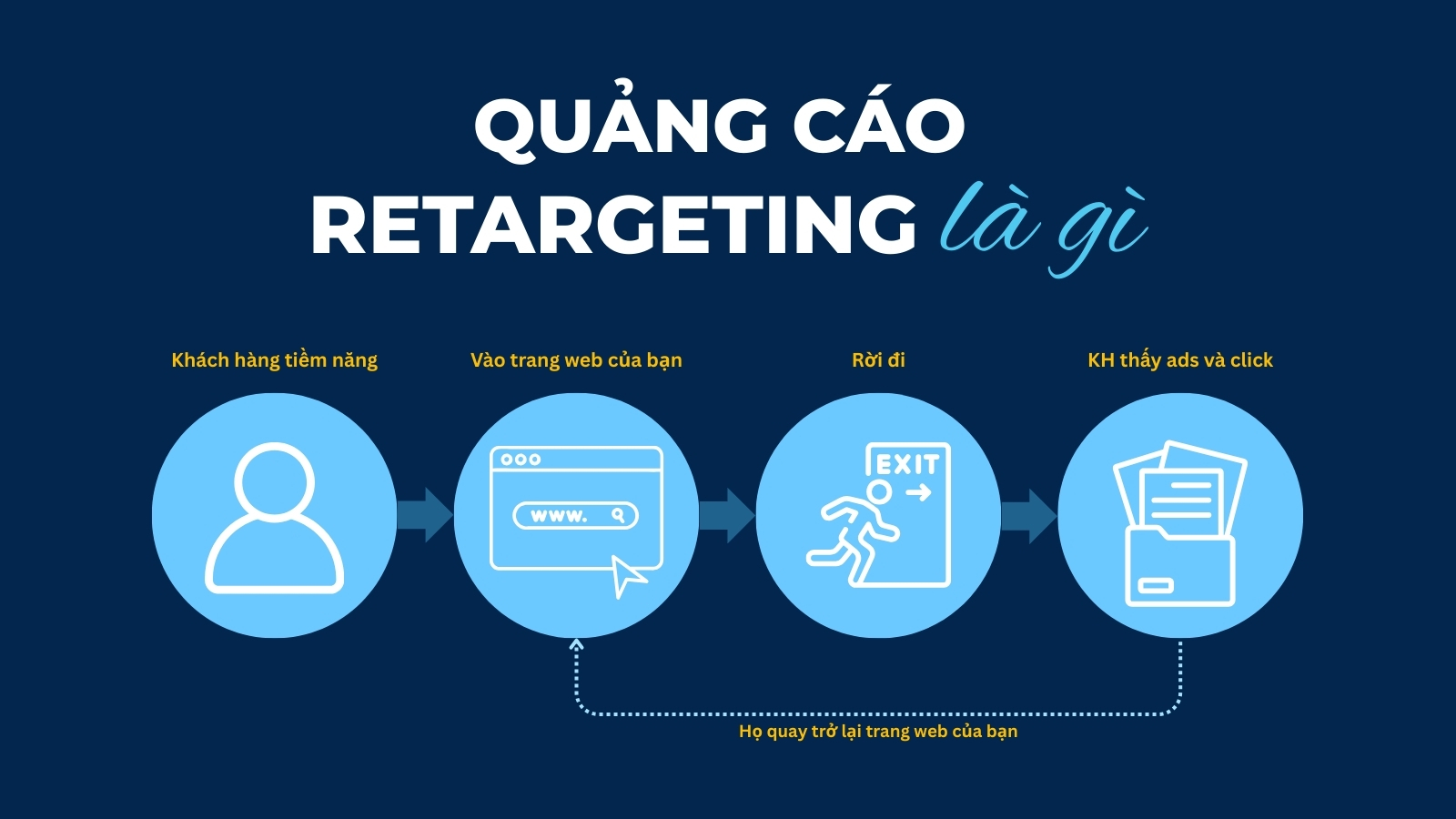
Retargeting is an advertising strategy that targets individuals who have previously interacted with a business but have not yet converted, such as visiting a website, viewing products, adding to cart, or interacting with ad content.
Instead of reaching a completely new audience, Retargeting focuses on individuals who have shown a certain level of interest, thereby increasing conversion rates and optimizing advertising costs. This strategy allows businesses to display relevant messages based on the behavior and intent level of each customer segment.
In reality, Retargeting is not just about "showing ads again," but a process of guiding customers through stages, from brand awareness, product understanding, to purchase decision-making.
Current Retargeting Challenges for Businesses
Not all businesses effectively leverage Retargeting. In fact, many campaigns are still facing core issues.
- Website visitors do not necessarily mean ready-to-buy customers: The majority of users leave a website after their first visit. Without a classification and nurturing strategy, businesses will miss out on the highest potential customer segments.
- Disjointed, non-continuous behavioral data: Customers may view products on a website, interact on Facebook, and then search again on Google. When data is fragmented, it's difficult for businesses to identify the right timing and message for retargeting.
- Lack of personalized ad messages: A single ad creative for all audiences, from those who only read blogs to those who abandon their carts, significantly reduces effectiveness and wastes budget.
- Uncontrolled ad frequency: Ads appearing too often cause fatigue, while appearing too infrequently is not enough to create memorability.
What Opportunities Does Retargeting Open Up for Businesses?
When implemented correctly, Retargeting offers many superior advantages over acquiring new customers.
- Increased conversion rates at lower costs: Customers who are already aware of the brand have a higher purchase probability compared to completely new customers, leading to significant improvements in CPA and ROAS.
- Optimized customer journey at each stage: Retargeting allows businesses to reach customers based on their actual level of interest, thereby guiding them step-by-step towards conversion.
- Leveraging data instead of relying on intuition: Advertising decisions are built on users' actual behavior, not guesswork.
- Expanding revenue from existing customers: Upselling, cross-selling, and win-back campaigns become stable growth sources if organized systematically.
Secrets to Implementing Effective Retargeting Campaigns
Segmenting Audiences by Intent Level
Not all website visitors are equally valuable. Businesses need to clearly divide them:
- High Intent Group (Hot): Abandoned cart, initiated checkout but not completed. This group requires the highest priority with messages that encourage quick action.
- Medium Intent Group (Warm): Viewed products, checked pricing, compared solutions. Content should focus on benefits, social proof, and addressing concerns.
- Low Intent Group (Cool): Read blog posts, viewed about pages. This stage should use educational content and build brand recognition.
- Existing Customers: A group often overlooked but with huge revenue potential through upsells and long-term care.
Designing the Retargeting Campaign Structure
An effective Retargeting strategy needs to be broken down rather than lumped together.
- Campaigns for High Intent Groups: Focus on cart abandonment, checkout abandonment, segmented by timeframes to create a sense of urgency.
- Campaigns for Medium Intent Groups: Retarget based on viewed products or categories, incorporating dynamic ads.
- Nurturing and Reactivation Campaigns: For those who interact with content, existing customers, or customers who haven't returned in a while.
- Sequential Retargeting: Seamlessly guide from brand awareness, product education, to conversion promotion.
Personalizing Content and Controlling Frequency
- Messages must be relevant to each segment: Customers who abandon their carts need a call to action, not brand introduction content. Conversely, new customers need to build trust before being sold to.
- Dynamic ads increase relevance: Display the exact products the customer viewed, along with prices, reviews, and related suggestions.
- Manage frequency to avoid "ad fatigue": Reasonable frequency helps maintain awareness without causing annoyance, while also protecting brand image.
How GTG CRM Supports Systematic Retargeting Implementation?
GTG CRM acts as a central data and operations platform, helping businesses implement Retargeting systematically:
- Consolidated customer behavioral data: All interactions from websites, landing pages, ads, and messages are recorded on one platform, creating a complete customer journey picture.
- Supports building Landing Pages for Retargeting: Landing Pages are optimized to answer specific questions for each customer segment, increasing conversion rates during retargeting.
- Customer and segment management within CRM: Businesses can easily create retargeting audiences based on behavior, time, and customer status.
- Supports multi-channel customer care: Combining ads, emails, and messages helps businesses reach customers at the right time and in the right context.
Conclusion
Retargeting is not just about "running ads again for those who have viewed them," but a data-driven customer journey management strategy. The earlier and more systematically businesses implement Retargeting, the more pronounced their competitive advantage will be, especially in the context of rising marketing costs.
Investing in a centralized management platform like GTG CRM helps businesses not only improve advertising effectiveness but also build a sustainable, scalable marketing operations system for the long term.
Turn what you've just read into real results — apply now with GTG CRM, free.
Apply Now