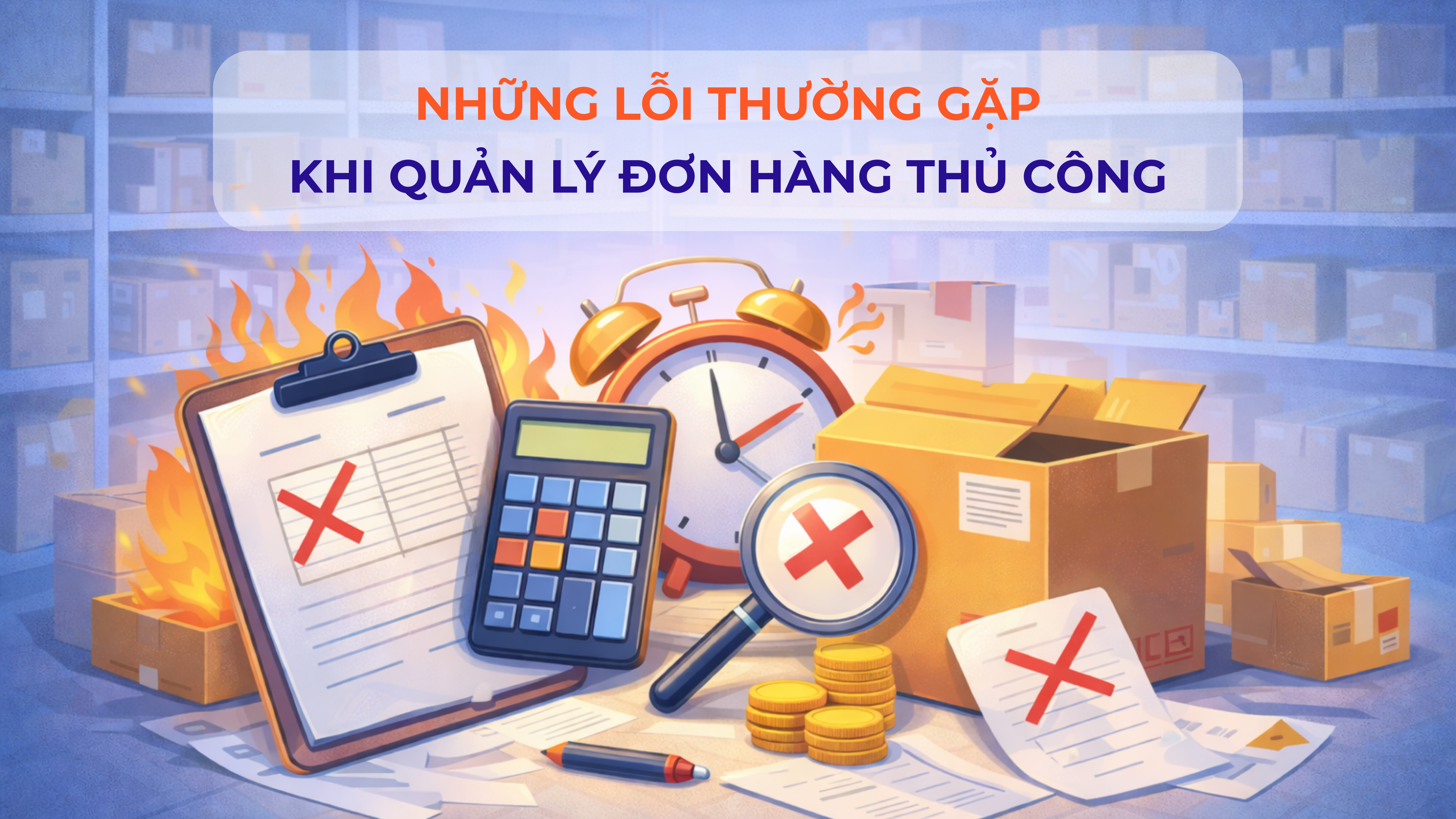
In the early stages of business, many sellers manage orders with notebooks, Excel files, or scattered notes on their phones. This method is acceptable when there are only a few orders per day, sales are through one channel, and there are almost no returns or refunds.
But as the number of orders increases, sales are made through multiple channels simultaneously, or COD deliveries, returns, and payment settlements begin to occur, manual order management quickly becomes the biggest bottleneck in operations.
Not a few sellers find themselves in a situation where they have consistent orders and revenue, but the more they sell, the more confused they become, not knowing exactly if they are making a profit or a loss.
Here are the most common mistakes.
Disjointed order recording, no central data
A very common mistake is that each sales channel is recorded differently. Shopee orders are on the app, Facebook orders are in messages, Zalo orders are written in a notebook, and website orders are in emails.
When there is no single place to centralize all orders, sellers are almost unable to:
- Grasp the total number of orders for the day
- Quickly check the status of each order
- Reconcile old orders when problems arise
In the long run, fragmented data makes management dependent on memory and intuition.
With GTG CRM, all orders from multiple channels: e-commerce platforms, websites, manual orders, etc., are gathered into a single management dashboard, allowing sellers to see the overall picture instantly, without having to open multiple apps or files.
Easy to miss orders or process duplicates
Manual management easily leads to situations where:
- An order has been delivered but forgotten to be updated
- An order has already been processed but not remembered, leading to reprocessing
- It’s unclear whether COD orders have been paid for
These errors may seem small at first, but when accumulated over time, they will lead to revenue discrepancies, cash shortages, or disputes with shipping companies.
When orders are centrally managed on GTG CRM, each order has a clear status. Sellers know exactly which orders are being processed, which are completed, and which need reconciliation, significantly reducing the risk of errors due to manual operations.
Unable to track order lifecycle
An actual order is not just "created and done." It goes through many stages: confirmation, packaging, delivery, successful delivery, return, or cancellation.
Manual management often only records the final outcome, ignoring the entire process in between. This prevents sellers from knowing which stage the problem is occurring in: slow packaging, late delivery, or high return rates.
With GTG CRM, each order has a clear lifecycle, helping sellers identify bottlenecks in the process to adjust, rather than just dealing with issues when it's too late.
Orders detached from inventory, leading to discrepancies as sales grow
An extremely dangerous mistake is when orders are not linked to inventory. Sellers check inventory based on intuition or update inventory only after selling.
Common consequences:
- Selling beyond stock
- Delivering insufficient items
- Actual inventory at the end of the month does not match records
GTG CRM directly links orders to inventory, helping to update stock as soon as an order is generated. This is especially important for multi-channel sellers, where a stock discrepancy on just one channel can lead to a cascade of problems.
Unable to control costs per order
Many sellers only look at the selling price, without attaching costs to each order: shipping fees, platform fees, returns, packaging, promotions.
Without cost data per order, sellers are easily caught in situations where:
- Revenue increases but retained earnings do not
- They don’t know which orders are profitable and which are not
- Decisions are made based on feeling
When orders are managed systematically on GTG CRM, order data, costs, and revenue are stored synchronously, creating a foundation for sellers to truly understand their business performance.
Shop owners get bogged down in operations, losing time for development
Manual management forces shop owners to directly check each order, reconcile each amount, and handle each small error. Time that should be spent on marketing, product improvement, or expanding sales channels is "eaten up" by repetitive tasks.
This is a clear sign that the operational model has reached its limit.
GTG CRM automates most of the order management tasks, allowing sellers to escape manual work and focus on activities that drive growth.
Conclusion
Manual order management is not wrong in the beginning, but it cannot be a long-term solution when the business is on track.
Mistakes like missed orders, inventory discrepancies, lack of cost control, or data confusion do not stem from sellers not performing well enough, but from the lack of a suitable management system.
That is why many online sellers choose GTG CRM as a centralized order management platform, where orders, inventory, shipping, invoices, and cash flow are connected within the same system. When data is standardized from the beginning, sellers not only reduce risks but also have a solid foundation for sustainable business expansion.
Turn what you just read into real results — apply it now with GTG CRM, for free.
Apply now