From January 1st, 2026, the Tax Department will implement a management model transformation for household businesses, ending the lump-sum tax mechanism and shifting to declaration based on actual revenue. This is a major change because the responsibility of "self-calculating, self-declaring, and self-paying" will be directly linked to sales data, invoices, and documents of each household business, instead of a predetermined tax rate.
Tax calculation and declaration methods after January 1, 2026
The key point for the period after January 1, 2026 is: the tax authorities will manage based on actual revenue, and business households need to have sufficiently clear data to declare accurately.
What does "self-declaration, self-payment" mean?
- Self-determining taxable revenue: revenue generated from the sale of goods and provision of services during the period.
- Tự lập hồ sơ khai thuế: nộp tờ khai theo mẫu và kỳ khai theo quy định
- Pay taxes on time: after determining the amount of tax payable according to the instructions.
Regarding implementation guidelines, the Tax Department has clearly communicated the goal of helping business households become familiar with and transition to self-declaration and payment starting in 2026.
Xem thêm thông tin chi tiết tại: Link
Self-declaration and self-payment scheme
Common declaration cases
Ở thời điểm hiện tại, phần “hồ sơ, mẫu biểu” và cách giản lược thủ tục đang được Bộ Tài chính truyền thông theo hướng đơn giản hóa tờ khai, phân nhóm theo đối tượng và cách tính thuế (ví dụ nhóm không phải nộp GTGT, TNCN; nhóm nộp theo doanh thu; nhóm tính theo thu nhập chịu thuế). Nội dung này được nêu trong thông tin của Báo Chính phủ về hồ sơ, thủ tục quản lý thuế đối với hộ kinh doanh, kèm mô tả các mẫu tờ khai dự kiến trong dự thảo thông tư. Xem thông tin chi tiết về các trường hợp cần kê khai tại link.
Important note: The specific form template may be updated according to official guidelines, but the underlying principle remains data-driven reporting. [Sample form]
Why have electronic invoices and sales data become the "backbone" of digital technology?
When switching to declaration-based reporting, the data used for declarations no longer relies on "lump-sum estimates," but must adhere to the following:
- Revenue per order
- Electronic invoices
- Revenue tracking log, related documents (depending on the case)
In line with the transformation roadmap, the Ministry of Finance and the Tax authorities are promoting digital transformation activities to support business households in filing tax returns electronically from 2026.
The current situation and "bottlenecks" when completing tax declarations close to the deadline.
When taxes were based on a fixed rate, many businesses were accustomed to simply paying when due. However, with the shift to a declaration-based system, pressure typically focuses on four key areas:
- Revenue is spread across multiple channels: e-commerce platforms, social media, physical stores, collaborators, etc., making it difficult to close the right sales without a proper system.
- Lack of transaction history: the absence of order logs and reconciliation makes it easy to make mistakes in total revenue calculation.
- Invoices not accompanying transactions: issuing separate invoices reduces the ability to reconcile them and increases the risk of discrepancies.
- Putting things off until the end of the period: the closer to the deadline, the higher the risk of late filing or hasty declarations.
The tax authorities are also implementing intensive campaigns to support business households in "getting familiar with tax declaration" before the transition, indicating a significant change in habits and operational capabilities.
Regulations regarding errors in declaration and penalties.
Below are typical administrative penalties according to Government Decree 125/2020/ND-CP on administrative penalties for violations related to taxes and invoices.
Filing tax returns late
According to Article 13 of Decree 125/2020/ND-CP, the penalty for submitting tax returns late is stipulated based on the number of days of delay, for example:
- 1 to 5 days (and with mitigating circumstances): warning penalty
- 1 to 30 days: a fine of 2,000,000 to 5,000,000 VND.
- 31 to 60 days: fine of 5,000,000 to 8,000,000 VND
- 61 to 90 days (or similar cases as stated in clause 4): a fine of VND 8,000,000 to VND 15,000,000.
- Over 90 days (subject to regulations): a fine of VND 15,000,000 to VND 25,000,000.
Incorrect declarations resulted in a shortfall in tax payable.
According to Article 16 of Decree 125/2020/ND-CP, there are regulations on penalties based on percentages, including cases where a penalty of 20% of the amount of underdeclared tax or the amount of tax that has been exempted, reduced, or refunded in excess of the regulations is imposed, depending on the act and applicable conditions.
(Excerpt from Decree 125/2020/ND-CP on the Government Information Portal)
What role does GTG CRM play during this transition period?
GTG CRM does not "file tax returns on behalf of" or "pay taxes on behalf of" businesses. Its most appropriate role during this transition period is to help businesses standardize their operational data for accurate and timely tax filing, especially as the model shifts to tracking actual revenue.
- Centralizing outgoing and incoming invoices in one place helps to finalize figures faster each period, reducing manual summation from multiple channels.
- Linking electronic invoices to actual transactions facilitates easier reconciliation when reviewing revenue for a given period.
- Reduces the risk of "waiting until the last minute": because data is recorded over time, not compiled at the end of the period.
- Supporting operational discipline: shop owners and in-house accountants share a common data source for cross-checking.
Digital transformation activities for household businesses are also being strongly promoted by the authorities, so standardizing sales data and invoices is a proactive approach.
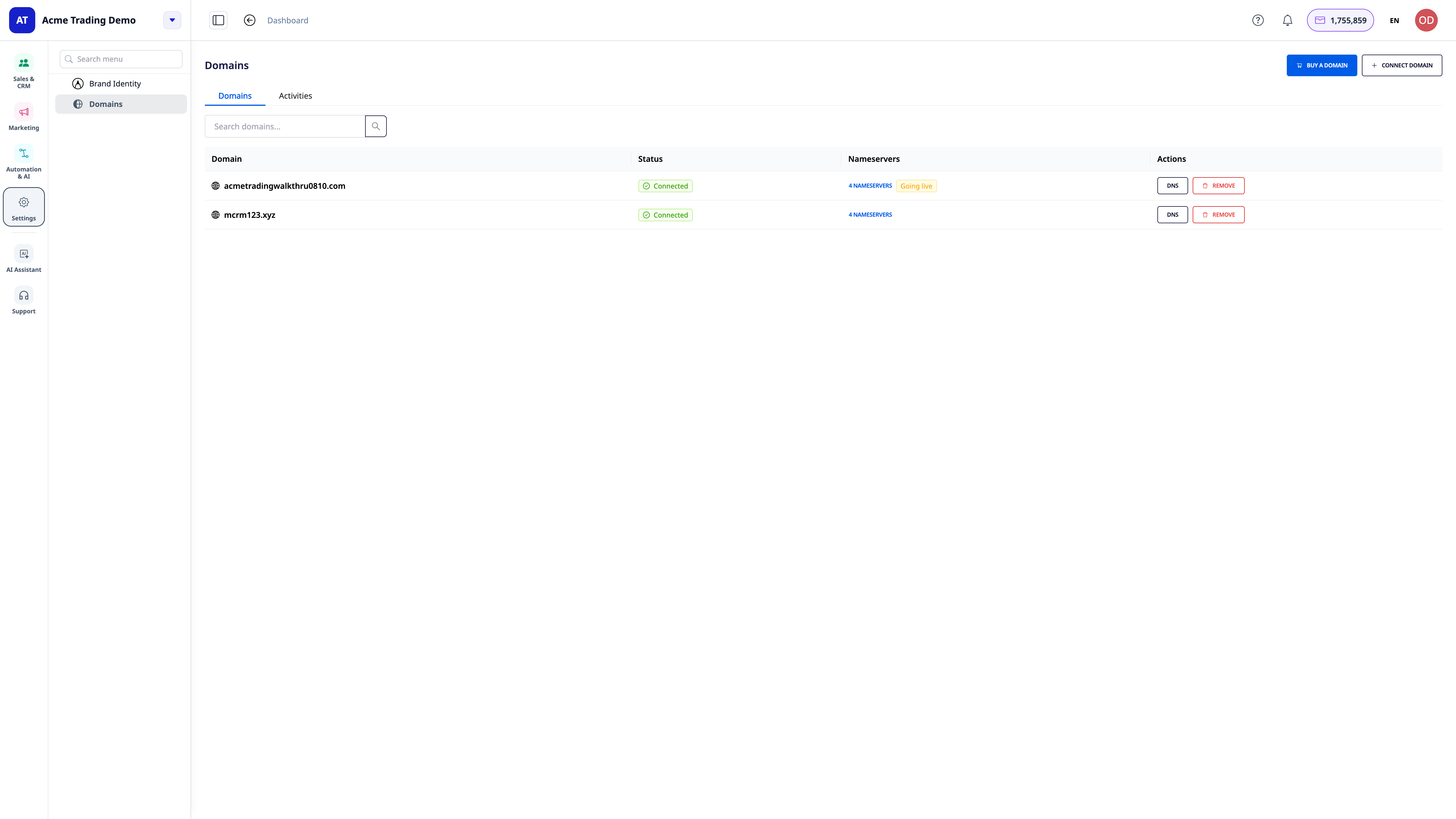
Suggested image for illustration: A "one dashboard" image including Revenue, Orders, Electronic Invoices, and reconciliation file export.
Conclude
From January 1st, 2026, the shift to self-declaration and self-payment represents a major change in habits and data discipline. While previously, the lump-sum tax system meant many businesses had little need to work with their accounting systems, after this date, the decisive factor will be having clear revenue data for each period, with invoices and the ability to reconcile them.
Turn what you've just read into tangible results — apply it now with GTG CRM, free.
Apply now