From 01/01/2026, the abolition of the lump-sum tax mechanism and the transition to self-declaration and self-payment of taxes based on actual revenue marked a major shift in tax management. This change compels businesses and sole proprietorships to re-examine how they record revenue, manage invoices, and operate internally.
Viewed solely from a compliance perspective, this is a pressure. However, from a management perspective, it's also an opportunity to standardize business operations for greater sustainability.
“Self-declaration, self-payment of taxes” - A new challenge for businesses starting in 2026
When transitioning to a self-declaration model, the focus shifts from "paying the fixed amount" to the more fundamental question: what is the actual revenue, and how is it recorded?
This brings about a series of new requirements:
Revenue must be transparent and clearly substantiated
In the new model, actual revenue is the basis for tax calculation. Lack of data, incomplete records, or scattered revenue from multiple sales channels will make it difficult for businesses to accurately determine their figures for declaration.
Dispersed sales data, difficult to consolidate
Businesses selling on Shopee, Lazada, TikTok Shop, websites, or physical stores often find data fragmented across each channel. Without a centralized system, consolidating revenue for tax declaration periods can easily lead to errors.
Invoices become crucial legal evidence
Electronic invoices are no longer just a final step in documentation but direct data for revenue reconciliation. Issuing invoices disjointedly, not linked to orders, or manually managing input-output invoices increases the risk of incorrect declarations.
Significant pressure on accounting departments
Accountants can no longer process data only at the end of the month or quarter. The self-declaration model requires continuous tracking and frequent reconciliation, increasing workload and pressure if operations remain manual.
Accountability rests entirely with the business owner
As tax authorities gain more data-matching tools, businesses must have a thorough understanding of their own figures. All discrepancies must be explained based on actual data, leaving no room for "estimation" methods.
Opportunities arising from tax policy changes
Standardization of all business operations
Tracking actual revenue helps businesses clearly see the performance of each sales channel, each product, and overall cash flow. This forms the basis for more accurate business decisions, extending beyond tax purposes.
Reduced reliance on manual end-of-period processing
With continuously recorded data, businesses no longer need to rush to consolidate invoices and figures close to deadlines. Tax declaration becomes an integrated part of the operational process rather than a seasonal burden.
Enhanced management capabilities, approaching corporate standards
The self-declaration model compels sole proprietorships and small businesses to become familiar with data management, revenue reporting, and cost control. This is a crucial step for scaling up and partnering with larger entities.
Leveraging technology to reduce risks and operational costs
Using a centralized management platform reduces errors, saves time, and mitigates tax risks. Technology becomes a tool for compliance and operational optimization, rather than just an add-on utility.
How GTG CRM helps businesses seize opportunities and reduce challenges
GTG CRM serves as a centralized management infrastructure, enabling businesses to proactively adapt to the "self-declaration, self-payment" era.
Centralized management of products from e-commerce platforms
Product catalogs are consolidated onto a single platform, synchronizable from Shopee, Lazada, TikTok Shop, allowing businesses to maintain consistent control over sales data.
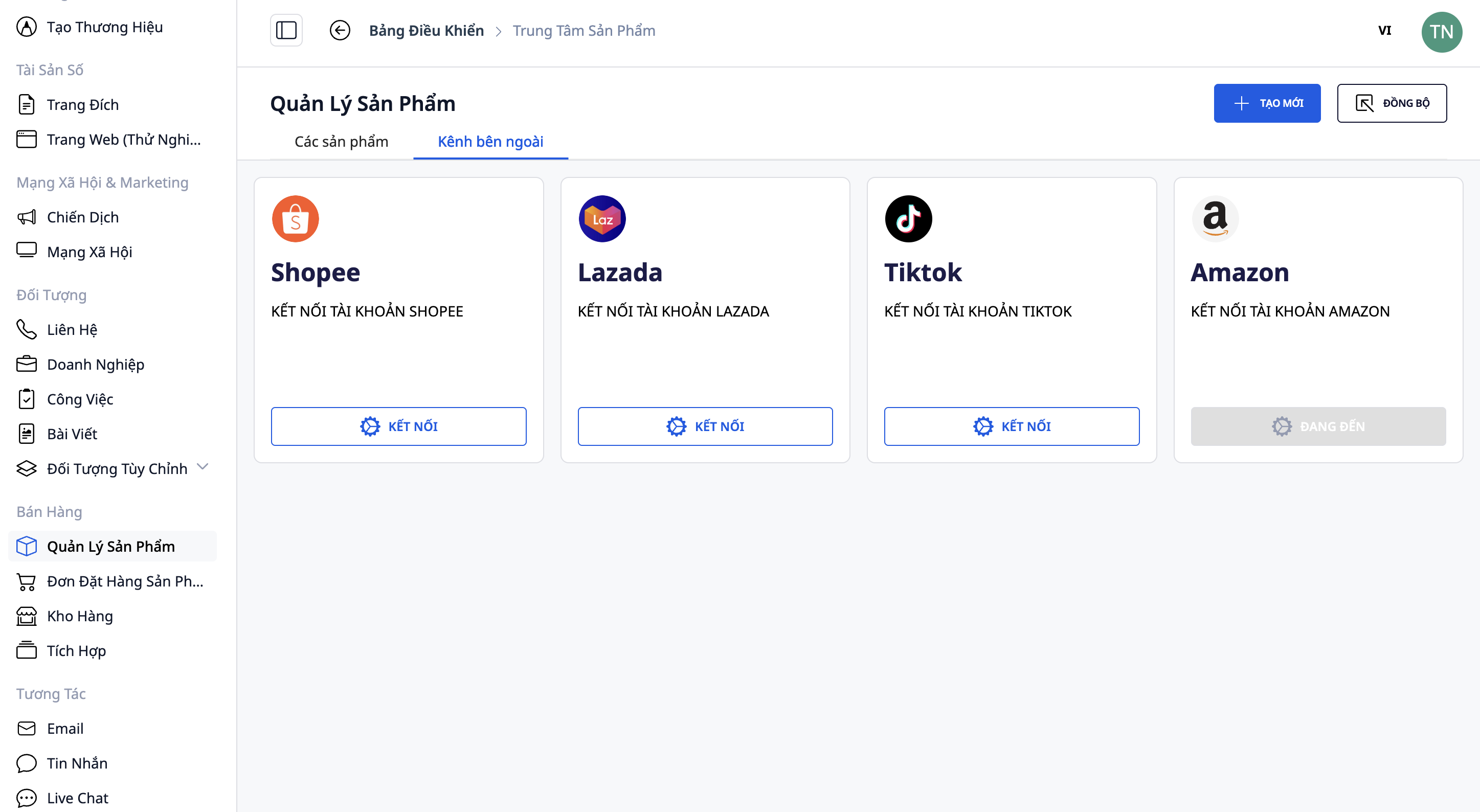
GTG CRM supports centralized product management from e-commerce platforms for easy oversight
Real-time order and inventory recording
Each transaction is stored centrally, facilitating accurate revenue closing for tax periods and reducing data discrepancies.
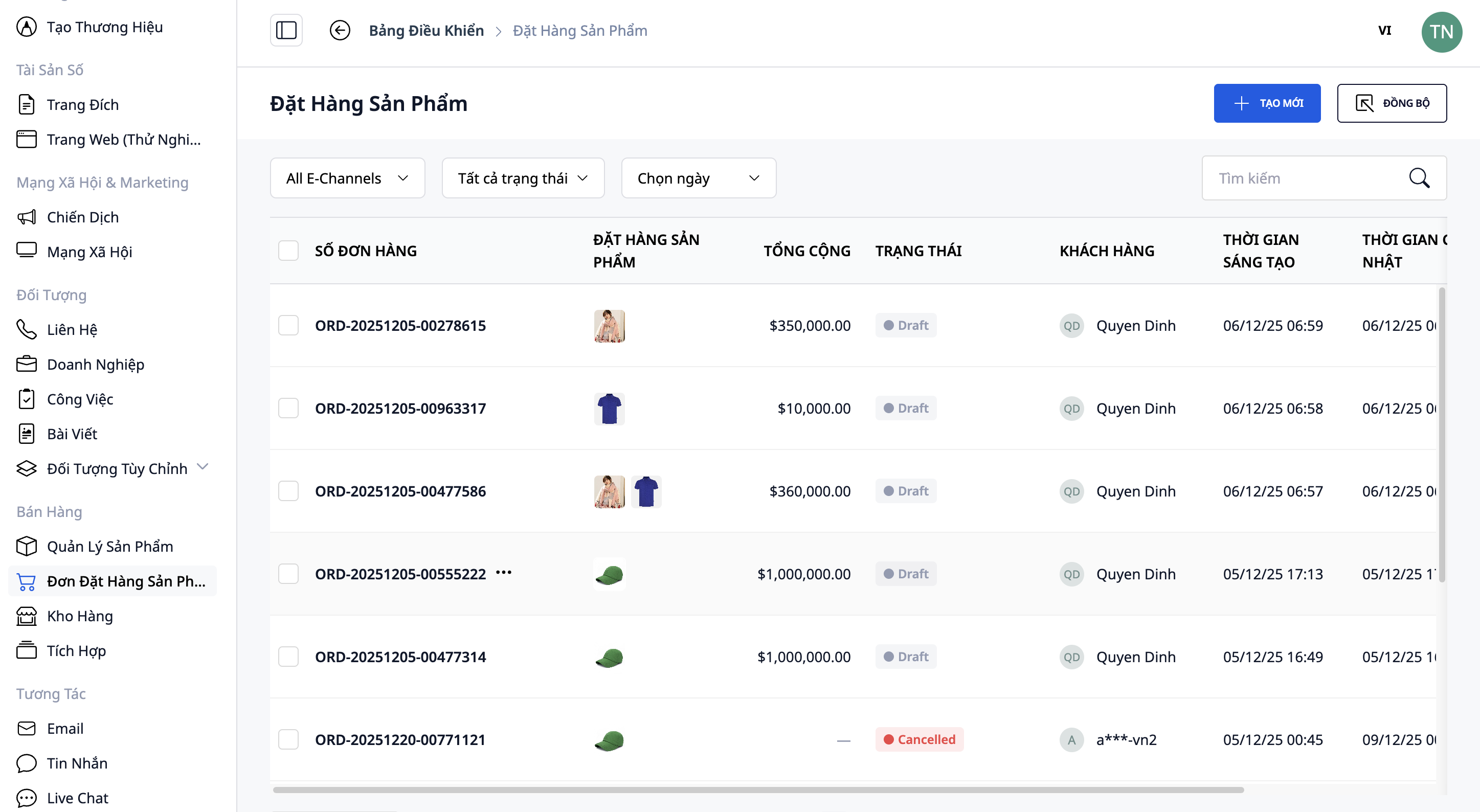
Illustration of order management on GTG CRM
Proactive management of outgoing and incoming invoices
Invoices are linked to actual transactions, enabling accountants to compile data faster and reducing manual effort during the declaration process.
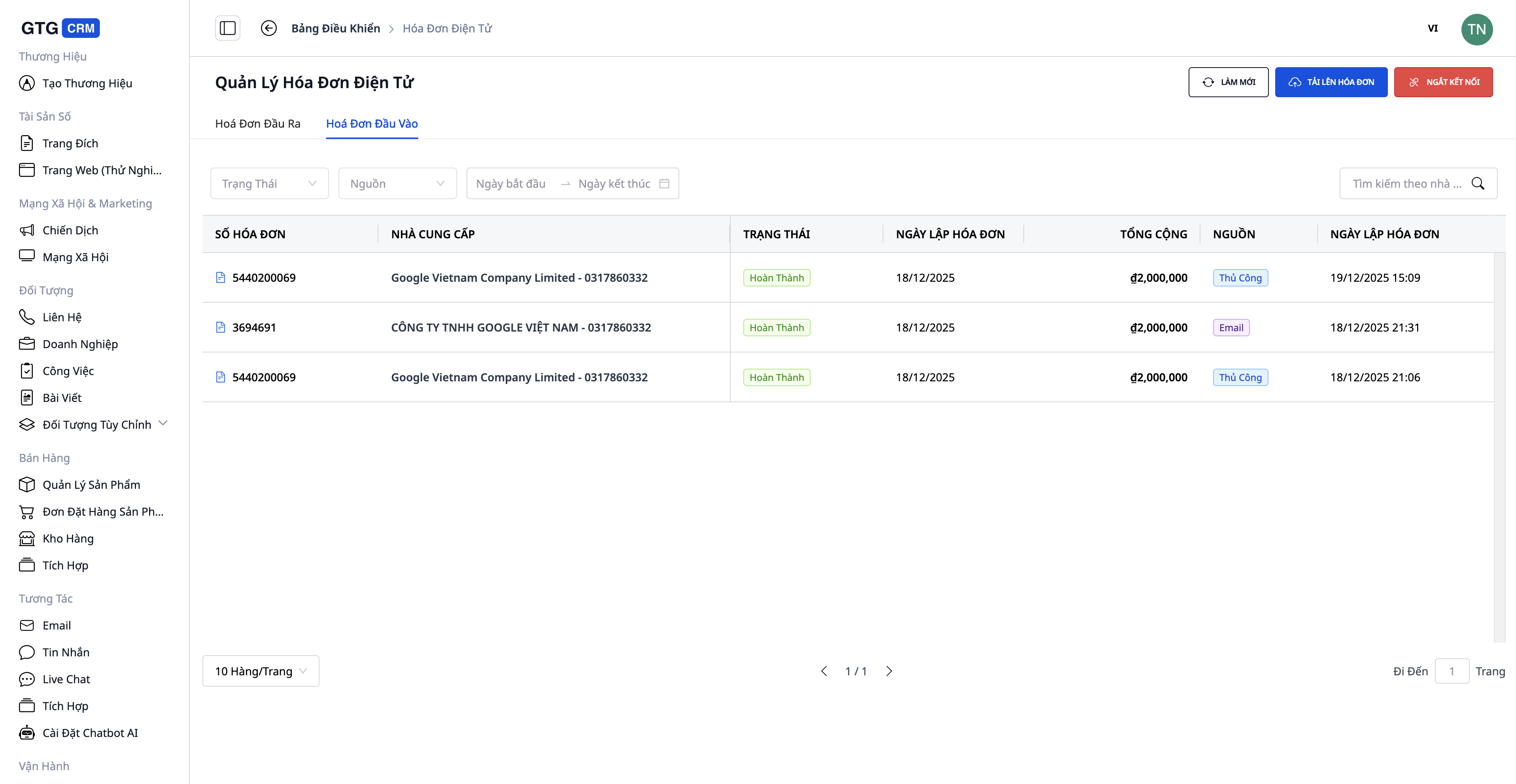
Proactively manage incoming and outgoing invoices
Reducing the burden on accountants under new compliance
Centralized data allows accountants to work proactively, minimizing end-of-period rushes and reducing the risk of errors.
Conclusion
The transition to self-declaration and self-payment of taxes from 01/01/2026 presents a significant challenge, but also an opportunity for businesses to standardize operations and enhance management capabilities. Businesses that proactively invest in a data management system early on will not only ensure compliance with new regulations but also build a foundation for transparent and sustainable operations in the long run.
Turn what you've just read into real results — apply now with GTG CRM, for free.
Apply Now