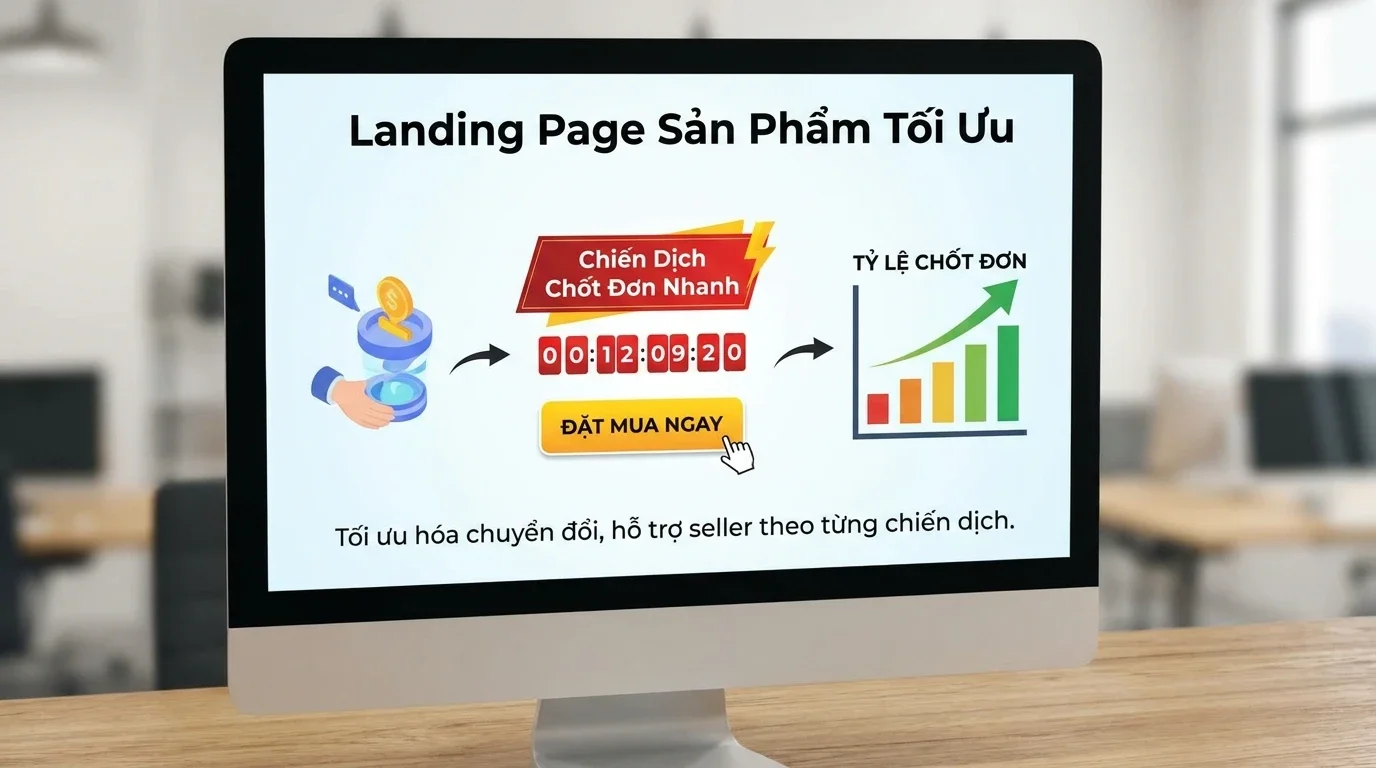
When sellers run flash sales, launch new products, or implement bundled campaigns, directing all traffic to the homepage or shared storefront often significantly reduces conversion rates. A separate product landing page for each campaign allows for more focused messaging, clearer calls to action (CTA), and easier measurement of effectiveness. This tool helps sellers optimize the customer journey from the moment they see the ad to the completion of a purchase or leaving their contact information.
Why do sellers lose conversions when directing customers to the main page?
Many sellers still haven't changed their habit of linking their advertisements to their homepage or to a store selling multiple products. This might seem convenient, but in reality, it creates many loopholes in the customer journey.
When a customer clicks on an ad for a 50% off flash sale on a specific product but is redirected to the homepage, they have to find the product themselves, check if the sale is still running, and understand how the offer applies. This process creates a cognitive and behavioral gap. Customers are easily distracted by other products, banners, or simply lose patience and leave.
A landing page specifically designed for the campaign will eliminate this gap. Customers see an ad for a discounted lipstick combo, click on it, and immediately see the exact product, the clear discount price, the offer period, and a single action button. No complicated menus, no distracting related products, just a single flow of information guiding the customer to a single goal.
That's why product campaign landing pages become a crucial tool when sellers run multiple sales events.
When should sellers use a separate landing page for their product or campaign?
A separate landing page isn't always necessary. A sales website remains the primary platform for building brand image and serving customers long-term. However, when sellers need to focus resources on a short-term campaign with clear objectives, a product landing page is a more suitable option.
Flash sale or limited-time promotion
When sellers run 24-hour flash sales or flash discounts, they need a dedicated page displaying a countdown timer, discounted products, specific offers, and an "Order Now" button. Flash sale landing pages create a sense of urgency and encourage quick action from customers.
New product launch
When launching a new product, a dedicated landing page is essential for detailed introductions of its features, benefits, usage, or unique selling points. This allows sellers to tell the product story without being overshadowed by existing products. It provides a space to highlight strengths and persuade customers to try the product.
Campaign based on product combos or packages.
When selling multi-item bundles at discounted prices, sellers need space to explain the value of the bundle compared to buying the items individually, list the items in the bundle in detail, and explain why customers should choose this bundle. A campaign-specific landing page helps to present this more clearly than simply placing the bundle within a general product list.
Seasonal or special occasion campaigns
Holidays, back-to-school season, Black Friday, or special occasions like October 10th and November 11th are all times when sellers need to launch campaigns with a specific message. A sales landing page for these occasions helps create the right context, connect emotionally, and encourage immediate purchase decisions.
The advertising campaign has a large budget.
When sellers spend money on Facebook, Google, TikTok, or other paid advertising channels, directing customers to a conversion-optimized product landing page helps increase return on investment. Every dollar spent needs to yield a specific action, and a dedicated landing page helps sellers accurately track which campaigns deliver the best results.
The structure of a product landing page that has the potential to convert into a sale.
An effective product campaign landing page doesn't need to be complicated, but it should have enough elements to guide customers from awareness to action.
Hero section with the main message
The first thing a visitor sees when they land on a page should immediately answer the question: what is this, who is it for, what are the benefits, and what is the next step? A concise title, clear product images, and a prominent call to action (CTA) should be placed right here.
Special offer or reason to buy now
If it's a promotional campaign, clearly state the discount amount, the validity period, the quantity limit, or any free gifts included. If it's a new product, highlight its unique selling points or exclusive value. This section helps customers understand why they should act now instead of later.
Product or combo information
Provide a detailed description of the product, including ingredients, specifications, usage instructions, or a list of items in the combo. If selling multiple products in the same campaign, clearly list each item with images and prices.
Benefits customers receive
Instead of simply listing features, sellers need to show what customers will get after purchasing. For example, instead of saying "the product has a moisturizing formula," say "your skin will be softer and smoother after 7 days of use." This helps customers visualize the actual results.
Reliable evidence
Reviews from previous customers, real customer photos, sales figures, or return/exchange guarantees all help increase credibility. Sellers don't need many; just a few genuine reviews or actual sales figures will reassure customers.
Clear and repeated call-to-action
A Call to Action (CTA) shouldn't just appear once at the bottom of the page. It should be placed in the hero section, after the offer, after the benefits, and at the very bottom of the page. The CTA content should be specific, such as "Order Now," "Get 50% Off," or "Message Us Now," instead of vague phrases like "Learn More."
Frequently Asked Questions
This section helps quickly answer common questions such as return policies, delivery times, payment methods, or how to use the product. When customers have answers right on the page, they have less reason to delay their decision.
Contact or messaging channel
At the bottom of the page, there should be a way for customers to contact you if they need direct support. This could be a message button via Messenger or Zalo, or a form to leave their information. Messaging tools help sellers reach hesitant customers and close the deal right in the conversation.
The role of CTAs in landing pages according to campaigns.
A Call to Action (CTA) is the deciding factor between a viewer leaving and a visitor taking the desired action. On a product landing page, the CTA needs to be designed to avoid distractions.
A common mistake is placing too many options on a single page. For example, having buttons like "Buy Now," "Add to Cart," "Message Us," "View More Products," and "Subscribe to Newsletter." With too many options, customers can easily become overwhelmed and decide not to do anything.
Landing pages for sellers work best when they have a single main action. If the goal is to sell, the CTA should be "Order Now". If the goal is to collect information for later consultation, the CTA should be "Leave your phone number to receive a consultation". If the goal is to connect via message, the CTA should be "Message Now".
Secondary calls to action (CTAs) are possible but should be placed in less prominent locations or only appear when the user has scrolled to the bottom of the page. It's crucial to avoid having secondary CTAs compete with the primary CTAs.
The color, size, and placement of the CTA button also have a significant impact. The button needs to be prominent enough for customers to see it immediately, but not so flashy that the page looks like cheap advertising. The text on the button should be concise, the action clear, and if possible, should be linked to a benefit such as "Get 50% off now" instead of just "Buy now".
How to measure the effectiveness of a product landing page.
One of the major advantages of a dedicated landing page is the ability to measure the effectiveness of each campaign separately.
Number of visits
This is the most basic metric. Sellers need to know how many people visit their page after clicking on an ad or sharing link. If traffic is low, it could be due to ineffective advertising or an unappealing message.
Bounce rate and time spent on page
If visitors enter and leave within seconds, it could be due to slow page loading, content not matching advertising expectations, or an unappealing design. If visitors stay longer and scroll to the bottom of the page, that's a positive sign.
Number of clicks on the CTA
This is the most important metric. How many people clicked the "Order Now" or "Message for advice" button? The click-through rate on the CTA indicates whether the landing page persuaded customers to take action.
Number of completed forms or messages sent
If the goal is to collect information, count how many people fill out the form completely. If the goal is to receive messages, know how many conversations are opened via messaging. This is a direct measure of the number of leads or sales opportunities.
Final conversion rate
From the number of visitors to the number of people completing the desired action, this ratio indicates whether the landing page is performing well. If the ratio is low, the seller needs to review the content, CTA, or user experience.
Comparison between campaigns
When running multiple different campaigns, having a separate landing page for each campaign allows sellers to compare results directly. For example, a landing page for a shoe flash sale might have an 8% conversion rate, while a landing page for a handbag combo might have a 12% conversion rate. This helps sellers determine which products to focus on or which campaigns to adjust.
Practical example: A seller runs a flash sale, but the traffic is scattered.
An online cosmetics seller decided to run a flash sale with a 50% discount on their vitamin C serum for 48 hours. The seller ran Facebook ads with a budget of 10 million VND, linking to their shop's homepage. The homepage featured over 200 products, rotating banners promoting various programs, and a complex menu.
Results after 2 days: 5,000 ad clicks, but only 150 orders. Conversion rate was only 3%. Sellers realized that customers visiting the homepage had to find discounted products themselves, were distracted by other banners, or were confused about which promotion was applicable.
Next time, the seller tried again with a separate flash sale landing page. This page only displayed the vitamin C serum product, with the original price crossed out, the discounted price clearly displayed, a countdown timer, customer reviews, and a "Buy Now 50% Off" button. There was no menu, no other products, and no distracting banners.
Result: 5,000 clicks, but 450 orders. Conversion rate increased by 9%. With the same advertising budget, revenue tripled.
Flow from traffic to customer action
An effective product landing page campaign typically follows this flow:
Customers see ads on Facebook or posts in sales groups, find the product attractive and the offer clear. They click on the link.
They immediately went to the product campaign landing page, found the exact product they had seen in the advertisement, the discounted price was clearly displayed, and they were reminded of the remaining time in the promotion.
They scrolled down, read more about the product's benefits, checked reviews from previous customers, and found a clear return policy.
They decide to buy and click the "Order Now" button, or if they have any questions, they click "Message us for advice".
If they choose to buy immediately, they fill out an order form or are redirected to the checkout page. If they choose to message, a messaging window opens, and the seller or chatbot responds immediately, answering questions and closing the deal within the conversation.
The entire journey is smooth, with no unnecessary detours or superfluous steps. That's why product landing pages perform better than simply directing customers to the general page.
How does GTG CRM support sellers in deploying product landing pages?
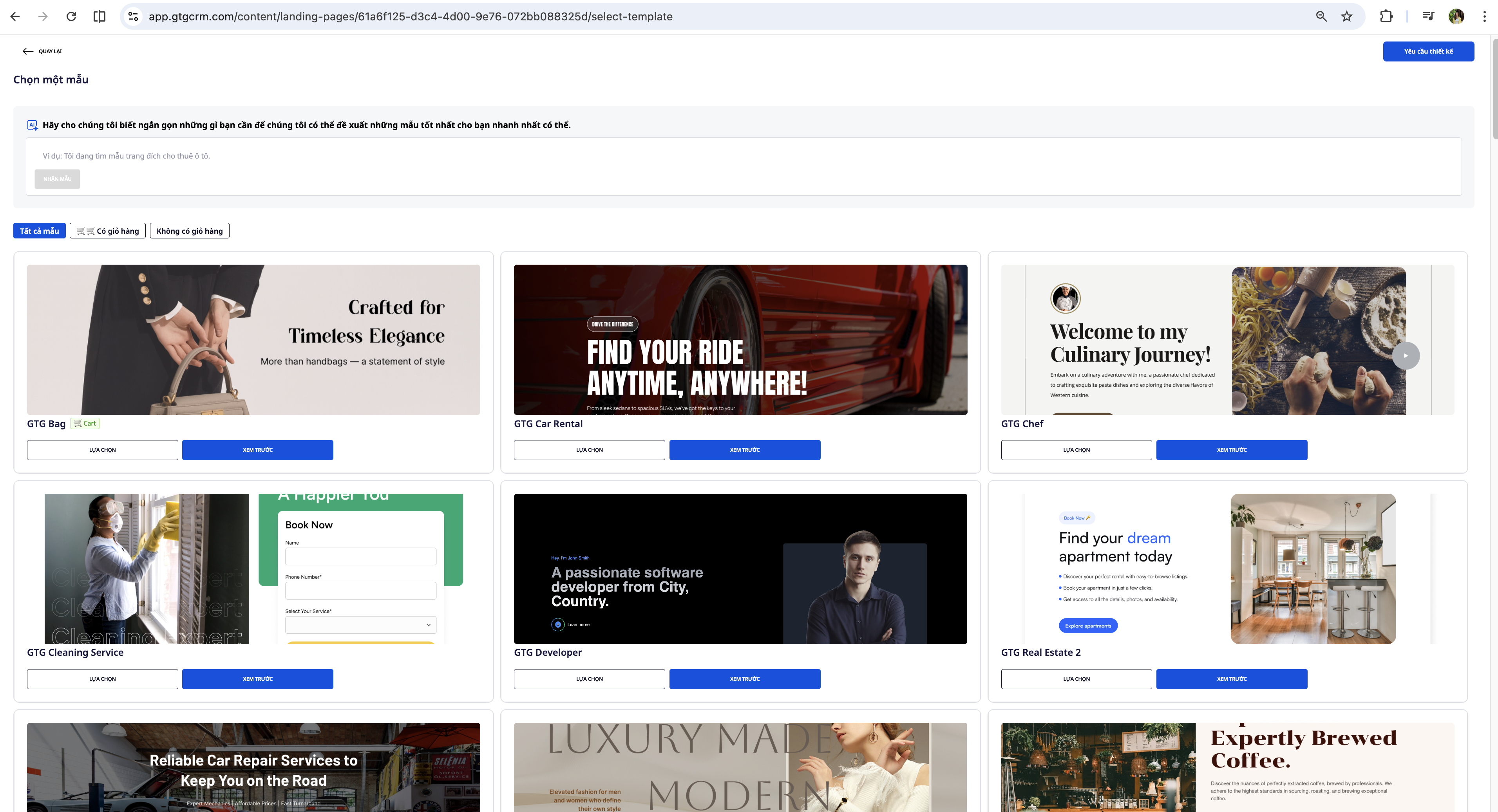
GTG CRM provides tools that help sellers quickly create landing pages without requiring complex programming or design knowledge.
Sellers can create custom landing pages for each campaign, customize content, images, CTAs, and connect with messaging tools to receive customer information instantly. When customers leave information or send messages, sellers receive notifications and can process them immediately within the system.
GTG CRM also integrates with e-commerce websites, helping sellers manage both the overall platform and individual campaign pages in one place. Sellers don't need to use many separate tools; instead, they can track the effectiveness of each landing page, manage potential customers, and launch subsequent campaigns more easily.
This is a suitable solution for sellers who want to focus on sales instead of spending time on technical issues.
Conclude
Product landing pages don't completely replace e-commerce websites, but they are an important tool when sellers need to close specific campaigns in a short time. Instead of directing all traffic to a single, generic location, sellers should use a separate landing page for each campaign to increase focus, clarify the message, optimize calls to action (CTA), and measure effectiveness more accurately.
 When sellers understand when to use landing pages, which structures are effective, and how to measure results correctly, they can better utilize their advertising budget, increase conversion rates, and control the outcomes of each campaign.
If you need a tool to quickly deploy product landing pages for sales, new product launches, or short-term campaigns, create product landing pages with GTG CRM to get started.
Frequently Asked Questions
How does a product landing page differ from a product details page on a website?
Product detail pages on websites typically follow a general structure, including menus, related products, and various other options. Product landing pages, however, are designed specifically for a particular campaign, eliminating distractions and focusing on a single action.
When should sellers use landing pages instead of directing customers to the homepage?
When running campaigns with clear objectives such as flash sales, new product launches, bundled deals, or limited-time promotions, landing pages help increase conversion rates more effectively than the homepage.
What should a flash sale landing page include?
There needs to be a discounted product, a clear offer, a countdown timer, benefits for the customer, reviews or credible proof, and a clear CTA such as "Buy now and get 50% off".
Does a landing page need to have many products?
Not necessarily. Landing pages work best when they focus on a specific product or combo. If you have multiple products, you should create separate landing pages for each campaign.
How do you know if a landing page is effective?
Track website visits, click-through rates (CTAs), completed forms or messages sent, and final conversion rates. Compare these metrics to your initial goals or previous campaigns.
Does GTG CRM support creating landing pages without knowing how to code?
Yes. GTG CRM provides a landing page creation tool for sellers that requires no programming knowledge, helping sellers deploy quickly and connect with messaging to receive customer information immediately.
Can a landing page replace a sales website?
No. A sales website is the primary platform for building brand awareness and serving customers long-term. Landing pages are a supplementary tool for short-term campaigns, helping to focus the message and increase conversions at specific times.
How many CTAs should a landing page have?
There should be one main call to action (CTA) that appears multiple times in different locations on the page, such as the hero section, after the offers section, after the benefits section, and at the bottom of the page. Avoid placing too many different types of CTAs, as this can be distracting.
Turn what you've just read into tangible results — apply it now with GTG CRM, free.
Apply now