When running multiple campaigns and selling many products, the question of when to use a website and when to use a landing page isn't always straightforward. If the goal is to build a long-term platform with diverse products and content, you should prioritize a sales website . Conversely, if you need to focus on a specific campaign, offer, or product to maximize conversions, a product landing page is a more suitable option. These two tools are not mutually exclusive, but serve two different roles in the online sales journey.

This article will help you understand when to use a website, when to use a landing page, and how to combine these two tools most effectively.
Why are many sellers confused when choosing between a website and a landing page?
Many new or expanding sellers often face this problem: too many products, too many different campaigns, but only a single homepage to direct customers to. As a result, the message becomes diluted, customers don't know what to focus on, and conversion rates drop.
The main reason stems from a lack of understanding of the role of each platform. Websites and landing pages are both tools for reaching customers, but each serves a different purpose. If you use a website to run all your advertising campaigns, you will have difficulty measuring the effectiveness of each campaign. If you only use landing pages without an overall platform, you will struggle to build long-term trust with customers.
Choosing the wrong tools not only wastes traffic, but also causes you to lose time and money on misguided efforts.
What is the difference between a website and a landing page?
Website: The Complete Platform for Branding
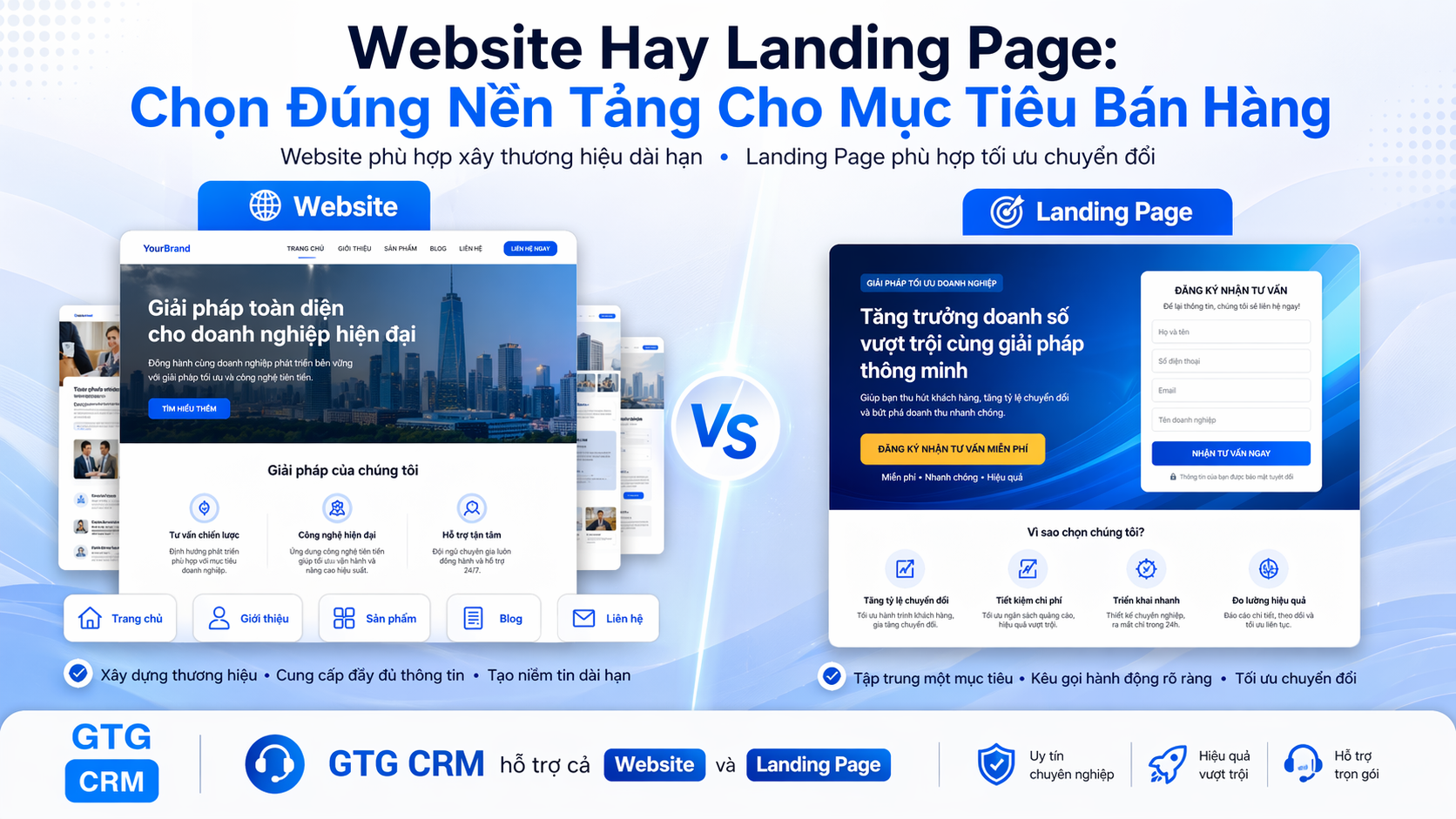
A website is where you build a comprehensive picture of your brand, products, and services. Websites typically have multiple pages, including a homepage, about us, products, blog, contact, and other pages. Customers can freely navigate between these pages to learn more information.
A sales website is ideal when you need a place where customers can return repeatedly, learn about various products, read useful content, and feel confident in your brand's credibility. It's a long-term platform that helps you build a sustainable sales system.
Landing Page: Focus on a Single Goal
A seller's landing page is a single page designed to serve a very specific goal: closing a sale, collecting contact information, registering for a program, or downloading materials. Landing pages don't have complex menus or numerous links leading visitors astray; instead, they focus on a single message and a single action.
Product landing pages are commonly used for advertising campaigns, flash sales, new product launches, or limited-time promotions. Because they are focused, landing pages typically have a higher conversion rate compared to directing visitors to a website's information-filled homepage.
Comparing Roles in Online Sales
A website is strong in its ability to display a lot of information, giving customers an overview and building trust. A landing page is strong in its focus, helping you control the customer journey and speed up the purchase decision.
If you're deciding between a website or a landing page for sales , ask yourself: what is my current goal? If it's to build a long-term brand image and serve a wide range of customer groups, choose a website. If it's to optimize a specific campaign with a clear advertising budget, choose a landing page.
When Should Sellers Prioritize Creating a Website?
When You Need to Build a Long-Term Foundation
If you're just starting out selling online and want an official place for customers to learn about you, a website is the number one priority. Today's customers are very cautious before buying; they'll search for information about your brand, read descriptions, look at other products you sell, and even check if you have a blog or any useful content.
A website helps you create a professional and trustworthy impression. It's where you can tell your brand story, explain why your products are good, and build lasting connections with customers.
When you have many products or many categories
If you sell a wide variety of products, from fashion to accessories, or offer different product lines to different customer groups, a website is the best tool for organizing information. You can create clear menus, categorize products, and make it easy for customers to find what they need.
In this case, the e-commerce website is not just a place to display products, but also a center for managing the customer experience. Customers can view all products, compare them, read more information, and make purchasing decisions comfortably.
When You Want a Place Where Customers Keep Coming Back
A website is a place where customers can stay and return repeatedly. They can read blogs, view new products, learn more about warranty policies or user guides. If you want to build a loyal customer base, a website is an indispensable platform.
When You Want to Optimize SEO and Appear on Google
A website with multiple content pages, blogs, and detailed information gives you a better chance of appearing in search engine results. If you want customers to find you when they search for keywords related to your products or industry, investing in a complete website is essential.
When Should Sellers Prioritize Creating Landing Pages?
When you are running ads for a specific product or offer.
If you're running Facebook, Google Ads, or TikTok Ads for a specific product or promotion, directing customers to a product landing page will help you maximize conversion rates. Landing pages eliminate distractions, focusing entirely on the message you want to convey in your advertising campaign.
When customers click on an ad, they expect to see exactly what you promised in that ad. If you direct them to a website homepage with a lot of information, they will be distracted and may leave without taking any action.
When you want to quickly test a new product idea or offer.
Before investing heavily in a new product line or a complex sales program, you can create a landing page to test the market. You run small ads, measure how many people are interested, how many leave their information or make a purchase, and then decide whether to continue or not.
Landing pages save you time and money because you don't need to build an entire complex website just to test an idea.
When You Want to Collect Leads or Customer Information
Landing pages for sellers are very effective when you want to collect contact information from potential customers. You can offer an attractive deal such as a discount code, a free ebook, or the chance to participate in a special promotion in exchange for their email or phone number.
When customers leave their information on a landing page, this data can be saved to your customer management system so you can nurture and re-engage them later. This is an effective way to build a list of potential customers without having to make a sale immediately.
When you want to clearly measure the effectiveness of each campaign.
Each landing page serves a specific goal, so you can easily measure which campaigns are effective and which need adjustment. If you use the same homepage for every campaign, it will be difficult to know where the traffic is coming from, what their behavior is like, and whether the advertising message matches the landing page content.
The Process of Choosing the Right Platform Based on Business Goals
To help you easily decide when you need a website and when you need a landing page , ask yourself the following questions:
What is my main goal?
- If you want to build your brand, increase brand awareness, and provide a place for customers to get an overview, choose a website.
- If you want to focus on a specific action such as making a purchase, signing up, or leaving information, choose a landing page.
How many products or services do I have?
- If you have many products and categories and want customers to be free to explore them, a website is a better option.
- If you only want to focus on a specific product or combo for a certain period of time, a landing page will be more effective.
Am I currently running an advertising campaign?
- If so, and that campaign targets a specific offer or product, you should create a separate landing page for that campaign.
- If you only want to increase overall brand awareness, you can drive customers to your website.
Do I need to measure the effectiveness of each campaign separately?
- If so, a landing page is the best tool because it allows you to accurately track customer behavior from a specific traffic source.
- If you only need an overview, a website with comprehensive analytics tools will suffice.
Five Real-Life Scenarios to Help You Choose the Right Tool
Scenario 1: New Seller Needs a Structured Online Presence
You've just started your business, have a few core products, and want to build a professional image. You don't have a large budget to run many complex advertising campaigns.
Solution: Prioritize building your website first. Your website will be where you introduce yourself, showcase your products, and build trust with customers. Once you have a stable website, you can gradually add landing pages for each campaign later.
Scenario 2: The seller is running ads for a specific product or sales campaign.
You're preparing for a 3-day flash sale with a 30% discount code for a best-selling product. You have an advertising budget and want to maximize the number of orders.
Solution: Create a separate landing page for this sale. The landing page should focus solely on that product, clearly display the offer, create a sense of urgency, and feature a prominent buy button. This allows you to control the customer journey and increase conversion rates.
Situation 3: The seller has many products and wants the customer to explore them comprehensively.
You run a fashion business with a wide range of products: shirts, pants, accessories, and shoes. You want customers to be able to freely browse all the products, compare them, and make their choices.
Solution: Build a comprehensive website with clearly categorized menus. Customers can easily search, filter products, and discover what you have to offer. A website also helps you create an impression of scale and professionalism.
Scenario 4: Seller Wants to Quickly Test a New Offer Before Making a Large Investment
You have an idea for a new product combo but aren't sure if the market will like it. You want to run a small test ad to see the response.
Solution: Create a landing page for that combo, run ads for a few days, and measure the results. If the response is good, you can expand the campaign or add the product to the main website. If it's not effective, you can stop without much effort.
Scenario 5: The seller already has a website but needs a separate page for each campaign.
You already have a complete website with many products. Now you want to run separate advertising campaigns for specific occasions such as Black Friday, Lunar New Year, or new product launches.
Solution: Keep the website as the main platform, but create separate landing pages for each campaign. Each landing page will have its own message and offer, allowing you to easily measure effectiveness and optimize each campaign independently.
How can websites and landing pages work together?
Many sellers think they have to choose one or the other, but in reality, a website or a landing page for sales isn't an optional choice. You can absolutely use both to optimize the customer journey.
Effective Collaboration Model
You can use a website as an overall platform to introduce your brand, showcase all your products, and provide useful content. At the same time, you can create separate landing pages for each advertising campaign or key product.
For example, a customer sees an advertisement for a special offer, clicks on it, and is directed to a landing page focused solely on that offer. After completing the action, they may be directed back to the website to explore other products or learn more about the brand.
Benefits of Combining
When you combine both, you have a solid foundation for building long-term trust and flexible tools to optimize each short-term campaign. A website helps you retain existing customers and attract new ones through organic search. A landing page helps you close conversions quickly and measure effectiveness clearly.
Manage customers from both sources.
Whether customers come from your website or landing page, you need a place to store and manage their information. When customers fill out a form on a landing page or website, the data can be sent to the seller's CRM system so you can easily track, categorize, and nurture customers later.
Connecting your website, landing page, and CRM ensures you don't miss any opportunities and builds a professional and efficient sales process.
Practical Example: An Online Fashion Shop
Imagine you own an online fashion shop with around 50 products. Initially, you only have one homepage on Facebook and use that page to run all your advertising campaigns. The result is that customers visit the page, see too much information, don't know what to focus on, and ultimately leave without making a purchase.
After doing some research, you decide to build a comprehensive website with clear product categories, an about us page, and a blog sharing styling tips. The website becomes a place where customers can learn about the brand and see all the products you offer.
At the same time, when there's a sale or a new collection launch, you create a separate landing page for each campaign. For example, when running ads for a summer collection, you direct customers to a landing page that only displays summer products with a 20% discount. This landing page doesn't have a complex menu or links to other products; it focuses solely on customers viewing and purchasing immediately.
As a result, conversion rates from advertising increase significantly, while the website remains a place where customers return to learn more. You also collect customer information from both sources and manage it within a single CRM system.
GTG CRM: A Solution for Both Websites and Landing Pages
If you're looking for a tool to easily deploy both websites and landing pages, GTG CRM is the right choice. The system provides tools for creating multi-page websites with clear menus and navigation, and allows you to quickly create drag-and-drop landing pages for specific campaigns.
You can use your website as a comprehensive sales platform to showcase your brand and products. When you need to run an advertising campaign, simply create a separate landing page with a focused message and a clear call to action (CTA). All customer information left on the website or landing page is automatically saved to your CRM system, making it easy to manage and nurture customer relationships later.
GTG CRM doesn't require you to choose between a website or a landing page; instead, it allows you to flexibly use both tools depending on your business goals at any given time. You can create forms to collect leads, manage menus and navigation for your website, and easily edit content without needing any programming knowledge.
If you'd like detailed advice on whether to start with a website or a landing page based on your current business situation, the GTG CRM team is ready to assist you in choosing the right platform and implementing it quickly.
Conclude
When you need a website and when you need a landing page depends on your business goals, resources, and stage of development. A website is suitable when you need to build a long-term foundation, showcase many products, and build trust with customers. A landing page is suitable when you need to focus on a specific campaign, product, or offer to maximize conversions.
You don't necessarily have to choose one over the other. Using both a website and a landing page effectively will help you optimize both long-term and short-term goals, while also making it easier to measure and improve sales performance.
Most importantly, you need to understand the role of each tool, choose the right time to use it, and integrate them into a professional sales process. When you do it right, you'll see that traffic is no longer wasted, the message becomes clearer, and conversion rates increase significantly.
Frequently Asked Questions
I've just started selling online, should I create a website or a landing page first?
If you have many products and want to build a long-term brand, prioritize creating a website first. If you only want to test a product or run a small campaign, a landing page will save you time and money.
Can a landing page replace a website?
A landing page cannot replace a website if you need a comprehensive platform to introduce your brand, showcase multiple products, and build long-term trust. Landing pages are only suitable for short-term, focused goals.
Can I use both the website and the landing page at the same time?
Absolutely. Many sellers use their website as their primary platform and create separate landing pages for each advertising campaign or key product. This approach provides both a solid foundation and flexibility for each campaign.
When should you create a separate landing page for your product?
When you're running ads for a specific product, a limited-time offer, or a special promotion, a landing page helps you focus your message and increase conversion rates from your ads.
How do I know if my campaign needs a separate landing page?
If your campaign has a clear objective, a specific message, and a key action you want customers to take, you should create a separate landing page. If you only want to increase overall brand awareness, directing customers to your website is sufficient.
Can I manage customers from both the website and the landing page?
Yes, you should use a CRM system to store and manage customer information from both sources. When customers fill out forms on your website or landing page, the data will be sent to the CRM so you can easily track and provide follow-up services later.
Turn what you've just read into tangible results — apply it now with GTG CRM, free.
Apply now