The Overall Picture of the Tourist Car Rental Industry
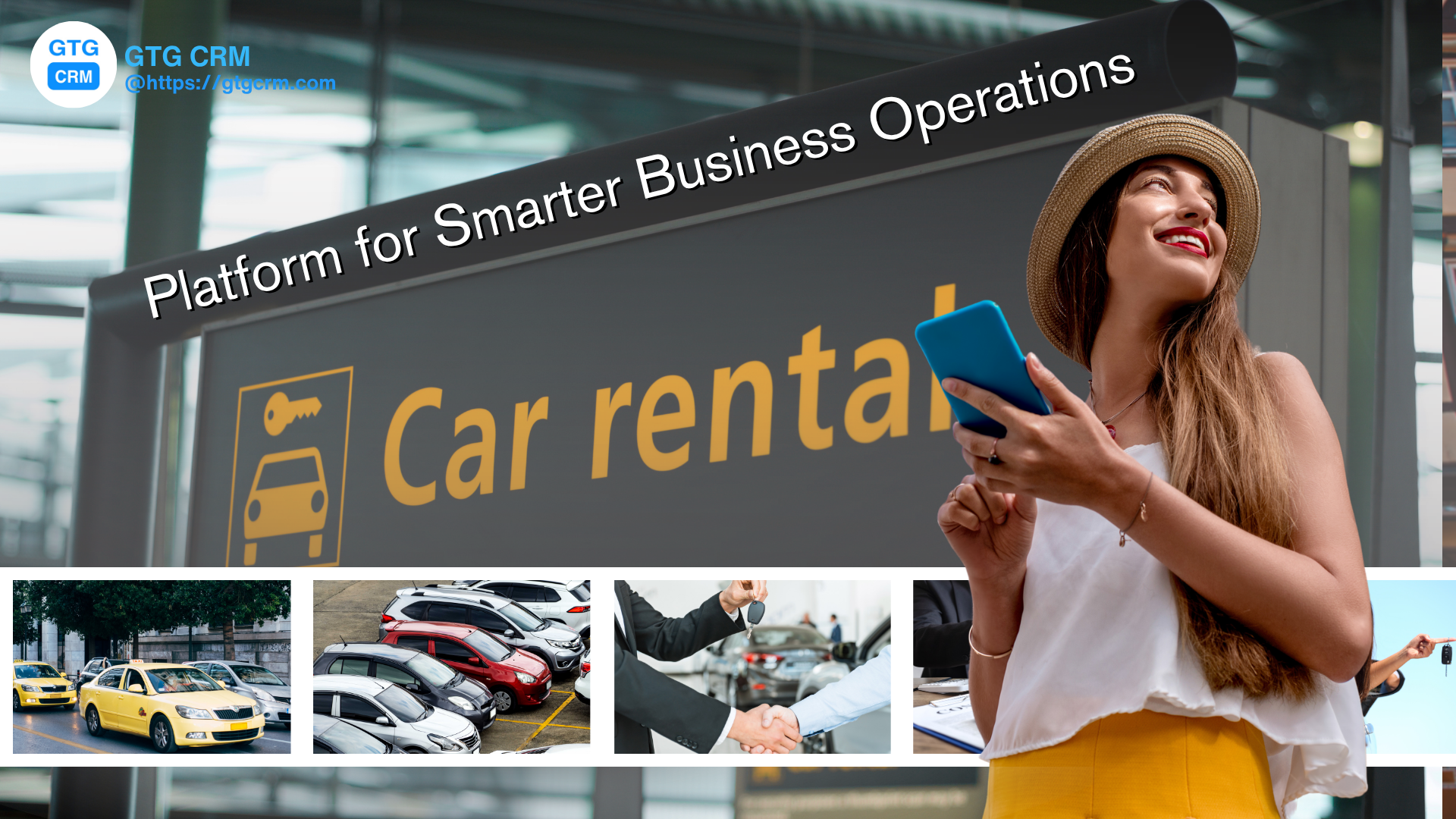
The Overall Picture of the Tourist Car Rental Industry
The tourist car rental industry is a unique segment within the service sector, possessing both traditional aspects and the need for immediate customer responsiveness.
The business model, seemingly simple – “with vehicles and customers, comes revenue” – actually conceals many layers of complexity:
- Unloyal Customers: They seek price, quick responses, and reliability. Without a good experience, they are readily willing to switch to another provider.
- Unpredictable Orders: There can be peak seasons during holidays and low seasons midweek. Itineraries change constantly, requiring swift updates.
- Heavy Reliance on Sales and Operations Teams: Everything runs on people – phone calls, messages, manual notes – leading to errors, missed customers, or slow responses.
Consequently, most businesses in the industry are "stuck" in a reactive sales model, failing to transition to a proactive and data-driven model.
What's notable is that many businesses in the industry don't fall behind in service quality, but rather in response speed and the ability to maintain consistent experiences. In a market where customers can "search" for car rentals and find countless providers, the business that responds faster and more professionally wins.
Growth Limitations: When Revenue No Longer Correlates with Effort
Anh Khoa Travel – a car rental business in Ho Chi Minh City – once operated very stably with 15 vehicles and a loyal customer base. Six years of experience gave them a deep understanding of the market and customer journeys, but precisely because of this, they increasingly felt the limitations.
"We don't lack customers, but we always have the feeling that we're losing them somewhere without knowing why," shared Anh Khoa, the Founder.
That feeling stemmed not from weak business performance, but from the fragmentation of data. Each communication channel – Facebook, Zalo, Website – was a separate "island." Customer information was scattered, lacking interaction history, making customer care nearly impossible. Quotes, contracts, and vehicle tracking were still managed on Excel, leading to errors, delayed responses, and lost potential customers due to mere minutes of delay.
As advertising costs continued to rise without the ability to trace which customer sources were truly profitable, the business understood: growth through human effort had reached its limit; it was time to transition to growth through systems.
The Turning Point: When Service Businesses Start "Thinking with Data"
Anh Khoa Travel chose GTG CRM not to "have another management software," but to rebuild their operational approach.
Instead of focusing on "customer management," they aimed for a larger goal – building a unified, responsive, and data-driven operational system.
The first thing to change was speed.
In the car rental service industry, response speed directly translates to revenue opportunities. If a customer inquires about a Dalat tour price and receives no response within 10 minutes, there's a high chance they've already booked elsewhere.
Upon implementing GTG CRM, all conversations from Facebook, Zalo, and the Website were consolidated into a single interface. Employees no longer had to switch between applications, and notably, AI assisted by suggesting appropriate replies directly within the chat window, reducing the average response time from 45 minutes to 13 minutes.
But speed was just the beginning. The deeper change was in how the business perceived its operations – transforming from a series of disconnected tasks into a measurable process.
Instead of "whoever remembers a customer follows up with them," GTG CRM established a clear sales funnel: New customer, Quoted, Pending confirmation, Booked, Completed. Each step is recorded by the system, scheduled for follow-up, and conversion rates are tracked. After 3 months, the rate of customers responding after receiving a quote increased from 38% to 67%.
From there, Anh Khoa Travel began to shift from reactive to proactive.
With AI Landing Page Builder, they could create a "Quick Booking" page in 15 minutes, collect customer information, and have it directly fed into the CRM. Simultaneously, automated workflows sent confirmation emails, offers, and reminders after a few days – the entire nurturing process occurred without requiring additional staff.
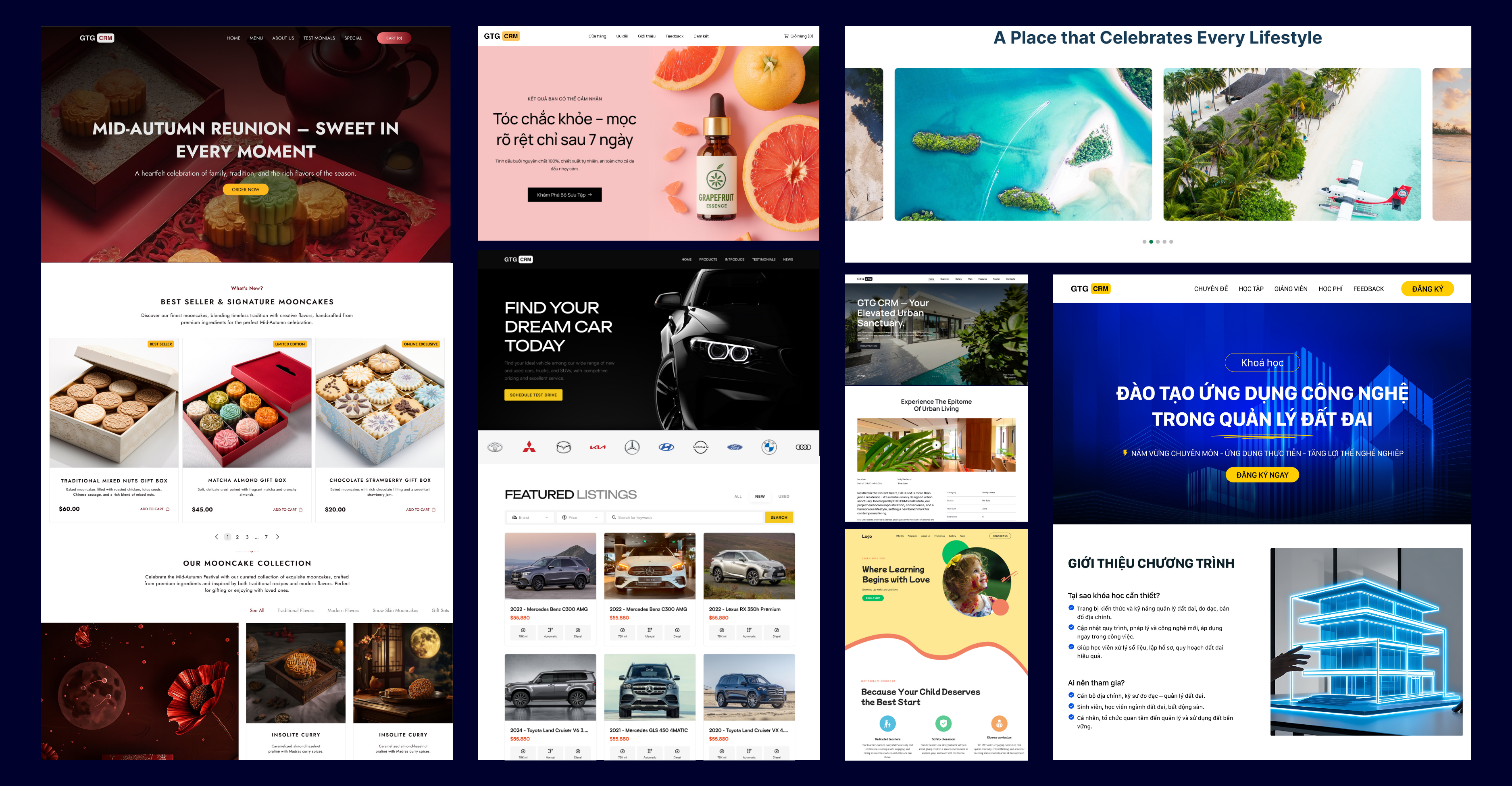
Easier Landing Page Creation with GTG CRM
The True Value of Digital Transformation
Looking back after three months of implementation, the numbers speak for themselves:
- Response time reduced by 70%.
- Customer response rate increased by 76%.
- Number of bookings per month increased by 42%.
- Repeat customer rate increased 2.5 times.
But the greater value lies in the change in work culture.
If previously all employees operated based on personal habits, they now work based on data – knowing which customer is at which stage, when to follow up, and which behaviors lead to conversions.
The business is no longer dependent on "people who remember," but on "the system that remembers."
Customers clearly feel the professionalism: regardless of the contact channel, they receive consistent responses and are recognized correctly with each return interaction.
In essence, this is not just software application – it is a management mindset transformation: from manual operations to data-driven operations.
GTG CRM and Lessons for Vietnamese Service Businesses
In service industries highly dependent on response speed and customer experience, competitive advantage lies not in the number of employees, but in the ability to consolidate data and respond as a unified organization.
When every message, interaction, and response is stored on the same platform, even small businesses can operate as smoothly as large corporations.
Process standardization helps new employees integrate quickly; data enables managers to forecast and expand branches without fear of "system breakdown."
This is particularly crucial in the context of the Vietnamese market entering a phase of "digitalization of small and medium-sized enterprises" – where software is not just a tool, but operational infrastructure.
Conclusion: Not Replacing People with Machines – But Helping People Work Smarter
Digital transformation, for many, remains an abstract concept. But for businesses like Anh Khoa Travel, it is a very real story: when people begin to trust data, they work better, faster, and make more accurate decisions.
GTG CRM not only helps manage customers but becomes the "operational backbone" – where data, processes, and people connect.
And when that happens, small businesses are no longer "underdogs" – they become organizations capable of sustainable growth in a volatile market.
"I didn't think software could change how I operate.
But GTG CRM made customers more trusting, employees more proactive, and my business could develop more sustainably."
— Anh Khoa, Founder of Anh Khoa Travel.
Are you in the car rental, tour, or transportation service business?
Don't just sell the trip – start building the customer journey.
Try GTG CRM free for 14 days to see how your business can respond faster, more accurately, and more professionally – starting today.
Your business can achieve similar results – start for free.
Start Your Journey