The first few months of 2025 witnessed a significant recovery in Vietnam's real estate market. Searches for apartments, townhouses, and land plots increased sharply, while advertising costs to generate leads nearly doubled. According to a report from Batdongsan.com.vn, search demand increased by over 25% year-on-year, but the cost of reaching customers is becoming increasingly expensive.
This shows that real estate businesses need a new strategy, not only to save budget but also to optimize sales performance in a highly competitive environment.
Real estate outlook 2024-2025: Demand increases, but challenges are greater.
Recent real estate news consistently highlights a key trend: customers are researching online more, in greater detail, and with more discernment. According to the Google Real Estate Report, 90% of homebuyers research projects online before contacting a sales representative.
That means:
- The project content must be clear and persuasive.
- Landing pages must be optimized for conversions.
- Salespeople need to respond extremely quickly.
- Businesses need data to track the customer journey.
In this context, real estate software becomes an essential tool for maintaining stability and optimizing operations.
Why do many projects fail in the very first week of sales?
Despite positive market signs, real estate businesses still face three familiar "bottlenecks":
The marketing content lacks appeal.
Customers increasingly want to see detailed information, price analysis, and feature comparisons, but many advertisements fail to meet these expectations.
Leads are scattered - sales processing is slow.
Messages from Facebook, Zalo, hotlines, etc., flooded into many locations, disrupting customer service.
There is no system for long-term guest retention.
Real estate clients don't make decisions immediately. Without follow-up, regular care, or timely attention, businesses can easily lose hot-time clients.
These limitations cause many projects to lose their competitive edge right from the start.
Real estate software - The solution for cost and performance
Businesses turn to software not because of trends, but because of real needs:
- Reduce marketing costs by increasing conversions.
- Transparent and scientific lead tracking.
- Reduce the number of customers missed.
- Reduce response time
- Help the sales team provide more professional customer service.
One of the outstanding platforms for real estate businesses is GTG CRM, a solution that integrates marketing, sales, and customer service.
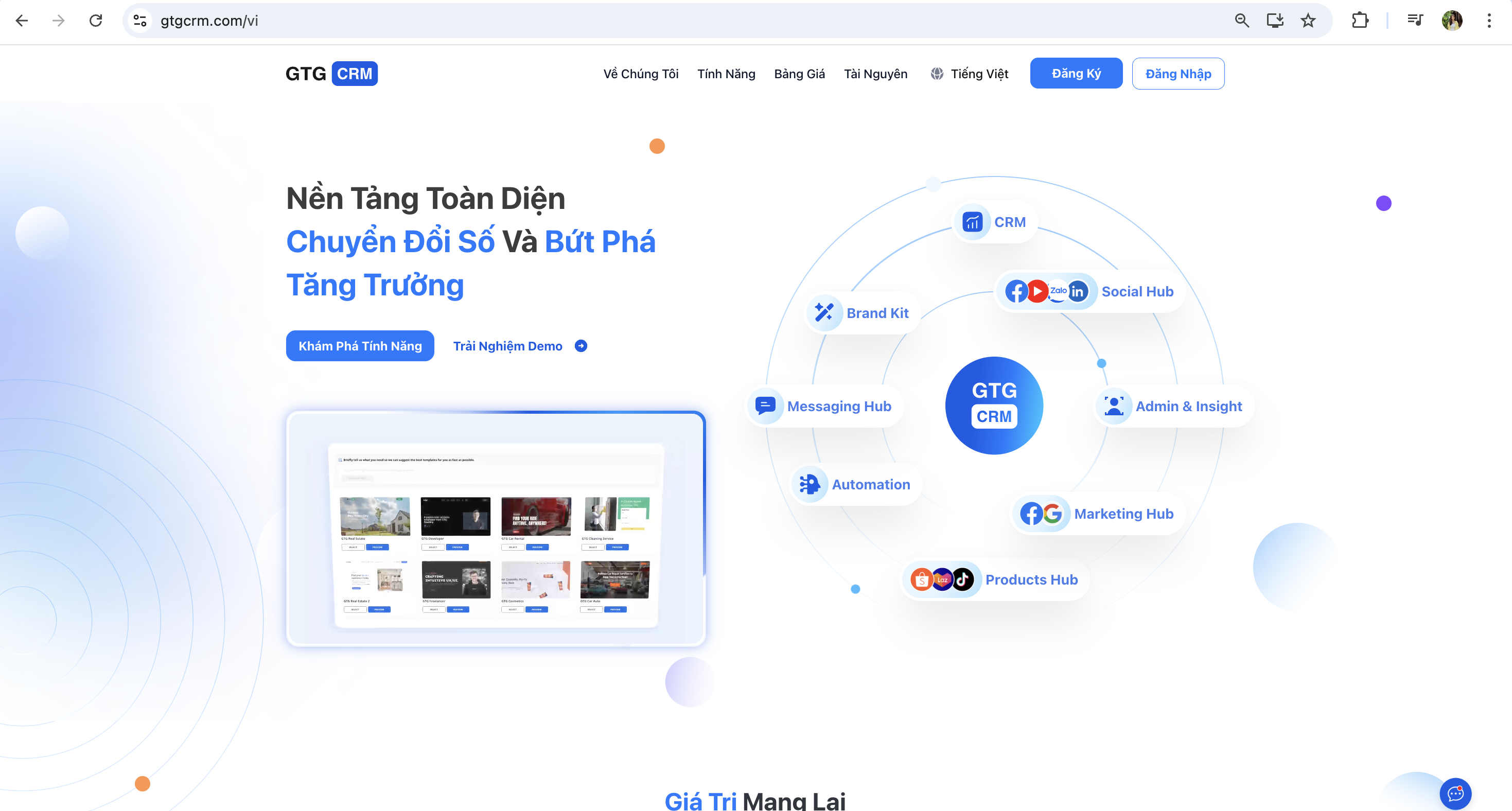
GTG CRM website interface
Learn more about the full range of GTG CRM features.
GTG CRM - Real estate software solution for the new competitive era.
GTG CRM is not just a data storage solution; it's a closed-loop process that accompanies businesses from project preparation to customer deposit. That's why many businesses choose GTG CRM as their central real estate software to optimize operations.
Here's how a real estate business can use GTG CRM to standardize and accelerate the entire sales process:
Build your project's brand right from the start.
Before launching advertisements or reaching out to customers, a project needs a clear brand identity and compelling descriptive content. This is where GTG CRM comes into play:
- Brand Identity AI assists in creating logos, colors, and brand stories for projects.
- AI Content helps write Facebook and LinkedIn posts describing the location, amenities, legal aspects, and highlights of a project.
- AI Image creates illustrations that provide marketing teams with quick access to resources for deploying communication strategies.
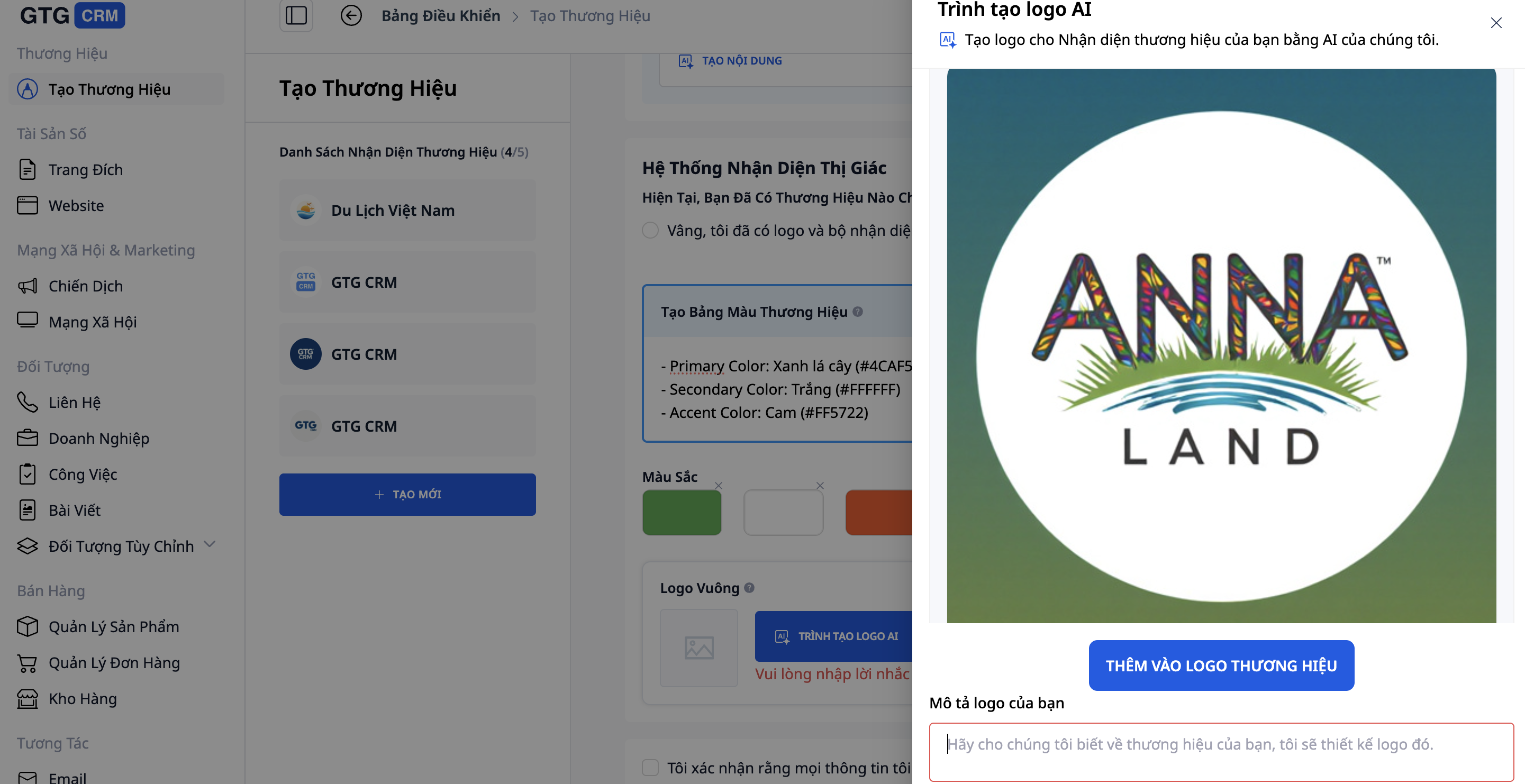
GTG CRM helps businesses create logos and build brand identity.
This is especially useful for projects that need to launch quickly, when the marketing team hasn't had time to finalize the official documentation from the developer.
Check out how to create a brand image with Brand Identity now.
Attract interested customers with consistent content and communication channels.
Instead of manually writing each blog post, the marketing team could:
- Using AI to write social media posts to create content introducing projects, analyzing the market, and highlighting competitive advantages.
- Post simultaneously to multiple platforms (Facebook, Zalo OA, LinkedIn, YouTube) via Social Hub.
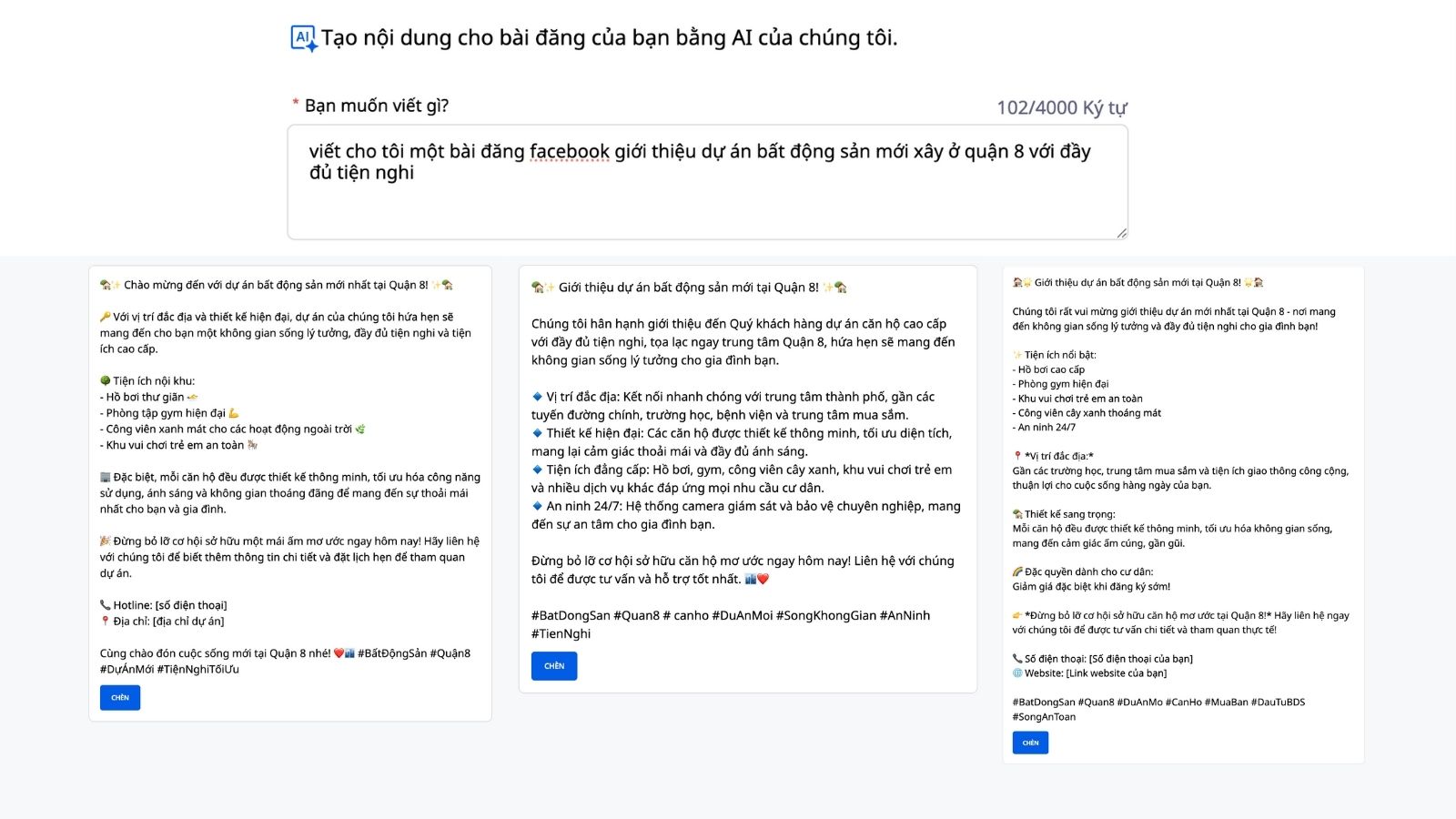
GTG CRM's AI creates engaging content with just a simple command.
This helps businesses maintain a consistent communication pace, a crucial factor in creating brand awareness when a new project is launched.
Check out the detailed guide on how to use GTG CRM's Social Hub now.
Generate leads using professional landing pages.
Once customers become interested, the landing page becomes a crucial "touchpoint" in deciding whether or not they leave their information. GTG CRM supports businesses in this way:
- Create your own Real Estate Landing Page with an optimized layout for conversion using a standard SEO template.
- There is a form to register for a house viewing or to receive a price list.
- AI creates engaging images and content.
- Customize your own domain
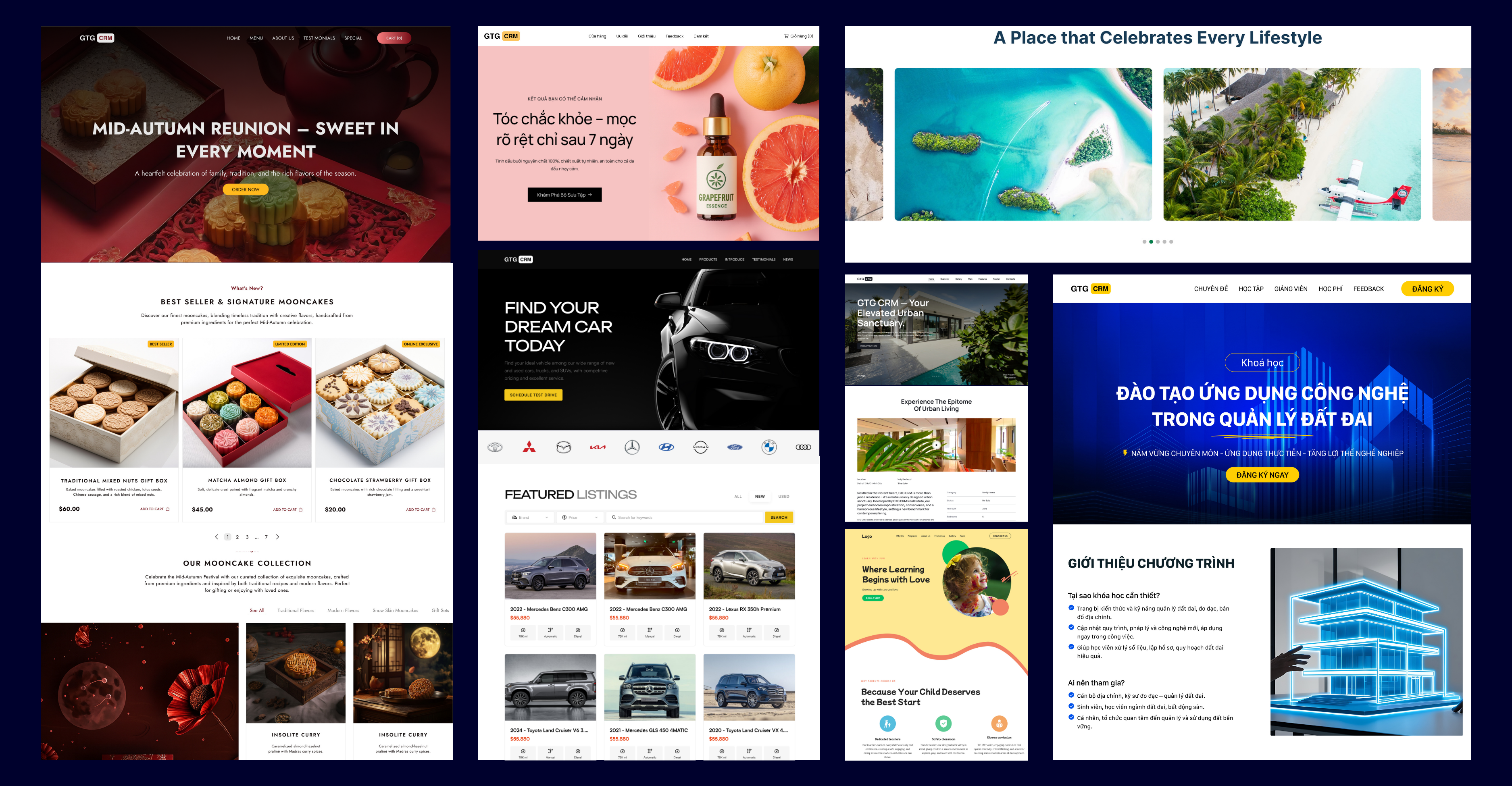
GTG CRM's diverse library of landing page templates.
Landing pages can be created quickly, without the need for a technical team, making them suitable for the fast-paced real estate project development, which often requires very tight budgets.
Check out this guide on creating landing pages with GTG CRM.
Run ads easily with AI.
When launching a new project, real estate businesses often need to create campaigns quickly while ensuring the content is accurate, the images are relevant, and the target audience is correct. The AI tools in GTG CRM simplify this entire process by:
- Automatically write ad copy (Google Ads, Facebook Ads) in a real estate style, optimizing keywords and messaging.
- Create project illustrations using AI, meeting advertising standards.
- Suggestions for titles, descriptions, and calls to action to increase CTR.
- Suggest keywords and ad groups suitable for each customer segment.
- Direct connection to the landing page ensures a unified communication flow from advertising to lead generation.
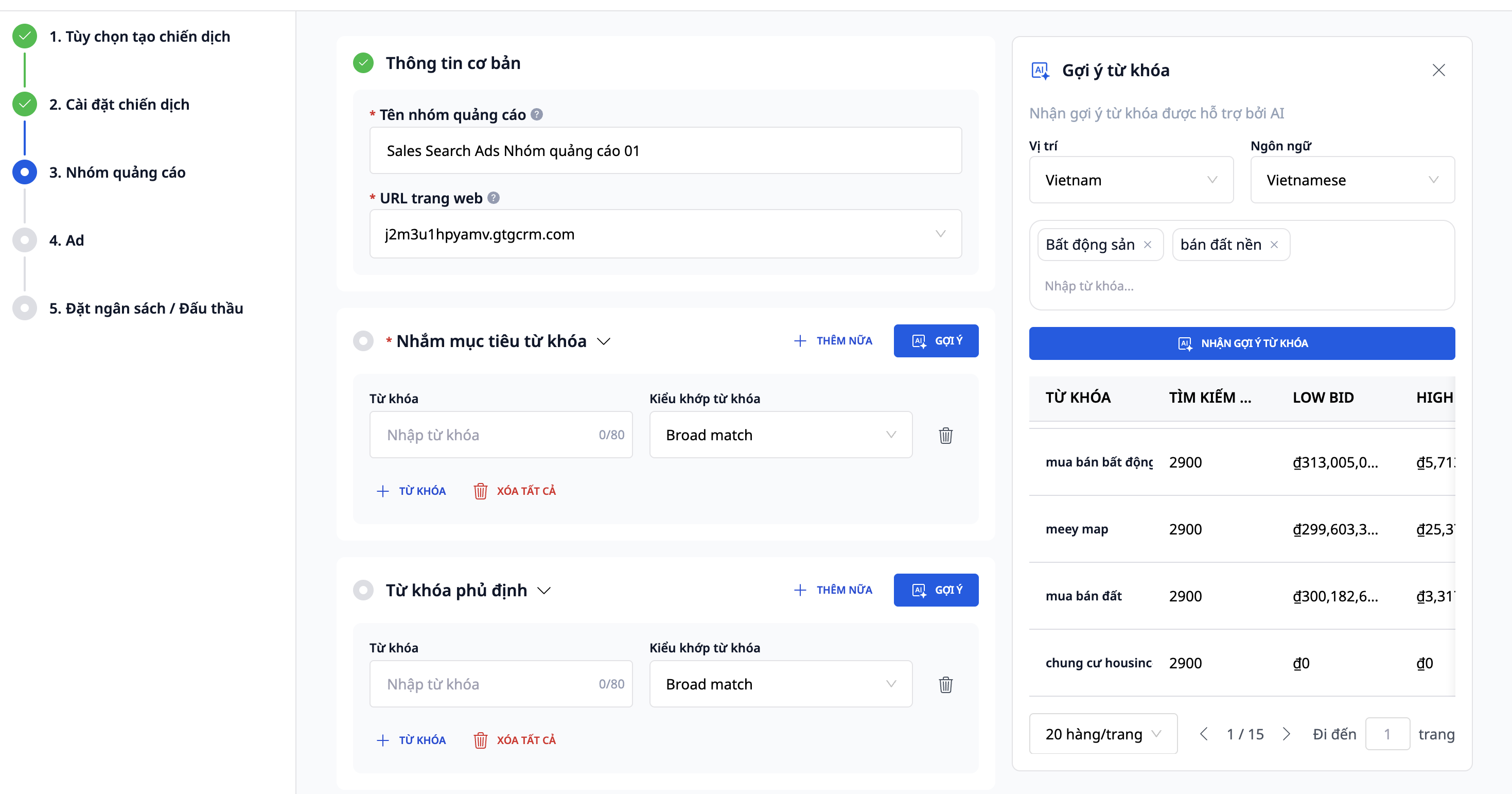
AI helps users create SEO-optimized titles and descriptions, and suggests keywords.
As a result, businesses can create fast, synchronized, and effective campaigns during the project launch phase without needing a dedicated advertising team.
Scientific lead screening and classification in CRM
After acquiring a lead, what businesses need is to know where the lead came from, how high its engagement is, and who should be the first to take care of that customer. GTG CRM's CRM allows this:
- Automatically record lead sources (ads, website, Zalo, Facebook, etc.)
- Set status: New – Contacted – Interested – Viewed – Deposit Confirmed
- Automated lead generation by region or campaign
- Save the entire interaction history.
This helps the sales team avoid missing any potential customers, while giving management a clear view of each individual's performance.
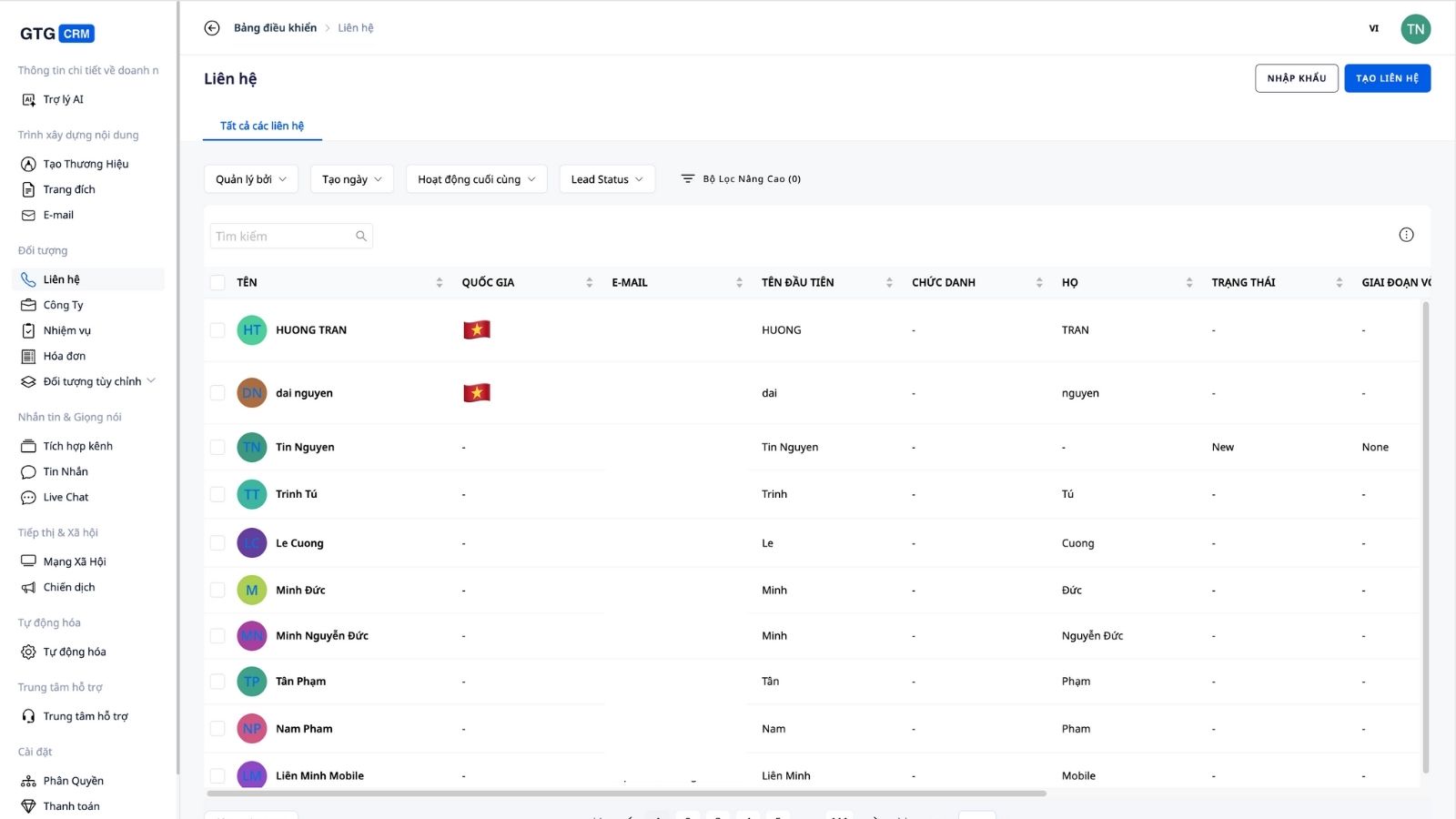
GTG CRM's CRM automatically collects leads from multiple sources, helping businesses manage them more easily.
Guide to using GTG CRM's CRM features.
Customer care through multi-channel messaging and email marketing.
One of the reasons real estate businesses lose customers is slow or inconsistent response times. GTG CRM integrates messages from: Facebook, Zalo, Email, Live Chat, website, Outlook, Whatsapp, and Twillio.
Everything is contained within a single working window. Along with that comes:
- AI suggests quick, contextually relevant answers.
- Easily categorize conversations.
- Email marketing nurtures the group of customers who are still comparing projects.
As a result, businesses maintain a continuous flow of interaction without needing to increase staff.
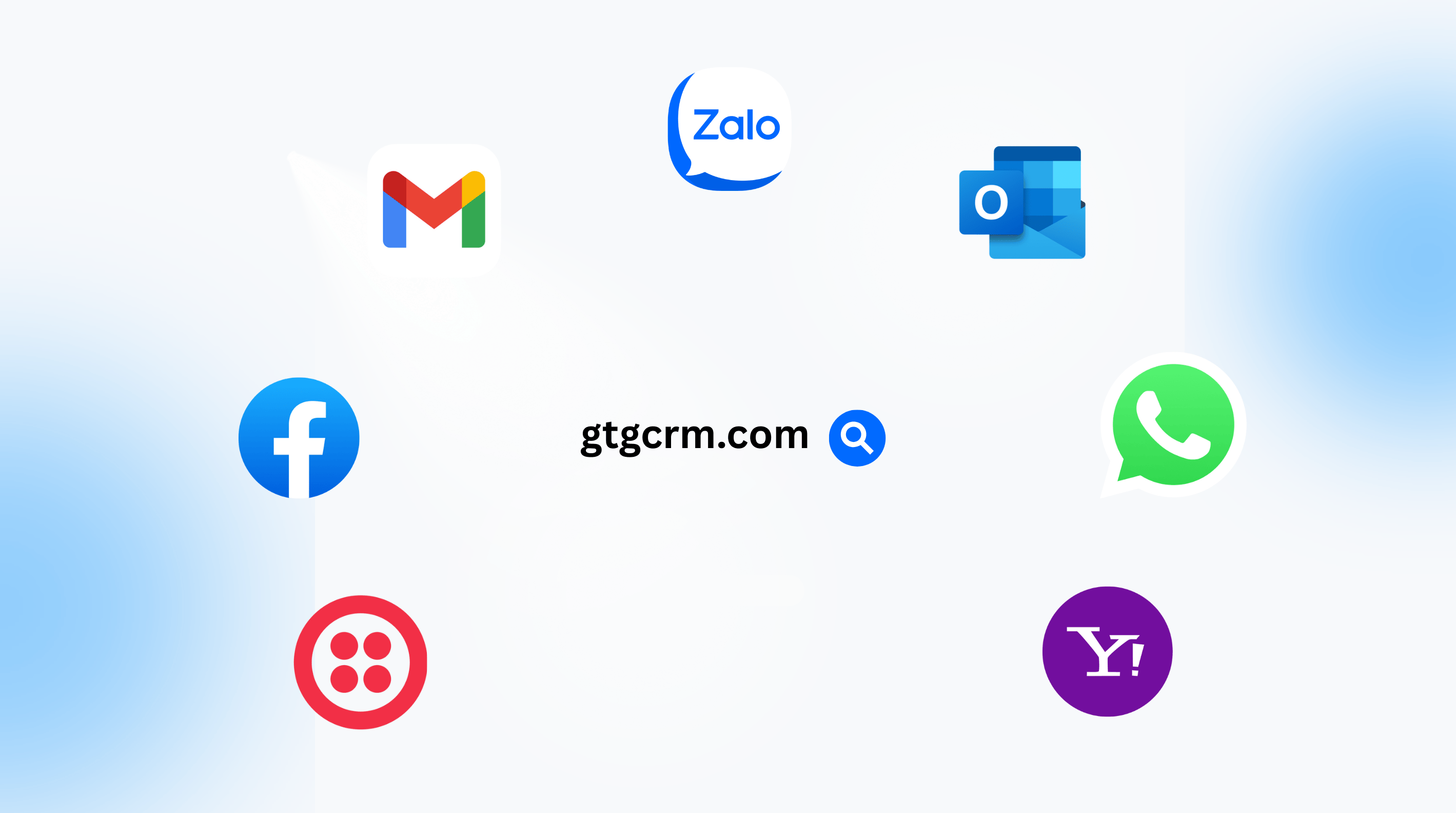
GTG CRM delivers a complete multi-channel messaging experience.
Experience multi-channel messaging now with this detailed guide.
Automated after-sales service
Forgetting or not being reminded about property viewing appointments is a major reason why many customers lose interest. GTG CRM automation helps businesses:
- Send a confirmation message for your appointment.
- Please notify guests 2–3 hours in advance.
- Ask the salesperson to call you back after you view the house.
- Send project progress updates via email.
- Sending a thank you message after the consultation.
These tasks typically require 1-2 lead management personnel to complete, but with automation, businesses can operate with a small sales team while maintaining a high level of professionalism.
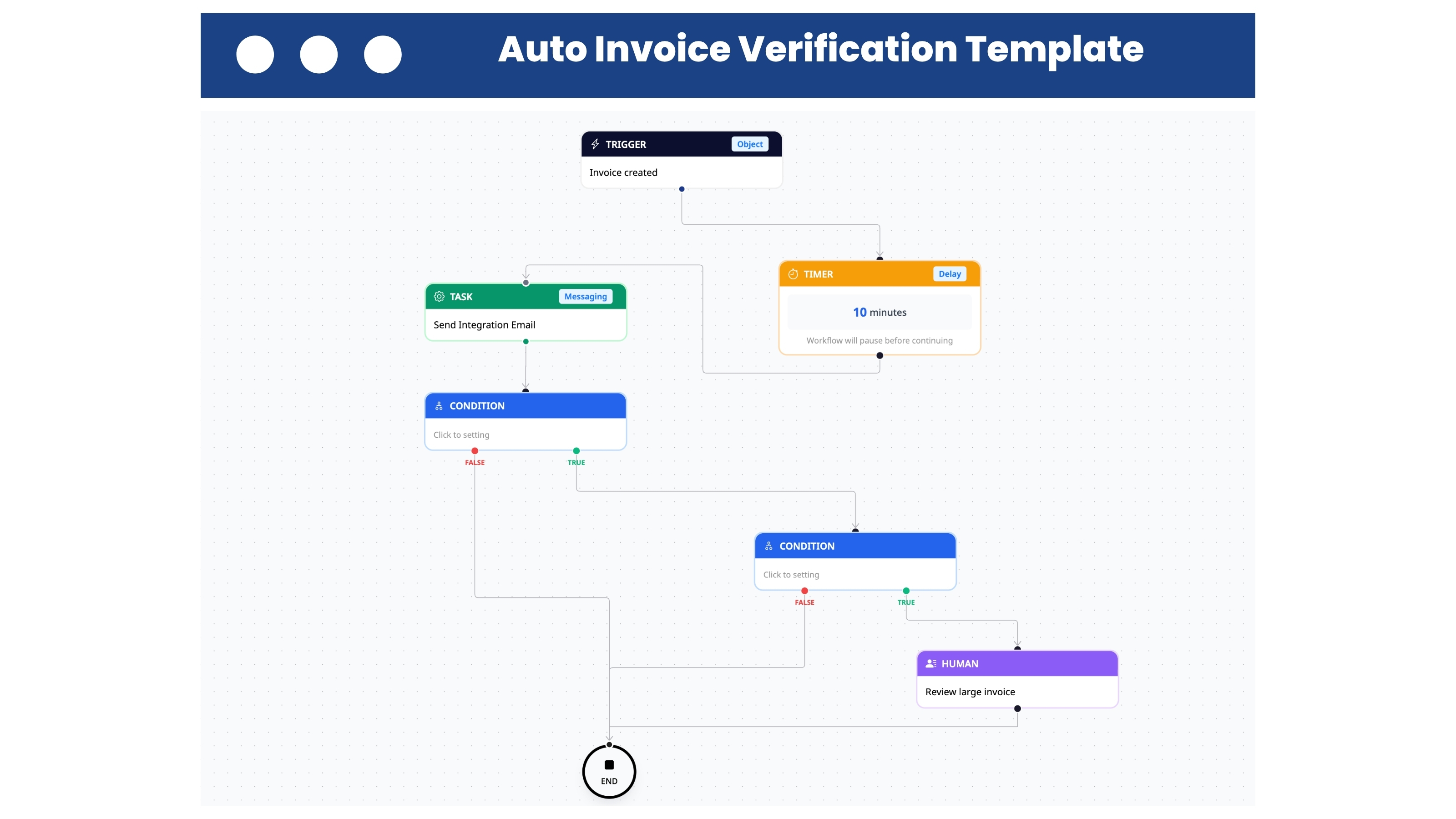
One of GTG CRM's Automation models.
View the guide on creating automations with GTG CRM now.
Conclude
In 2025, the real estate market will change rapidly, and customers will have higher expectations for the consulting experience. Businesses therefore need a clear, consistent, and fast enough sales process to avoid missing opportunities. The application of real estate software like GTG CRM helps operational teams become more efficient, provide better customer service, and optimize marketing budgets in an increasingly competitive environment.
Turn what you've just read into tangible results — apply it now with GTG CRM, free.
Apply now