Thinking any product can be advertised
Not all products are suitable for Facebook. Some items are good for live streams, while others perform better on Google or TikTok. If you try to advertise "difficult" products, no matter how much budget you pour in, it will be hard to see orders.
Example: A store tried running Facebook Ads to sell heavy industrial machinery. A budget of tens of millions went to waste, but not a single order was placed, because customers in this industry usually search via Google or direct relationships, rather than clicking on Facebook ads.
Determining which products are suitable for Facebook is the first step that decides the success or failure of a campaign.
Afraid of violating policies, so only choosing "easy to run" products
Many people are afraid that difficult products will lead to account suspension, so they only sell popular items like clothes, cosmetics, or accessories. But because "everyone sells them," the competition is fierce, bidding prices are high, and profits are slim. Don't just look for "easy" products, look for the "right" products.
Example: An online shoe shop chose the mainstream sneaker segment. They poured a large budget into it but still made no profit because hundreds of other stores targeted the same audience. Meanwhile, a small shop selling safety shoes – a product few dared to advertise due to targeting difficulties – made stable profits because the customer base had little competition.
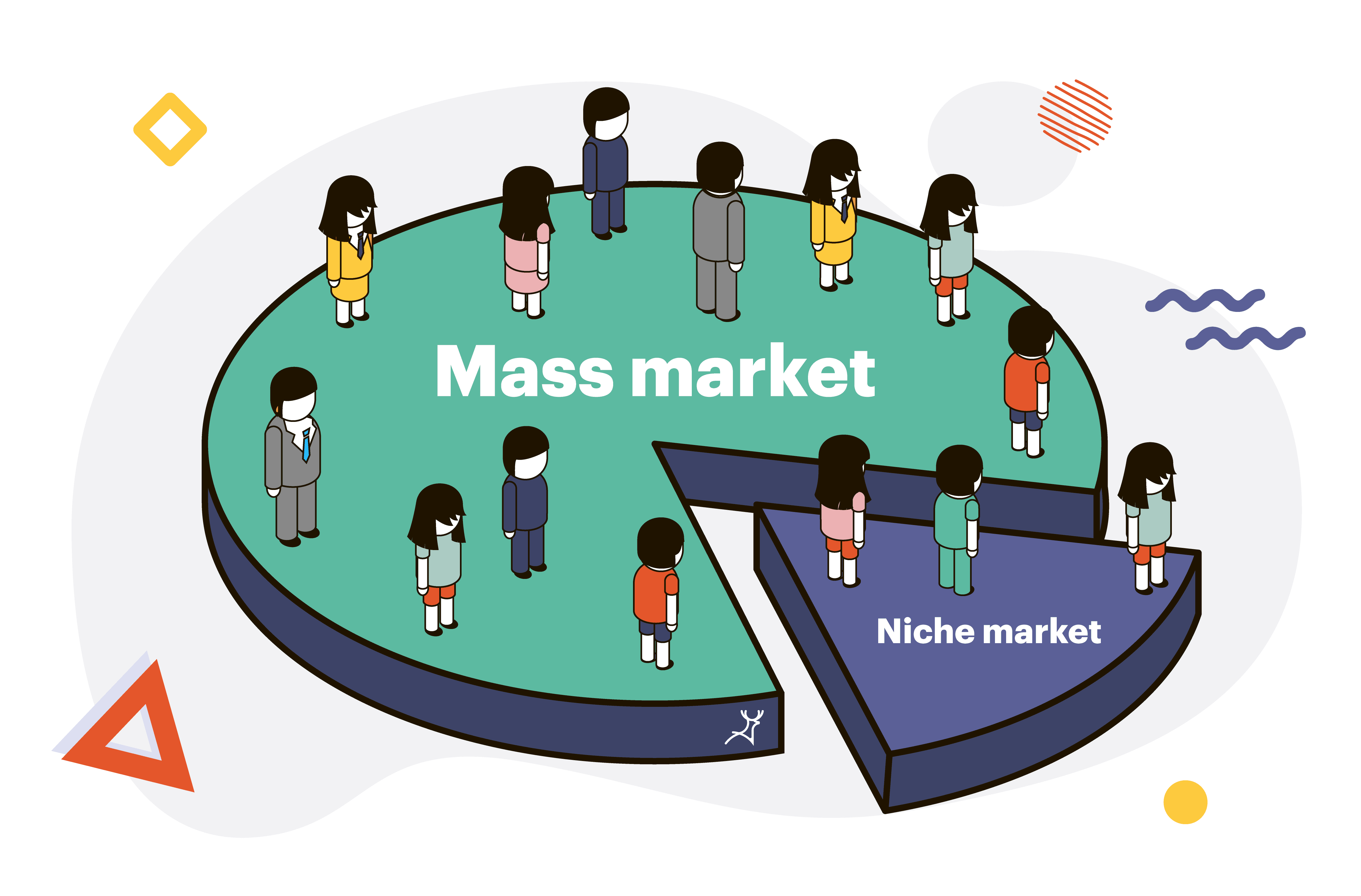
Mass market & Niche market
Believing that buying likes and comments will sell products
A fanpage with 50,000 likes but all students won't help if you're selling high-end cosmetics. Many people mistakenly believe that more interaction leads to easier sales, when the most important thing is reaching the right customers.
Example: A shop owner spent a few million VND to buy likes from India and the Philippines to make the fanpage look "reputable." But when running Ads, Facebook distributes based on the existing audience, resulting in ads being shown to people from other countries – a waste of money and effort.
Lazy to create content, running the same ad repeatedly
Ads have a lifespan. If you use the same image or copy for a long time, customers will quickly ignore it, and the bidding price will gradually increase. Smart marketers always prepare multiple versions for testing and continuously change them to keep ads fresh and effective.
Example: A spa launched a 50% discount promotion and repeatedly ran only one banner. In the first week, each message cost only 5,000 VND. In the third week, it increased to 25,000 VND because customers had seen the ad too many times.
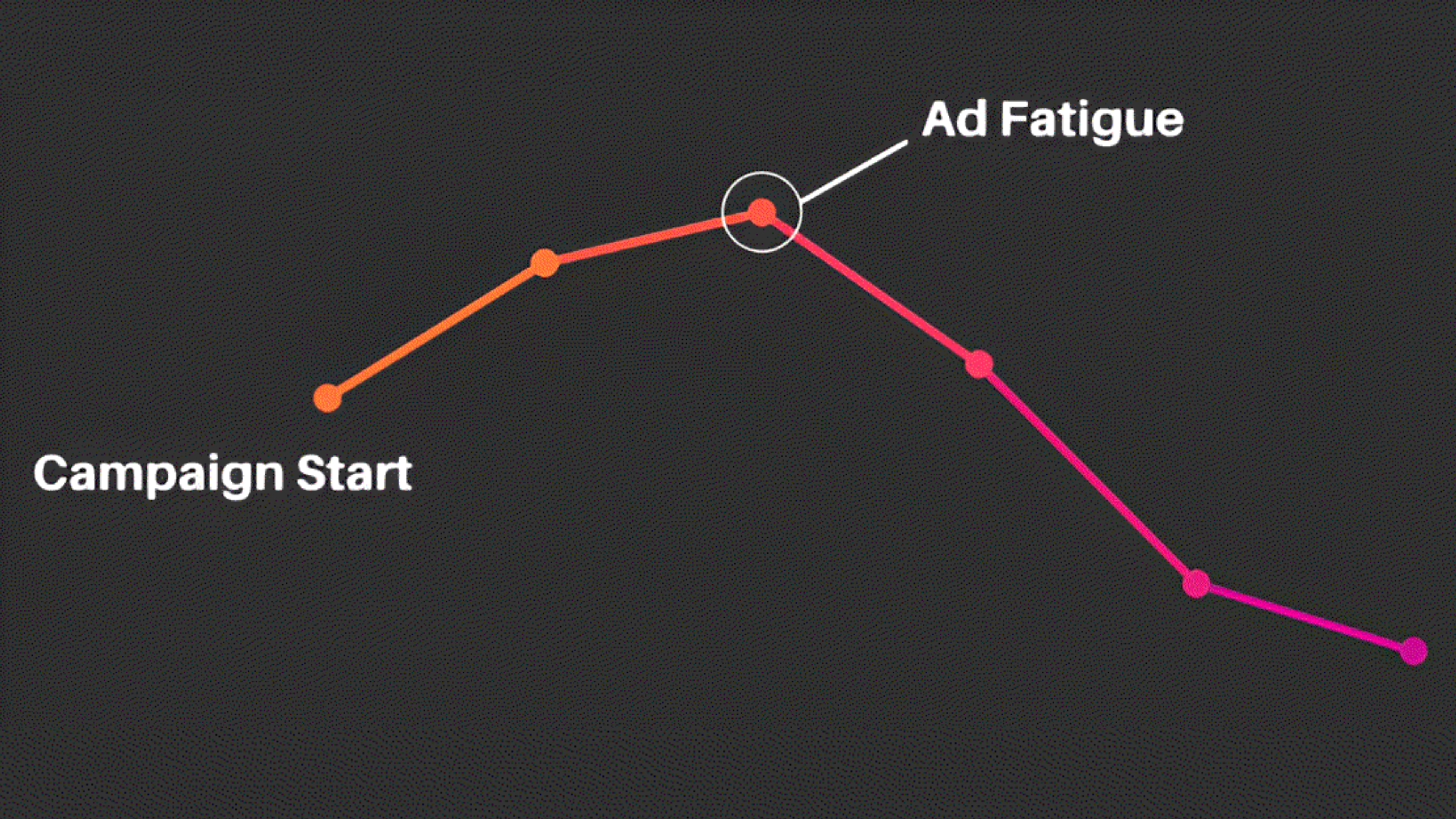
Ad fatigue occurs when content doesn't change (Source: Charlie Lawrance)
Therefore, content needs to be refreshed continuously. Even when an ad is performing well, prepare 2-3 alternative versions to test and optimize.
Only optimizing ads while forgetting to optimize the sales system
Ads bring customers in, but if the subsequent processes are not good, you will still lose money. The product must be attractive enough, sales staff must close deals quickly, and shipping must be efficient.
Example: A women's clothing shop ran ads that generated 200 orders per day. However, due to a disorganized warehouse and constant incorrect size shipments, the return rate was 30%. Profits disappeared even though the Ads initially performed well.
If you only focus on optimizing ads while the sales system is loose, profits will still be wasted. We need to optimize the entire system, from products, logistics, sales, to customer care.
Not building an automated system
During peak season, the volume of messages increases many times over. If handled manually, staff can easily become overwhelmed, miss customers, and even create a bad impression.
Example: A cosmetics shop had 3 staff members managing the page. During a major promotion, 500 messages per day flooded in, overwhelming everyone. Customers had to wait 3-4 hours for a response. After the campaign, the rate of returning customers significantly decreased.

Overwhelmed workload leads to staff burnout and customer disadvantage
An automation system or chatbot helps you respond instantly, maintain a good experience, reduce staff workload, and sustain revenue even when orders surge.
Completely relying on Facebook Ads
Any business that puts all its revenue into a single channel is putting itself at risk. When an account is restricted or bidding prices increase suddenly, everything can collapse.
Example: A fashion store relied entirely on Facebook Ads for revenue. When their account was restricted due to policy violations, revenue dropped to zero within 2 weeks. Meanwhile, competitors with additional TikTok Shop and community group channels continued to sell steadily.
Using only one ad account and one fanpage
Relying on a single fanpage or ad account is too dangerous. If Facebook locks the account for any reason, all campaigns are effectively "frozen."
Example: An English language center ran ads solely on one fanpage. When Facebook mistakenly locked their account during a mass scan, they lost all remarketing data, and revenue plummeted.
Having proactive backup plans will keep you safer and prevent you from being in a passive position.
Thinking that hiring someone to run Ads is enough
"If you don't know, hire someone" sounds reasonable, but the reality is not entirely so. If you hire the wrong person, you not only lose money but also your fanpage, account, and may even fall victim to scams.
Example: A cosmetics shop handed over its entire budget to a newly acquainted freelancer. After 1 month, they lost 30 million VND and had their account blocked for policy violations.
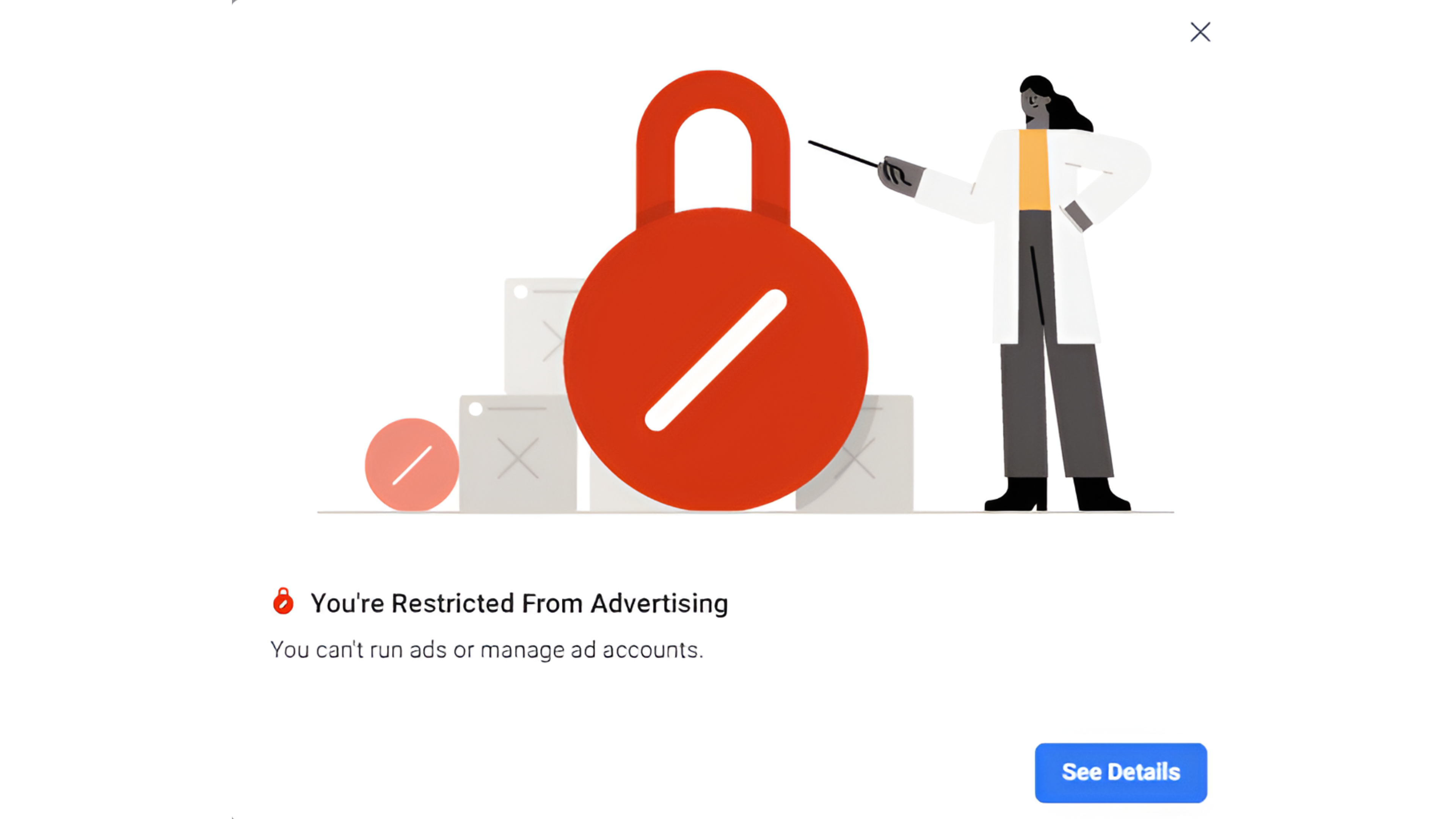
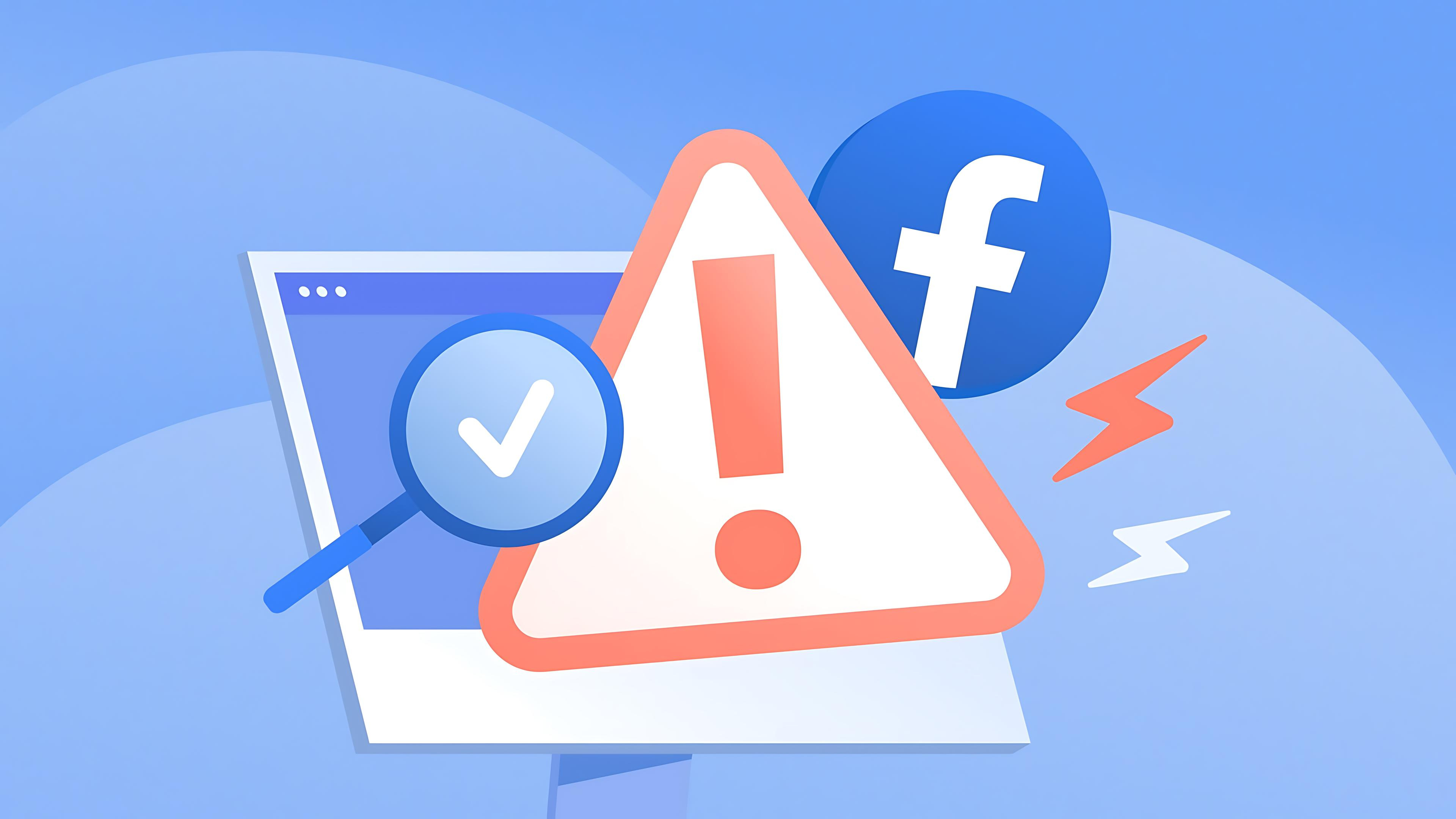
Ad account locked
Even when hiring, you still need to understand the basics to monitor, set correct requirements, and ensure advertising spend is directed appropriately.
Conclusion
Facebook Ads is not a matter of luck. It will bring sustainable profits if you avoid the mistakes above, have a clear plan, and an optimized sales system. Then, every dollar spent on advertising will become a profitable investment, rather than a futile "money burning" session.
Turn what you've just read into real results — apply it now with GTG CRM, for free.
Apply Now