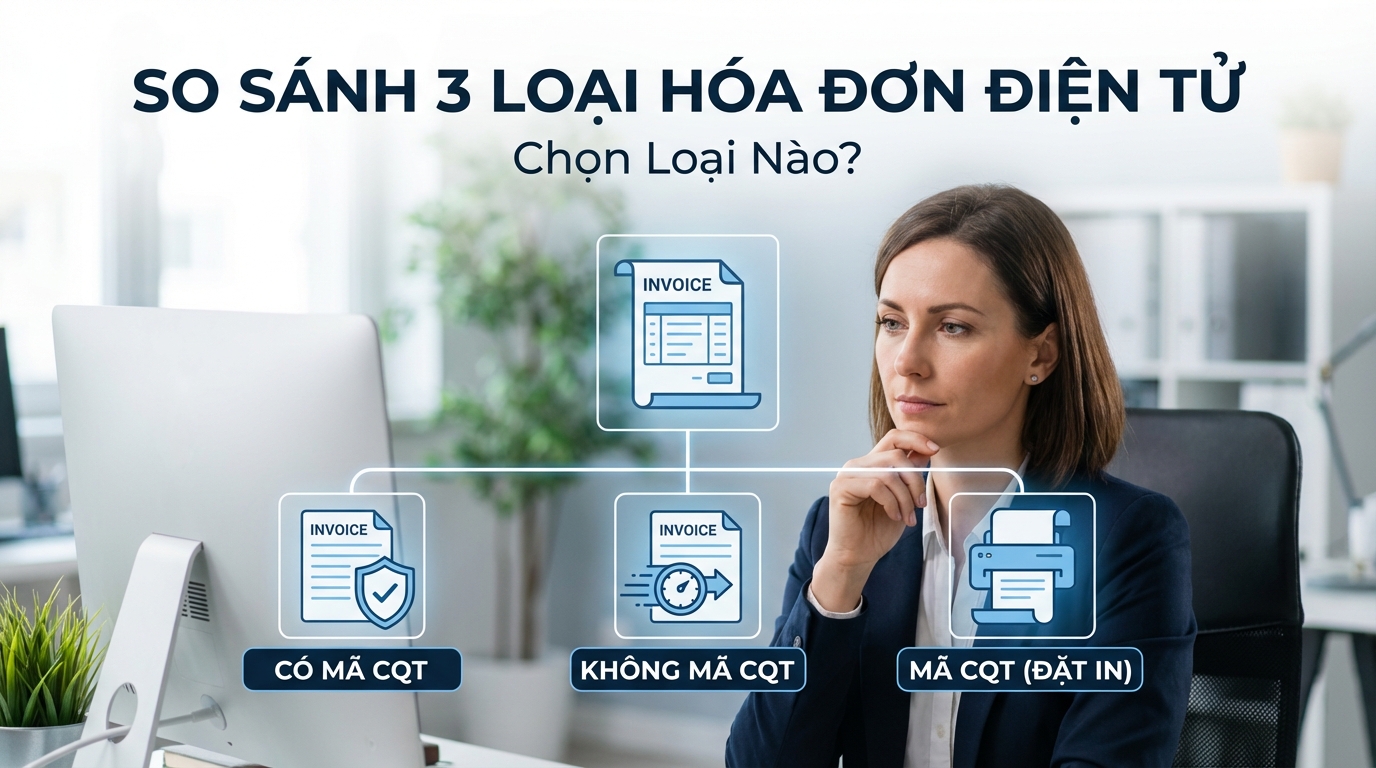
Since electronic invoices became mandatory under the regulations of the General Department of Taxation, many shop owners, retailers, and business households are still unsure which type of electronic invoice best suits their scale and business characteristics. The three most common types of electronic invoices currently available are invoices with tax authority codes, invoices without tax authority codes, and invoices with tax authority codes (also known as printed invoices) – each with its own advantages and disadvantages.
Choosing the right type of invoice not only helps businesses comply with the law but also optimizes operating costs and sales processes. This article will analyze three types of electronic invoices in detail, compare their advantages and disadvantages, and help you make the most suitable decision.
1. Electronic invoices with tax authority codes.
Concept
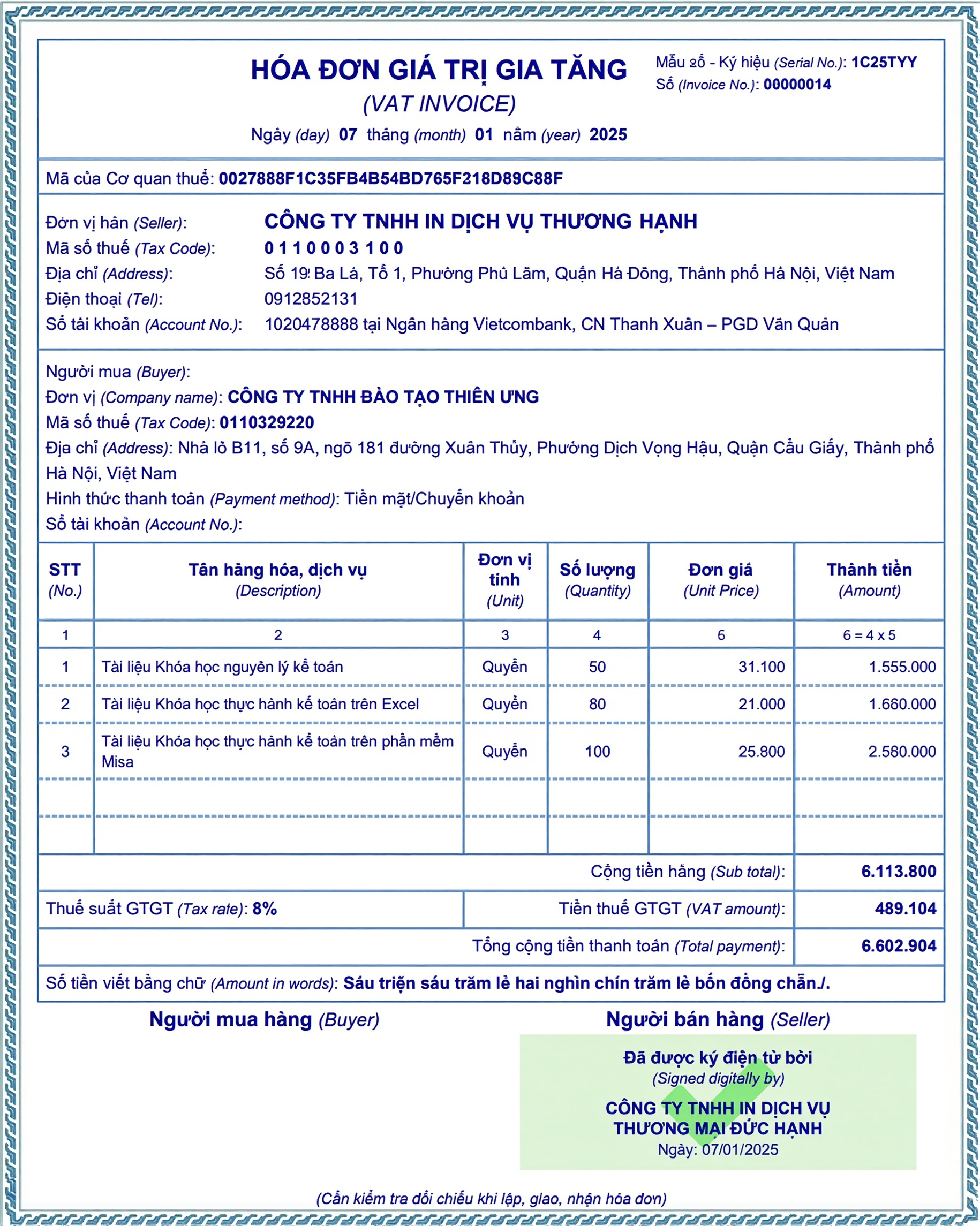
An electronic invoice with a tax authority code is an invoice that has been issued an authentication code by the General Department of Taxation before being sent to the customer. This code consists of a unique string of characters created by the tax authority and attached to the invoice to confirm its validity.
Applicable subjects
According to Decree 123/2020/ND-CP, businesses classified as high-risk for tax purposes are required to use invoices with codes:
- Newly established businesses that have not been operating for 12 months
- Businesses that are temporarily suspended from operation, have tax arrears, or pose tax risks.
- Household businesses and individual businesses with annual revenue of 1 billion VND or more.
- Businesses operating in sensitive sectors (scrap metal, petroleum, etc.)
Release process
- Businesses create invoices using accounting software or a management system.
- Submit invoice data to the General Department of Taxation's portal.
- The tax authorities will check and issue the verification code within 1-2 seconds.
- Businesses receive invoices with codes and send them to customers.
Advantage
Transparency and strict control: Tax authorities have access to invoice information in real time, minimizing tax fraud.
Low cost: Businesses do not have to pay fees to the invoicing service provider; they only need to register and use it for free through the General Department of Taxation's portal.
High legal validity: The invoice is directly certified by the tax authority, ensuring absolute legal validity.
Disadvantages
Dependence on the tax system: When the General Department of Taxation's system experiences problems or maintenance, businesses may be unable to issue invoices.
Slower speed: Compared to invoices without codes, having to wait for the tax authorities to issue a code can cause delays in some cases.
Flexibility limitations: Not suitable for businesses that need to issue invoices in bulk within a short period.
2. Electronic Invoices Without Tax Authority Codes
Concept
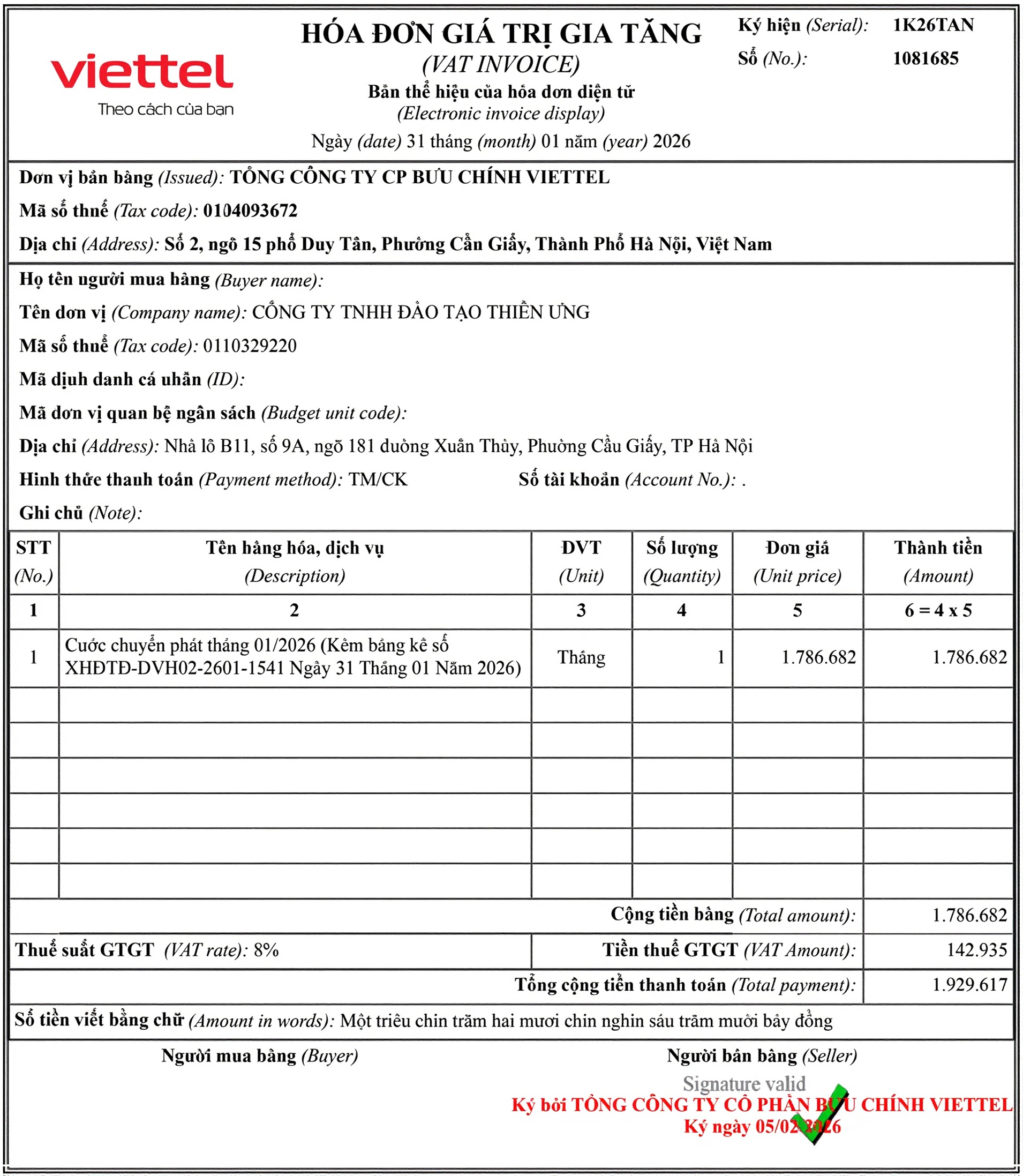
Electronic invoices without a code are invoices issued by businesses themselves through an electronic invoice service provider (a provider approved by the General Department of Taxation), and do not require a verification code before being sent to customers.
Applicable subjects
Businesses are allowed to use invoices without codes if they meet the following conditions:
- Has been in operation for 12 months or more.
- No outstanding tax debts, no tax violations.
- Not classified as a high-risk taxpayer according to the tax authorities' assessment.
- Are you using the services of a legitimate electronic invoicing provider?
Release process
- Businesses sign contracts with organizations that provide electronic invoicing services.
- Generate invoices using the software and send them directly to customers.
- Regularly (daily/monthly) send invoice data to the tax authorities through the supplier.
Advantage
Fast speed: Instant invoice issuance, no need to wait for confirmation from the tax authorities.
Independent of the tax system: Businesses can still issue invoices even if the General Department of Taxation's system experiences problems.
High flexibility: Suitable for businesses with high transaction volumes that require bulk invoice issuance.
Easy integration: Service providers often have APIs and features that integrate with sales management software.
Disadvantages
Service costs: Businesses must pay fees to the electronic invoicing service provider, ranging from a few million to tens of millions of VND per year depending on the service package.
Eligibility requirements: Not all businesses are eligible to use this service, especially new businesses or those with tax risks.
Legal responsibility: Businesses are solely responsible for the accuracy and legality of the invoices they issue.
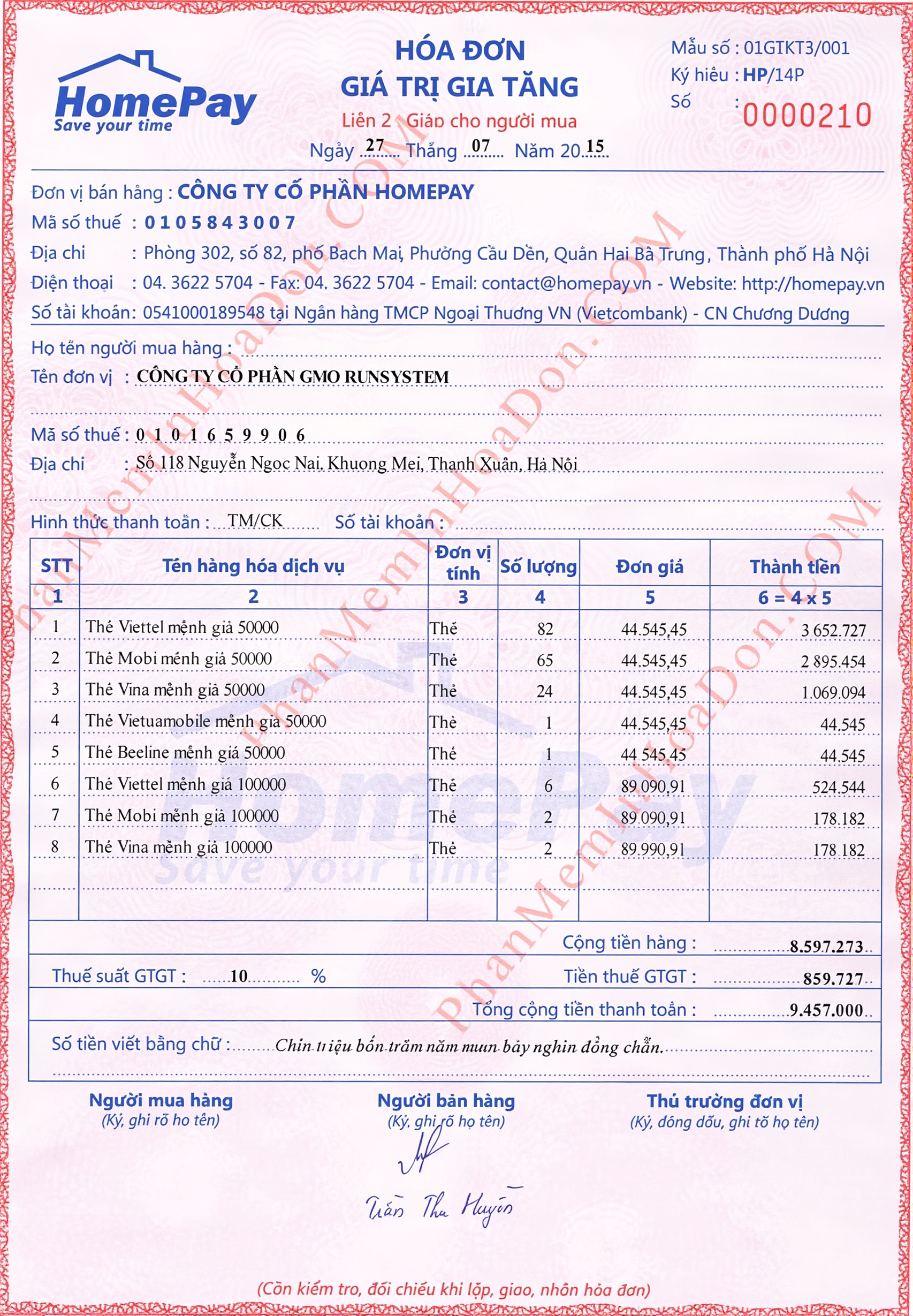
3. Electronic Invoice with Tax Authority Code (Printed on Demand)
Concept
Tax authority-issued invoices, also known as on-demand printed invoices, are pre-printed invoices with a code assigned by the tax authority. This is a transitional form from paper invoices to electronic invoices, usually applied to businesses that do not yet meet the requirements or are not ready to fully switch to electronic invoices.
Applicable subjects
- Small businesses and household businesses with annual revenue under 1 billion VND.
- The unit operates in remote, rural areas lacking technological infrastructure.
- Special cases as stipulated by the tax authorities.
Instructions for use
- Businesses register with the tax authorities the number of invoices they need to use.
- The tax authority issues invoice numbers.
- Businesses can have their invoices printed at authorized printing facilities.
- Use paper invoices with codes for transactions with customers.
Advantage
Suitable for small businesses: Requires no complex technology infrastructure.
Simple process: Easy to use, no internet connection required when generating invoices.
Low upfront cost: No investment in software or electronic invoicing services is required.
Disadvantages
Outdated: Not in line with current digitalization trends, gradually being phased out.
Management challenges: Prone to loss, difficult to retrieve and store compared to electronic invoices.
Inflexible: If there are errors, the paper invoice must be canceled and reported to the tax authorities.
Time limit: According to the roadmap, this type of invoice will gradually be completely replaced by electronic invoices.
Comparison Table of 3 Types of Invoices
| Criteria | It has a tax code. | No tax code | Tax Code (Printing Order) |
|---|---|---|---|
| Output speed | Slow (1-2s) | Fast (instant) | Medium |
| Expense | Free of charge | 3-15 million/year | Printing costs |
| Internet dependent | Have | Have | Are not |
| Manage | Easy | Easy | Hard |
| Flexibility | Short | High | Very low |
| Trend | Popular | Popular | Currently being removed |
Which Type of Invoice Should You Choose?
Choose invoices with codes if you:
- This applies to newly established businesses or household businesses with annual revenue exceeding 1 billion VND.
- Want to save on service costs?
- There wasn't a very large volume of transactions in the short term.
- Transparency and strict compliance are our top priorities.
Choose the NO-CODE invoice option if you:
- A business that has been operating stably for over 12 months.
- We have a large volume of orders and need to issue invoices quickly.
- Selling on multiple e-commerce platforms requires automated integration.
- Willing to pay for the service in exchange for speed and flexibility.
Select the TAX CODE invoice (Print order) if you:
- As a small business, our revenue is less than 1 billion VND per year.
- Operating in areas without internet access.
- Temporary solutions are needed during the digital transformation period.
Conclude
Choosing the right type of electronic invoice depends on the business scale, transaction volume, and development strategy. Most small and medium-sized enterprises (SMEs) currently use invoices with codes due to their lower cost and compliance with legal requirements. Meanwhile, larger businesses with high transaction volumes often choose invoices without codes to optimize their operational processes.
To help shop owners and businesses issue electronic invoices easily and quickly, GTG CRM has integrated a feature that allows direct electronic invoice generation from orders. You can connect with leading invoice providers, automatically generate invoices from order information, and send invoices to customers with just a few simple steps. This saves time, reduces errors, and ensures compliance with legal regulations.
Turn what you've just read into tangible results — apply it now with GTG CRM, free.
Apply now