In the current period when tax authorities are strengthening their management of e-commerce activities, especially revenue generated on e-commerce platforms, the question of "Is it okay to sell online without issuing invoices?" is no longer a theoretical concern but has become a real legal risk for many businesses.
This article clarifies the obligation to issue invoices for online sellers, the legal basis applied, the time to issue invoices, and the legal consequences of non-compliance.
Is it mandatory to issue invoices when selling online?
The answer is: Yes.
According to the Tax Administration Law and its guiding documents on invoices, all sales of goods and provision of services that generate revenue must be invoiced, regardless of:
- Online or offline sales
- Sales on e-commerce platforms or via social media
- Whether the customer requests an invoice or not
The fact that "customers do not request an invoice does not exempt the seller from the obligation to issue an invoice."
For businesses selling on e-commerce platforms, this obligation is even more strictly controlled because order data, revenue, and cash flow are stored by the platforms and provided to tax authorities as required by law.
Read more: Is revenue on e-commerce platforms subject to tax declaration?
Legal basis applied to online sellers
Two key legal documents that online sellers need to understand:
- Decree 123/2020/ND-CP: Provides the general legal framework for invoices and documents
- Decree 70/2025/ND-CP (amended and supplemented): Clarifies the responsibility for issuing electronic invoices in e-commerce activities, especially the data connection mechanism with tax authorities
From July 1, 2025, issuing electronic invoices for businesses selling on e-commerce platforms will no longer be a recommended path but a mandatory requirement, monitored through data reconciliation between platforms, shipping units, banks, and tax authorities.
This means:
- If there is a successful order but no corresponding invoice, businesses risk being asked for explanations and assessed taxes.
When to issue invoices when selling online
One common misconception is that invoices only need to be issued when payment is received. This understanding is not in accordance with the law.
According to current regulations, the time of invoice issuance is the time of transfer of ownership or right to use goods, regardless of whether payment has been received.
For online sales, this time is generally understood as:
- The order has been successfully delivered to the customer
- Cash on delivery or advance payment does not change the obligation to issue an invoice
Some models using cash registers connected to data are allowed to issue consolidated daily invoices, but they must ensure:
- 100% of revenue generated is recorded
- Revenue cannot be deferred to the next period
Delivering goods first and issuing invoices later, or issuing invoices retroactively, are considered issuing invoices at the wrong time.
Read more: All about electronic invoices: When to issue, how to handle errors
Are there penalties for not issuing invoices when selling online?
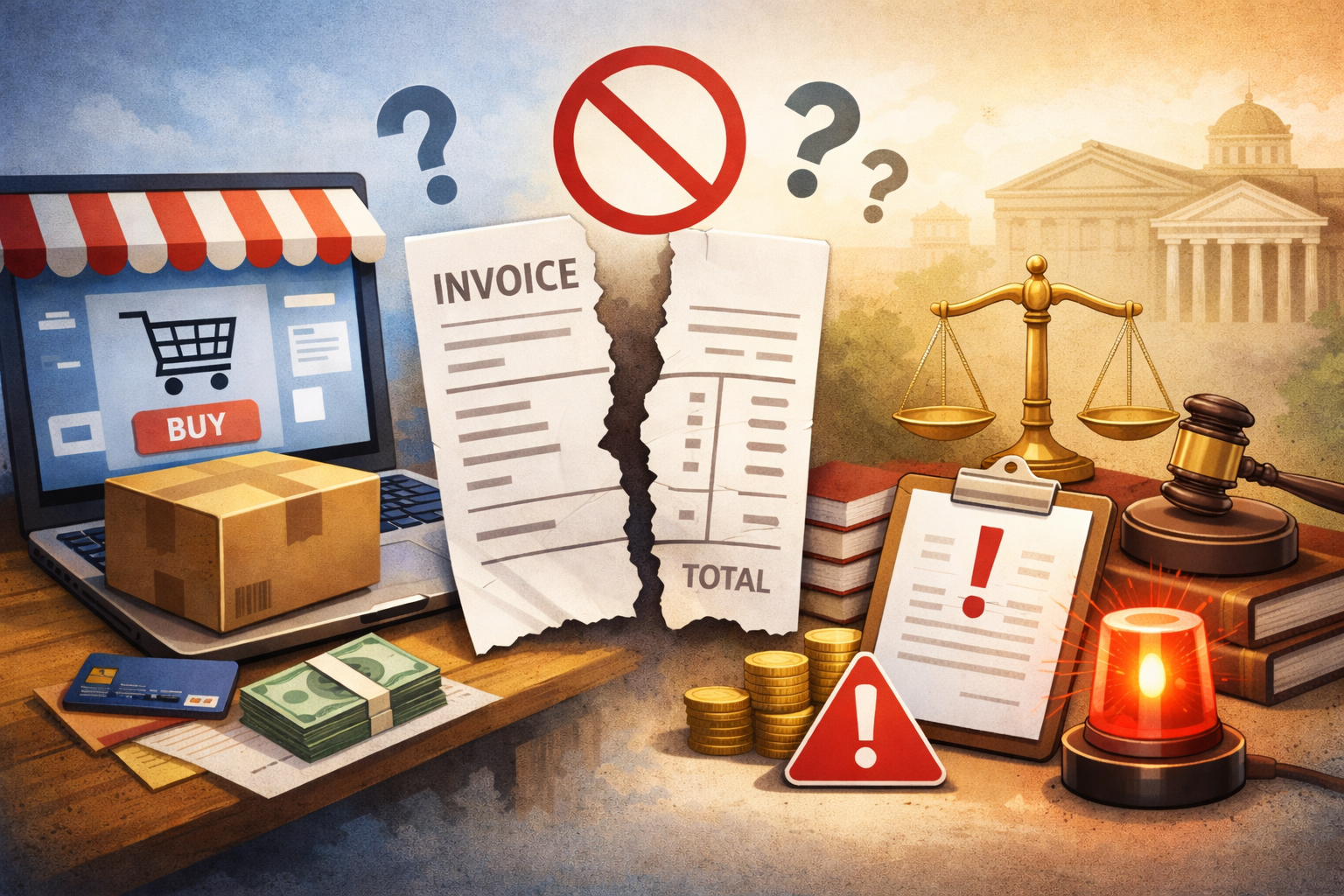
What are the penalties for not issuing invoices when selling online?
Yes, and the penalties are much heavier now than before.
According to new penalty regulations, the act of not issuing invoices when selling goods can lead to:
- Administrative penalties for violations related to invoices
- Retroactive tax collection on all actual revenue generated
- Calculation of late payment interest on the collected tax
In addition to the risks from tax authorities, sellers also face risks from the e-commerce platforms themselves. In many cases, seller accounts may be suspended or their activities restricted if found to be in violation of tax obligations.
How to handle incorrect invoices?
From June 1, 2025, all errors on electronic invoices will no longer be resolved by cancellation.
Depending on the nature of the error, sellers must choose one of two options:
- Adjustment Invoice: Applied when partial content needs to be adjusted (price, tax, quantity, etc.)
- Replacement Invoice: Applied when the entire incorrectly issued invoice needs to be replaced
Choosing the wrong method of correction can render the invoice invalid and directly affect tax declaration.
Read more: Summary of replacement invoices and adjustment invoices
Practical solutions for online sellers
In an environment where sales data is becoming increasingly transparent, the safest approach is not to "avoid invoices" but to standardize processes from the beginning.
Online businesses should:
- Use a management system capable of automatically issuing electronic invoices when an order is completed
- Synchronize data for orders – inventory – revenue – invoices to avoid discrepancies
- Have a clear process for handling returns, refunds, and invoice adjustments
In practice, many businesses are opting for integrated management platforms like GTG CRM, which allow for:
- Automatic issuance of electronic invoices through MISA, S-Invoice
- Automatic creation of replacement invoices when returns occur
- Integration and synchronization of products from e-commerce platforms
- Management of products, inventory, stock levels, suppliers, orders, shipping, invoices, and accounting data within a single system
This approach helps reduce manual errors and meets audit and reconciliation requirements when needed.
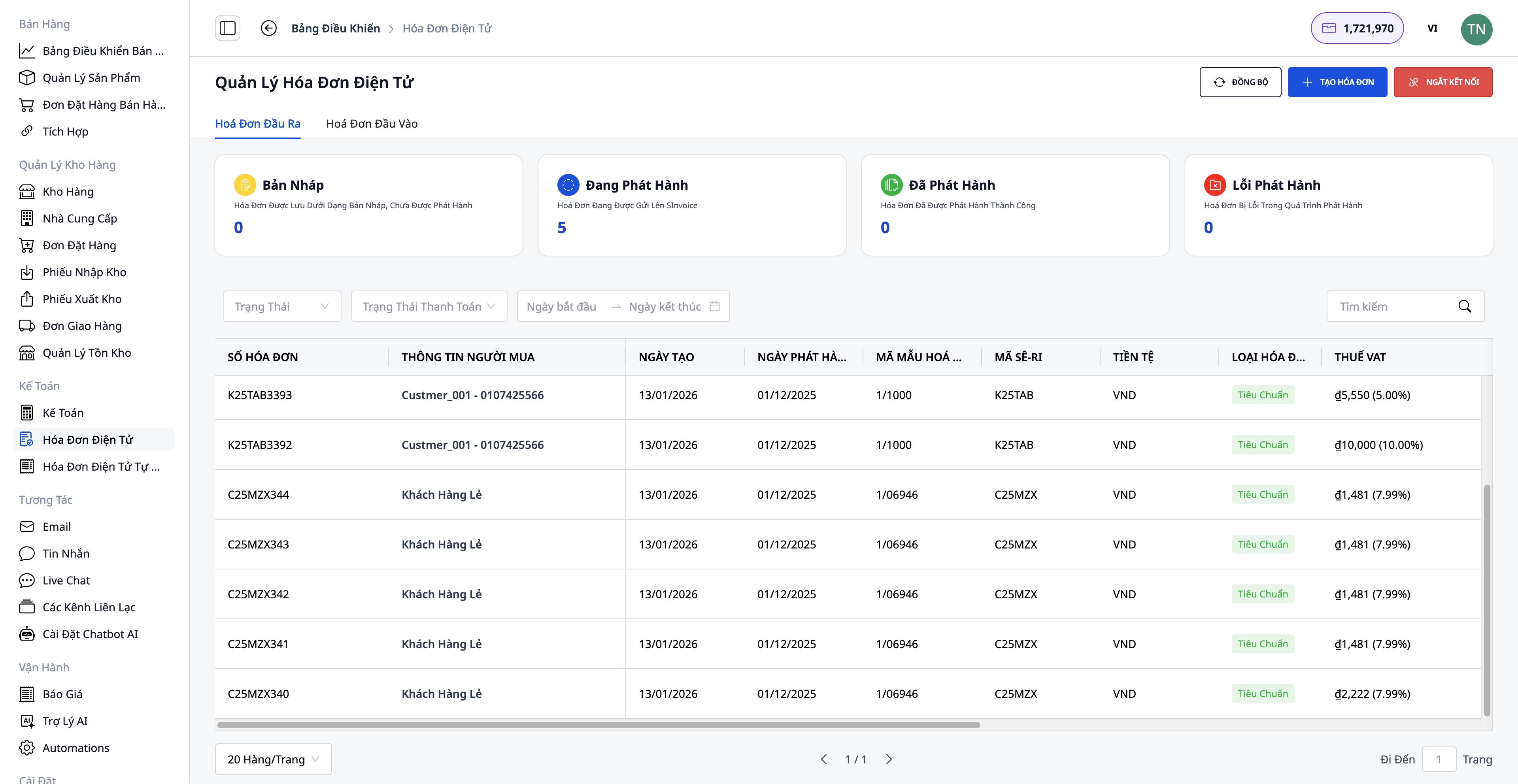
GTG CRM automatically issues electronic invoices and synchronizes products from e-commerce platforms
Conclusion
Selling online without issuing invoices is no longer a "small matter" in the current period.
Sellers need to understand:
- Having revenue means having the obligation to issue invoices
- Not issuing invoices does not reduce the tax payable, but only increases the risk of retroactive collection and penalties
- Standardizing processes from the beginning is the only way to conduct sustainable business
In the context of abolished lump-sum taxes and businesses transitioning to declaring based on actual revenue, electronic invoices are not just an obligation but also a tool to protect the sellers themselves against future legal risks.
Turn what you've just read into real results — apply now with GTG CRM, for free.
Apply Now