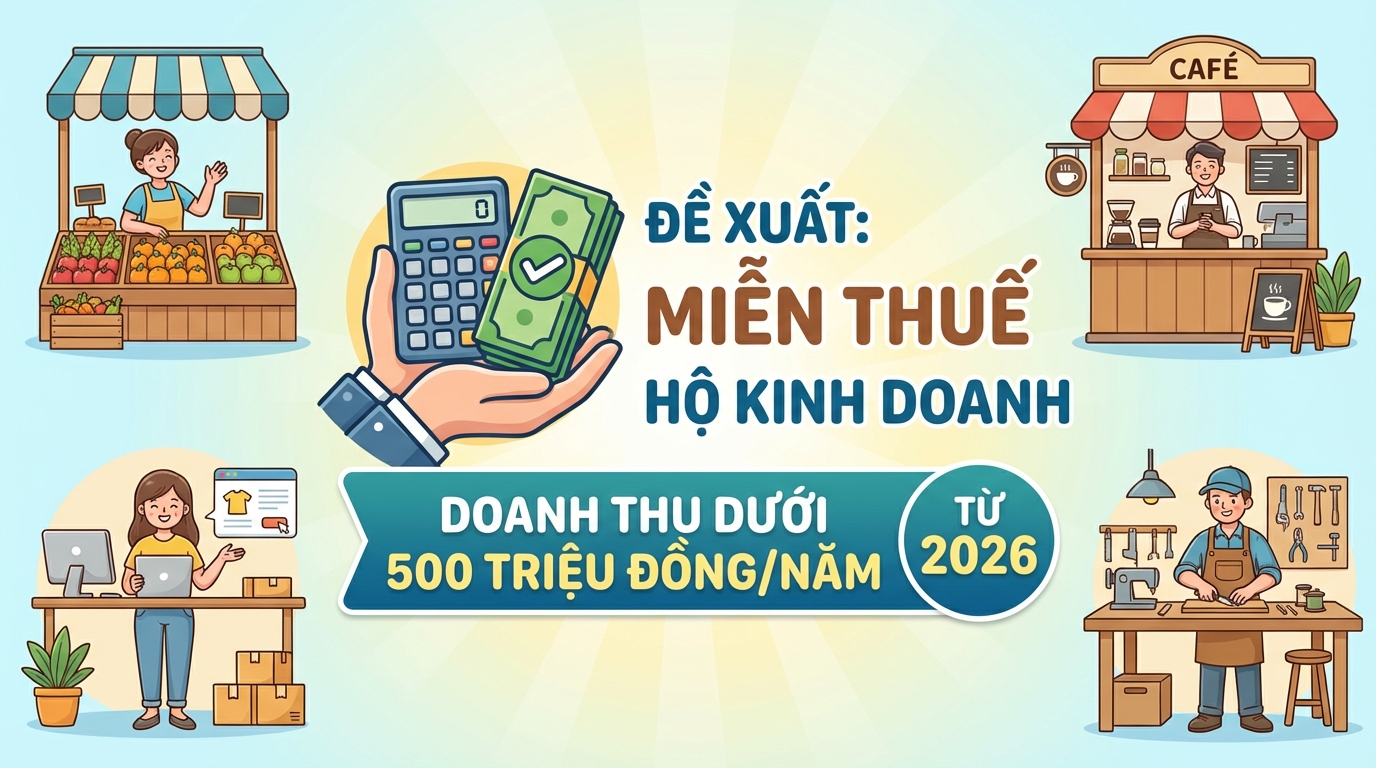
The Ministry of Finance recently proposed tax exemption for household businesses with annual revenue under 500 million VND, expected to take effect from July 1, 2026. This information has attracted considerable attention from many household businesses, promising a significant reduction in tax burdens and creating conditions to promote the more stable development of small-scale businesses.
Raising the tax exemption threshold from 200 million to 500 million VND per year is considered a significant step in supporting the individual business sector. It is estimated that approximately 90% of current business households will no longer have to pay taxes, allowing them to confidently maintain operations and reinvest amidst a volatile market.
Current regulations on taxation for household businesses.
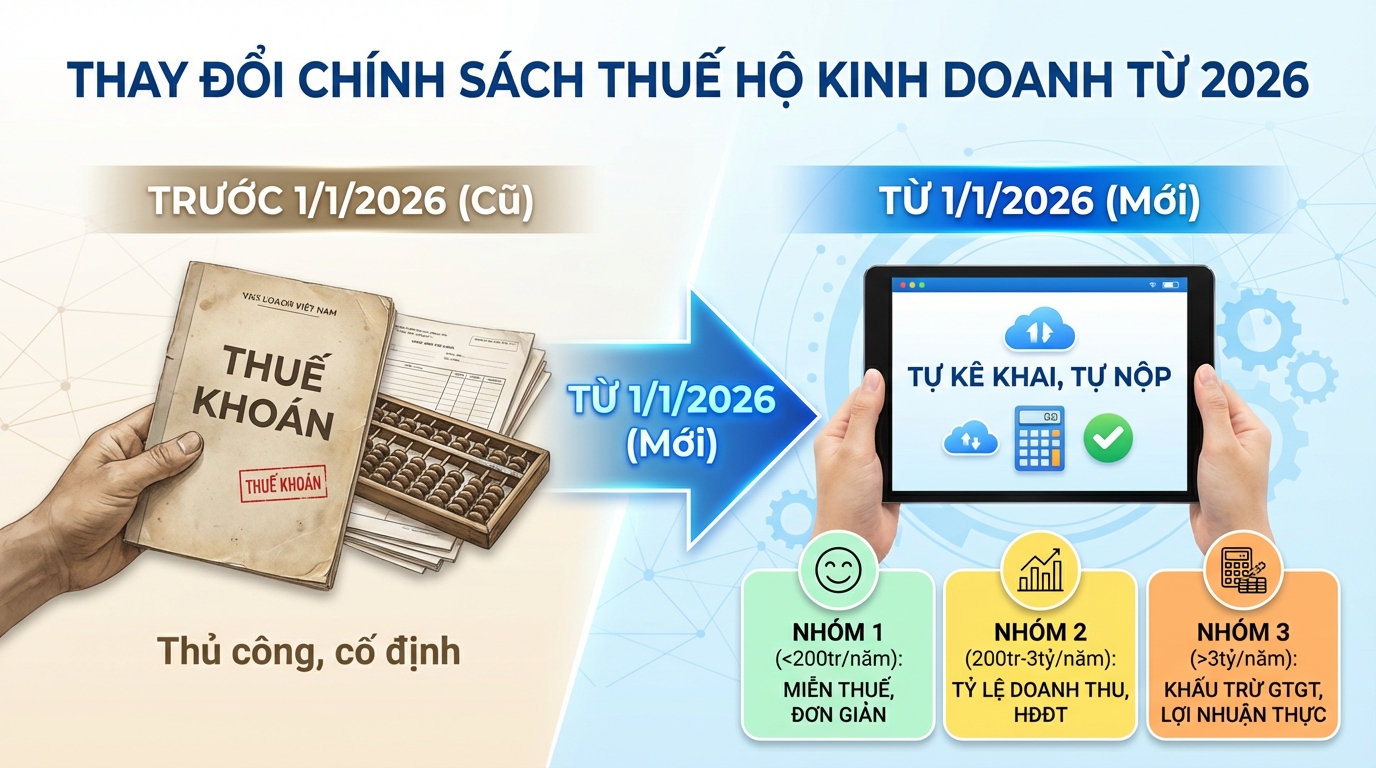
According to Decision 3389/QD-BTC of 2025, from January 1, 2026, the lump-sum tax collection method for business households will be completely terminated and management will shift to a self-declaration and self-payment method. Business households will be divided into 3 main groups:
Group 1: Revenue under 200 million VND/year
- Exempt from VAT and personal income tax.
- No need to use complex accounting records.
- Declarations are made twice a year, at the beginning of the year and in the middle/end of the year.
Group 2: Revenue from 200 million to less than 3 billion VND/year
- Apply the direct tax calculation method based on revenue.
- Tax rates by industry:
- 1% for distribution and supply of goods.
- 5% for services; construction does not include materials.
- 3% for manufacturing, transportation, services related to goods, and construction with material procurement included.
- 2% for other business activities
- File tax returns 4 times a year (quarterly).
- Households with annual revenue exceeding 1 billion VND in the retail and direct service sectors must issue electronic invoices from cash registers connected to the tax authorities.
Group 3: Revenue exceeding 3 billion VND/year
- Applying the VAT deduction method: VAT payable = Output VAT – Input VAT
- Personal income tax: 17% on total profit (Profit = Revenue – Reasonable expenses)
- Tax declarations should be filed monthly if revenue exceeds 50 billion VND/year, and quarterly if revenue is below 50 billion VND/year.
New proposals from the Ministry of Finance.
On November 27, 2025, the Ministry of Finance issued Official Letter 18491/BTC-CST with the following notable points:
Increase the tax-exempt revenue threshold to 500 million VND/year.
- Adjusted from 200 million to 500 million VND/year
- Approximately 2.3 million households (90% of the total 2.54 million business households) will be exempt from taxes.
- Effective from July 1, 2026, if approved.
Tax is calculated based on actual income for households with revenue exceeding 500 million VND.
Households and individual businesses with annual revenue ranging from 500 million to 3 billion VND:
- Tax is calculated based on actual income (revenue – expenses).
- A tax rate of 15% will be applied, similar to micro-enterprises.
- If the cost cannot be determined, then a tax based on a percentage of revenue will be applied.
Detailed tariff schedule according to the new draft.
Tax based on income (revenue – expenses):
| Annual revenue | Tax rate |
|---|---|
| Over 500 million - 3 billion | 15% |
| Over 3 billion - 50 billion | 17% |
| Over 50 billion | 20% |
Tax based on a percentage of revenue (when costs cannot be determined):
| Occupation | Tax rate |
|---|---|
| Distribution and supply of goods | 0.5% |
| Services and construction services do not include material procurement. | 2% |
| Property leasing, insurance agency, lottery, multi-level marketing. | 5% |
| Production, transportation, and construction that includes material procurement. | 1.5% |
| Digital content products/services | 5% |
| Other professions | 1% |
Specific regulations for real estate rentals.
Individuals who rent out real estate on an infrequent basis (excluding accommodation businesses) and have an annual revenue exceeding 500 million VND:
- Only the tax calculation method based on a percentage of revenue will be applied.
- No need to determine costs, no need to offset income, no need to settle accounts at the end of the year.
Benefits of the new policy
Reducing the financial burden for the majority of household businesses.
With 90% of businesses completely exempt from taxes, those with small or unstable revenues can confidently maintain operations, reinvest, and recover better.
A fairer tax system based on actual income.
Households with revenue exceeding 500 million VND are taxed based on actual profit: only those with profit are taxed, while those with low profits pay little or no tax. This is particularly beneficial for households with high input costs.
Creating conditions for stable development
The new policy helps small businesses stabilize their livelihoods, enhance their competitiveness, and contribute more positively to the economy. This is an important step in supporting the individual economic sector.
Encouraging transparency and disclosure.
Household businesses have a greater incentive to declare and disclose their revenue transparently, which helps in more effective tax management and easier access to government support and policies.
The most obvious beneficiaries
Small business households
Small grocery stores, eateries, cafes, service shops, and small-scale online businesses with annual revenue under 500 million VND are completely exempt from tax.
Self-employed individuals
Small-scale entrepreneurs, online sellers, and seasonal vendors with unstable incomes benefit from higher tax exemptions, giving them greater peace of mind and stability.
Households with annual revenue of 500 million to 3 billion VND.
If they can track their expenses properly, they will be taxed based on actual income instead of revenue, which is beneficial for households with high input costs (inventory, rent, labor, etc.).
Service industry, small wholesale
Industries where input and operating costs account for a large portion of revenue will benefit from profit-based taxation, resulting in a fairer tax liability. 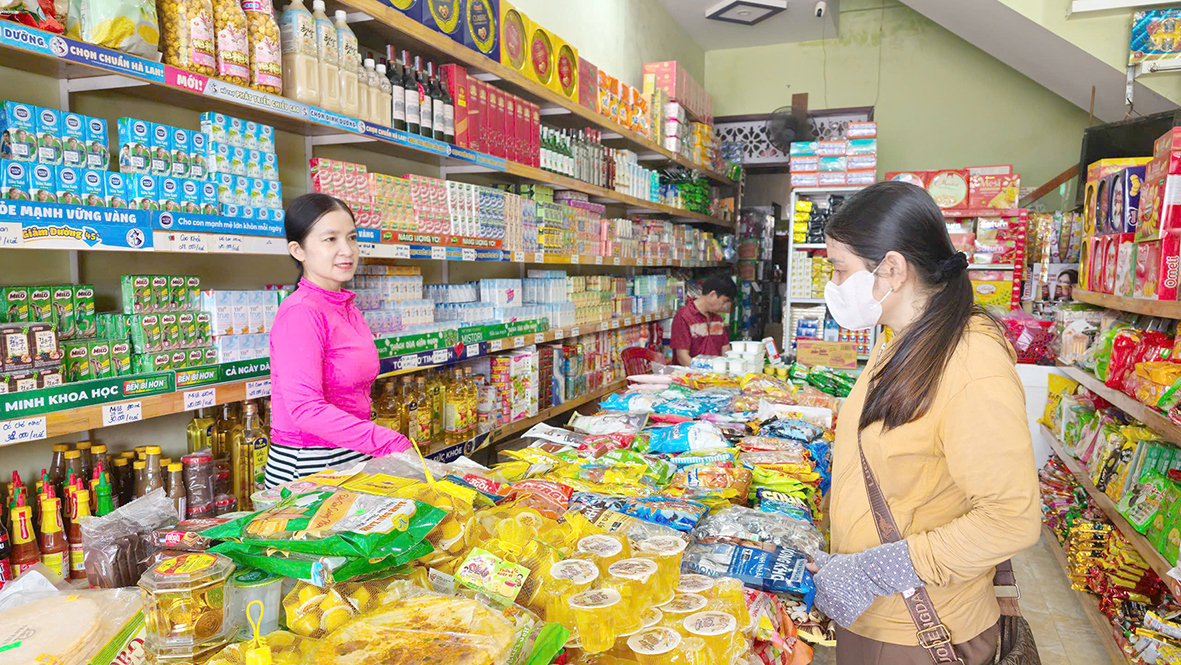
Prepare for change with GTG CRM
With the shift in tax calculation method from lump-sum to self-declaration and the proposal to raise the tax exemption threshold, business households need to prepare a clear sales management and accounting system to accurately track revenue and expenses.
GTG CRM is a multi-channel sales management solution that helps shop owners and businesses:
- Automatically synchronize orders from multiple e-commerce platforms (Shopee, Lazada, TikTok Shop, Facebook, etc.)
- Manage revenue, expenses, and profits in real time.
- Generate detailed revenue reports by day, month, quarter, and year for tax filing purposes.
- Transparent inventory management and goods import/export procedures.
- Integrating electronic invoicing helps meet the invoicing requirements for households with annual revenue exceeding 1 billion VND.
With GTG CRM, tracking revenue and expenses becomes simple, making it easy to determine the tax payable under the new regulations and maximize the benefits of tax exemptions. Get ready to embrace the changes starting July 1, 2026.
Turn what you've just read into tangible results — apply it now with GTG CRM, free.
Apply now