Many small and medium-sized businesses (SMBs), after creating a website or landing page, often feel a familiar sense of accomplishment: finally, there's a place to drive customers, a form to capture leads, and a clear destination for campaigns. This is a huge step forward because, at the very least, businesses are no longer letting traffic wander through a vague journey.
But then another question immediately arises: once you have leads, how do you nurture them consistently?
This is where many SMBs start to feel stuck. Users fill out forms, leave their emails, sign up for consultations, or download a resource. But after this initial step, the journey often breaks off. Some businesses respond slowly. Some send emails when they remember, and forget when they're busy. Some sales reps call once, don't get through, and then let it go. The result is leads coming in, but not being nurtured consistently.
Therefore, if websites and landing pages are the tools that help businesses attract and gather interest, then email and automation are the tools that help businesses maintain that interest long enough to convert into real opportunities.
Why do many businesses have leads but still struggle to nurture them consistently?
In the early stages, lead nurturing is often quite manual. New leads receive emails, manual messages, or phone calls based on memory. This approach might be acceptable when the number of leads is small. However, once businesses start having websites, landing pages, sign-up forms, and more touchpoints, the manual method quickly reveals its limitations.
The problem isn't that businesses don't want to nurture leads. The problem is that the team doesn't always have enough time to nurture each individual consistently.
Common signs of this include:
- New leads receive their first email several days after coming in.
- Customers who downloaded a resource or provided information are not followed up with.
- The sales team focuses only on hot leads, while those still in the research phase are neglected.
- Sent content is inconsistent, sometimes delivered, sometimes not.
- Marketing generates leads, but there's no clear nurturing flow to maintain engagement.
This is where email and automation start to play a clearer role. Not because businesses need to make things overly complex, but because they need a way to nurture leads more consistently, at the right time, and with less dependence on individual memory.
When should businesses start considering automation?
You don't need to implement automation immediately just because you have a website. However, if your business is facing any of the following situations, it's time to seriously consider it:
1. When your website or landing page has started generating a steady stream of leads
If you're getting people filling out forms, signing up for demos, leaving their emails, or inquiring for consultations every week, it's time for your business to have a more defined follow-up flow. Otherwise, these leads will gradually be missed or nurtured very inconsistently.
2. When your sales team is small and cannot follow up with each lead immediately
This is a very common situation for SMBs. Sales reps need to prioritize hot leads, but that doesn't mean leads who aren't ready to buy yet are unimportant. Automation helps fill this gap by keeping in touch with leads while the sales team focuses on opportunities closer to closing.
3. When your business wants to nurture leads instead of just waiting for them to return
Many leads don't purchase on their first interaction. They need more time, more information, or more confidence. If your business doesn't have a way to stay with them after the initial touchpoint, there's a high chance they will gradually lose interest and disappear.
In other words, automation becomes necessary when businesses not only want to have leads, but also want to prevent leads from dropping off after they've been acquired.
What role do email and automation play after websites and landing pages?
Websites and landing pages typically excel in the initial phase of the customer journey. They help customers become aware of your business, understand your services or offers, and then leave their contact information. However, after that point, customers don't automatically become sales opportunities.
There's a crucial gap: from the moment a customer leaves their information to the moment they are ready for a deeper discussion or to make a decision. Email and automation reside precisely in this gap.
Their roles typically consist of three parts:
- Maintaining the continuity of interest
- Providing additional information at the right time
- Enabling the team to follow up with leads in a more systematic way
This point is especially important for small businesses, as they may not always have enough staff to closely follow up with each lead manually.
3 Basic Flows SMBs Should Consider First
Not every business needs an extensive automation system. For SMBs, sometimes just a few basic flows used in the right places can make a significant difference.
1. Welcome Flow After Form Submission
This is a very basic but extremely important flow.
When a customer has just left their information on your website or landing page, their interest is at its freshest. A timely first email can help confirm that the business has received their information, while also creating a more professional and proactive impression.
This flow is typically suitable when customers:
- sign up for a consultation
- download a resource
- register for a demo
- submit their needs through a form
The first email doesn't need to be overly long. The important thing is that it's clear, serves its purpose, and helps the customer understand the next steps.
2. Lead Nurturing Flow with Relevant Content or Information
Not everyone who leaves their email is ready to buy immediately. Some people are in the research, comparison, or waiting for the right time phase. This is where lead nurturing emails come into play.
Your business can send content such as:
- clearer explanations of services or solutions
- case studies or real-world examples
- frequently asked questions (FAQs)
- points that help customers better understand the issue they are concerned about
This flow helps your business stay on the customer's radar after the first touchpoint. It also helps leads remember your business longer, rather than letting their interest fade.
3. Re-engagement or Reactivation Flow for Unresponsive Leads
This is a very useful flow but is often overlooked. Many leads have shown interest, filled out a form, or opened an email, but haven't taken further action. Without a re-engagement flow, these leads often remain dormant in the system.
A well-structured re-engagement sequence can help recapture attention by:
- reminding them of the main value or benefits
- suggesting the next step, such as scheduling a call, viewing a demo, or responding to their needs
- providing a clear reason to re-enter the conversation
For small businesses, effectively leveraging this group of leads alone can significantly improve nurturing efficiency.
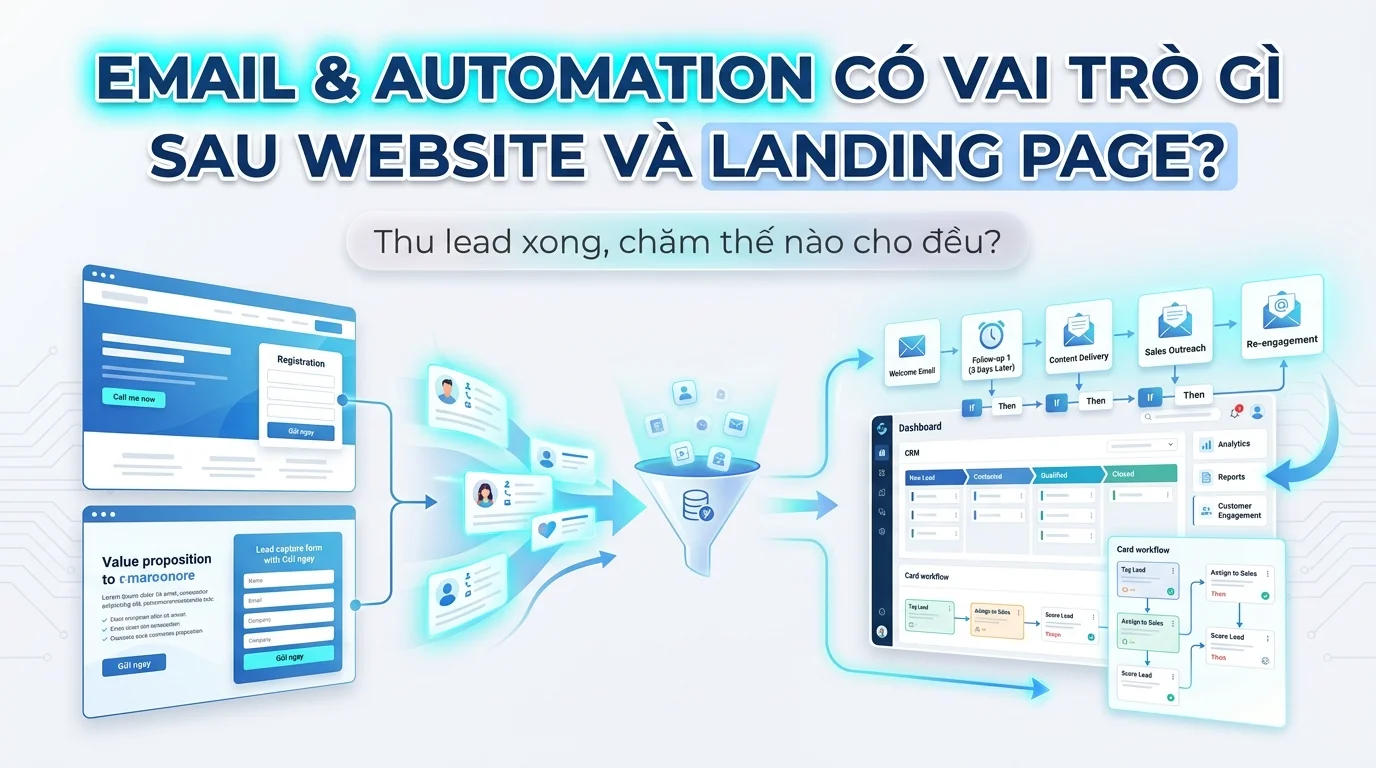
How should Websites, CRMs, Email, and Automation work together?
This is the most crucial part. If email and automation are disconnected from your website and CRM, your business operations will easily become fragmented.
A logical flow typically follows this sequence:
- The website or landing page is where customers leave their information.
- The CRM is where leads are recorded and customer data is tracked.
- Email and automation are the components that help maintain communication and nurture leads based on specific situations.
When these three components work together, your business will move beyond simply having "a form on the web." You'll start to have a clearer journey from customer visiting the web, leaving information, being recorded in the CRM, and being nurtured through email or automation.
It is this seamless integration that prevents leads from dropping off after the initial touchpoint.
How does GTG CRM support this challenge?
GTG CRM is suitable for small and medium-sized businesses that already have a website or landing page and are looking to move on to the stage of more consistent lead nurturing.
When leads come in from your website or landing page, you can manage their data more clearly within the CRM, rather than having information scattered. From there, email and automation can become the next part of the nurturing flow, rather than a manual, inconsistent step.
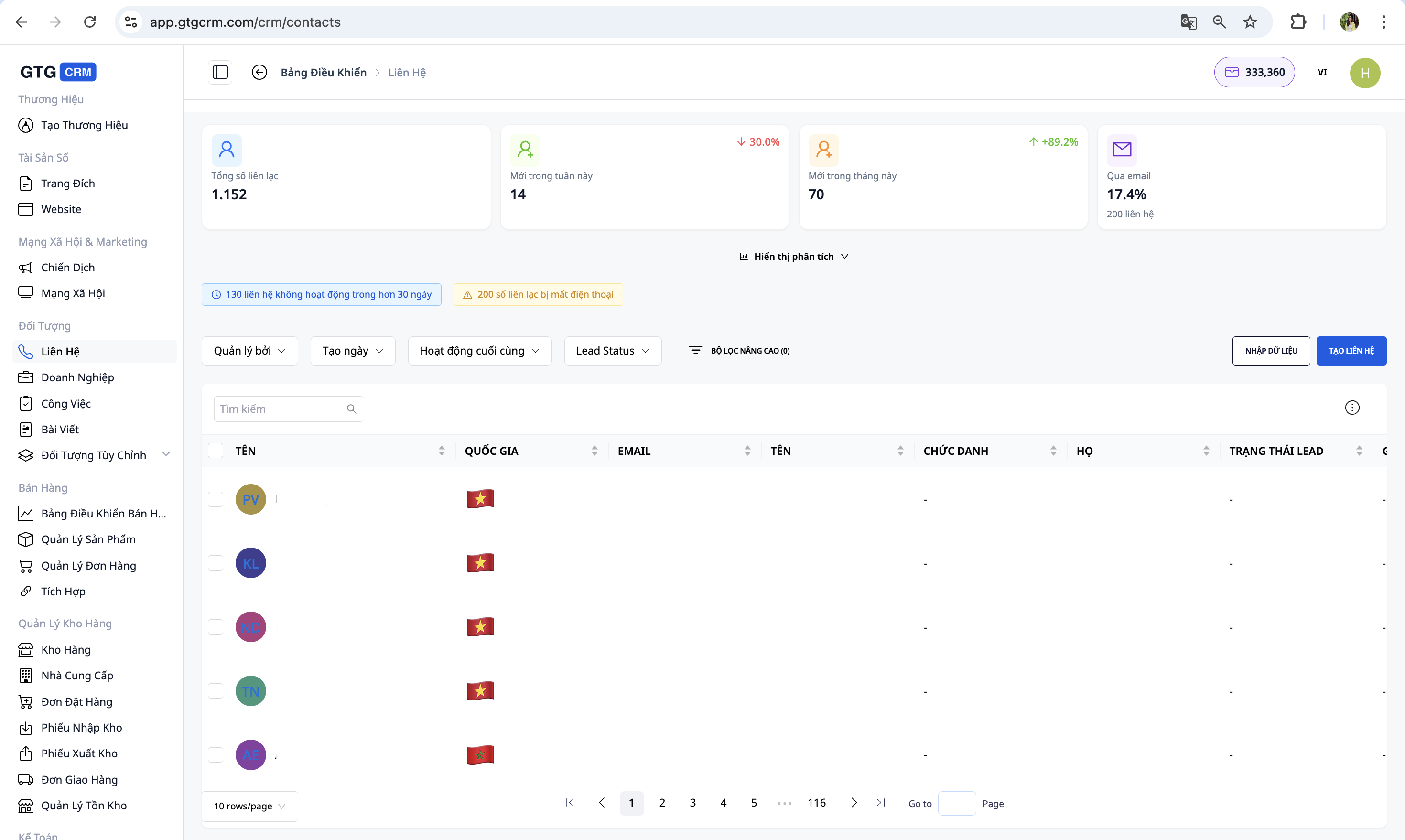 With GTG CRM, businesses can build email, message, or notification workflows to support lead nurturing and customer follow-up processes. The key here is not to create an overly complex system. The greater value lies in nurturing leads more consistently, at the right time, and with less reliance on individual memory.
If your website helps you create a clearer first touchpoint, then email and automation help make the subsequent part of the journey less disjointed.
Conclusion
Websites and landing pages are crucial foundations for attracting interest and gathering leads. However, if your business lacks a method for consistent follow-up afterwards, many leads will remain at the "they were interested" stage.
Email and automation help fill this gap. They enable your business to maintain communication, nurture leads better, and create a clearer follow-up flow after a customer has left their information.
For SMBs, this isn't something that needs to be a massive undertaking from the start. But once your website and landing page begin generating leads, email and automation are the next steps worth considering to prevent your sales system from breaking down mid-process.
With GTG CRM, businesses can connect their website with email and automation in a more streamlined way, thus making lead nurturing a natural part of their operational flow rather than an additional task when time permits.
Turn what you've just read into real results — apply it now with GTG CRM, for free.
Apply Now