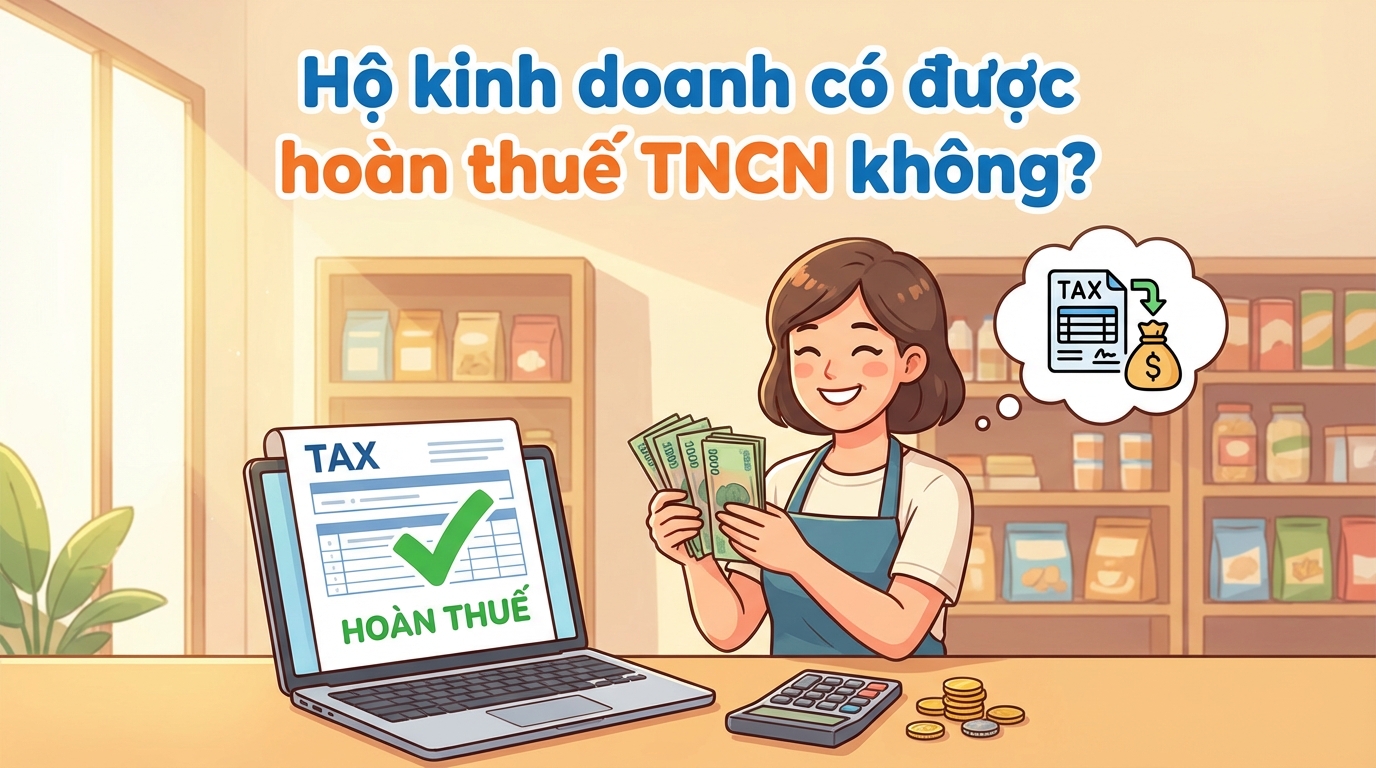
In their daily business operations, many business owners encounter situations where they have paid personal income tax but later discover that the amount paid is higher than the prescribed limit. In this case, are these business owners entitled to a refund of the excess tax paid? This is a common question among many shop owners and small business owners today.
This article will clarify the legal regulations regarding personal income tax refunds, helping you understand your rights, follow the correct procedures, and avoid unnecessary risks.
Personal income tax refund - Concepts you need to know.
Personal income tax refund is a process by which the tax authorities return to taxpayers the amount of personal income tax paid in excess of their actual tax liability, provided the taxpayer meets the conditions stipulated by law. According to the Personal Income Tax Law, the refund amount is determined based on the difference between the amount of tax provisionally paid and the actual tax payable after final settlement.
This is a legitimate right enjoyed by business owners, usually occurring when the amount of tax paid exceeds the amount of tax due or when actual income does not reach the taxable threshold as stipulated by law.
Regulations on personal income tax rates applicable to household businesses.
According to Article 10 of Resolution 198/2025/QH15, from January 1, 2026, the lump-sum tax and business license fee for household businesses and individual businesses have been eliminated. From this point onwards, household businesses only have to pay two main types of taxes: personal income tax (PIT) and value-added tax (VAT), and will switch from the lump-sum tax method to self-declaration and payment.
Key new points regarding business tax in 2026
Adjusting the tax exemption threshold: The tax-free revenue threshold for household businesses and individual business owners has been raised from VND 200 million/year to VND 500 million/year. This amount will be deducted before calculating tax based on a percentage of revenue.
VAT-exempt threshold: Similarly, the revenue level exempt from VAT has also been raised to 500 million VND/year.
How to calculate personal income tax: Individuals and household businesses will calculate tax based on profit (profit = revenue – expenses).
For revenue from over 500 million VND to 3 billion VND: - If expenses can be determined: Personal income tax is 15% on the profit, equivalent to the tax rate for small businesses. - If expenses cannot be determined: Continue to pay tax at a rate of 0.5% - 2% on revenue, depending on the industry.
Household businesses have the right to choose whether to calculate tax based on a percentage of revenue or based on income.
Other tax rates: - Revenue from 3 to 50 billion VND: 17% - Revenue over 50 billion VND: 20%
Regarding VAT in 2026: Households and individual businesses with annual revenue exceeding 500 million VND will pay VAT using the direct calculation method based on revenue, with a percentage rate as stipulated in the 2024 Value Added Tax Law.
Under what circumstances are household businesses entitled to a personal income tax refund?
Not all business households are eligible for a personal income tax refund. This right only applies when the business household has paid taxes in excess of the prescribed amount.
According to regulations effective from July 1, 2025, business households are eligible for tax refunds in the following two specific cases:
Case 1: Business conducted on e-commerce platforms with tax deduction.
If you sell goods on e-commerce platforms with payment functionality and the platform has deducted, declared, and paid taxes on your behalf, but:
- Total revenue for the year does not exceed 100 million VND.
- Or not exceeding 200 million VND (applicable from 2026)
In this case, you are entitled to a refund of any overpaid taxes after the e-commerce platform has fulfilled its tax declaration and payment obligations.
Second case: Doing business on a platform without payment functionality.
If you operate an e-commerce platform without a payment function, you will have to declare and pay VAT and personal income tax for all transactions during the year yourself, but:
- Total revenue for the year does not exceed 100 million VND.
- Or not exceeding 200 million VND (applicable from 2026)
You can also apply for a tax refund for any excess tax paid.
Conclusion: From July 1st, 2025, business households will only be eligible for tax refunds if their revenue has not reached the tax threshold but they have already paid taxes during the year. 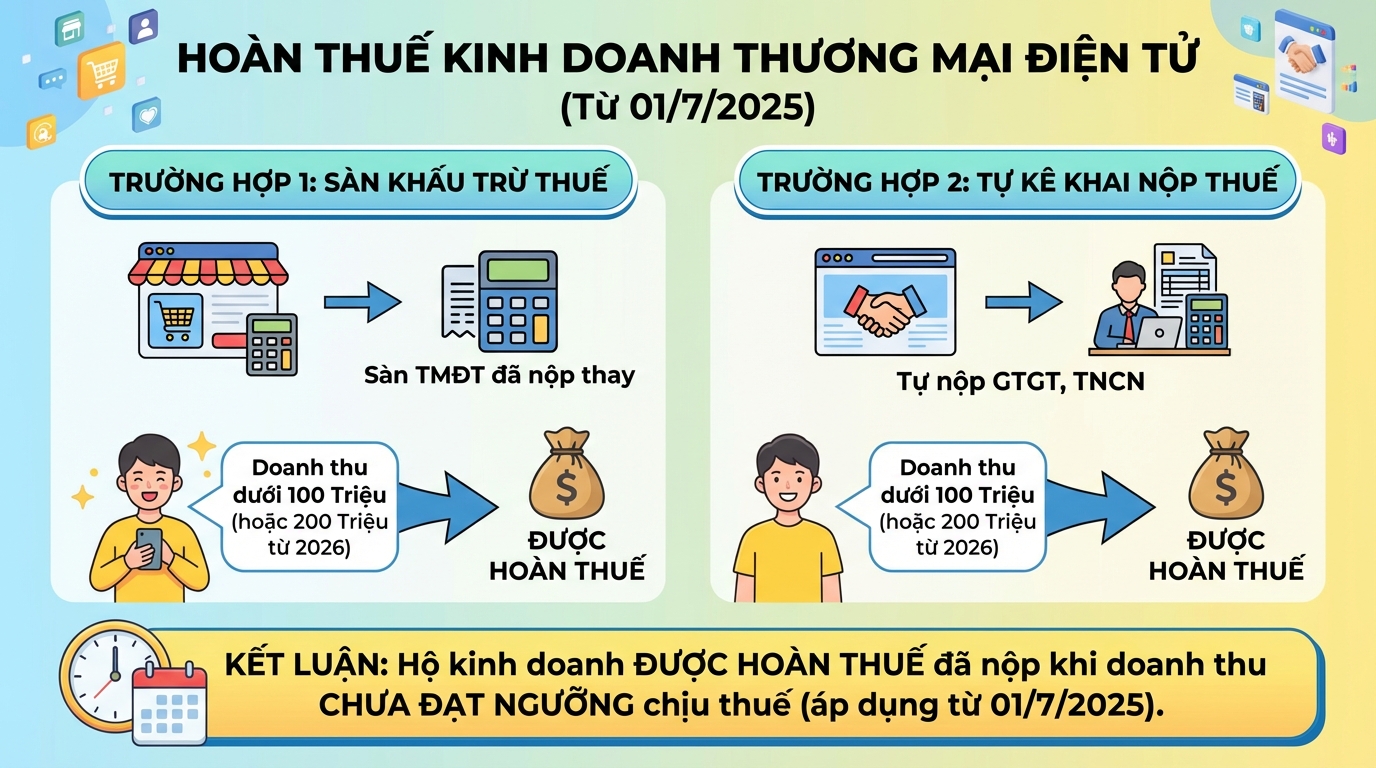
Documents and procedures for personal income tax refund for e-commerce businesses.
The tax refund process for business households operating on e-commerce platforms is detailed in Article 10 of Decree 117/2025/ND-CP, effective from July 1, 2025:
Conditions for tax refund
Households and individuals who have had taxes deducted (by e-commerce platforms) or have paid taxes themselves (households and individuals doing business on e-commerce platforms without payment functions) but whose annual revenue from all business activities falls under the category of being exempt from VAT and personal income tax, are entitled to a tax refund procedure in accordance with tax management laws for any overpaid taxes.
Documents to prepare
Application for tax refund from households and individuals engaged in business activities on e-commerce platforms (according to Form 03/CNKD-TMĐT) issued with Decree 117/2025/NĐ-CP.
Where to submit the application
The tax authority manages the area where the household or individual resides (current/temporary/permanent residence). 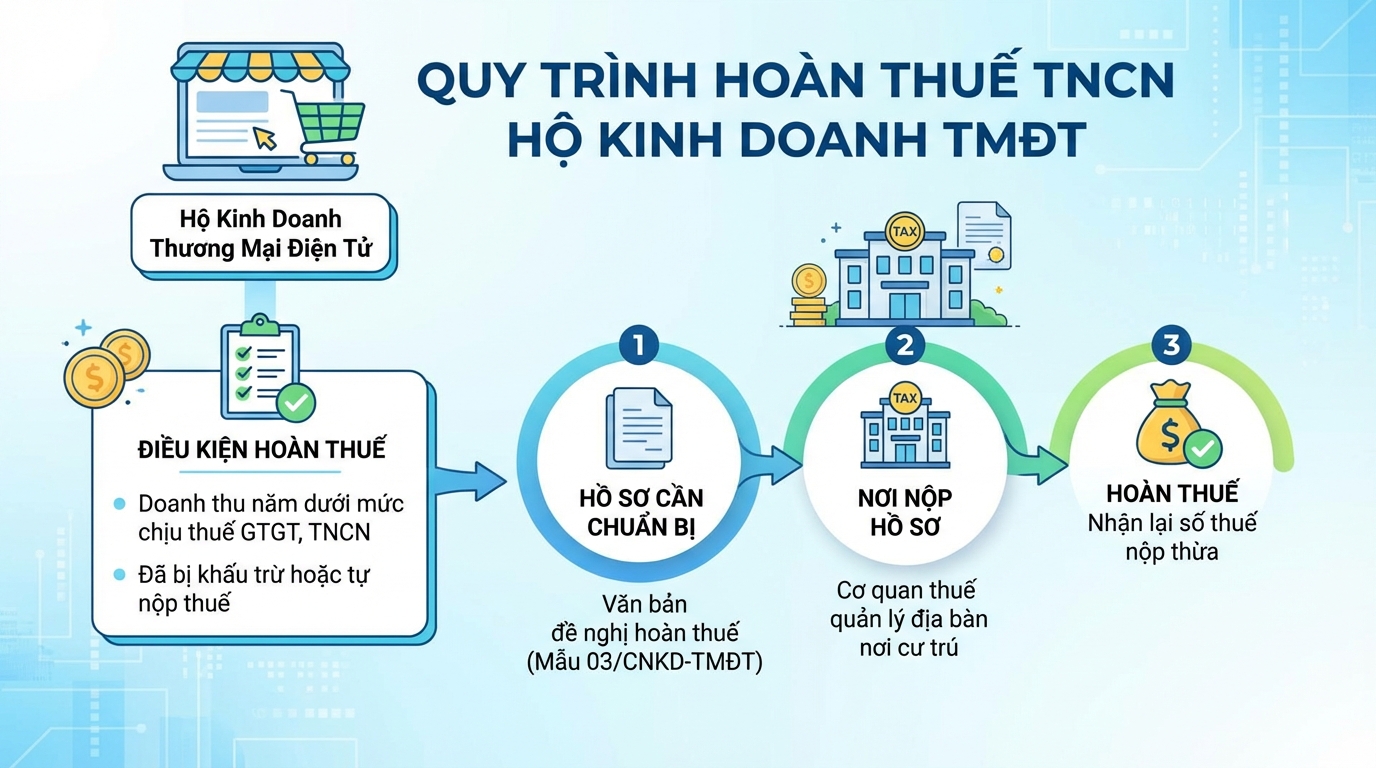
Points to note when carrying out the personal income tax refund procedure.
To avoid having their applications rejected or experiencing delays in processing, business owners should note the following points:
Carefully check the amount of tax paid: Carefully compare the amount of personal income tax withheld or paid voluntarily during the year with the data in the tax authority's system to ensure there are no discrepancies.
Keep all tax deduction documents intact: Tax deduction documents and tax payment receipts are important documents for the tax authorities to consider tax refunds, therefore they need to be preserved completely and properly.
Accurately declare revenue: Declared revenue must accurately reflect actual business operations. Incorrect or incomplete revenue declarations may lead to tax refund applications being reviewed or rejected.
Personal information must match the tax authorities: Information such as tax identification number, citizen identification number, and bank account number for receiving tax refunds must be accurate and consistent with the data registered with the tax authorities.
Some frequently asked questions
In what cases are household businesses exempt from personal income tax?
Household businesses and individual business owners with annual revenue from production and business activities of VND 500 million or less are exempt from paying personal income tax according to current laws.
How long will it take to receive the tax refund?
- For applications eligible for personal income tax refund: No later than 6 working days from the date the application is deemed valid.
- For applications subject to pre-refund verification for personal income tax: The processing time is no later than 40 working days from the date the application is deemed valid.
What is the tax-exempt threshold for personal income tax for household businesses?
From 2026, the threshold for exemption from personal income tax and value-added tax will be adjusted from 100 million to 500 million VND per year. Although exempt from VAT and personal income tax, household businesses and individual businesses with revenue below 500 million VND are still responsible for declaring and submitting tax returns on time as required.
Conclude
Personal income tax refund is a legitimate right of business households that have overpaid taxes compared to their actual obligations. However, not all cases are eligible for a refund; they must meet the conditions stipulated by regulations, especially regarding revenue thresholds. Understanding the regulations, preparing complete documentation, and accurately declaring your income will help you exercise this right quickly and effectively.
If you're struggling with tax filing and electronic invoice management, try GTG CRM – a multi-channel sales management software with built-in invoice management and tax filing support that makes it easier and more accurate for businesses.
Turn what you've just read into tangible results — apply it now with GTG CRM, free.
Apply now