
Online business is becoming increasingly popular due to its low costs, rapid customer reach, and ease of expansion. However, along with this convenience comes a system of legal obligations that many sellers are not fully aware of. In reality, there are numerous cases of businesses being fined, having their assets confiscated, or being forced to cease operations due to seemingly minor mistakes.
This article summarizes the most common legal risks when doing business online, based on current regulations and management practices, to help sellers proactively avoid them.
Do not register or notify e-commerce websites.
A common risk is building a website with an ordering function without notifying or registering with the relevant government authorities.
According to e-commerce regulations, websites selling goods with online ordering functionality are required to notify or register with the Ministry of Industry and Trade. This procedure includes:
- Completed entirely online.
- No fees charged.
- No complicated paperwork required.
However, failure to comply may result in administrative penalties for the seller:
- For individuals: the fine can range from 10 to 20 million VND.
- For organizations: the fine can range from 20 to 40 million VND.
This is a common risk for individuals selling through their own websites, sales landing pages, or websites with integrated shopping carts without reviewing the accompanying legal obligations.
Read more: Guide to Registering a Household Business: Process, Documents, and Things You Need to Know
Attach the "notified/registered" icon when not yet confirmed.
More serious than not registering is the unauthorized placement of verification symbols without proper authorization.
The use of symbols such as "notified" or "registered" without official confirmation is considered a form of providing false information, misleading consumers and regulatory authorities.
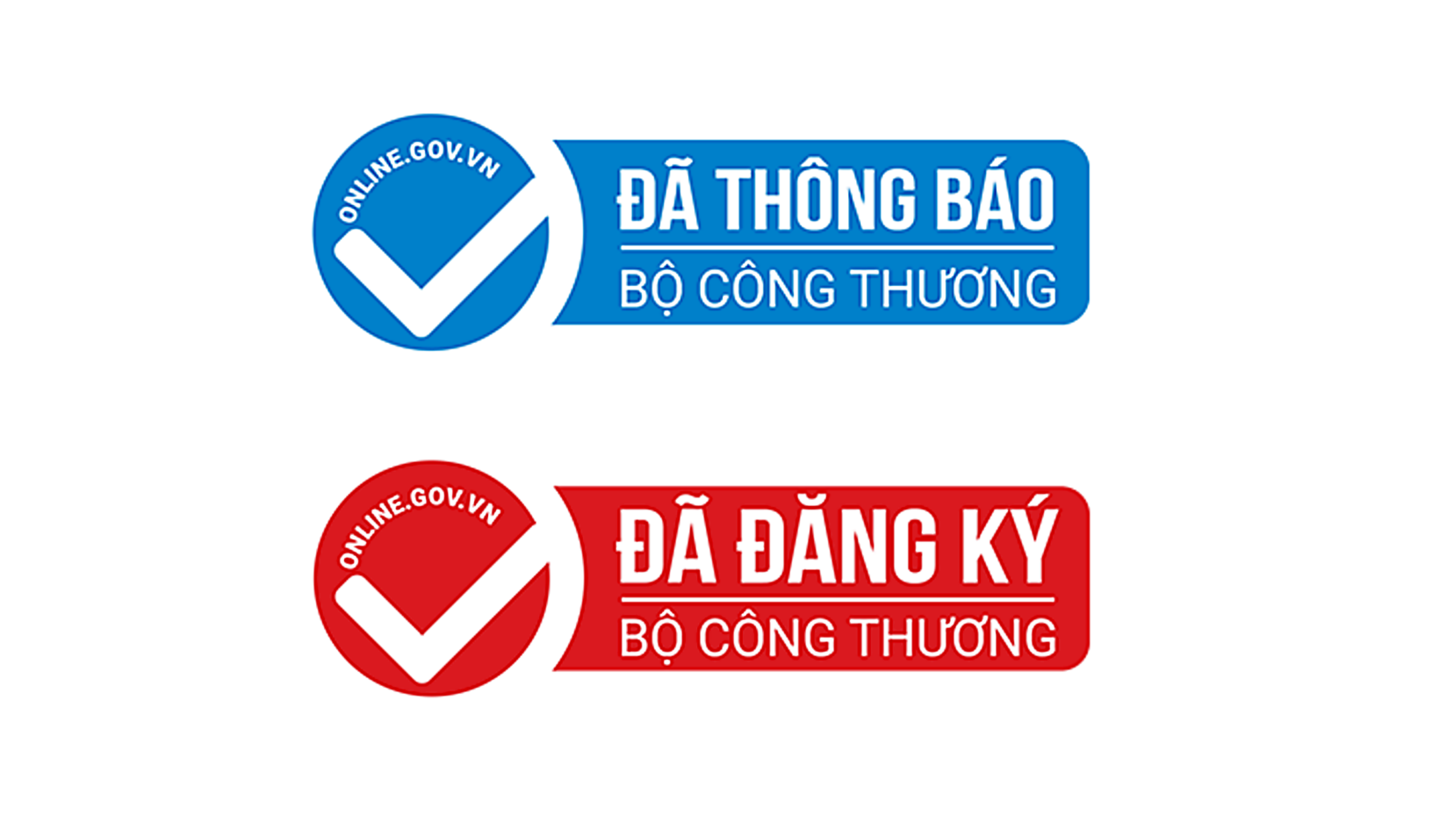
Using icons like "notified" or "subscribed" without official confirmation may result in penalties.
This behavior may be subject to penalties:
- From 10 to 30 million VND for individuals
- In the case of an organization, the penalty can be doubled.
In addition to administrative penalties, websites may also be required to remove infringing content or have their operations temporarily suspended.
Misunderstanding of responsibilities between sellers and e-commerce platforms.
One of the most dangerous misconceptions is the idea that: "If you sell on an exchange, the exchange is fully responsible."
According to the new regulations, e-commerce platforms are responsible for coordinating in managing goods, handling violations, and protecting consumer rights. However, this does not diminish the legal responsibility of sellers.
Online business owners still have to:
- Ensuring the legality of goods
- Comply with tax and invoicing regulations.
- Provide truthful information about the product.
When a violation occurs, both the platform and the seller may be held liable, depending on the extent and nature of the offense.
Read more: Do revenues from e-commerce platforms need to be declared for tax purposes?
Violation of business conditions in controlled industries.
Not all types of goods are allowed to be sold online under the same conditions.
Certain sensitive product categories, such as alcohol, dietary supplements, cosmetics, and regulated products, are only permitted to be sold online when they fully meet additional legal requirements.
For example, with alcoholic beverages, online sellers must:
- Has a valid business license.
- Implement age verification for both buyers and recipients.
- Coordinate with the shipping company to verify.
- Adopt cashless payment methods.
If these conditions are ignored, the seller may face:
- Imposing heavy administrative penalties.
- Forced product recall
- Risk of being accused by competitors or consumers.
Lack of control over promotional content and live stream sales.
Livestreaming is becoming an important sales channel, but it also brings new legal risks regarding content and data.

Livestreaming is becoming an important sales channel, but it also carries legal risks.
According to the new policy guidelines, livestreaming data used for sales purposes must be stored for a specific period of time to serve as a basis for resolving disputes, complaints, or violations.
This places a demand on the seller:
- Control the content of speech and avoid false advertising.
- Avoid exaggerating the product's benefits.
- There is a mechanism for storing and retrieving data when needed.
Poor control over livestream content can lead to risks of advertising penalties, consumer protection breaches, or unfair competition.
Risks associated with issuing electronic invoices when selling online.
One practical difficulty is the lack of buyer information when selling goods through e-commerce platforms, due to the platform's data security mechanisms.
Without a suitable plan, the seller may find themselves in the following situation:
- They have revenue but cannot issue valid invoices.
- Data discrepancies between the exchange and tax records.
- Subject to request for explanation or tax assessment.
Currently, the law allows for several legitimate courses of action, including:
- Using electronic invoices generated from a cash register connected to the tax authority does not require full buyer information.
- Authorize the e-commerce platform to issue invoices on your behalf in eligible cases.
Failing to proactively choose the appropriate solution can expose sellers to risks even without intending to violate the law.
Read more: Everything You Need to Know About Electronic Invoices: When to Issue Them, How to Handle Errors
Risks related to costs and accounting documentation.
Many vendors are only concerned with revenue, but it's only when they are inspected that the following is discovered:
- Expenses lacking sufficient documentation.
- Expenses that are not deductible for tax purposes.
- No valid expense category can be determined.
Common consequences include:
- Taxes payable are higher than the actual amount.
- Subject to back taxes and late payment penalties.
Read more: Which Business Expenses Are Tax Deductible?
Solution: The management system is the most important legal "line of defense".
The common thread among most of these risks is not ignorance of the law, but the lack of a system for properly enforcing it in daily operations.
Integrated management platforms like GTG CRM support sellers by:
- Centralized management of orders, products, inventory, and shipping.
- Issue electronic invoices through MISA and S-Invoice.
- Issue a replacement invoice when returns or exchanges occur.
- Synchronize sales and accounting data.
- Data storage for reconciliation and auditing purposes.
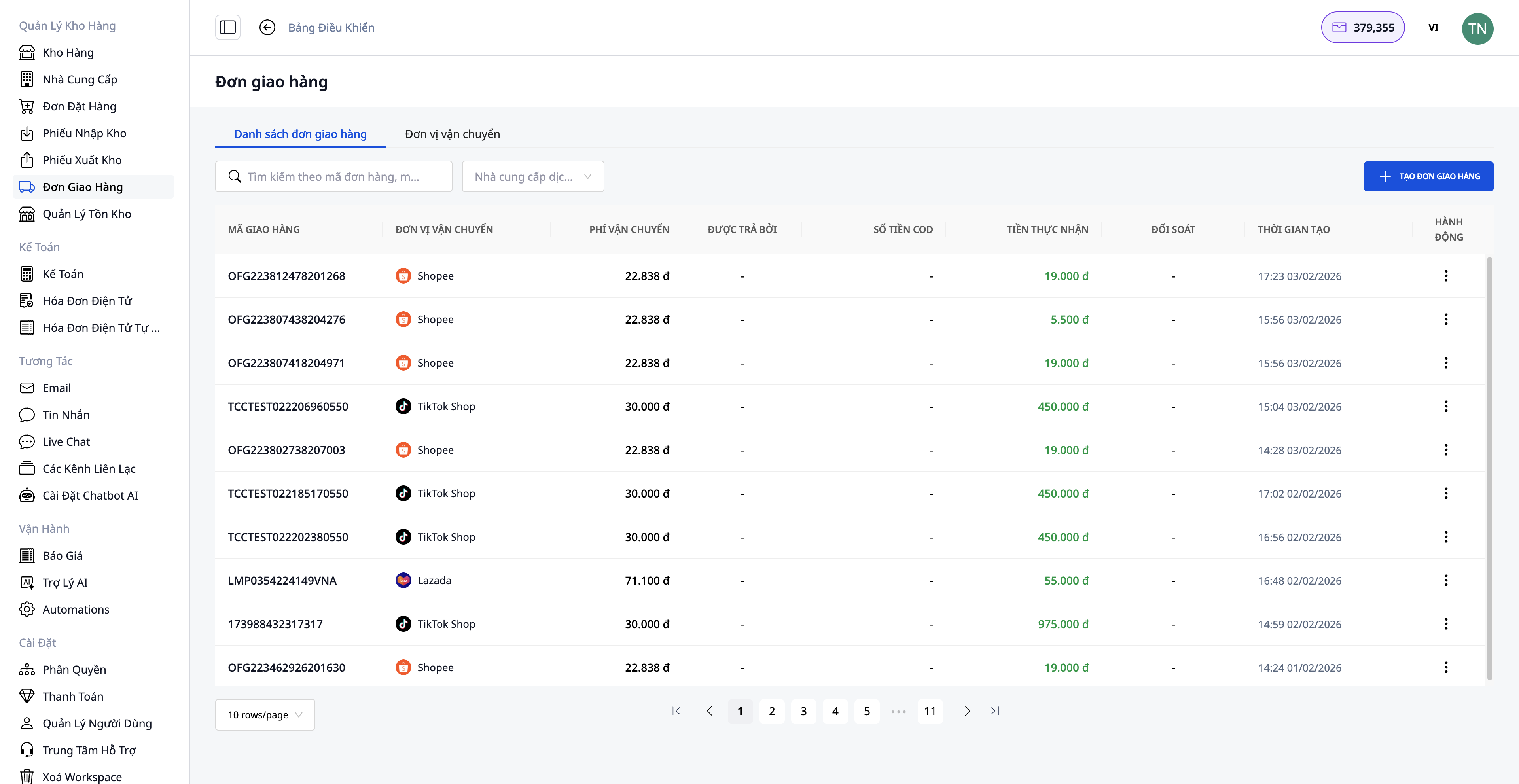
Centralized management of orders, products, inventory, shipping, accounting, etc.
This is not a risk avoidance solution, but rather a systematic way to control risk.
Conclude
Online business is no longer a legal gray area as it once was. Current management systems are shifting strongly towards data-driven, invoicing-based, and technology-based management.
The most common risks usually stem from:
- Lack of updated regulations
- Misunderstanding of roles and legal responsibilities.
- Failure to standardize processes from the outset.
Understanding and adhering to regulations not only helps avoid unfortunate penalties but also forms the foundation for stable, transparent, and sustainable online business growth in an increasingly tightly regulated digital environment.
Turn what you've just read into tangible results — apply it now with GTG CRM, free.
Apply now