
Online business is becoming a popular method due to low costs, quick customer reach, and ease of expansion. However, along with this convenience comes a system of legal obligations that many sellers are not fully aware of. In reality, there are not a few cases of penalties, back taxes, or forced business closure simply due to seemingly minor errors.
This article summarizes the most common legal risks when doing business online, based on current regulations and management practices, to help sellers proactively avoid them.
Failure to Register or Notify E-commerce Websites
A common risk is building a website with ordering functionality but failing to complete the notification or registration procedures with state management agencies.
According to e-commerce regulations, a sales website with online ordering functionality must complete the notification or registration procedures with the Ministry of Industry and Trade. This procedure:
- Is conducted entirely online
- Is free of charge
- Does not require complex documentation
However, if not completed, sellers may face administrative penalties:
- For individuals: penalties can range from 10 to 20 million VND
- For organizations: penalties can range from 20 to 40 million VND
This risk often occurs with individuals selling through their own websites, sales landing pages, or websites with integrated shopping carts but who have not reviewed the accompanying legal obligations.
Read more: Guide to Registering a Household Business: Process, Documents, and What You Need to Know
Displaying "Notified/Registered" Icons Without Confirmation
More serious than failing to register is arbitrarily displaying confirmation icons without valid authorization.
The use of icons such as "notified," "registered" without official confirmation is considered an act of providing false information, misleading consumers and management agencies.
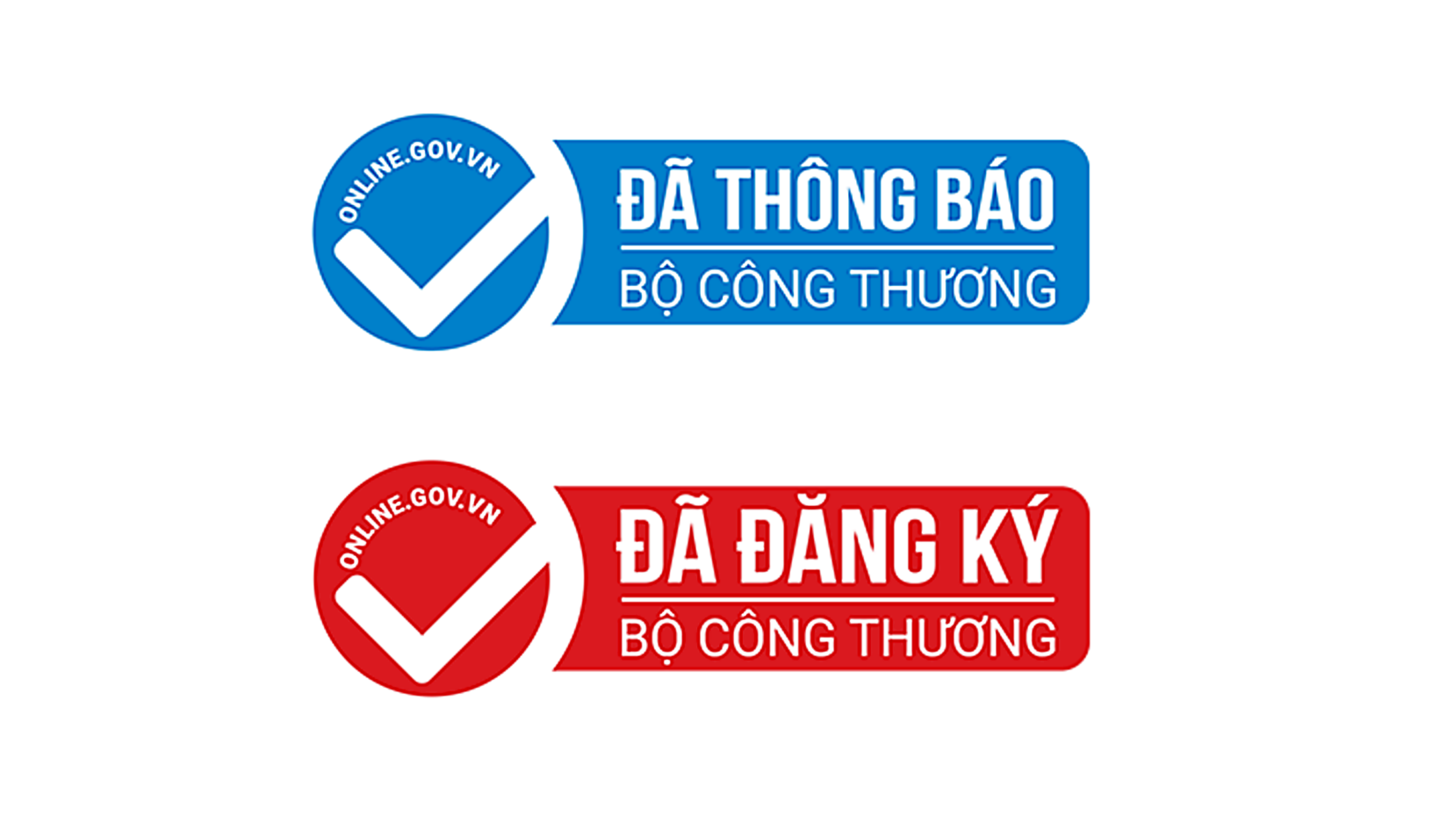
Using icons such as "notified," "registered" without official confirmation may result in penalties
This behavior may be penalized:
- From 10 to 30 million VND for individuals
- For organizations, the penalty may be doubled
In addition to administrative penalties, websites may also be required to remove infringing content or suspend operations.
Misunderstanding Responsibilities Between Sellers and E-commerce Platforms
One of the most dangerous misconceptions is thinking: "If I sell on a platform, the platform is entirely responsible."
According to new regulations, e-commerce platforms are responsible for coordinating in goods management, handling violations, and protecting consumer rights. However, this does not reduce the legal responsibility of the seller.
Online businesses must still:
- Ensure the legality of goods
- Comply with tax and invoicing regulations
- Provide truthful information about products
When violations occur, both the platform and the seller can be held responsible, depending on the extent and nature of the action.
Read more: Is Revenue on E-commerce Platforms Subject to Tax Declaration?
Violating Conditions for Doing Business in Regulated Industries
Not all types of goods are allowed to be sold online under the same conditions.
Certain sensitive industries such as alcohol, functional foods, cosmetics, and regulated products are only permitted for online business when all additional legal requirements are met.
For example, for alcoholic beverages, online sellers must:
- Possess a valid business license
- Implement age verification for buyers and recipients
- Coordinate with transportation units for verification
- Apply non-cash payment methods
If these conditions are overlooked, sellers may face:
- Heavy administrative penalties
- Forced product recall
- Risk of complaints from competitors or consumers
Failure to Control Content in Advertising and Livestream Sales
Livestreaming is becoming an important sales channel, but it also brings new legal risks regarding content and data.

Livestreaming is becoming an important sales channel but also brings legal risks
According to new policy directions, livestream broadcast data used for sales must be stored for a certain period to serve as a basis for dispute resolution, complaints, or violations.
This places requirements on sellers:
- Control spoken content, avoid false advertising
- Limit exaggeration of product benefits
- Have a mechanism for storing and retrieving data when needed
Poor control of livestream content can lead to risks of penalties for advertising, consumer protection, or unfair competition.
Risks in Issuing Electronic Invoices for Online Sales
A practical difficulty is the lack of buyer information when selling through e-commerce platforms, due to the platform's data security mechanisms.
Without a suitable solution, sellers may find themselves:
- Having revenue but unable to issue valid invoices
- Data discrepancies between the platform and tax records
- Being asked for explanations or subject to assessed taxes
Currently, the law allows for some legal solutions, including:
- Using electronic invoices generated from cash registers connected to tax authorities, without requiring full buyer information
- Authorizing e-commerce platforms to issue invoices on behalf of sellers in eligible cases
Failure to proactively choose appropriate solutions can lead to sellers facing risks even without intending to violate the law.
Read more: All About Electronic Invoices: When to Issue, How to Handle Errors
Risks of Costs and Accounting Documents
Many sellers only focus on revenue, but when inspected, they discover:
- Insufficient documentation for expenses
- Expenses that cannot be deducted for tax calculation
- Inability to identify which expenses are valid
Common consequences include:
- Higher taxes payable than actual
- Back taxes and late payment penalties
Read more: Which Expenses Can Be Deducted for Business Taxes?
Solution: A Management System is the Most Important Legal "Defense"
The commonality of most of the above risks lies not in not knowing the law, but in not having a system to correctly implement the law in daily operations.
Integrated management platforms like GTG CRM support sellers in:
- Centralized management of orders, products, inventory, and shipping
- Issuing electronic invoices through MISA, S-Invoice
- Issuing replacement invoices for returns
- Synchronizing sales and accounting data
- Storing data for reconciliation and audits
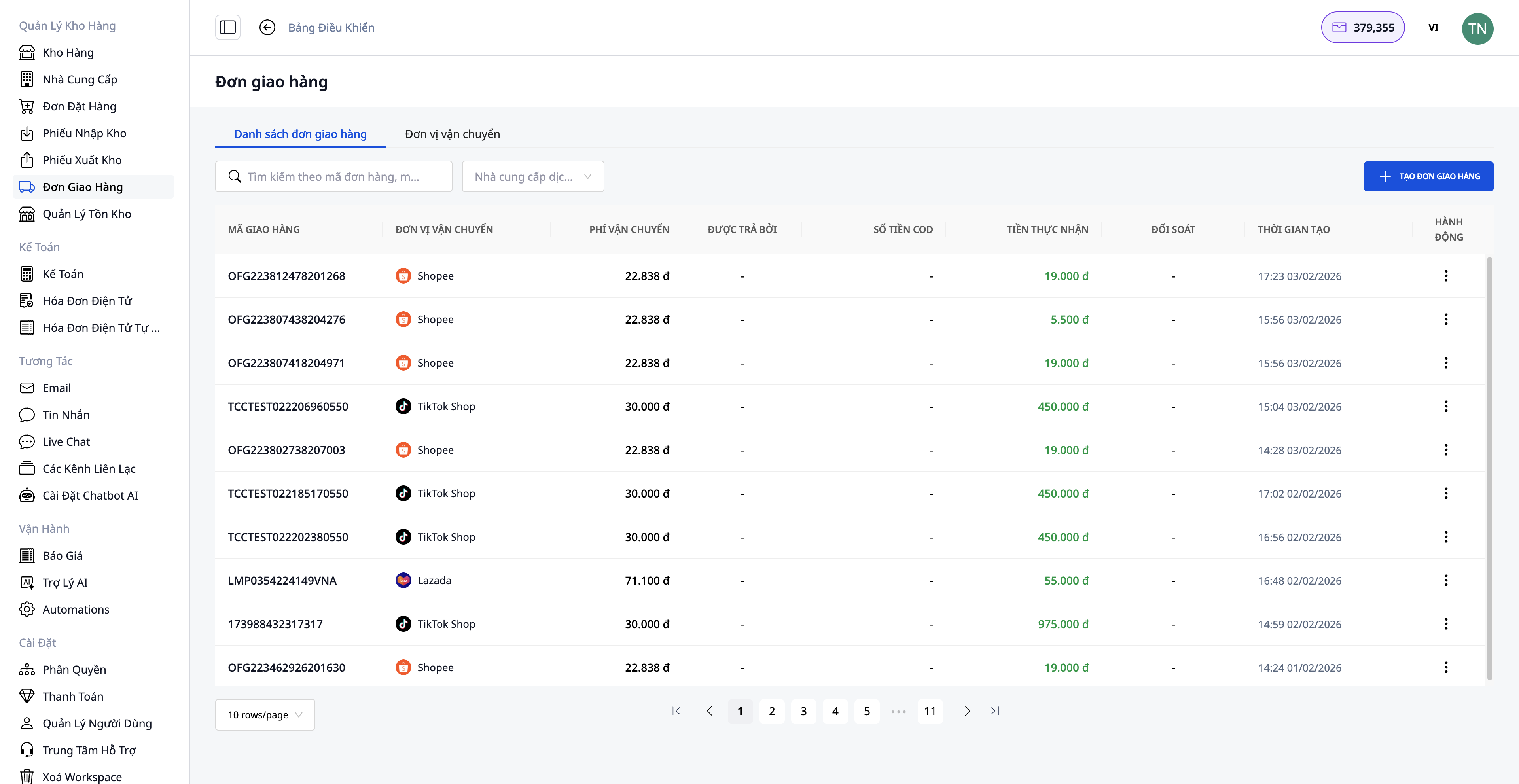
Centralized management of orders, products, inventory, shipping, accounting...
This is not a risk avoidance solution, but a systematic way to control risks.
Conclusion
Online business is no longer a legal gray area as it once was. Current management systems are shifting strongly towards data-driven, invoice-based, and technology-platform management.
The most common risks often stem from:
- Lack of updates on new regulations
- Misunderstanding of legal roles and responsibilities
- Failure to standardize processes from the outset
Understanding and complying with regulations not only helps avoid regrettable penalties but also forms the foundation for stable, transparent, and sustainable online business growth in an increasingly regulated digital environment.
Turn what you've just read into real results — apply it now with GTG CRM, for free.
Apply Now