The article below will analyze common objectives, with practical examples for your reference.
If you are new to advertising formats, you can read the detailed guide at Top 7 Basic and Most Popular Facebook Ad Formats before choosing an objective.
Brand Awareness Objective
Brand Awareness is a group of campaigns at the “top of the funnel,” helping products or services reach as many people as possible. The main objectives are typically
- Maximize Ad Reach: commonly used when wanting to maximize brand exposure.
- Maximize Impressions: ads are shown repeatedly to increase memorability.
- Ad Recall Lift: suitable for businesses that need to build long-term brands.
- Maximize Video Views (Thruplay): used when wanting to promote messages through video.
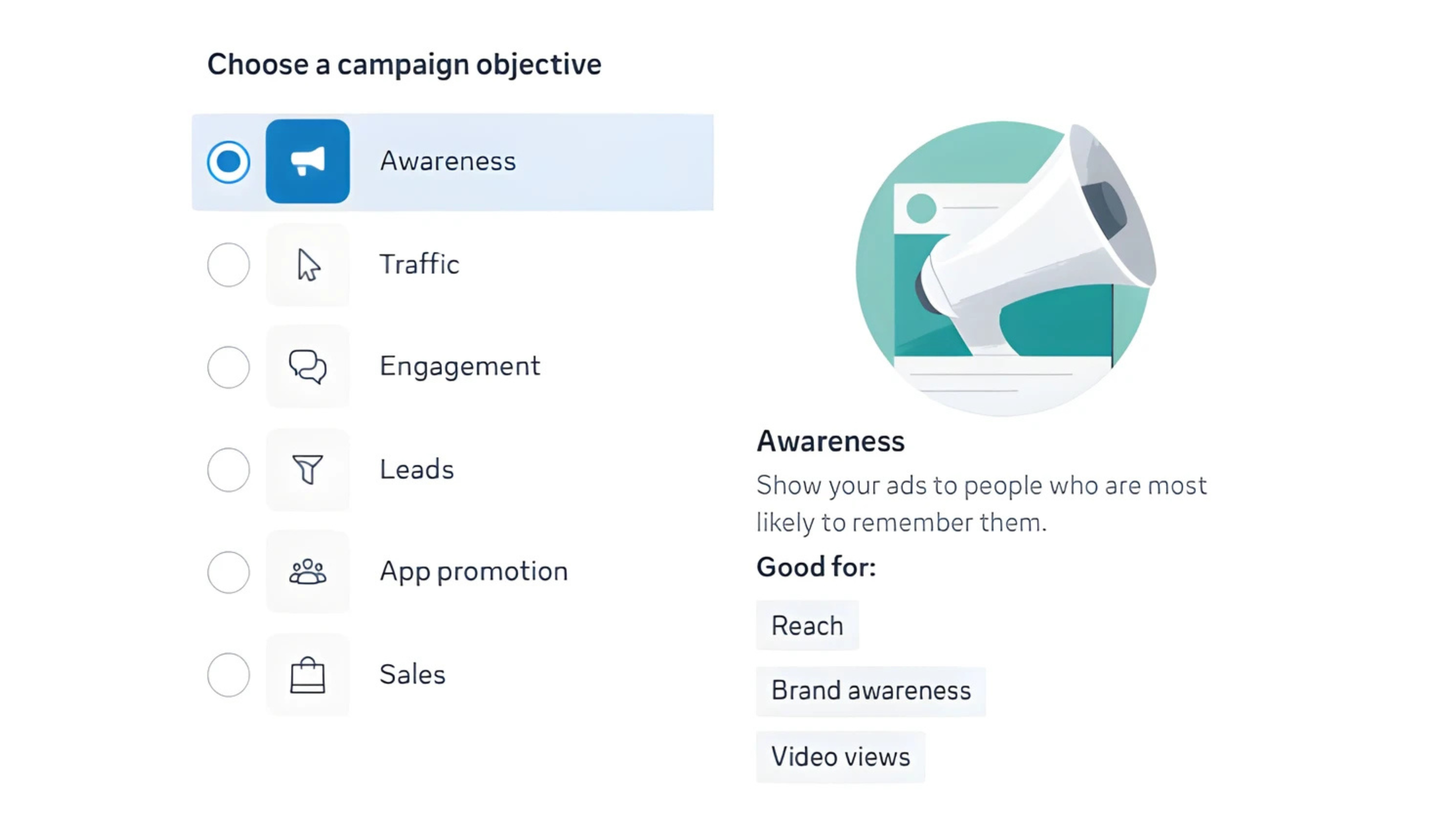
Brand Awareness Campaign
Example: A newly launched fashion brand will often run a "Reach" campaign to widely distribute product images. Or for F&B brands, running promotional videos of dishes with the "ThruPlay" objective helps them create a customer list of people who have watched the video, allowing for remarketing in later stages.
The strength of this campaign is helping customers become familiar with the brand, but keep in mind: awareness campaigns rarely generate direct orders; they only serve as a foundation for subsequent steps.
Traffic Objective
Unlike awareness, traffic campaigns aim to drive customers to a website, landing page, or a platform you control. This is how you can both introduce products and collect behavioral data.
Example: A language center can run traffic ads to a landing page for consultation registration. Here, they install a pixel to collect data, and then run remarketing ads to the group of people who visited but did not leave their information.
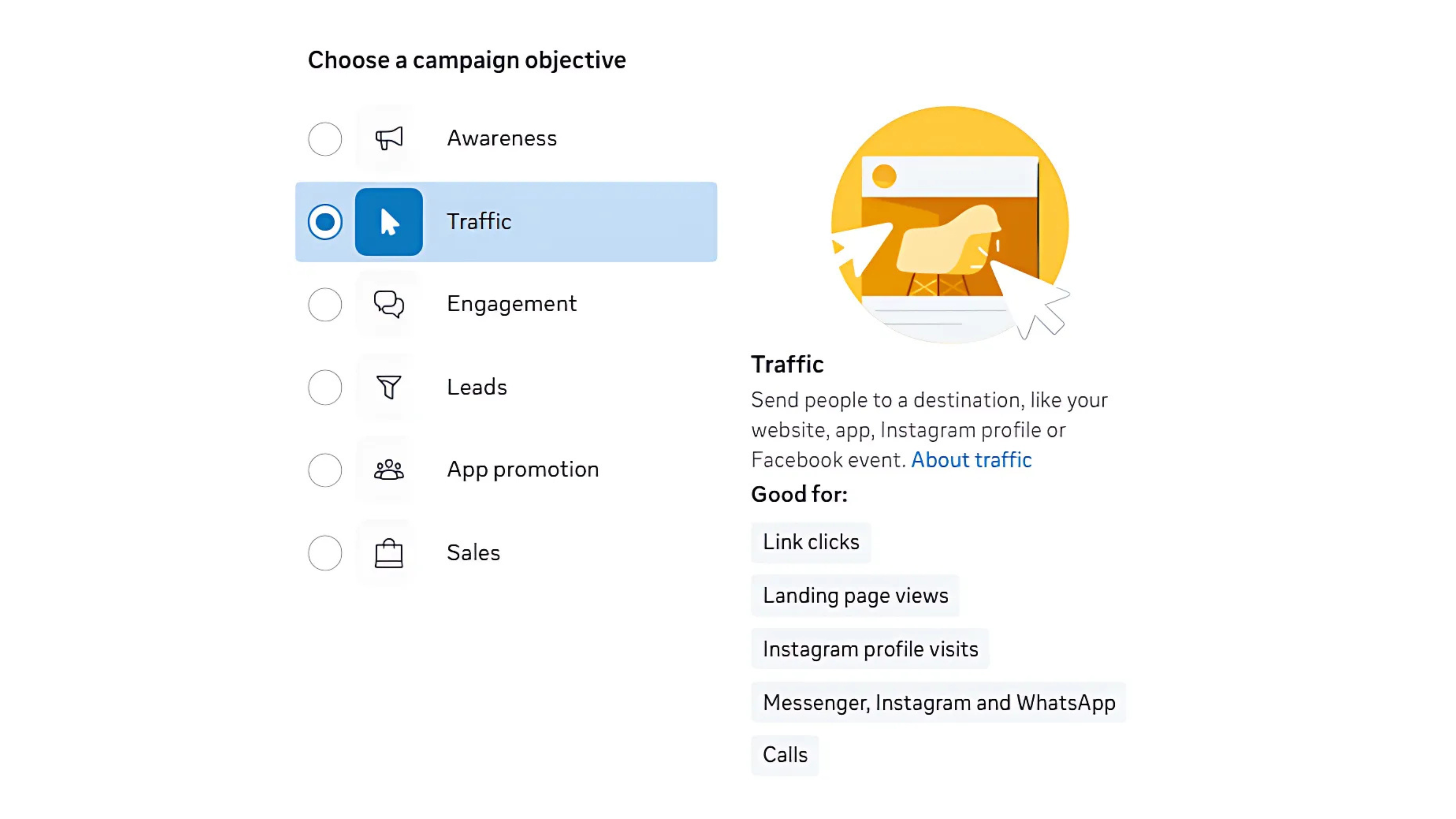
Traffic Campaign
Notable point: The "Link Click" and "Landing Page View" objectives may seem similar but are actually very different. "Link Click" might just be users clicking the link and leaving immediately, while "Landing Page View" optimizes for those who successfully load the page. This is a small detail but directly affects the quality of the data you collect.
Engagement Objective
An ad with many likes, comments, and shares often creates a much stronger sense of trust compared to one with only a few views. That's why engagement campaigns are always used by advertisers to enhance the appearance of their fan pages, increase trust, and attract potential customers.
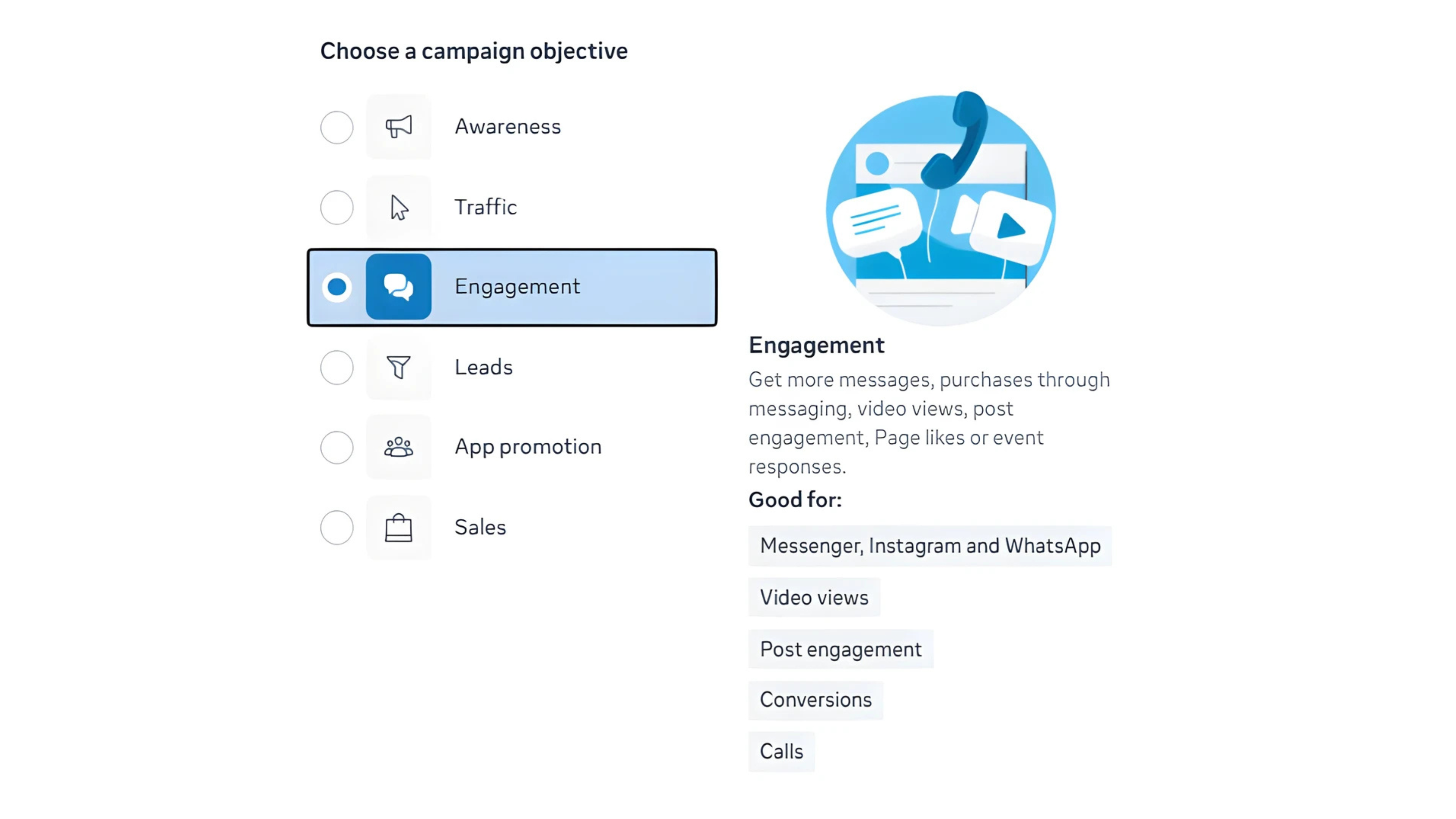
Engagement Campaign
Commonly used objectives include:
- Post Engagement
- Video Views (Thruplay)
- Community Group Engagement
- Event Responses
- Maximize Messenger Engagements
- Maximize Conversions from Messenger Ads
- Sponsored Messages
- Maximize Calls
- Maximize Page Likes
The point to note is that engagement does not equate to conversion. If the campaign stops at likes and comments without a subsequent remarketing plan, it will be difficult to generate actual sales.
Lead Generation Objective
This campaign is suitable for businesses that need to collect data for nurturing and care. It's commonly seen in education, services, B2B, or real estate.
Commonly used objectives include:
- Collect data via instant forms on Facebook/Instagram
- Increase leads via Messenger
- Increase Instagram chat leads
- Maximize direct calls
- Increase leads to website
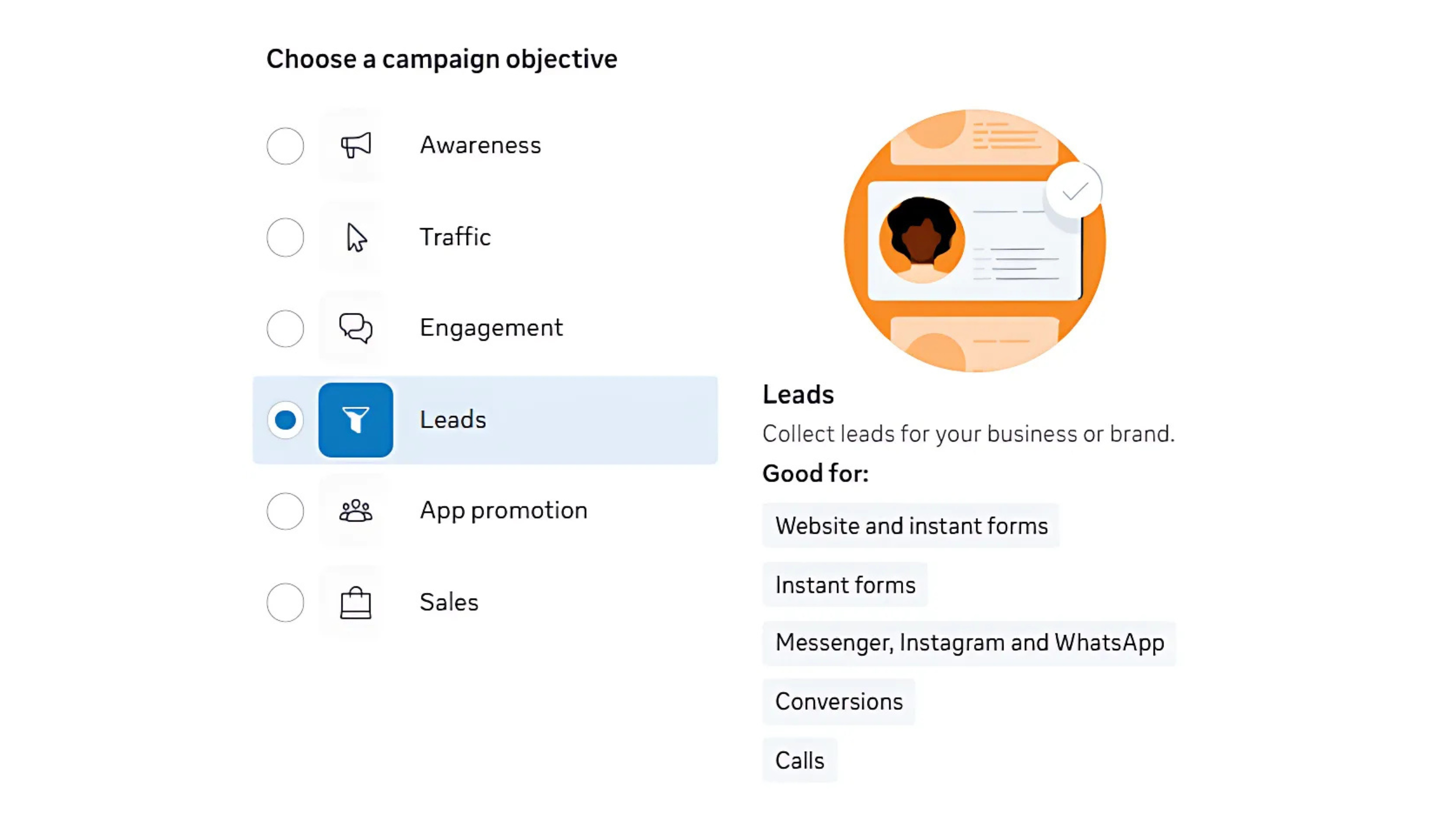
Lead Generation Campaign
The advantage of this type of campaign is that Facebook provides forms directly within the platform, making it faster for customers to fill out. However, the disadvantage is that the data quality can sometimes be low because users fill in information just to "take a look" without a real need. Therefore, many businesses combine lead forms with telemarketing or email automation to filter high-quality leads.
If you are facing issues with poor leads or significant losses during the follow-up process, you can refer to the article: Never Miss a Lead Again: Automate Management, Increase Conversion Rates 3x.
Sales/Conversions Objective
This is the most important objective group because it is directly linked to revenue. Businesses can optimize for Conversions (purchases, form submissions, service registrations) or Value (order value).
Example: An online shoe store often chooses the "Purchase" objective to have Facebook optimize for people most likely to buy. A high-end furniture brand might choose "Value Optimization" to prioritize customers with high spending potential, rather than just counting the number of orders.
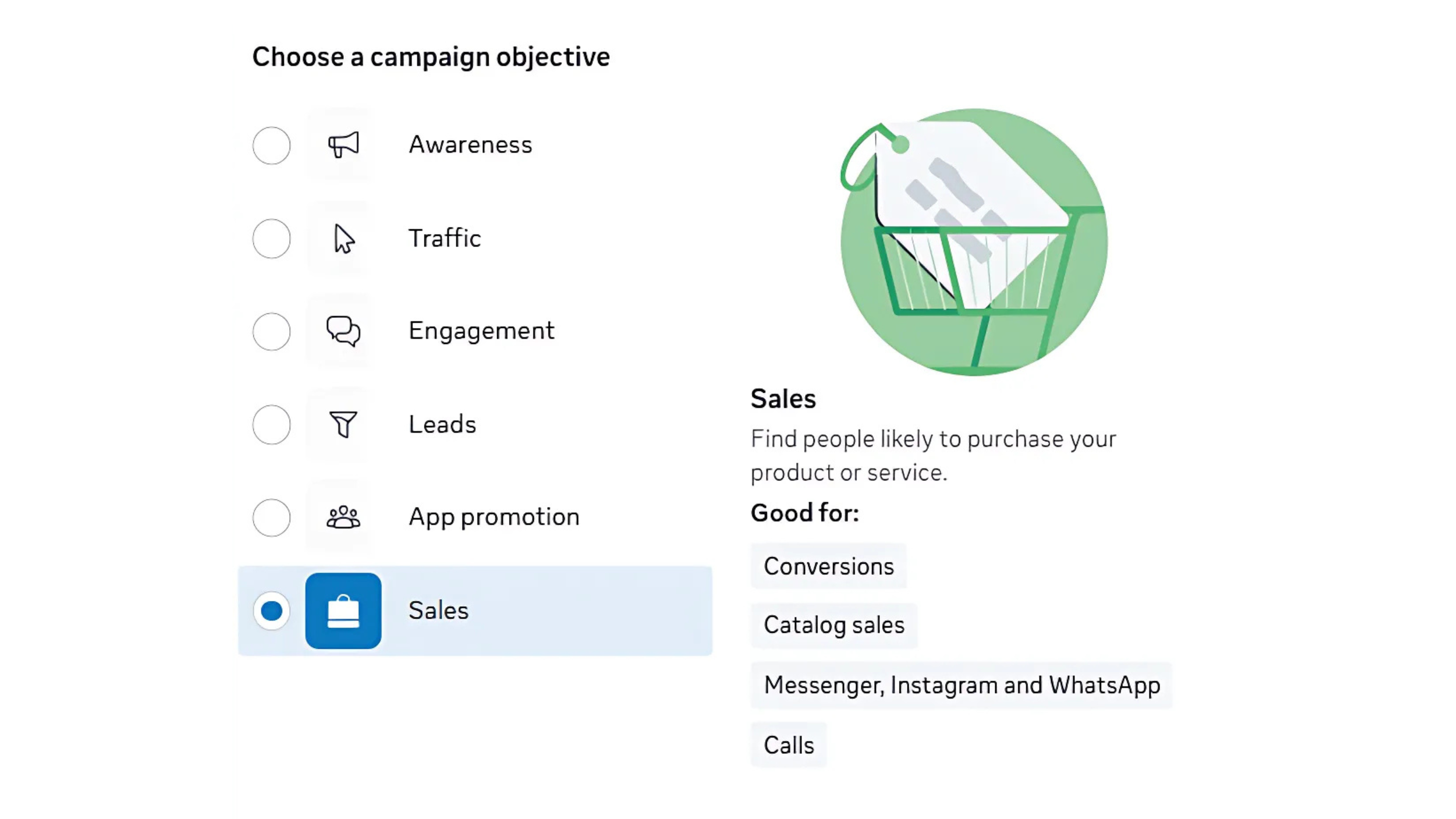
Sales/Conversions Campaign
The key here is data. If the pixel has not collected enough conversion data, the algorithm will not optimize effectively. Therefore, many advertisers often follow this progression: run awareness → traffic → lead → conversion. This approach helps build the audience step-by-step before "closing the deal" in the final stage.
Conclusion
There is no single "best" objective for every situation. Awareness helps brands get known, traffic drives customers to your platform, engagement builds trust, lead generation collects data, and conversion is the stage for closing deals.
The important thing is to understand your product, customers, and resources to choose the right objective at the right time. An effective advertising campaign is not just based on a ready-made formula but on the ability to flexibly combine different objectives to build a complete marketing funnel. When that happens, advertising doesn't just spend money but truly becomes a lever for sustainable revenue growth.
If you are just starting out and need a more straightforward implementation roadmap, you can refer to the article: Practical Secrets to Help Beginners Run Effective Ads Right from the Start
Turn what you've just read into real results — apply it now with GTG CRM, for free.
Apply Now